Edwardsville’s Glacial Legacy: How Local Soil Types Affect Your Home’s Radon Risk
The familiar bluffs overlooking the Mississippi River floodplain, a defining feature of our Edwardsville landscape, tell a story far older than the city itself. This ancient geological narrative, shaped by successive glacial periods, directly influences something invisible yet critical to our health: your home’s radon risk. From the historic homes in the Leclaire neighborhood to newer constructions in Stone Meadows and the lakeside properties of Holiday Shores, understanding Edwardsville’s unique subterranean characteristics is paramount for homeowner safety. Air Sense Environmental, an IEMA-accredited radon testing and mitigation contractor, deeply understands how these local conditions translate into real-world indoor air quality challenges for our community.
This unique glacial legacy means that radon, a naturally occurring radioactive gas, isn’t just a generic concern here; it’s a deeply localized issue. Our team at Air Sense Environmental, including Partner Jason Jackson, has observed firsthand how Edwardsville’s specific soil composition and weather patterns contribute to varying radon levels, even between neighboring properties. By the end of this article, you’ll gain a comprehensive understanding of why your Edwardsville home’s location and underlying geology are key determinants of its radon vulnerability, and what steps you can take to protect your family.
The Ground Beneath Us: Edwardsville’s Glacial Till and Loess Legacy
Edwardsville sits atop a fascinating geological tapestry woven by ancient glaciers. Our region is a marginal portion of the Illinoian Till Plain, a vast area sculpted by the Illinoian glaciation approximately 200,000 to 130,000 years ago. As these colossal ice sheets receded, they left behind a complex mix of glacial till—unsorted sediment, gravel, sand, and clay. However, the most significant geological factor influencing Edwardsville’s soil, and consequently its radon potential, is loess. Loess is a fine, windblown silt deposited in thick blankets across much of Illinois, often averaging about 1.5 meters (approximately 5 feet) in thickness over 90% of the state. These deposits are particularly thick immediately adjacent to the floodplains of major streams, such as the nearby Mississippi River, and along the east sides of valleys.
The “Edwardsville series” of soils, common in our area, consists of very deep, somewhat poorly drained, moderately permeable silt loams formed in this loess on till plains. Radon gas originates from the natural radioactive decay of uranium, an element found in varying concentrations within these very soils and bedrock. While uranium is typically dispersed, studies have found a significant association between the chemical form of uranium in Illinois soils and elevated basement radon levels, with a Spearman correlation coefficient of 0.266 (p > |r|, 0.007). This means the specific fine-silty, moderately permeable nature of Edwardsville’s loess-derived soils acts like a subtle, pervasive sieve, allowing radon gas to efficiently emanate from uranium atoms within the soil matrix, making it readily available to migrate upwards towards your home’s foundation. Imagine the soil as a sponge constantly releasing a colorless, odorless gas; the more efficient that sponge is at releasing it, the higher the potential for accumulation.
When Edwardsville’s Homes Meet Subterranean Gas
The age and construction methods prevalent in Edwardsville’s housing stock play a crucial role in how readily radon gas from the underlying glacial soils can infiltrate homes. Edwardsville is a historic city, and many properties, especially in areas like City Center / Leclaire or parts of Edwardsville East, date back well before 1939 (16.46% of housing stock) or between 1940-1969 (20.47%). Even newer homes, particularly those built between 1970-1999 (42.19%), may not have been constructed with modern radon-resistant features. The median age of Edwardsville real estate is around 40 years old.
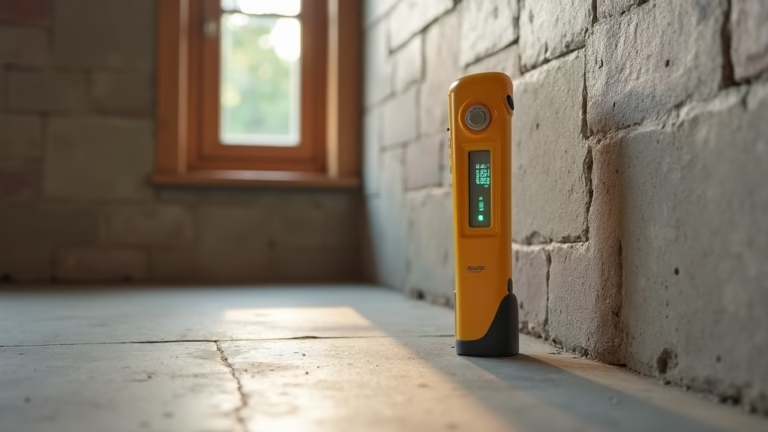
Single-family detached homes constitute the largest portion of housing, at 72.92% of the city’s units. Many of these homes, common throughout neighborhoods like Pinebrook Estates and Country Club Manors, often feature basements or crawl spaces – environments where radon can easily accumulate. Radon typically enters a home through tiny cracks in the foundation, gaps around utility pipes, sump pits, and even exposed soil in crawl spaces. Over time, as foundations settle and expand and contract with Edwardsville’s varied climate, these entry points can become more pronounced. What might start as a microscopic fissure can, over decades, become a significant pathway for soil gas entry. Without proper testing, homeowners are often unaware of radon’s presence until health issues arise. Air Sense Environmental’s state-of-the-art continuous radon monitors are specifically designed to detect these unseen dangers, providing real-time data that traditional charcoal tests can miss.
Local Factors Amplifying Edwardsville’s Radon Risk
Edwardsville’s specific environmental, geological, and regulatory landscape combine to create a distinct set of conditions that can exacerbate indoor radon levels.
Firstly, the glacial geology is paramount. The Edwardsville soils, formed in loess on till plains, exhibit moderately permeable characteristics, which facilitate the upward migration of radon gas from decaying uranium in the deeper soil and bedrock. This is particularly true for homes built on the thicker loess deposits closer to the Mississippi River floodplain or along the bluffs separating the upland from the American Bottoms. Madison County, where Edwardsville is located, is identified by the EPA as having areas with a high to moderate potential for elevated indoor radon levels.
Secondly, Edwardsville’s climate plays a significant, often overlooked, role. The city experiences a humid continental climate with distinct seasons. Average annual precipitation is around 43-45 inches, with May typically being the wettest month, averaging 5 inches of rain. This high soil moisture content, especially during spring and summer, can increase radon gas movement. As water saturates the soil, it fills pore spaces, essentially pushing trapped radon gas upwards and into homes through any available pathways. Our winters are cold, with January lows averaging 19-23°F, leading to numerous freeze-thaw cycles. While precise Edwardsville-specific freeze-thaw data can vary, the Midwest region averages around 42 cycles annually. These cycles cause the ground to expand and contract, creating and enlarging microscopic cracks and pathways in foundations and slabs, thereby providing more routes for radon entry into homes across areas like Bluff Junction and the neighborhoods around Southern Illinois University Edwardsville.
Finally, local building codes reflect a growing awareness of home safety. The City of Edwardsville has adopted the 2021 International Residential Code (IRC) with local amendments. This includes specific requirements for residential construction, such as the installation of a 6-millimeter plastic vapor barrier between the basement rock base and the concrete floor. For homes with crawl spaces, the IRC dictates ventilation requirements, though these can be modified if a Class 1 vapor retarder is installed on the floor. However, many older homes in Edwardsville, particularly those in historic districts like Leclaire or the established Enclave neighborhood, predate these modern standards, making them inherently more susceptible to radon intrusion due to their original construction methods and lack of robust vapor barriers. This combination of uranium-rich glacial deposits, fluctuating moisture levels, freeze-thaw cycles, and older building stock makes Edwardsville homes, from Godfrey to Glen Carbon and Maryville, particularly vulnerable to elevated radon levels.
Unseen Threat: Warning Signs and Proactive Guidance for Edwardsville Homeowners
Because radon is an odorless, colorless, and tasteless gas, there are no immediate “warning signs” in the traditional sense that homeowners in Edwardsville can observe with their senses. This insidious nature is precisely why testing is so critical. The most tangible “indicator” would be the historical data for Madison County, which has areas of high and moderate potential for elevated indoor radon levels. This means that regardless of whether your home is in a desirable eastern neighborhood or a more affordable western area, a test is always recommended.
However, certain local conditions in Edwardsville should prompt immediate action. If you live in a home with a basement or a crawl space, particularly properties in the City Center or near Edwardsville East that are older than 40 years, your risk factor is inherently higher due to the increased potential for foundation cracks and soil gas entry points. Homes in low-lying areas or those that have experienced significant seasonal flooding or persistent moisture issues in basements or crawl spaces should also be prioritized for testing. The enhanced soil moisture from Edwardsville’s average 43-45 inches of annual precipitation can significantly increase the movement of radon gas into your home. The Illinois Emergency Management Agency (IEMA) strongly recommends that all homes be tested, regardless of geographic location or foundation type. Don’t wait for a real estate transaction to uncover this hidden threat; proactive testing is the only way to truly know your home’s radon levels.
Air Sense Environmental: Your Edwardsville Authority on Radon Solutions
At Air Sense Environmental, we recognize that addressing radon in Edwardsville isn’t a one-size-fits-all problem; it requires deep local knowledge and specialized solutions. As an IEMA-accredited contractor, our team is licensed and regulated by the Illinois Emergency Management Agency to perform both radon measurement and mitigation, ensuring we meet the highest state standards. We don’t rely on guesswork; our approach starts with precise data. We utilize state-of-the-art continuous radon monitors that are certified by both the National Radon Proficiency Program (NRPP) and the National Radon Safety Board (NRSB). These monitors provide real-time, hour-by-hour data over a 48-hour testing period, offering a far more accurate and comprehensive picture of your home’s radon fluctuations than basic charcoal tests can provide.
Our commitment extends beyond just testing. If elevated levels are detected, we craft customized mitigation plans tailored to the unique characteristics of your Edwardsville home, whether it’s a century-old brick home in Old Town or a modern build in Enclave. For homes with crawl spaces, a common feature in many Edwardsville properties, our specialized Crawl Space Encapsulation process is a game-changer. This involves installing a high-durability vapor barrier over the exposed soil, effectively sealing off a major entry point for radon, moisture, and musty odors. Jason Jackson, one of our partners, often emphasizes to homeowners in areas like Country Club Manors the dual benefit of encapsulation, explaining how it not only addresses radon but also improves overall indoor air quality by reducing humidity and preventing mold growth. We pride ourselves on dependable service, clear communication, and educating homeowners, rather than employing pushy sales tactics. Our promise includes quick response and scheduling, ensuring your family’s safety is addressed promptly. For a recent homeowner in the Pinebrook Estates area, our team was able to quickly identify a previously unknown radon issue through continuous monitoring and design a targeted sub-slab depressurization system that brought their levels well below the EPA action level of 4 pCi/L, restoring their peace of mind within days of the initial call. Our expertise is also detailed in our comprehensive guide, “Radon Mitigation System Installation: A Complete Homeowner’s Guide.”
Safeguarding Your Edwardsville Home Against Radon’s Invisible Threat
Edwardsville’s unique glacial past, marked by its position on the Illinoian Till Plain and blanketed by permeable loess soils, creates a specific environment where radon gas can readily accumulate in homes. Combined with our region’s fluctuating climate and diverse housing stock, understanding this localized risk is crucial for every homeowner. The median age of Edwardsville homes, around 40 years old, means many were built before modern radon-resistant construction techniques were common, making proactive testing essential.
Protecting your investment and your family’s health starts with knowledge and decisive action. Don’t let the invisible threat of radon linger in your Edwardsville home. Explore our Radon Testing services for accurate, real-time results or learn more about effective solutions through our Radon Mitigation page. Contact Air Sense Environmental today for a free in-home estimate and let our IEMA-accredited experts help you achieve a healthier indoor environment.
Frequently Asked Questions
How does Edwardsville’s specific soil type, like the Edwardsville series silt loam, affect radon levels differently than other areas of Illinois?
Edwardsville’s distinctive “Edwardsville series” silt loam soils, formed from glacial loess on till plains, are characterized by their moderately permeable nature and fine-silty composition. This specific soil structure allows radon gas, which originates from the natural decay of uranium within the soil, to migrate more efficiently towards the surface and into homes compared to denser, less permeable soil types found elsewhere in Illinois. The deep loess deposits, particularly near the Mississippi River floodplain, act as a more effective conduit for radon gas, making Edwardsville homes potentially more susceptible to elevated indoor levels.
What impact do Edwardsville’s freeze-thaw cycles and annual precipitation have on radon entry into homes?
Edwardsville experiences significant annual precipitation, averaging 43-45 inches, with a peak in May. This high soil moisture saturates the ground, displacing radon gas and pushing it towards the path of least resistance – typically into homes through foundation cracks. Additionally, the city’s cold winters, with January lows around 19-23°F, contribute to numerous freeze-thaw cycles. These cycles cause the soil and foundation to repeatedly expand and contract, creating and enlarging microscopic pathways in basement walls and slabs, thereby increasing points of entry for radon gas, especially in older homes in neighborhoods like Holiday Shores.
Given that Edwardsville is an older city with many homes built before modern codes, are there specific construction features that make these properties more vulnerable to radon?
Yes, older Edwardsville homes, particularly those built before the adoption of the 2021 International Residential Code, often lack modern radon-resistant features. Many properties, especially those from the 1940s-1970s prevalent in areas like City Center / Leclaire, were constructed without a 6-millimeter plastic vapor barrier beneath basement slabs, a current requirement designed to block soil gas entry. Furthermore, these older foundations are more likely to have settled over time, developing hairline cracks, unsealed sump pits, and unaddressed penetrations around utility lines, all of which serve as direct pathways for radon gas to enter and accumulate, particularly in basements and crawl spaces.