Understanding the investment required for accurate radon testing is crucial for safeguarding your family’s health, especially in the St. Louis area. This guide lays out the financial landscape, contrasting the typically lower initial outlay of a do-it-yourself charcoal kit against the superior reliability of professional electronic monitoring, which generally ranges from $125 to $250.
You will learn how variables like home size, shipping expenses, and the necessary testing duration directly impact the final bill, whether you are preparing for a real estate transaction or conducting routine environmental checks.
We will also detail why professional testing offers the validated results often required by contracts and explore the costs associated with mitigation should your results indicate a hazard, giving you a full picture of your environmental safety budget.
Take control of your home’s air quality by understanding exactly what a definitive radon assessment will cost.
Radon Testing Cost: A Comprehensive Price Breakdown
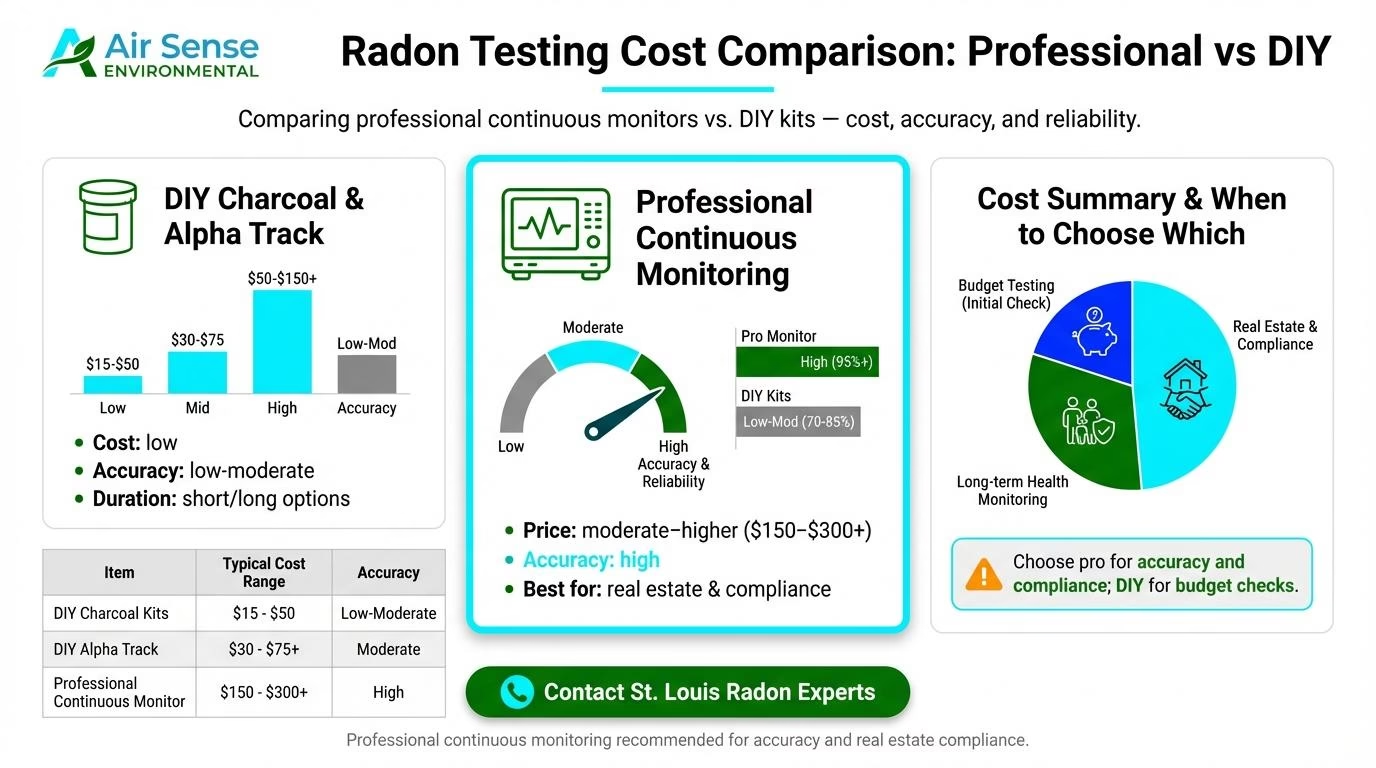
Determining the radon testing cost for your home is an essential investment in your family’s health and safety. On average, homeowners can expect to pay between $150 and $300 for a professional inspection, while do-it-yourself (DIY) test kits typically range from $15 to $50. According to the EPA’s Guide to Radon, testing is the only way to know if you and your family are at risk from this radioactive gas, making it a critical step for any property owner or buyer.
Typical Price Ranges for Radon Testing
To help you budget for your home’s safety, here is a breakdown of the standard costs associated with different testing methods:
- Professional Radon Testing ($150 – $300): This service is performed by licensed experts using calibrated equipment. The price usually includes the deployment of the device, retrieval, and a detailed lab analysis report.
- Short-Term DIY Test Kits ($15 – $25): These are entry-level kits found at hardware stores. They measure radon levels over a period of 2 to 90 days.
- Long-Term DIY Test Kits ($30 – $50): These kits remain in the home for more than 90 days to provide a more accurate year-round average of radon concentrations.
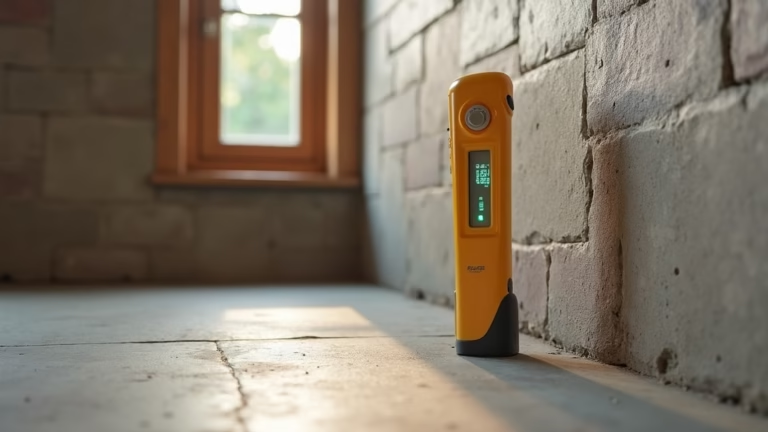
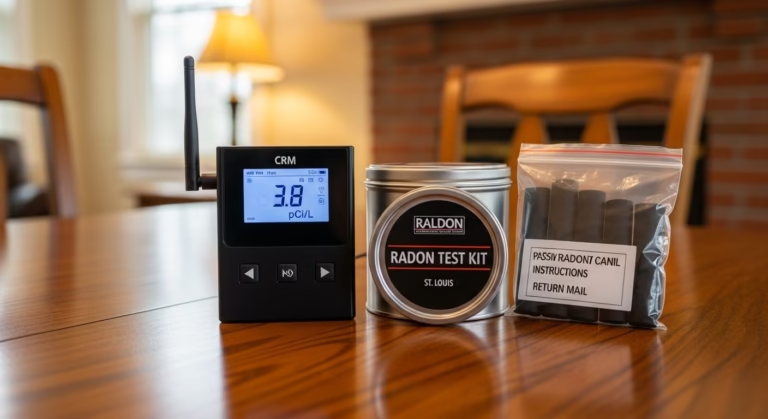
- Continuous Radon Monitors (CRM) ($150+): These electronic devices provide real-time data and are often used by professionals during real estate transactions to prevent tampering and provide rapid results.
While these ranges provide a baseline for what you can expect to pay, several variables can cause the final radon testing cost to fluctuate depending on your specific situation and property type.
Factors That Influence Radon Testing Prices
While a standard professional test usually falls within a set range, your home’s specific architecture and the timing of the test play a major role in the final quote. Professionals must account for the time, equipment, and lab resources required to provide an accurate reading. Understanding these variables helps you avoid surprises when viewing your radon testing cost.
Home Size and Multi-Level Foundations
The most significant factor in testing price is the number of testing devices required. According to EPA protocols, technicians must place devices in the lowest livable area of each unique foundation type within a home.
If your home features a complex foundation—such as a partial basement combined with a crawlspace or a slab-on-grade addition—multiple monitors are necessary. More devices mean higher equipment costs and more time spent by the technician on setup and retrieval. Essentially, the more ground your home covers, the more you should expect to pay for a comprehensive assessment.
Laboratory and Shipping Fees
For professional tests involving charcoal canisters or liquid scintillation, the physical samples must be sent to a certified laboratory. Lab fees are typically included in your professional quote but can fluctuate based on the type of analysis required.
If you require a faster turnaround, such as for a real estate transaction, expedited shipping and "rush" lab processing will increase the price. Professionals often use continuous radon monitors (CRMs) to bypass some of these fees, though the higher cost of the CRM equipment itself is reflected in the service rate.
Seasonal Price Variations
Radon levels naturally fluctuate with the weather, often reaching their peak during the winter. This makes the colder months the most accurate time to test, but also the period of highest demand for environmental services.
Testing during winter requires strict adherence to "closed-house" conditions, where all windows and doors remain shut except for normal entry and exit. Maintaining these conditions ensures that the test captures the highest potential radon accumulation. Because this seasonal accuracy is critical for safety, many homeowners prioritize testing in the winter, which can lead to higher seasonal service rates.
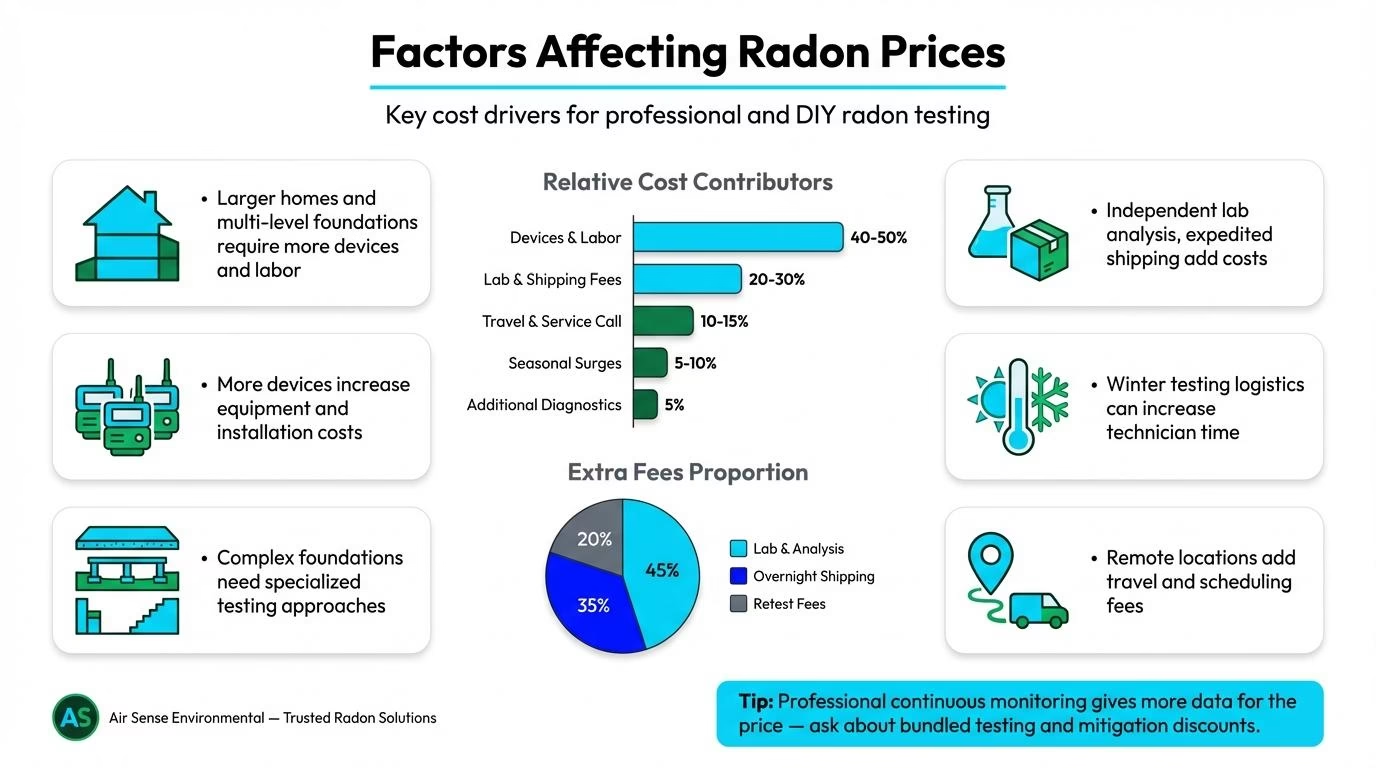
Key Factors Summarized:
- Home Square Footage: Larger footprints often require more monitors to ensure full coverage.
- Foundation Types: Homes with multiple foundation levels (basement + crawlspace) require additional testing devices.
- Lab Turnaround Time: Standard results are more affordable than "rush" results needed for quick home sales.
- Testing Season: Winter testing is ideal for accuracy but may carry higher demand-based pricing.
- Travel Distance: Technicians may charge a small fee for homes located outside their standard service radius.
Whether you are preparing for a sale or simply ensuring your family’s safety, choosing a professional service ensures these factors are handled according to state regulations. You can learn more about the differences between DIY and professional services to determine which fits your budget and safety needs.
Professional Radon Testing vs. DIY Charcoal Kits
When deciding how to measure the safety of your home, the choice usually comes down to DIY convenience versus professional precision. While a store-bought kit might seem like the most cost-effective route, the "hidden" cost of an inaccurate reading can be significant when dealing with a carcinogen like radon.
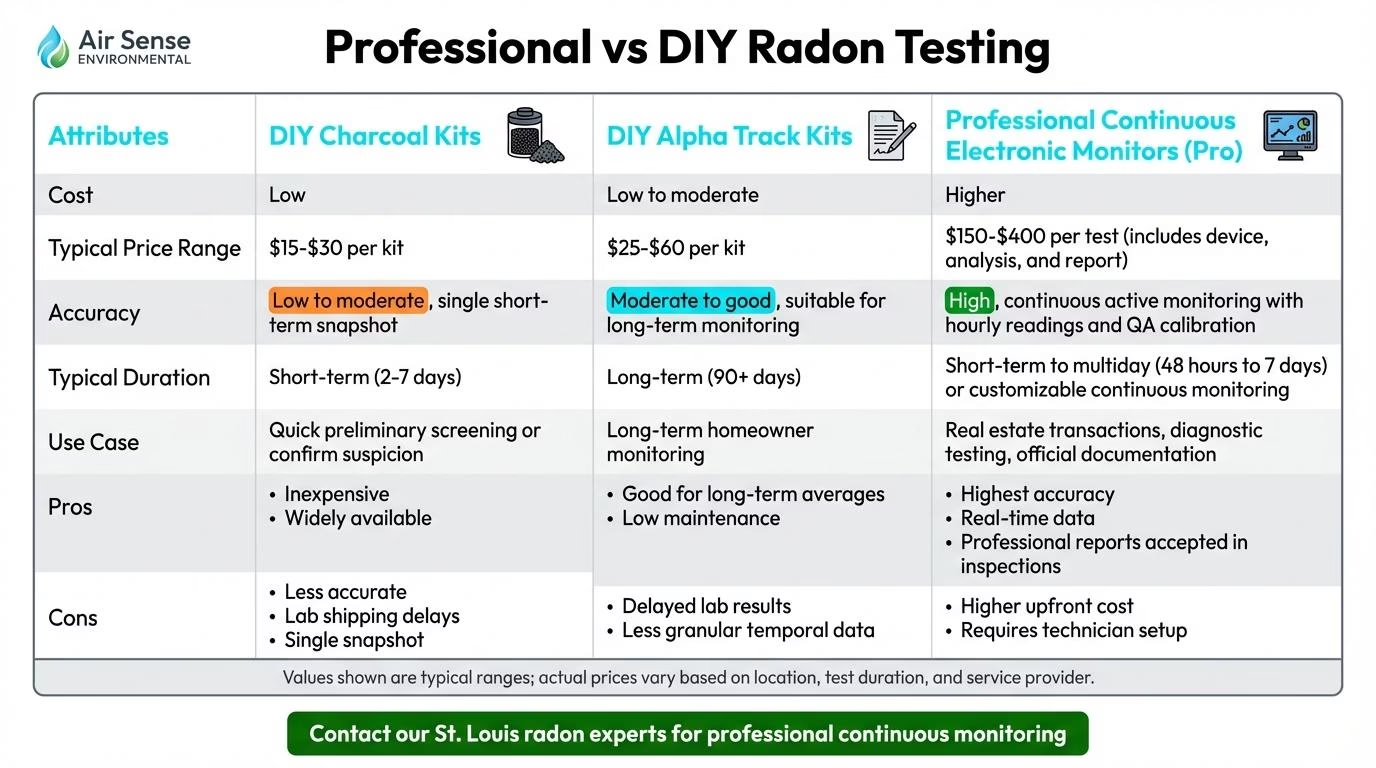
The following table compares the three most common methods for measuring radon testing cost and performance:
| Test Method | Average Cost | Accuracy Level | Test Duration |
| :— | :— | :— | :— |
| DIY Charcoal Kit | $15 – $30 | Moderate (Snapshot) | 2 – 7 Days |
| DIY Alpha Track Kit | $30 – $60 | High (Average) | 90 Days – 1 Year |
| Professional CRM | $150 – $300 | Very High (Detailed) | 48 Hours |
Continuous Electronic Monitoring (Pro)
A Professional Continuous Radon Monitor (CRM) is the gold standard for real-estate transactions and homeowners who want immediate, undeniable results. These devices are calibrated annually and operated by licensed experts, such as the team at AirSense Environmental.
Unlike basic kits, a CRM records radon levels hour-by-hour. This allows professionals to see how weather patterns or HVAC usage influence radon entry. Furthermore, these monitors include tamper-resistance sensors that detect if the unit was moved or if windows were opened during the test, ensuring the final report is legally and scientifically sound.
Charcoal Canisters and Alpha Track Kits (DIY)
If you are not in a rush, DIY kits offer a lower entry point for radon testing.
- Charcoal Canisters: These are the most common "short-term" DIY tests. They use activated charcoal to absorb radon. While inexpensive, they are highly sensitive to humidity and temperature, which can skew results if the lab analysis is delayed.
- Alpha Track Kits: These are "long-term" tests designed to stay in your home for 3 to 12 months. They use a small piece of plastic that is marked by alpha particles. Because radon levels fluctuate wildly with the seasons, these kits provide a much better picture of your actual annual exposure.
Passive vs. Active Radon Tests
Understanding the technical difference between these two categories is essential for choosing the right DIY or professional radon service.
- Passive Radon Tests: These do not require power to function. They work by simply exposing a collection medium (like charcoal or plastic film) to the air. Because they don’t record when the radon was present, they only provide a single average number at the end of the test period.
- Active Radon Tests: These require a power source (battery or plug-in) and continuously monitor the air. These "active" devices can report fluctuations in radon concentration, barometric pressure, and humidity. This data is vital for a mitigation professional to design an effective system tailored to your home’s specific air dynamics.
Short-Term vs. Long-Term Radon Testing Costs
When determining your radon testing cost, the first decision you’ll face is whether to perform a short-term or long-term test. The price difference between these two methods is relatively small—usually a matter of $20 to $40—but the value they provide varies significantly depending on your goal.
Cost Analysis of Short-Term Testing
Short-term testing is the "quick snapshot" of the radon world. These tests typically last between 2 and 7 days and are the industry standard for real estate transactions. Because time is of the essence during a home inspection, buyers and sellers rely on these rapid results to make immediate decisions about radon in real estate.
- DIY Short-Term Kits ($15–$50): These are available at most hardware stores. The lower end of the price range often covers just the canister or charcoal liquid scintillation device, while the higher end usually includes the lab analysis fee and return shipping.
- Professional Short-Term Testing ($150–$350): For real estate deals, most professionals use Continuous Radon Monitors (CRMs). These calibrated electronic devices provide hour-by-hour data and are tamper-resistant, justifying the higher price point compared to a DIY kit.
While short-term tests are affordable and fast, they only capture a brief window of time. Radon levels can fluctuate wildly based on barometric pressure, wind, and rain, meaning a short-term test might not reflect your home’s average year-round exposure.
Investing in Long-Term Radon Monitoring
If your goal shifts from a "real estate fix" to long-term health monitoring, a long-term test is the superior investment. These tests remain in your home for 90 days to one year, providing a true average of your exposure across different seasons.
- DIY Long-Term Kits ($30–$60): These kits typically use alpha track detectors. While they cost slightly more than short-term canisters, they offer much higher accuracy regarding your actual health risk because they account for the way radon levels rise and fall as you heat or cool your home throughout the year.
- Digital Long-Term Monitors ($150–$250+): Many homeowners are now opting for smart, plug-in monitors. While the upfront cost is higher, these devices provide lifetime monitoring and real-time alerts to your smartphone, eliminating the need to buy and mail kits repeatedly.
Choosing a long-term test is an investment in preventative health. Since radon is the second leading cause of lung cancer, knowing your year-round average is the only way to ensure your family’s safety. If your long-term results consistently show levels at or above 4.0 pCi/L, it’s time to look into the cost of a radon mitigation system.
Radon Testing in Real Estate Transactions and Inspections
Radon testing has become a pivotal step in the home-buying process. Because radon is invisible and odorless, a professional test is the only way for both parties to understand the potential health risks associated with a property.
In the St. Louis area, where radon levels can vary significantly, these results often influence the final sale price or repair negotiations. Addressing these concerns early ensures the home is safe for its future occupants without delaying the closing.
Are Radon Results Legally Binding?
While radon testing is not a federal legal mandate for every home sale, it has become a standard contingency in modern real estate contracts. Buyers and sellers should be aware of how these results function within a transaction:
- Disclosure Laws: In many states, including Missouri, sellers are legally required to disclose any known high radon levels or previous mitigation work to potential buyers.
- Standard Contingencies: Most buyers include a radon contingency in their offer. This gives them the legal right to request mitigation or even cancel the contract if levels exceed the EPA action level of 4.0 pCi/L.
- Negotiation Power: If a test returns high results, the buyer typically negotiates for the seller to cover the radon mitigation cost or provide a credit at closing.
According to the (https://www.nar.realtor/residential-real-estate/home-inspections/radon-key-messages-and-resources), testing is highly recommended for all homes—regardless of age or location—to protect the buyer’s future health and investment.
Radon Testing During Home Inspections
Integrating radon testing into a standard home inspection is the most efficient way to handle the requirement. However, it is important to distinguish between a general home inspection and a specialized radon test.
- Certified Professionals: While some general inspectors offer radon testing, it is vital to ensure they use calibrated continuous monitors that provide hourly data to prevent tampering.
- Short-Term Testing: Real estate transactions usually utilize 48-hour short-term tests. These are designed to provide quick, reliable results that fit within tight inspection windows.
- Third-Party Accuracy: Using an expert like AirSense Environmental ensures that the testing is performed according to strict EPA protocols, providing an unbiased report for both the buyer and the seller.
For further local context, the (https://health.mo.gov/living/environment/radon/homebuyers.php) provides specific resources for homeowners and real estate professionals navigating radon issues during a sale.
Checklist for Real Estate Radon Testing:
- Ensure "closed-house conditions" are maintained for at least 12 hours before and during the test.
- Verify the testing device is placed in the lowest livable area (such as a finished basement).
- Request a copy of the professional’s current certification for radon testing in real estate.
How Often Should You Retest Your Home for Radon?
Radon levels are not static; they fluctuate based on soil moisture, temperature, and even the structural integrity of your home. Because radon testing cost is relatively low compared to the long-term health risks of exposure, maintaining a regular testing schedule is a critical part of home maintenance.
Understanding when to test involves looking at both fixed time intervals and specific "trigger events" that could alter how gas enters your living space.
The Lifespan of Radon Test Results
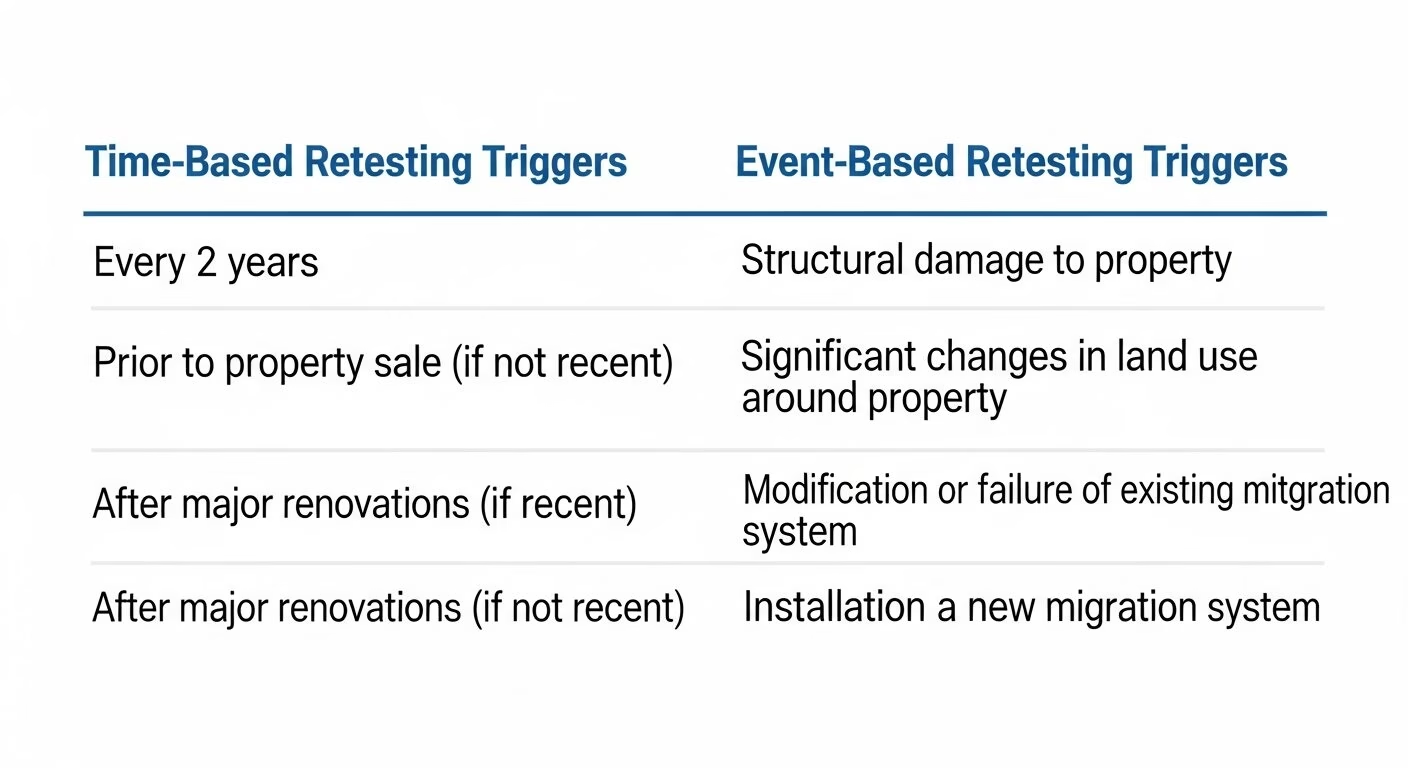
A radon test result is a snapshot of your home’s air quality at a specific point in time. It does not guarantee that levels will remain the same indefinitely. Event-based retesting is necessary whenever the physical structure of your home or the ground beneath it changes.
You should perform an immediate retest if any of the following occur:
- Major Renovations: Structural changes, such as adding an extension or finishing a basement, can create new pathways for radon gas or change the way air circulates through the house.
- HVAC Changes: Replacing a furnace or installing a new central air system can alter the pressure balance of your home, potentially drawing more radon from the soil.
- Seismic Activity or Soil Settling: Significant shifting in the earth or new cracks in your foundation can open "entry points" that weren’t there during your last test.
- Mitigation System Maintenance: If you already have a radon mitigation system installed, you should retest every few years to ensure the fan is operating at peak efficiency and effectively drawing gas away from the foundation.
Recommended Retesting Intervals
For homes without significant structural changes, the EPA recommends retesting every two years. This time-based retesting ensures that even gradual changes in soil composition or home settling are accounted for.
If your initial test result was near the EPA’s action level of 4.0 pCi/L (for example, between 2.0 and 3.9 pCi/L), you might consider testing annually or using a long-term monitor to track fluctuations. Even if your home tested low in the past, a biennial check is the only way to confirm your indoor air remains safe.
Regular testing is a small investment in your family’s safety. If you are unsure about your previous results or have recently completed a home project, consulting with licensed radon experts can help you determine the best testing strategy for your specific property.
Budgeting for Radon Mitigation if Levels are High
If your radon testing results return a reading of 4.0 pCi/L or higher, the EPA recommends taking immediate action to reduce the gas levels in your home. While finding high levels can be alarming, the transition from testing to a solution is straightforward. Budgeting for professional radon mitigation services is the next logical step in protecting your family’s health.
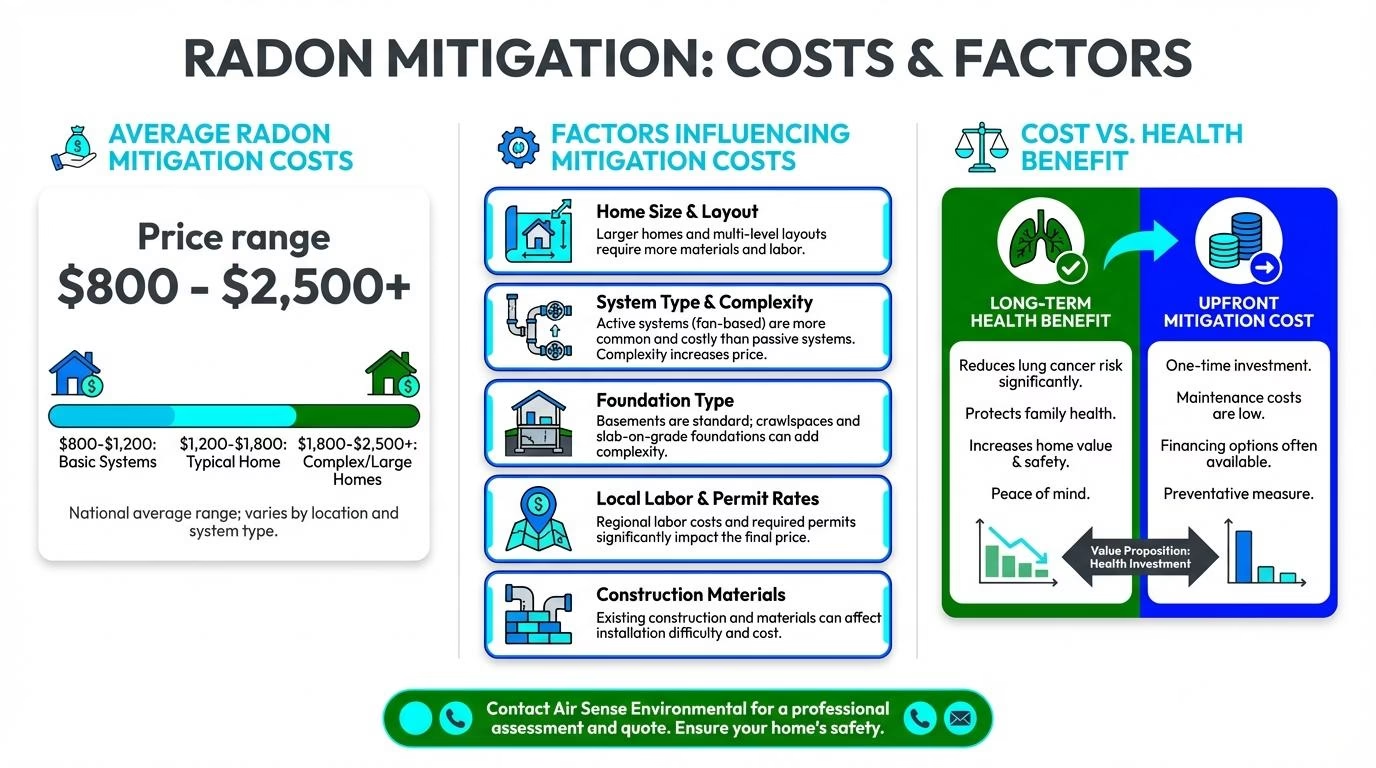
For a standard residential property, the cost for a radon reduction system typically ranges from $800 to $1,500+. While this is an additional expense, it is a permanent investment that significantly lowers the risk of lung cancer associated with long-term radon exposure.
Factors Affecting Mitigation System Pricing
Not every home requires the same setup. Several variables can influence whether your final quote falls on the lower or higher end of the price spectrum:
- Foundation Type: Homes built on a slab or over a basement are generally easier to mitigate. Properties with crawlspaces often require soil suction and plastic encapsulation, which increases both labor and material costs.
- System Design: An exterior installation (where the pipe runs up the side of the house) is usually more affordable than an interior installation, which involves routing pipes through closets or the attic for better aesthetics.
- Number of Suction Points: Large homes or homes with fragmented foundations may require multiple suction points to effectively pull radon from beneath the entire footprint.
- Fan Power: Depending on the soil density beneath your home (clay vs. gravel), a more powerful, specialized fan may be necessary to achieve the required pressure field extension.
Radon Testing and Total Home Health Environments
In the St. Louis area, we understand that a home is more than just four walls; it is a complex ecosystem. While determining the radon testing cost is often the first step for concerned homeowners, it is important to view this as one vital piece of a larger puzzle. A truly healthy home requires a holistic approach that addresses air quality, water mitigation, and moisture control simultaneously.
Moisture and radon often share the same entry points, such as foundation cracks and porous concrete. High humidity levels in a basement or crawl space can exacerbate indoor air quality issues, creating an environment ripe for mold growth and structural decay. By integrating crawl space encapsulation or moisture management with your radon strategy, you create a comprehensive barrier against environmental hazards.
Furthermore, for those on private wells, considering the potential for radon in water is essential. Radon gas can be released into your home’s air through everyday activities like showering or running the dishwasher, making water mitigation a necessary component of your safety plan.
Our mission at AirSense Environmental is to provide St. Louis families with the peace of mind that comes from a professional, data-driven assessment. Investing in professional testing today prevents the long-term physical and financial costs associated with environmental hazards.
Contact our St. Louis radon experts today for a professional, continuous electronic radon monitor test.
Radon Testing and Mitigation FAQs
How much should a radon inspection cost?
A professional radon inspection typically costs between $150 and $300. This price can fluctuate based on the size of the home, the number of foundation types present, and whether the test is bundled with other environmental inspections. Standalone tests using continuous electronic monitors often sit at the higher end of this range due to the sophisticated technology and detailed data reports provided.
What questions should I ask a radon mitigation company?
Verify that the company holds current state certification and carries specific liability insurance for radon work. Ask about their diagnostic process, specifically how they determine the best location for suction pits and the appropriate fan size for your home’s unique soil or sub slab conditions. It is also important to confirm they provide a follow up test to guarantee the system is performing as intended.
Can I get a free radon test kit?
Free or low cost radon test kits are sometimes available through state health departments or local non profit organizations, especially during National Radon Action Month in January. These kits are usually passive charcoal canisters meant for basic screening. While helpful for a preliminary check, they lack the tamper resistance and hourly data analysis provided by professional grade electronic equipment.
Does a home inspection typically include radon testing?
A standard home inspection generally focuses on the physical structure and mechanical systems of a house and does not include radon testing by default. Most buyers must request a radon test as an additional service. Because radon levels can change based on seasonal conditions and soil movement, adding a professional test to your inspection period is a critical step in a real estate transaction. Securing an accurate reading is the only way to confirm the air you breathe every day is safe.
Secure Your Home With Professional Radon Testing
Contact our St. Louis radon experts today for a professional, continuous electronic radon monitor test to ensure your family’s safety with the highest level of accuracy. Working with a certified team for professional radon mitigation services ensures that any detected issues are addressed with precision and long term reliability.