The Ultimate Guide to Water Damage Restoration in St. Louis 2026
When disaster strikes your St. Louis home, immediate and expert action is the critical factor in saving your property and safeguarding your family’s health. This comprehensive guide details everything you need to know about navigating water damage recovery, from the essential first call to successful rebuilding.
You will learn why immediate response—often within 60 minutes—is necessary to contain damage, the exact technical phases involved in professional mitigation versus full restoration, and how to assess contamination levels, noting that hazards range from Category 1 (clean) to Category 3 (sewage). We will also provide strategies for documenting your loss for insurers and navigating the financial landscape of claims, ensuring you avoid common communication pitfalls. Beyond the immediate crisis, discover how to tailor restoration techniques for St. Louis’s unique architectural styles, including managing porous materials in older homes and addressing pervasive basement flooding. Finally, understand the long-term measures required to maintain healthy indoor air quality and prevent recurrence, allowing you to move confidently toward full property recovery.
Emergency Water Damage Response in St. Louis
24/7 Availability for Local Emergencies
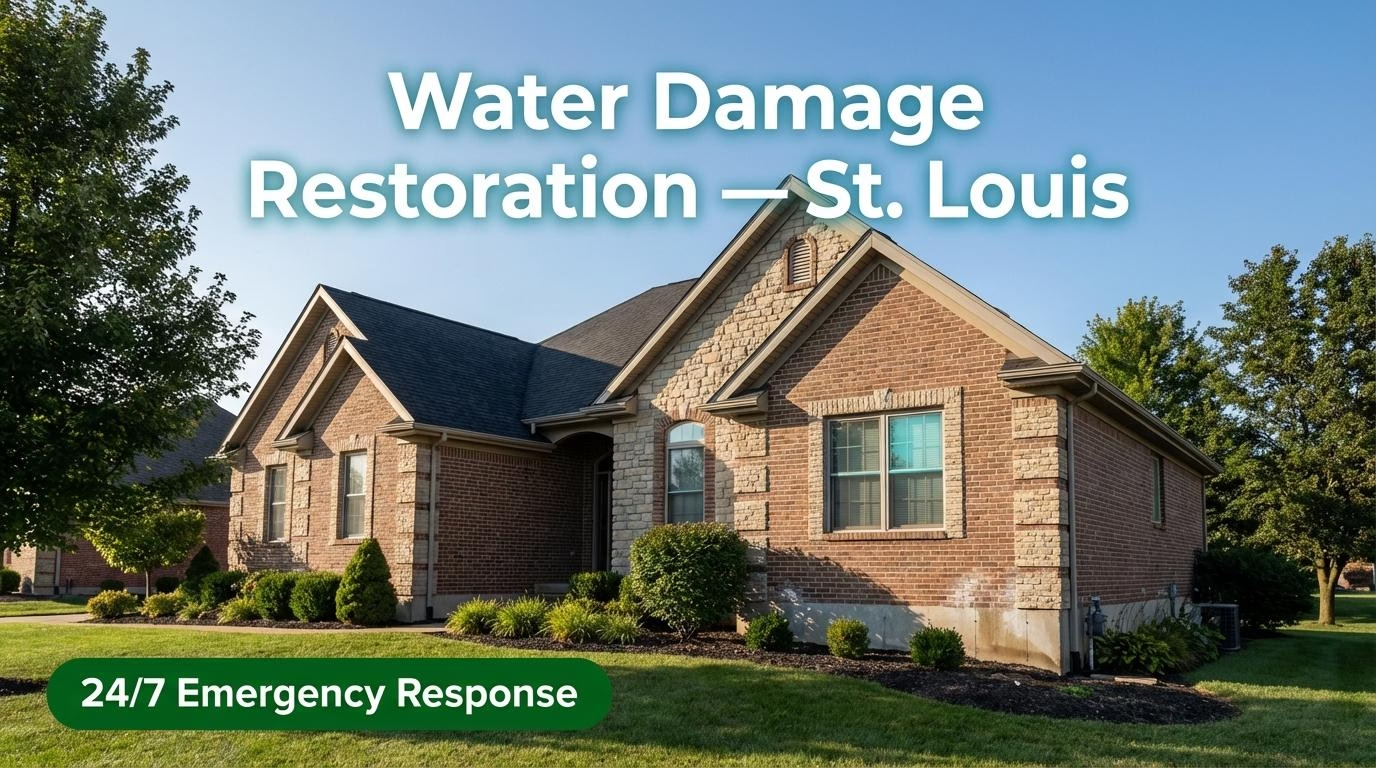
We provide 24/7 emergency water damage restoration for all St. Louis residents. Pipe bursts and flash floods do not follow a standard schedule, which is why our experts are always on standby. You can reach our local dispatch team any time of day or night.
Rapid Response and Arrival Times
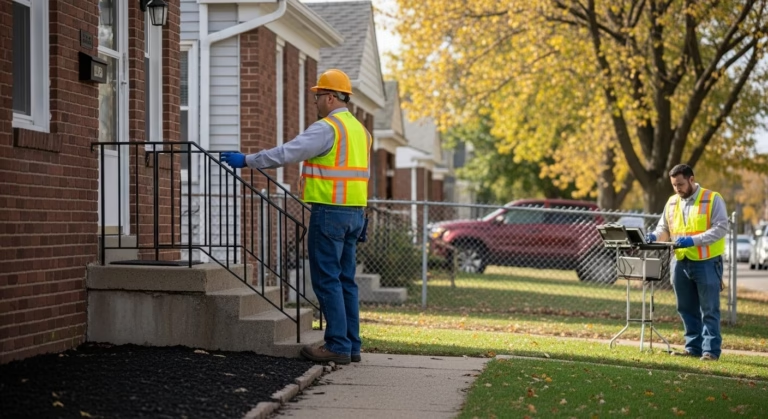
When your property is taking on water, every second counts to prevent permanent structural decay. We guarantee a 60-minute arrival at your location to begin the professional water remediation process.
Our team arrives fully equipped to stop the water source and begin immediate extraction. This rapid intervention is the most effective way to minimize repair costs and protect your home from long-term mold growth.
Professional Mitigation and Restoration Standards
In the world of property recovery, following established protocols is the difference between a successful recovery and long-term structural failure or mold growth. At AirSense Environmental, we adhere strictly to the IICRC S500 Standard, which is the industry-recognized benchmark for professional water damage restoration. These standards ensure that every step—from initial extraction to final moisture verification—is handled with technical precision to protect the health of St. Louis residents and the integrity of their homes.
Identifying the Source and Containing the Damage
The first step in any professional response is identifying the category and class of water damage. Per IICRC guidelines, water is categorized based on its cleanliness (Category 1 being “clean” water and Category 3 being “black” water containing pathogens). The class of damage refers to the evaporation rate based on the materials affected.
To prevent the situation from escalating, our technicians focus on:
- Source Identification: Ensuring the leak, burst pipe, or seepage is fully stopped.
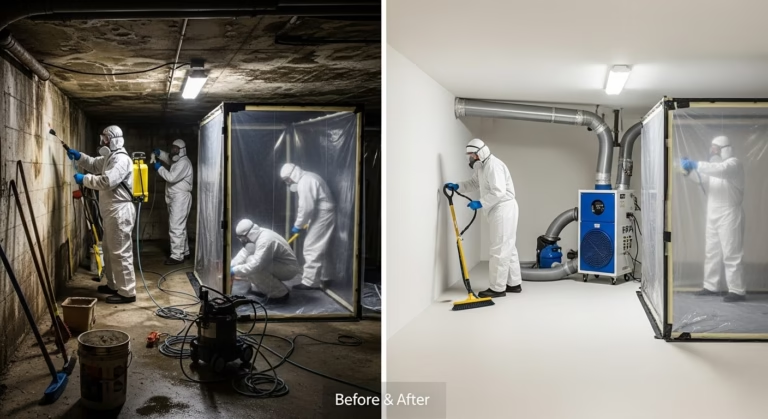
- Containment: Using physical barriers to prevent cross-contamination of moisture and potential mold spores into unaffected areas of the home.
- Safety Assessments: Checking for electrical hazards and structural compromises that often accompany significant water intrusion.
The Water Mitigation vs. Restoration Phases
It is vital for homeowners to understand the distinction between these two phases. Water mitigation is the emergency response designed to prevent further damage. This includes water extraction, removal of unsalvageable materials (like saturated carpet pad), and the application of antimicrobials. Utilizing professional water mitigation services during the first 24 to 48 hours is critical to minimizing the overall loss.
The transition point occurs once the structure has reached its “dry standard”—a pre-determined moisture level that mimics the dry materials in an unaffected part of the building. Once the environment is stabilized, sanitized, and dry, the mitigation phase ends and the restoration phase begins. Restoration focuses on the permanent repair and reconstruction of the property, such as hanging new drywall, installing flooring, and painting, to return the home to its pre-loss condition.
Industrial Drying Equipment and Monitoring
Effective drying requires more than just opening windows or using household fans. We employ industrial-grade equipment to manage the thermodynamics of the indoor environment. By controlling airflow, temperature, and humidity, we “force” moisture out of structural elements.
Key equipment used in this process includes:
- Low Grain Refrigerant (LGR) Dehumidifiers: These remove water vapor from the air more efficiently than standard units, preventing secondary damage like wood warp or mold.
- High-Velocity Air Movers: Positioned strategically to create “vortex” airflow across wet surfaces, accelerating evaporation.
- Moisture Meters and Thermal Imaging: We use non-invasive moisture sensors and infrared cameras to “see” behind walls and under floors, ensuring no hidden pockets of moisture remain.
Daily monitoring is a requirement of IICRC standards. Our team documents moisture readings every 24 hours to track progress, adjusting equipment placement as needed until the structural drying goals are met.
Assessing Water Contamination and Mold Risks
Properly identifying the type of water and the extent of its intrusion is the first step in any successful water damage restoration St. Louis project. At Air Sense Environmental, we categorize water damage according to industry standards to ensure the safety of both our technicians and your family.
Understanding Water Categories and Hazards
The IICRC S500 standard classifies water into three distinct categories based on its level of contamination. Identifying these categories immediately dictates the safety protocols, personal protective equipment (PPE), and disposal methods required for the water remediation process.
| Water Category | Common Sources | Contamination Level | Safety & Restoration Protocols |
| :— | :— | :— | :— |
| Category 1 (Clean Water) | Broken supply lines, tub overflows (no suds), melting snow. | Sanitary source; poses no immediate risk if handled quickly. | Focused on extraction and rapid drying. Materials can often be salvaged. |
| Category 2 (Grey Water) | Dishwasher/washing machine discharge, toilet overflow (urine only). | Significant contamination; may contain chemicals or microbes. | Requires biocides for sanitization. Porous materials (like pad) often require disposal. |
| Category 3 (Black Water) | Sewage backups, river/stream flooding, stagnant water with growth. | Grossly contaminated; contains pathogenic and toxigenic agents. | High-risk. Extensive PPE required. Most porous materials (drywall, carpet) must be removed and disposed of as biohazard. |
Source: IICRC S500 Standard for Professional Water Damage Restoration.
Precision Moisture Mapping and Mold Prevention
Simply “feeling” for wet spots is insufficient for a comprehensive restoration. We utilize non-invasive thermal imaging cameras to detect temperature differentials behind walls and under floors. This advanced technology allows us to visualize moisture pockets that are invisible to the naked eye without needing to tear into your structural materials prematurely.
To understand the stakes of hidden water, consider this CONSEQUENCE of inaction:
- Action: Leaving hidden moisture pockets untreated behind drywall or under cabinetry due to a lack of professional moisture mapping.
- Consequence: This creates a prime environment for rapid mold proliferation, structural rot, and a significant, permanent decline in your home’s indoor air quality.
By mapping the exact “migration path” of the water, we can target our drying equipment precisely, preventing the secondary damage of mold growth before it starts.
Post-Restoration Air Quality and Disposal
A logical progression from moisture mapping is the management of the air itself. When water evaporates, it can carry particulates, odors, and fungal spores into the breathing zone. This is why our indoor air quality testing and mitigation protocols are integrated into the restoration phase.
In Category 2 and 3 losses, contaminated materials like saturated insulation and drywall act as “spore reservoirs.” These items must be carefully bagged and removed following strict disposal guidelines to prevent cross-contamination. During and after this disposal, we deploy HEPA-filtered air scrubbers to capture airborne contaminants, ensuring that once the structure is dry, the air is clean and safe for your family to breathe.
Tailoring Restoration for St. Louis Home Architecture
St. Louis is defined by its rich architectural history, but the same features that provide charm also present unique challenges during water damage restoration in St. Louis. From the iconic red brick of Soulard to the ornate Victorian estates in Lafayette Square, historic properties require a specialized approach to prevent permanent structural degradation. According to a 2023 report by Construction Coverage, the median age of housing stock in the St. Louis metro area is 49 years, significantly older than many Sun Belt cities. This aging infrastructure often lacks modern vapor barriers, making professional intervention critical.
Managing Porous Materials in Historic STL Neighborhoods
The “St. Louis brick” found throughout the city is famously durable but highly porous. In neighborhoods like Soulard and Benton Park, water from a burst pipe or heavy rain doesn’t just sit on the surface; it wicks into the masonry through capillary action.
- Soft Red Brick: Older bricks were often fired at lower temperatures, making them more susceptible to “spalling” (crumbling) if moisture is trapped during a freeze-thaw cycle.
- Old-Growth Timber: Historic homes often feature large-dimension lumber that, while structurally superior to modern pine, can hide deep-seated moisture that leads to dry rot if not dried with high-velocity air movers and industrial dehumidifiers.

Basement Flooding and Sewage Backup Solutions
Many St. Louis residences, particularly in South City and the Central West End, utilize combined sewer systems that can become overwhelmed during the heavy spring rains typical of the Midwest. This often results in category 3 “black water” intrusions, which are highly unsanitary and require specialized biohazard remediation.
Historic basements often feature limestone foundations and earthen floors that lack modern drainage systems. Unlike a modern concrete slab, these materials require careful sanitization to ensure that bacteria and mold spores are not trapped within the irregular surfaces of the stone. Effective [water damage restoration in St. Louis](https://airsenseenvironmental.com/water-remediation/) for these basements includes antimicrobial treatments specifically formulated for porous organic materials.
Considerations for Landmark and Historic Properties
For homeowners in designated historic districts, restoration is not just about drying out; it is about compliance. Any exterior alterations or significant repairs to historic elements must often align with the strict preservation guidelines set by the [City of St. Louis Cultural Resources Office (CRO)](https://www.stlouis-mo.gov/government/departments/planning/cultural-resources/reviews/index.cfm).
When dealing with a landmarked property, we prioritize non-destructive drying techniques. This includes:
- Injectidry Systems: We use specialized equipment to push air behind lath-and-plaster walls without tearing down original 19th-century finishes.
- HEPA Filtration: To protect original woodwork and vintage air ducts from mold cross-contamination during the drying process.
- Material Sourcing: If materials are unsalvageable, we work to ensure replacements match the historical integrity required by local preservation boards.
Navigating the Insurance Claims Process
Filing an insurance claim for water damage restoration in St. Louis can be as overwhelming as the damage itself. According to the Insurance Information Institute (I.I.I.), approximately 1 in 60 insured homes files a claim for water damage or freezing annually, making it one of the most frequent types of property loss. Understanding how to navigate this system is the key to ensuring your repairs are fully funded and completed quickly.
Documentation and the Role of the Adjuster
The success of your claim hinges on the quality of your initial documentation. When an insurance adjuster visits your property, their job is to evaluate the scope of the loss on behalf of the carrier. To avoid common pitfalls like underpayment or claim denial, you must provide an undeniable paper trail of the event.
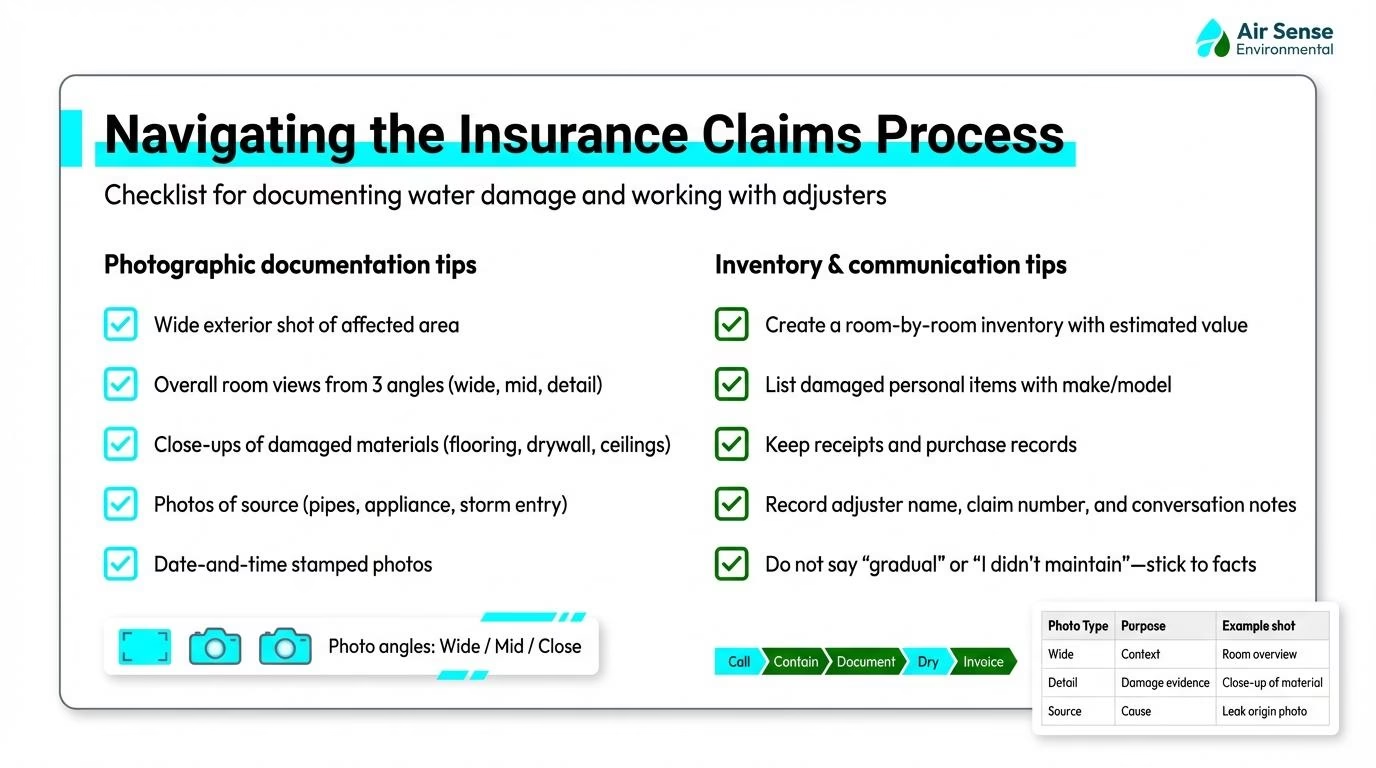
Checklist for homeowners on how to document property damage:
- Capture Visual Evidence: Take high-resolution photos and videos of the standing water, the point of origin (e.g., a burst pipe), and all affected personal belongings.
- Log the Timeline: Record the exact date and time the damage was discovered and the steps you took immediately to mitigate further loss.
- Inventory Damaged Items: Create a detailed list of impacted items, including their approximate age, purchase price, and brand.
- Save Physical Proof: If a failed appliance or pipe caused the issue, keep the faulty part for the adjuster to inspect.
- Maintain a Contact Log: Record every conversation with your insurance company, including the names of representatives and the claim number.
By handing over a comprehensive water remediation documentation package, you significantly reduce the risk of the “he-said, she-said” disputes that lead to claim delays.
Communication Etiquette: What to Avoid Saying
Precision in language is critical when speaking with your insurance provider. Many homeowners inadvertently use terms that trigger an automatic claim denial based on policy exclusions.
The most common error is misusing the word “flood.” In the insurance industry, a “flood” specifically refers to rising water from an outside source (like a river overflowing or heavy rain accumulating on the ground). Most standard homeowners’ policies exclude flood coverage unless you have a separate policy through the NFIP. If your damage was caused by a pipe burst or an appliance failure, always refer to it as “water damage” or a “sudden accidental discharge.”
Similarly, be careful with the term “surface water.” If you tell an adjuster that rain “seeped” through the foundation over several months, they may classify it as a maintenance issue or “seepage,” which is often excluded. Focus on the sudden and accidental nature of the event to ensure your claim aligns with standard coverage requirements.
Coordination and Direct Billing
At AirSense Environmental, we believe the restoration process should be a solution, not an added stressor. One of the primary ways we reduce homeowner anxiety is through coordination and direct billing.
Instead of forcing you to pay out-of-pocket and wait weeks for a reimbursement check, we work directly with your insurance carrier. Our team uses industry-standard estimating software (like Xactimate) that adjusters recognize and trust. By handling the line-item negotiations and submitting documentation directly to your adjuster, we ensure the water damage restoration in St. Louis meets all professional standards while keeping your financial burden to a minimum. This seamless coordination allows you to focus on returning your life to normal while we handle the technical and financial complexities of the recovery.
Long-Term Prevention and Seasonal Risk Management
Effective water damage restoration in St. Louis requires a dual approach: immediate mitigation and long-term preventative planning. Because the Gateway City is uniquely positioned at the confluence of major waterways, homeowners must look beyond simple repairs to manage the ongoing environmental risks inherent to the region.
St. Louis Weather Patterns and Seasonal Flooding
St. Louis property owners face a recurring threat dictated by the levels of the Missouri and Mississippi Rivers. During the spring thaw and heavy rainfall seasons, river stages often climb toward or exceed flood stage. Even if your property is not in a primary flood zone, high river levels raise the local water table, creating significant hydrostatic pressure against basement walls and floor slabs.
This pressure forces groundwater through porous concrete and foundation cracks, leading to seepage and structural instability. To protect your home’s foundation, it is critical to address these issues through professional water remediation services before seasonal shifts exacerbate existing vulnerabilities. Understanding that your basement’s health is directly tied to the regional watershed is the first step in proactive risk management.
Sump Pump Systems and Basement Waterproofing
A robust sump pump system serves as your home’s primary defense against rising groundwater. However, a standard pump alone is often insufficient during the volatile St. Louis spring storm season.
The primary reason for installing a sump pump battery backup is the high frequency of power outages during severe thunderstorms. In St. Louis, the exact moment you need your sump pump most—during a torrential downpour—is also when the electrical grid is most vulnerable. A battery backup ensures that:
- The system continues to pump water even if a transformer fails.
- High-volume water entry is managed by a secondary pump (in many dual-pump configurations).
- Property owners have peace of mind during overnight storms.
For homes with crawl spaces, encapsulation provides an additional layer of protection. By sealing the area with a heavy-duty vapor barrier and integrating it with a drainage system, you can prevent the humidity-driven mold growth and wood rot that often follow seasonal moisture spikes.

Resident Relocation and Project Financing
When severe water intrusion occurs, long-term recovery may involve more than just mechanical fixes. In cases of extensive mold contamination or structural compromise, resident relocation might be necessary to ensure the safety of the household during the remediation process. Professional restoration experts prioritize air quality and structural integrity, often recommending temporary vacancy while heavy equipment and industrial drying agents are in use.
Because comprehensive mitigation can be a significant investment, many St. Louis homeowners explore project financing. Treating these costs as a long-term recovery strategy allows for the implementation of permanent solutions—such as foundation piering or advanced waterproofing—rather than temporary “band-aid” fixes. Investing in high-quality restoration today prevents the compounding costs of recurring water damage and preserves the market value of your property.
Integrating Moisture Control with Indoor Environmental Standards
Professional restoration involves more than just extracting standing water; it requires a comprehensive approach to indoor environmental health. Once the visible water is gone, the focus must shift to the invisible factors—humidity levels, mold spores, and soil gases—that determine whether a home is truly safe for occupancy. Bridging the gap between structural drying and long-term respiratory safety is the final, critical step in the restoration process.
The Intersection of Humidity and Air Quality
The primary byproduct of lingering moisture is a decline in indoor air quality (IAQ). When porous materials like drywall and wood remain damp, they become breeding grounds for mold and bacteria. These biological contaminants release spores and volatile organic compounds (VOCs) that can trigger severe respiratory issues, particularly for residents with asthma or compromised immune systems.
When managing long-term moisture, the Environmental Protection Agency (EPA) recommends keeping indoor relative humidity between 30% and 50%. Staying within this range is essential because:
- Above 60%: Mold growth accelerates, and dust mite populations thrive.
- Below 30%: Dry air can irritate the respiratory tract and increase susceptibility to infections.
Effective water damage restoration in St. Louis must include high-capacity dehumidification to pull deep-seated moisture from the building envelope, ensuring that the “dry standard” is met not just on the surface, but within the air itself.
[insert infographic here: The relationship between relative humidity and biological growth]
Total Home Health: Water, Air, and Soil Gas
The environmental safety of a home is also dictated by the ground beneath it. In the St. Louis region, the heavy clay-rich soil creates a unique challenge for homeowners. Because clay is dense and holds water effectively, saturated soil during a flood or heavy rain creates significant hydrostatic pressure against the foundation.
This pressure does more than cause basement leaks; it also influences the migration of soil gases, specifically radon. Radon is a naturally occurring radioactive gas that moves from the soil into the home through cracks in the slab, foundation joints, and—most commonly—open sump pits.
The interaction between moisture and radon is a critical safety consideration:
- Soil Saturation: When soil is waterlogged, radon gas cannot easily escape into the atmosphere. Instead, it is forced toward the relatively low-pressure environment of your basement or crawlspace.
- The Stack Effect: As warm air rises and escapes through the top of the home, it creates a vacuum that pulls both moisture and radon up from the ground.
- Sump Pump Vulnerability: Sump pumps are essential for water mitigation, but an unsealed sump lid can act as a direct “chimney” for radon gas entry.
By integrating moisture control with soil gas mitigation—such as installing sealed sump covers and vapor barriers—restoration experts ensure that the home is protected against both water intrusion and the long-term health risks associated with radon exposure.
Validating Professional Credentials and Restoration Standards
In the high-stakes environment of water damage recovery, trust is the most critical factor. When your property is saturated, you need more than just a contractor with a shop vac; you need a certified professional who adheres to the rigorous standards of the restoration industry. For St. Louis homeowners, verifying these credentials is the only way to ensure the structural integrity of your home is restored and that secondary issues like black mold are effectively prevented.
IICRC Certification and Licensing
The gold standard for the restoration industry is certification through the IICRC (Institute of Inspection, Cleaning and Restoration Certification). This non-profit organization sets the global standards for professional cleaning and restoration. When vetting a St. Louis contractor, ensure their technicians hold the following specialized certifications:
- WRT (Water Damage Restoration Technician): This certification ensures the technician understands the science of drying. It covers the categories of water (clean, gray, or black), classes of water loss, and the specialized equipment needed to extract moisture from various materials.
- ASD (Applied Structural Drying): This is an advanced certification focused on drying the entire structure, including complex wall cavities, subfloors, and heavy timber. An ASD-certified professional knows how to utilize airflow, temperature, and dehumidification to dry a building without unnecessary demolition.
In addition to IICRC credentials, a reputable St. Louis provider must be fully licensed, bonded, and insured. This protects the property owner from liability and ensures the company is recognized by local Missouri regulatory bodies.
Warranties and Written Service Contracts
For any professional restoration project in St. Louis, written warranties and service contracts are non-negotiable. A verbal estimate is insufficient when dealing with the complexities of water mitigation. A formal contract protects you by outlining the specific scope of work, estimated timelines, and the moisture levels that must be achieved before the project is considered complete.
A trustworthy contractor should offer a workmanship warranty. This guarantee confirms that the restoration was performed according to industry standards and that the company will stand behind their work if issues arise post-remediation. Before signing, ensure the contract explicitly mentions compliance with S500 standards (the professional standard for water damage restoration).
Evaluating Local Expertise and References
St. Louis architecture ranges from historic brick homes in Soulard to modern constructions in Chesterfield. Choosing a contractor with local expertise ensures they understand the specific building materials and climate challenges unique to the Gateway City.
When evaluating potential contractors, use the following criteria:
- Local Response Time: Do they have a physical presence in the St. Louis metro area to ensure a 24/7 rapid response?
- Verifiable References: Can they provide recent references from St. Louis homeowners who faced similar water damage scenarios?
- Insurance Coordination: Are they experienced in working with major regional insurance carriers to streamline the claims process?
- Equipment Quality: Do they utilize industrial-grade LGR (Low Grain Refrigerant) dehumidifiers and high-speed air movers?
- Transparency: Do they provide a detailed moisture map and daily drying logs to prove the property is returning to its “dry standard”?
By insisting on these professional standards, you ensure that your water damage restoration in St. Louis is handled with the technical precision required to keep your home safe and dry.
Frequently Asked Questions
How do I know if the water in my basement is contaminated?
Contamination levels are determined by the water source, following the Category 1-3 definitions outlined in our Assessing Risks section. Category 1 is “clean” water from broken supply lines. Category 2 (gray water) contains chemical or biological contaminants, such as dishwasher discharge. Category 3 (black water) is highly toxic, involving sewage or rising floodwaters. If you are unsure of the source, treat the area as Category 3 and contact AirSense Environmental for professional indoor air quality testing to ensure your home is safe.
How long does the water damage restoration process usually take?
Most water damage restoration projects in St. Louis require 3 to 7 days to complete. The initial 24 hours focus on water extraction and equipment setup. The following days are dedicated to structural drying and moisture monitoring. While simple leaks are resolved quickly, extensive sewage cleanup or structural repairs may extend the timeline. We provide a specific project schedule after our initial inspection to help you manage expectations.
Does homeowners insurance in St. Louis cover water damage?
Coverage typically depends on the source of the damage and your specific policy. Most standard homeowners insurance covers sudden and accidental water damage, such as a burst pipe. However, damage caused by rising ground floodwaters or sewer backups usually requires separate coverage or specific riders. We recommend contacting your agent immediately after a loss. Our team can assist by providing the professional documentation and moisture maps required for your insurance claim.
Is it safe to stay in my house during the water restoration process?
Safety depends on the contamination category and the extent of the damage. While staying is usually safe for Category 1 clean water incidents, we advise vacating for Category 3 (black water) situations due to health risks. Additionally, the industrial air movers and dehumidifiers used for drying can be quite loud and generate significant heat. We will perform a safety assessment during our first visit and provide a recommendation based on the environment.
How can I prevent mold growth after a flood or leak?
Mold growth can begin in as little as 24 to 48 hours following moisture exposure. The most effective prevention is rapid water extraction followed by professional-grade dehumidification. For homes with chronic moisture issues or high humidity in lower levels, solutions like crawl space encapsulation provide long-term protection by keeping the area dry and inhospitable to mold spores. Maintaining indoor humidity below 50% is critical for ongoing prevention.
Water Damage Restoration FAQs
How long does the professional drying process typically take?
The professional drying process generally spans three to five days, though the specific timeframe depends on the volume of water and the density of the affected materials. Structural elements like hardwood flooring or thick subfloors may require additional time compared to standard drywall. Technicians use specialized moisture meters throughout this period to verify when the property has reached the dry standard necessary to prevent mold growth.
Will my homeowners insurance cover the costs of water damage restoration?
Standard homeowners insurance policies typically cover water damage that is sudden and accidental, such as a burst pipe or a water heater failure. Coverage is often denied for damage resulting from long term maintenance issues or gradual leaks that went unaddressed. Damage caused by rising groundwater or outdoor flooding usually requires a separate flood insurance policy through the National Flood Insurance Program.
What is the primary difference between water mitigation and water restoration?
Water mitigation is the immediate phase focused on containment and the prevention of secondary damage through water extraction and structural drying. Restoration is the subsequent phase that involves permanent repairs and rebuilding efforts, such as installing new drywall, painting, and replacing floor coverings. Mitigation stops the problem from getting worse while restoration returns the home to its pre loss condition.
Can I stay in my home while the industrial drying equipment is running?
You can typically stay in your home, but the environment will be significantly affected by the noise and heat generated by industrial air movers and dehumidifiers. These machines must run 24/7 to be effective, which can disrupt sleep and daily activities. In cases of extensive flooding or contamination, your insurance provider may cover the cost of temporary relocation if the home is deemed uninhabitable.
How do I know if the water in my basement is contaminated or safe?
Water is classified into three categories: clean water from supply lines, grey water from appliances like dishwashers, and black water which includes sewage or floodwater from rivers. St. Louis basements are particularly susceptible to Category 3 black water during heavy rains or sewer backups, which contains harmful pathogens and requires professional sanitation. Determining the specific category of the intrusion is the most critical step in ensuring the safety of your living environment.
Expert Water Damage Support in St. Louis
If your property has suffered a sudden leak or flood, expert intervention prevents long term structural decay and mold growth. Our team provides professional water mitigation services including a free inspection and 24/7 emergency response within 60 minutes for the entire St. Louis area.