Protecting your St. Louis home from radon gas requires more than just installing a system; it demands consistent oversight. You are responsible for ensuring the fan runs continuously, understanding the basic electrical costs, and recognizing when professional attention is needed.
This guide details how you can monitor the crucial pressure indicators within your system, assess the health of the core fan component, and maintain the physical seals necessary for effective suction. Furthermore, we cover performance verification through regular testing and address how the specific challenges of the Missouri climate might impact your operation, ultimately securing long-term radon reduction for your family.
Understanding Your Radon Mitigation System Maintenance Requirements
Maintaining a radon mitigation system is straightforward but essential for ensuring long-term protection against radioactive soil gas. Unlike other home appliances that you only turn on when needed, your mitigation system is a permanent safety feature that requires consistent oversight to remain effective.
The Essential Nature of Continuous Fan Operation
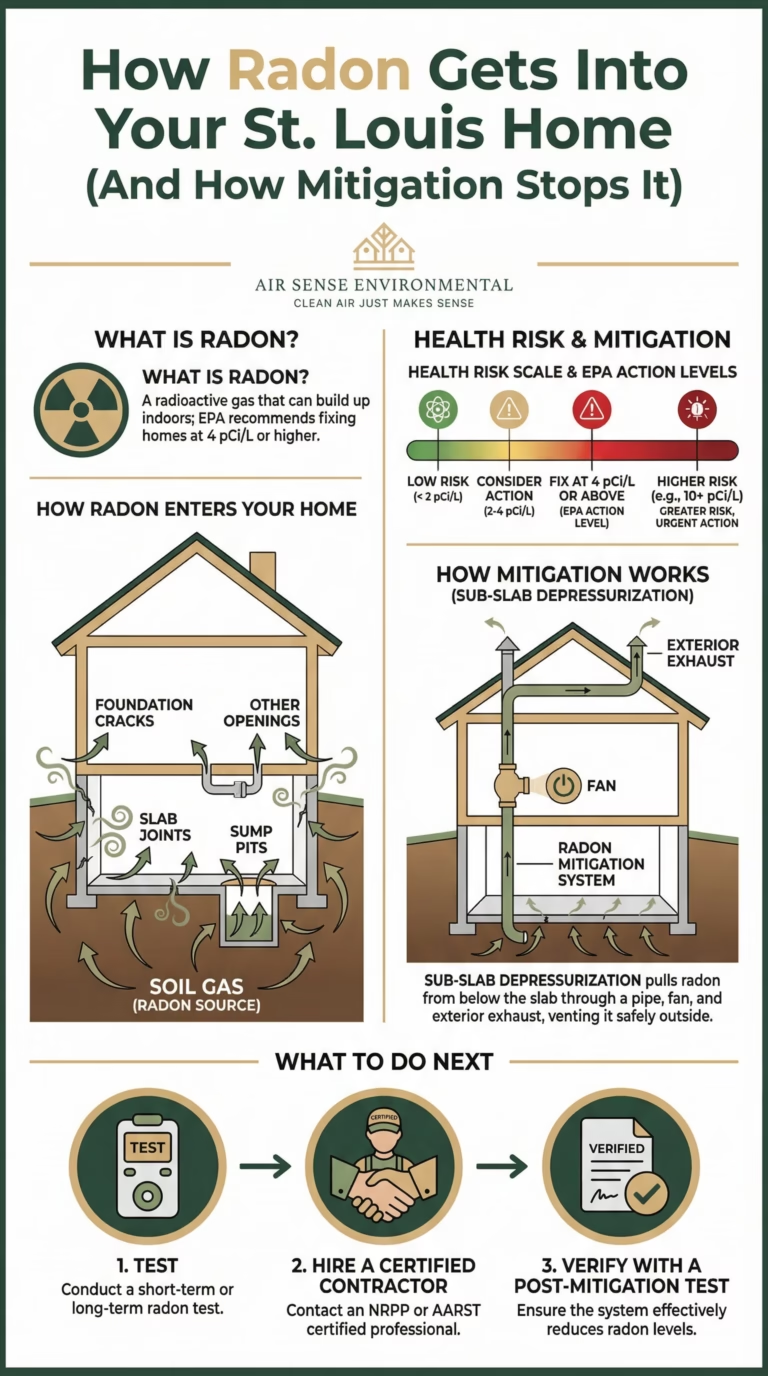
Your radon mitigation fan is designed to run 24/7 to maintain constant negative pressure under your foundation. This prevents radon gas from seeping into your living space. If the fan stops, gas can quickly accumulate to dangerous levels, compromising your indoor air quality and family’s safety.
| Appliance | Estimated Annual Electrical Cost |
| :— | :— |
| Radon Mitigation Fan | $50 – $100 |
| Standard Refrigerator | $150 – $200 |
| Single 60W Incandescent Bulb | $15 – $20 |
| 5-6 High-Efficiency LED Bulbs | $25 – $50 |
To ensure your system continues to operate at peak performance, homeowners should perform the following basic maintenance tasks:
- Check the U-Tube Manometer: Regularly inspect the clear tube on your system piping to verify the fan is creating suction.
- Listen for Noise Changes: Be alert for any new grinding, humming, or vibrating sounds coming from the fan.
- Inspect Exterior Piping: Ensure the discharge point is clear of bird nests, debris, or ice buildup during St. Louis winters.
- Monitor the Vent Stack: Confirm that the exhaust pipe remains securely attached to the structure.
- Schedule Periodic Testing: Perform a radon re-test every two years to confirm the system is still reducing levels effectively.
Estimates for annual electrical operating costs in the St. Louis area typically range from $50 to $100, depending on the specific fan model and local utility rates. Because these fans are engineered for high efficiency, they consume roughly the same amount of energy as a single 60-to-75-watt light bulb. This small investment provides a significant return in the form of a healthy, radon-safe home.
Reading the U-Tube Manometer and Monitoring Performance
Monitoring your radon mitigation system is primarily done through a simple diagnostic tool called a U-tube manometer. This gauge is typically mounted on the PVC suction pipe in your basement or utility area. It does not measure radon levels directly; instead, it measures the vacuum pressure (static pressure) created by the fan, confirming that air is being drawn from beneath your home’s foundation.
How to Read a U-Tube Manometer
Checking your system’s performance should be a monthly habit. To ensure your radon mitigation system is operational, follow these steps to perform a pressure check:
- Locate the Gauge: Find the clear, U-shaped tube attached to your vertical mitigation pipe.
- Observe the Liquid Levels: Look at the colored fluid (usually red or blue) inside the tube. A functioning system will have uneven liquid levels.
- Identify the "High" and "Low" Sides: Because the fan is pulling a vacuum, the liquid on the side of the tube connected to the pipe will be higher than the liquid on the side open to the room air.
- Calculate the Pressure Reading: Measure the distance between the top of the liquid in the left column and the top of the liquid in the right column. This difference—measured in inches of water column (WC)—is your system’s operating pressure.
- Compare to the Baseline: Check the sticker placed on the pipe by your installer. It should list the initial pressure reading. Your current reading should stay within about 0.25 to 0.5 inches of that original mark.
[insert diagram showing a U-tube manometer with uneven liquid levels labeled "Active" vs equal levels labeled "System Off"]
Troubleshooting a Zero Reading
If you look at your gauge and the liquid levels are perfectly level (sitting at zero on both sides), your system is not creating a vacuum. This indicates that the fan has stopped, or air is no longer being pulled through the pipe. First, check if the system fan has lost power by verifying that the vacuum switch is on and the circuit breaker hasn’t tripped. If the fan is humming but the gauge remains at zero, there may be a disconnection in the small plastic tubing leading to the manometer itself.
[insert photo of a manometer with level fluid highlighting the "0" mark]
Beyond a total failure, you should also monitor for significant shifts in the pressure reading. If the liquid level difference becomes unusually high, it often suggests a blockage in the pipe or a saturated soil condition. Conversely, a significant drop in pressure (while still above zero) usually indicates that the system seal has been compromised. This can happen if new cracks develop in the basement floor, the seal around the sump pump lid fails, or if a new utility line was installed through the foundation without being properly re-sealed. In these cases, your system is "leaking" room air into the suction point, reducing its ability to pull radon from the soil.
Managing Radon Fan Health and Longevity
The fan is the heart of your radon mitigation system. Because it must run 24/7 to maintain the pressure differential required to keep radon gas out of your home, it is subject to constant wear and tear. Monitoring the physical condition and sound of your fan is a critical part of radon mitigation system maintenance in St. Louis.
Identifying Unusual Fan Noises and Vibrations
Under normal conditions, a radon fan should produce a steady, low-level hum that is barely noticeable from inside the living areas. If you begin to notice a change in the acoustic profile of your system, it often signals an internal mechanical issue.
Common causes of fan noise include:
- Bearing Failure: A high-pitched squealing, grinding, or chirping sound usually indicates that the internal bearings are reaching the end of their life.
- Debris or Ice: A rattling or thumping sound may occur if debris (like a small stone or twig) has fallen into the fan housing or if condensation has frozen on the impeller blades during a St. Louis cold snap.
- Vibration Transfer: If the fan’s mounting brackets have loosened or the rubber couplings have hardened, vibrations can transfer into the home’s structure, creating a loud humming sound throughout the walls.
[insert chart: Radon Fan Noise Decibel Comparison – Normal Operation vs. Failing Bearings vs. Common Household Sounds]
Fan Lifespan and Replacement Indicators
Even with the best maintenance, mechanical components eventually fail. A high-quality radon fan typically has an average operational lifespan of 7 to 10 years.
While some fans may last longer, performance often degrades after the decade mark. You should consider a proactive replacement if you notice the fan housing is becoming excessively hot to the touch or if the U-tube manometer (which we will cover in the next section) consistently shows a drop in pressure despite the fan being powered on.
Why Fans May Struggle During Heavy Rain Events
In St. Louis, heavy spring rains can impact your system’s performance. Understanding the cause-and-effect relationship between weather and fan health can prevent unnecessary service calls:
- Soil Saturation: During intense rainfall, the soil beneath your slab becomes saturated with water.
- Increased Resistance: This moisture fills the void spaces in the soil, making it harder for the fan to "pull" air from beneath the foundation.
- Gurgling Sounds: You may hear a "gurgling" or "sloshing" sound coming from the pipe; this is the fan pulling air through water-logged soil or condensation.
- Thermal Overload: If the water levels are high enough to block the suction pipe completely, the fan may struggle to move air, causing it to work harder and generate excess heat. Most modern fans have a thermal cutoff switch that will temporarily shut the unit down to prevent a fire.
If your fan stops during a storm, wait for the ground to dry out. If it does not restart automatically once the water has receded, it may require a professional inspection or replacement from a licensed radon mitigation specialist.
Addressing System Seals and Structural Integrity
Maintenance isn’t just about the fan; the physical structure of your home and the system’s piping must remain intact to ensure long-term safety.
The Importance of Sealing Foundation Cracks
The effectiveness of a [radon mitigation](https://airsenseenvironmental.com/radon-mitigation/) system relies on creating a "sub-slab vacuum." If your foundation develops new cracks or if old seals fail, this vacuum is compromised.
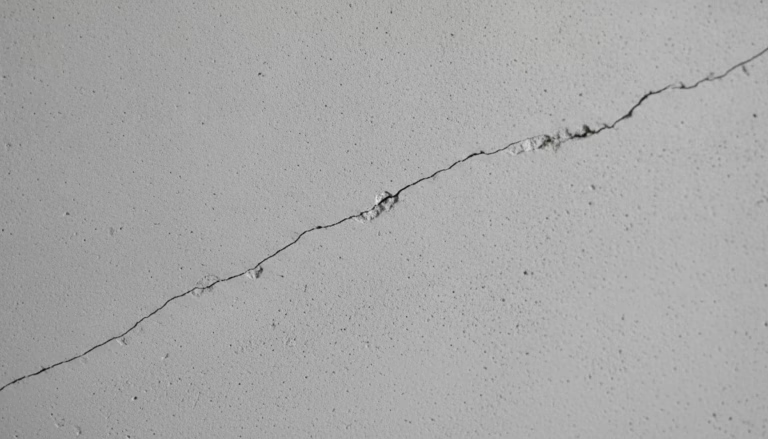
Air will follow the path of least resistance. If there are gaps in your basement floor or walls, the system will pull air from your living space instead of the soil beneath. This reduces the system’s ability to draw radon gas out of the ground.
Regularly inspect your basement floor, sump pump lids, and expansion joints. If you notice cracking, use a high-grade polyurethane caulk to restore the airtight seal and maintain peak performance for your radon mitigation system maintenance in St. Louis.
Dealing with Condensation and Water in Pipes
It is common for homeowners to see moisture inside their radon piping. It is important to understand that this water is usually not caused by a crack in the floor or a plumbing leak.
Condensation is a natural byproduct of moving soil air. Soil air is typically very humid, and as it moves through the cooler pipes of your system, moisture naturally collects on the inner walls.
A properly installed system is designed to handle this. All horizontal pipes should be sloped back toward the suction point, allowing moisture to drain safely back into the soil or your [sump pump system](https://airsenseenvironmental.com/service-area/st-louis-mo/).
[insert diagram showing proper pipe slope for moisture drainage here]
If you notice water dripping from joints or pooling in the pipe, it may indicate a loose connection or a shifting pipe. Ensure all hangers are secure and that the pipe maintains its downward pitch to prevent "gurgling" sounds or system blockages.
Seasonal Maintenance and the St. Louis Climate
St. Louis homeowners face a unique set of challenges due to the region’s extreme temperature swings. From humid, heavy summers to sub-zero winter blasts, your radon mitigation system must be resilient enough to handle local weather patterns. Regular seasonal upkeep ensures that the fan continues to draw soil gas effectively, regardless of the outdoor conditions.
Preventing Winter System Freeze-Ups
In the St. Louis area, ice buildup (or hoar frost) is the most common cause of system failure during the winter months. Because the air being pulled from beneath your slab is warm and moist, it can condense and freeze when it hits the frigid air at the vent termination point above your roofline.
If you notice a gurgling sound or see your U-tube manometer drop to zero during a cold snap, your stack may be restricted by ice. To manage this, ensure your system was installed with the correct pitch to allow condensation to drain back down toward the soil. Never attempt to "cap" the pipe in a way that traps moisture; instead, ensure the discharge point remains unobstructed by heavy snowfall or debris.
Seasonal Maintenance Checklist
To keep your home safe year-round, follow this quarterly maintenance schedule tailored to the Missouri climate:
| Season | Maintenance Focus Areas |
| :— | :— |
| Spring & Summer | • Check the Fan: Listen for unusual bearings noises after heavy spring thunderstorms.<br>• Inspect Exterior Piping: Ensure brackets haven’t loosened during the ground thaw.<br>• Examine Sealants: Check for cracks in floor polyurethanes as the foundation shifts with humidity. |
| Fall & Winter | • Monitor the Manometer: Check weekly to ensure the fan hasn’t been blocked by ice.<br>• Clear the Discharge: Ensure no autumn leaves or winter snow drifts are blocking the vent exit.<br>• Check for Backdrafting: Ensure your furnace and water heater are venting correctly as they work harder in the cold. |
[insert checklist graphic for seasonal radon maintenance here]
St. Louis Building Codes for Vent Termination
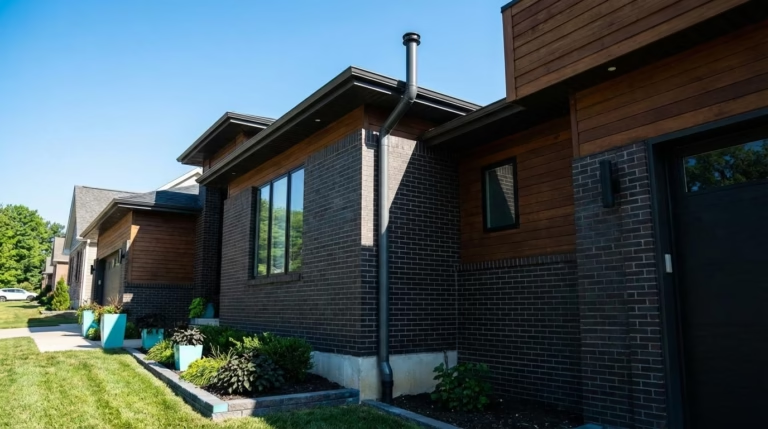
Proper maintenance also involves ensuring your system remains compliant with local standards and St. Louis building codes. In our region, radon vent pipes must terminate in a specific location to prevent "re-entrainment," which is when radon gas accidentally re-enters the home through an open window or vent.
Per local guidelines and the Missouri Department of Health and Senior Services – Radon, vent pipes must end:
- At least 10 feet above ground level.
- At least 2 feet above any window, door, or opening that is within 10 feet of the pipe.
- Above the roofline of the highest occupied level of the home.
Preparing Your System for Seasonal Shifts
As the seasons change, the stack effect—the process of warm air rising and escaping your home—changes the pressure dynamics of your basement. This shift can cause radon levels to fluctuate. When you transition from using the air conditioner to the furnace, it is a "best practice" to perform a DIY short-term test to verify that your mitigation system is still maintaining safe levels under the new pressure conditions.
By staying proactive with these checks, you ensure that your AirSense Environmental installed system continues to provide the highest level of protection against soil gas infiltration.
Retesting Protocols and Long-Term Effectiveness
Maintaining a radon mitigation system in St. Louis requires more than just listening for the fan; it requires a commitment to periodic verification. Because homes settle and environmental conditions shift, your initial post-installation test result is not a lifetime guarantee. Professional radon mitigation system maintenance ensures that your home remains a safe environment long after the initial installation.
Retesting Frequency and EPA Guidelines
The EPA recommendation for retesting is every two years, regardless of whether you have an active mitigation system in place. This biennial testing schedule is crucial because structural changes—such as new foundation cracks, basement renovations, or even significant seismic shifts—can alter the "stack effect" of your home and potentially bypass an existing system.
If you perform major renovations or install a new HVAC system, you should test immediately rather than waiting for the two-year mark. For homeowners in the St. Louis area, staying compliant with these guidelines is the only way to ensure your family’s long-term protection against the leading cause of lung cancer in non-smokers.
How Fast Radon Levels Drop After Mitigation
Once a professional mitigation system is activated, you do not have to wait weeks to see results. It is a standard expectation that radon levels will drop significantly within a 24-to-48-hour window. Modern sub-slab depressurization systems are highly efficient at rerouting soil gases before they ever enter your living space.
[insert timeline graphic showing radon level drop over 48 hours here]
After this initial 48-hour period, a post-mitigation test is performed to confirm the system is reaching the target level (ideally below 2.0 pCi/L). If levels do not drop within this assertive timeframe, it typically indicates a need for system adjustments, such as sealing additional bypasses or increasing fan capacity.
For a deeper dive into the technical requirements of these systems, refer to the EPA Consumer’s Guide to Radon Reduction. This guide outlines the standard protocols used by licensed professionals to ensure your home remains below the action level indefinitely. Continued radon mitigation system maintenance in St. Louis involves both this regular testing and the physical inspection of system components to ensure your indoor air quality never compromises your health.
Professional Servicing and Real Estate Considerations
Maintaining your radon system is a strategic financial move for St. Louis homeowners. By investing in professional oversight, you avoid the sudden, high costs associated with system neglect while simultaneously protecting your property’s long-term market value.
Professional Maintenance vs. System Failure Costs
The cost of a routine professional inspection is a small fraction of what you would pay if a system component fails entirely. For example, a radon fan that burns out prematurely due to a blockage or excessive moisture buildup can cost several hundred dollars to replace, plus the cost of emergency labor. In contrast, regular maintenance identifies these issues early—such as clearing debris from the exhaust or checking the integrity of the seals—extending the lifespan of the equipment significantly.
[insert table comparing annual maintenance costs vs. emergency fan replacement and re-testing costs here]
Benefits of routine service plans include:
- Reduced Repair Costs: Early detection of wear and tear prevents minor issues from escalating into total mechanical failures.
- Optimized Energy Efficiency: A clean, well-tuned system operates more efficiently, keeping your monthly utility costs lower.
- Documented Safety History: Having a paper trail of professional service is an invaluable asset during a home inspection.
- Priority Service: Many maintenance plans offer homeowners faster response times during extreme weather events or if the system alarm triggers.
Selling a St. Louis Home with a Radon System
In the current St. Louis real estate market, radon levels are a standard part of the contingency period during a home sale. If a home test reveals levels at or above 4.0 pCi/L, the seller is typically expected to cover the costs of mitigation before the sale can proceed. However, if your home already features professional radon mitigation services in St. Louis, you are already steps ahead of the competition. A well-maintained system signals to buyers that the property has been meticulously cared for, removing the fear of "hidden" environmental hazards.
A significant selling point for any local listing is a transferable warranty. When a radon contractor provides a warranty that stays with the property rather than the individual owner, it removes the buyer’s financial risk regarding future system repairs. During the closing process, always provide the new owners with all maintenance records and the original contractor’s explanation of the system’s operation. This transparency builds buyer confidence and helps ensure a smooth transition without last-minute repairs or negotiations.
The Intersection of Radon Mitigation and Water Intrusion Prevention
How Moisture Control Enhances Radon Reduction
Soil saturation plays a significant role in how gas moves beneath your home. When the ground is soaked from heavy rain, water fills the tiny air pockets in the soil, which can increase the pressure of soil gases like radon.
This pressure forces the gas to find alternative escape routes, often driving it through small cracks in your foundation or around the edges of a sump pit. High moisture levels often go hand in hand with radon spikes, making water management a priority.
The stack effect further complicates this relationship by acting like a vacuum for your house. As warm air rises and escapes through the upper floors, it creates lower pressure in the basement or crawl space. This pressure difference actively sucks both moisture and radon gas out of the damp ground and into your breathing air.
Proper radon mitigation system maintenance in St. Louis often involves ensuring your moisture barriers are intact. A well-maintained crawl space encapsulation system serves two purposes: it prevents mold growth and acts as a primary seal against radon entry.
Shared maintenance goals for these systems include:
- Sump Pump Inspection: Ensuring your pump is clearing water allows the radon system to pull air from the soil more effectively.
- Sealing Foundation Cracks: This prevents both liquid water intrusion and the "stack effect" from pulling in soil gases.
- Vapor Barrier Checks: Regularly inspecting liners ensures they haven’t been torn, which would compromise both moisture and radon control.
By keeping your foundation dry, you allow your mitigation fan to operate at peak efficiency. This integrated approach is the best way to maintain a healthy indoor air quality and protect your home from environmental hazards.
Frequently Asked Questions
Can I paint the exterior PVC vent pipe to match my home?
Yes, you can paint the exterior vent pipe to blend in with your home’s siding or trim. To ensure the paint adheres properly to the PVC, use a high-quality exterior spray paint formulated for plastics or a dedicated primer followed by exterior latex paint. Avoid painting the very top of the stack or any protective screens, as dried paint can block airflow and reduce the system’s efficiency.
What should I do if there is a power outage?
When the power goes out, your radon fan will stop running, and the liquid in your U-tube manometer will return to zero (level on both sides). You do not need to take any immediate action. Once power is restored, the fan should restart automatically. After the power returns, check your manometer to confirm the system is creating vacuum pressure again.
Why do I see "white smoke" coming from the vent pipe in the winter?
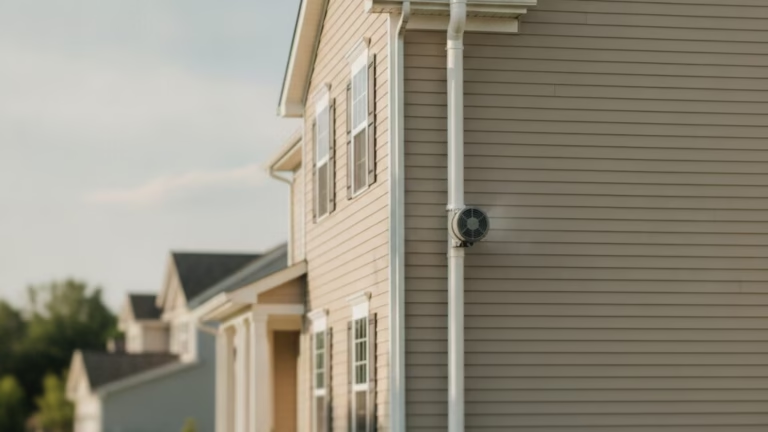
It is common for St. Louis homeowners to see what looks like white smoke or steam exiting the vent pipe during cold months. This is actually condensation or water vapor. The air being pulled from beneath your home is warm and humid; when it hits the freezing outdoor air, it creates a visible mist. This is a normal sign that your system is moving air effectively.
Can a radon fan be repaired, or does it need to be replaced?
Radon fans are sealed units designed for continuous operation. If the fan begins to make a loud grinding noise (indicating bearing failure) or stops spinning entirely, it must be replaced. Attempting to repair the motor or open the housing will void its UL listing and safety certifications. Most high-quality fans last 7 to 10 years before requiring replacement.
Does a radon mitigation system help reduce basement moisture?
Yes. Because the system creates a vacuum beneath the concrete slab, it frequently pulls out moisture and soil dampness before it can enter your basement. Many homeowners in the St. Louis area notice that their basements feel significantly less humid and smell less musty after a sub-slab depressurization system is installed.
[insert contact CTA for radon fan replacement services here]
Call to Action
Proactive radon mitigation system maintenance in St. Louis is the most effective way to guarantee your home’s air quality remains within safe limits year-round. While these systems are designed for longevity, routine professional evaluations ensure that every component—from the fan to the structural seals—is functioning at peak efficiency.
Ensure your home remains a safe haven. [Schedule a professional radon system inspection](https://airsenseenvironmental.com/contact/) and performance check with our licensed St. Louis experts today to verify your family’s protection.
[insert contact form or click-to-call button here]
Radon Mitigation Maintenance FAQs
Can I paint the exterior radon vent pipe to match my home?
You can certainly paint the exterior PVC pipe to match your home’s aesthetic. It is best to use a paint specifically designed for plastic or a high-quality exterior latex. Lightly scuffing the surface of the pipe with sandpaper before applying the paint will ensure better adhesion and a longer lasting finish.
Does the radon mitigation system continue to work during a power outage?
Your radon mitigation system requires a continuous electrical supply to power the suction fan. During a power outage, the fan will stop running and the vacuum seal under your foundation will be lost. While radon levels may rise during this time, the system will resume its job automatically once the electricity returns.
Is it normal to see steam or white vapor coming from the vent pipe in winter?
Seeing a plume of white vapor from the exhaust pipe during cold St. Louis winters is perfectly normal. This is simply the result of warm, humid air from beneath your home hitting the freezing outdoor air. If you notice ice completely blocking the pipe, however, it may require attention to prevent backpressure on the fan.
Can a radon fan be repaired, or does it always need to be replaced?
Radon fans are manufactured as sealed units to ensure no gas leaks into the living space. Because of this design, they are not serviceable. If the fan starts to grow excessively loud or stops spinning, a complete replacement is required to restore the integrity and safety of the mitigation system.
Will a radon system also help reduce moisture in my basement?
While the primary goal is gas removal, these systems often have the side benefit of reducing basement humidity. By extracting moisture-laden air from the soil before it enters your home, you may notice a decrease in that classic musty basement smell. Professional oversight ensures these benefits remain consistent throughout the year.
Protecting Your Home Investment
Ensure your home remains a safe haven for your family. Scheduling a professional radon system inspection and performance check with our licensed St. Louis experts today allows you to verify your protection is functioning at peak efficiency. Our team provides comprehensive professional radon mitigation services in St. Louis to give you the peace of mind that comes with a healthy living environment.