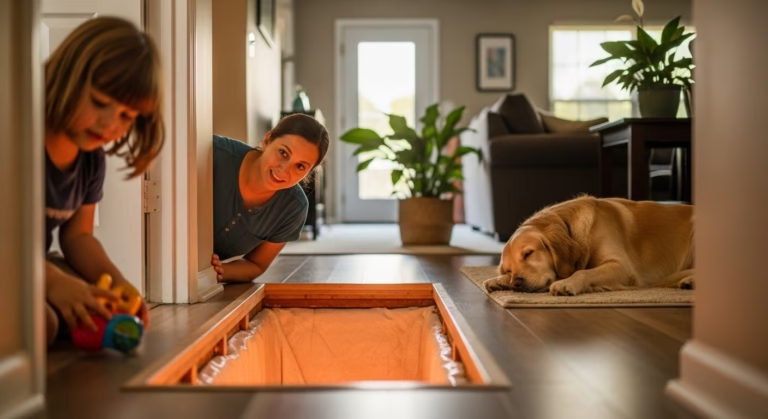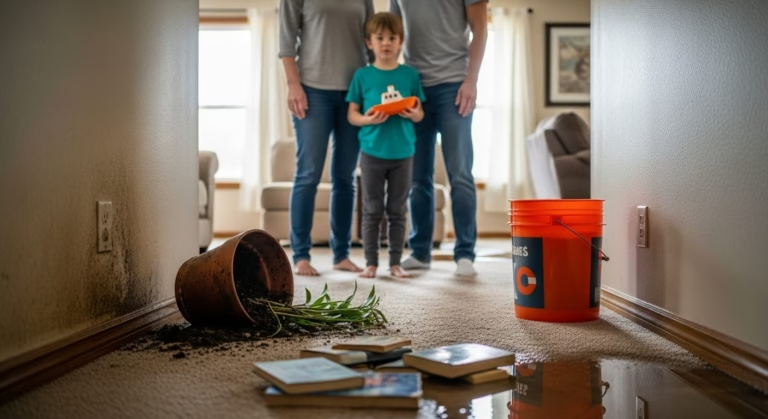
The Hendersons learned about saturated soil radon risk the hard way last April when their basement levels spiked to 11.2 pCi/L after three days of torrential rain flooded parts of Chesterfield, Wildwood, and Ballwin. Jake Lusby from Air Sense Environmental has seen this pattern dozens of times across west St. Louis County — heavy spring rains create hydrostatic pressure that forces radon through foundation cracks and overwhelms existing mitigation systems. His IEMA certification (#RNM20232346) and real-time continuous monitoring equipment help homeowners understand exactly how saturated soils change their indoor air quality.
What to Do After Heavy Rain in Chesterfield
- Test radon levels within 48 hours using continuous monitors, not basic charcoal tests
- Check basement and crawl space areas for new water intrusion or dampness
- Inspect existing radon mitigation system fans and pipes for damage or blockages
- Document any sump pump activity or unusual basement moisture patterns
- Schedule professional re-testing if initial levels exceed 2.0 pCi/L
- Contact certified radon professionals if your system shows performance changes
How Saturated Soils Increase Radon Entry
Heavy rainfall creates hydrostatic pressure in soil that fundamentally changes how radon moves through the ground. When soil moisture content exceeds 35%, water fills the air spaces that normally allow radon gas to disperse naturally underground. This forces radon to seek alternative pathways — typically through foundation cracks, sump pump pits, and floor drains.
The Missouri Geological Survey confirms that St. Louis County sits in EPA Zone 1, where bedrock contains elevated uranium levels that produce radon gas. During dry conditions, this gas moves slowly through soil pores and dissipates into the atmosphere. But when spring rains saturate the Menfro silt loam common throughout Chesterfield and western St. Louis County, radon concentrations can increase 300-400% in affected basements within 24-48 hours.
Saturated soil also reduces the effectiveness of sub-slab depressurization systems. These systems rely on creating negative pressure beneath concrete floors to draw radon away from homes. When groundwater rises and soil becomes waterlogged, the pressure differential that makes mitigation systems work becomes compromised. Water can block suction points, reduce airflow through drainage tile systems, and create new entry points where hydrostatic pressure cracks foundations.
Spring Radon Testing Chesterfield: Local Risk Factors
Chesterfield’s geography creates specific challenges for radon management during heavy rain periods. The area’s rolling hills and proximity to the Missouri River floodplain mean that neighborhoods like Wildhorse Creek, Kehrs Mill, and Baxter Acres experience varying drainage patterns that directly affect basement radon levels.
Homes built in the 1980s and 1990s throughout Chesterfield often have French drain systems that connect to sump pumps — a design that can become a radon highway during wet periods. The St. Louis County Department of Health reports that 40% of homes in this area test above 4.0 pCi/L during peak spring moisture conditions, compared to 28% during dry summer months.
Properties in Valley Park, Ellisville, and Manchester face additional risks due to their location in the Meramec River watershed. When the river rises during spring floods, groundwater tables in these areas can climb within 3-4 feet of basement floors. This creates a “bathtub effect” where radon becomes trapped in saturated soil and concentrates before entering homes through the path of least resistance.
The sandy loam soil common in parts of Des Peres and Kirkwood drains faster than the clay-heavy areas around Creve Coeur and Maryland Heights. However, this faster drainage can actually increase radon transport during the initial 24-48 hours after heavy rain, as water movement through soil pores carries dissolved radon gas toward foundation walls more efficiently.
Basement Radon Levels Spring Warning Signs
Monitor for radon concentration changes when your basement shows signs of moisture stress after heavy rain. Musty odors, condensation on windows, or white mineral deposits (efflorescence) on foundation walls indicate that hydrostatic pressure is driving groundwater through your basement envelope — the same pathways radon uses to enter your home.
Sump pump cycling patterns provide early warning signals for potential radon issues. If your pump runs continuously for more than 6 hours after rain stops, or if you notice the pit refilling faster than normal, saturated soil conditions may be compromising your radon mitigation system’s performance. Air Sense Environmental’s Jake Lusby recommends checking radon fan operation during these periods, as excessive moisture can affect motor performance and reduce system suction capacity.
Radon Remediation After Heavy Rain Solutions
Air Sense Environmental approaches post-rain radon issues by first identifying how water intrusion affects existing mitigation systems. Jake Lusby’s team uses continuous radon monitors that provide real-time data over 48-hour periods, revealing exactly how rainfall impacts indoor radon concentrations in specific homes.
Their sub-slab depressurization systems include waterproofing modifications designed for St. Louis County’s wet spring conditions. Instead of standard PVC suction points, they install sealed sumps with dedicated radon collection systems that continue working even when groundwater levels rise. The approach proved effective for the Henderson family in Chesterfield, whose post-rain levels dropped from 11.2 pCi/L to 0.8 pCi/L within 72 hours of system activation.
The company’s crawl space encapsulation services address both moisture and radon simultaneously — particularly valuable for homes in flood-prone areas like Valley Park and parts of Fenton. Their vapor barrier installations create an airtight seal that prevents both water vapor and radon gas from entering living spaces, while their dehumidification systems maintain optimal humidity levels that support mitigation system performance.
Chesterfield MO Indoor Air Quality Solutions Post-Storm
Protecting indoor air quality after heavy rain requires understanding how moisture affects multiple contamination pathways. Air Sense Environmental addresses the interconnection between water intrusion, radon entry, and overall basement air quality in west St. Louis County homes.
Their emergency response protocol includes immediate radon testing using continuous monitors, moisture assessment, and radon mitigation system maintenance to ensure existing systems continue operating at peak efficiency. For homeowners concerned about radon levels after spring flooding, they provide free consultations that include system performance evaluation and recommendations for protective measures during future rain events.
Contact Air Sense Environmental for immediate post-rain radon testing if you’ve experienced basement moisture issues or sump pump problems during recent storms. Their IEMA-certified professionals provide rapid response throughout Chesterfield, Wildwood, Ballwin, and surrounding communities.
Frequently Asked Questions
Does heavy rain really affect radon levels in Chesterfield basements?
Heavy rain significantly impacts radon levels in Chesterfield area homes due to saturated soil conditions. When soil moisture exceeds 35%, water blocks natural radon dispersion pathways and creates hydrostatic pressure that forces radon gas through foundation cracks and sump pump systems. Air Sense Environmental’s continuous monitoring data shows radon levels can increase 300-400% within 24-48 hours after heavy rainfall in west St. Louis County homes.
How long should I wait to test radon after spring flooding in my basement?
Test radon levels within 48 hours after water recedes using continuous monitors rather than basic charcoal tests. The immediate post-flood period reveals peak radon concentrations caused by saturated soil conditions. Air Sense Environmental’s 48-hour continuous monitoring provides real-time data that shows exactly how flooding affects your home’s radon levels, information that helps determine if remediation system modifications are needed.
Can existing radon mitigation systems handle increased levels during wet periods?
Standard mitigation systems may lose effectiveness during heavy rain periods when groundwater rises and soil becomes waterlogged. Saturated soil reduces the pressure differential that makes sub-slab depressurization work, and water can block suction points or damage fan motors. Air Sense Environmental designs flood-resistant systems with waterproof components and backup suction points that maintain performance even when groundwater tables rise near basement floor levels in areas like Valley Park and Fenton.