
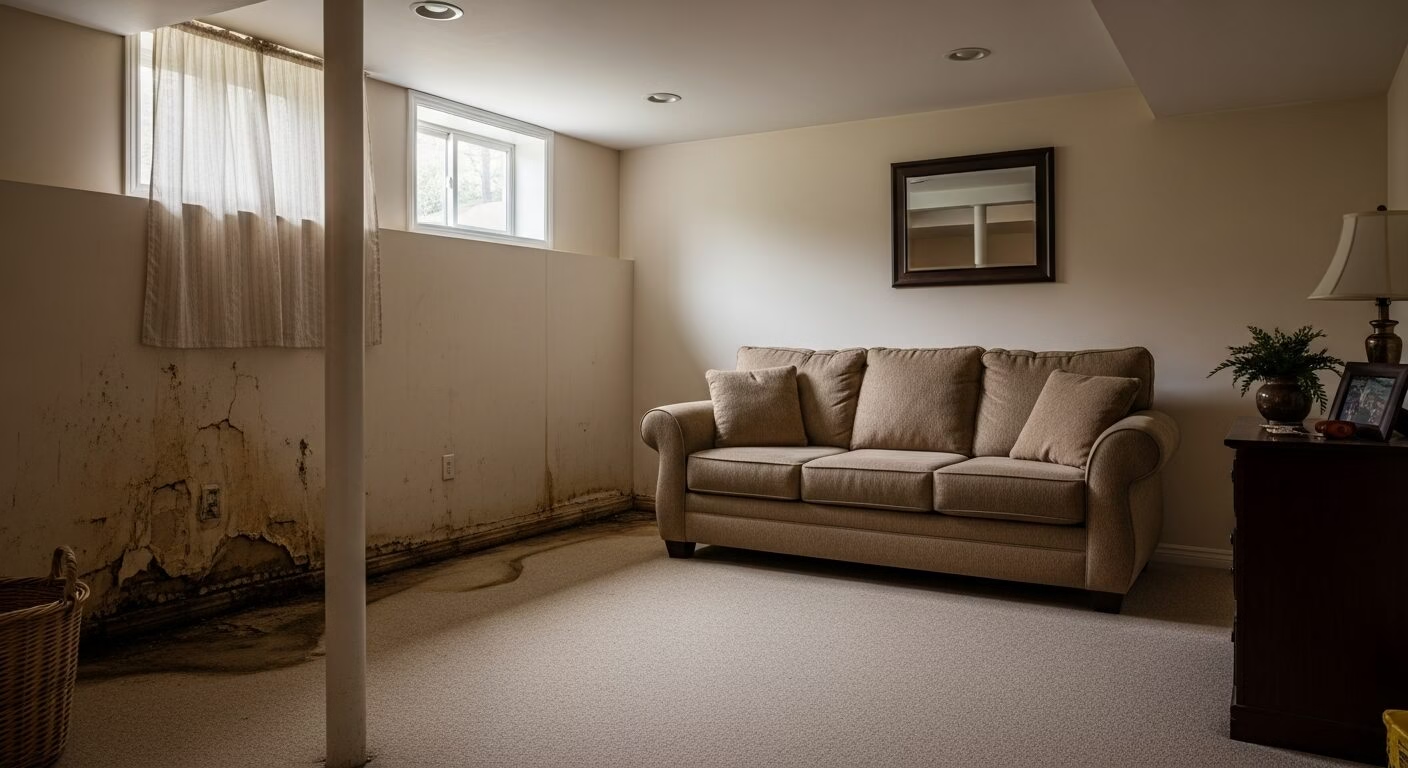
O’Fallon homeowners face unique spring basement challenges due to the area’s clay-heavy soil and rapid seasonal temperature swings that create perfect conditions for moisture intrusion, mold growth, and fluctuating radon levels. Air Sense Environmental serves O’Fallon homeowners dealing with spring moisture, basement, and radon concerns. Spring weather changes also affect radon concentrations as soil moisture levels shift, making this the ideal time for comprehensive basement protection planning.
When a spring test confirms elevated radon, radon mitigation in the St. Louis metro is the permanent fix, and it is one of the services Air Sense Environmental brings to O’Fallon homes.
What to Do for Spring Basement Protection in O’Fallon MO
- Test radon levels using 48-hour continuous monitors before spring storms arrive
- Install or service dehumidifiers to maintain humidity below 50% during Missouri’s humid spring months
- Inspect basement walls and floors for new cracks after winter freeze-thaw cycles
- Clean and test sump pumps before O’Fallon’s peak rainfall season in April and May
- Check crawl space ventilation and consider encapsulation if moisture signs appear
- Schedule indoor air quality testing to identify allergens and VOCs that spike during spring
Spring Weather Impact on O’Fallon Basement Conditions
O’Fallon’s location in St. Charles County creates specific spring basement challenges that differ from other St. Louis metro areas. The city sits on expansive clay soils that absorb winter snowmelt and spring rainfall, creating hydrostatic pressure against foundation walls. According to NOAA weather data, O’Fallon receives an average of 4.2 inches of precipitation in April and 4.8 inches in May, with spring storms often delivering intense rainfall that saturates the clay subsoil.
Clay Saturation and Radon Movement in St. Charles County
This clay saturation doesn’t just create moisture problems,it affects radon movement through soil. The EPA’s radon zone map places St. Charles County in Zone 1, indicating high radon potential. During spring, changing soil moisture levels can alter how radon gas migrates from bedrock through soil into homes. Wet clay acts as a barrier, potentially forcing radon to find new pathways into basements through foundation cracks or utility penetrations.
Spring Temperature Swings and the Stack Effect
Spring temperature fluctuations in O’Fallon also create stack effect changes in homes. When outdoor temperatures vary from 40°F at night to 70°F during the day, the pressure differential between basement and upper floors shifts constantly, affecting how air and radon move through the home’s envelope.
O’Fallon Basement Moisture and Neighborhood Risk Factors
O’Fallon’s diverse housing stock across different elevations creates varying basement moisture risks. Homes in lower-lying areas like Woodlands of Cottleville and Peruque Creek neighborhoods face higher groundwater pressure during spring runoff. These areas, built on Missouri River floodplain soils, experience seasonal water table fluctuations that can reach basement levels during wet springs.
WingHaven and Other Newer Subdivisions
The newer subdivisions in western O’Fallon, including WingHaven and Legends of O’Fallon, sit on higher ground but still deal with clay soil expansion and contraction. These homes, typically built in the 1990s and 2000s, often have basement foundation systems that weren’t designed for the extreme clay movement O’Fallon experiences. Missouri Department of Natural Resources soil surveys show that Mexico silt loam and Winfield silt loam soils dominate the area,both containing significant clay content that swells when wet.
1980s Homes in Established Neighborhoods
Established neighborhoods like Heritage of O’Fallon and Bryan’s Cave feature homes from the 1980s with basement waterproofing systems that may need updating. The concrete block and poured concrete foundations common in this era can develop hairline cracks after 30-40 years of clay soil movement, creating entry points for both moisture and radon gas.
Moisture and Indoor Air Quality
Spring basement moisture in O’Fallon also correlates with indoor air quality problems beyond just mold. The humid conditions create ideal environments for dust mites, bacteria, and chemical off-gassing from stored items. Basements that stay above 60% relative humidity during spring months often develop musty odors that indicate active microbial growth, even when visible mold isn’t present.
Warning Signs of Spring Basement Problems
O’Fallon homeowners should watch for specific indicators that signal basement moisture, air quality, or radon issues during spring months. Condensation on basement walls or windows during warm spring days often indicates inadequate vapor barriers or ventilation problems. This condensation frequently appears first on north-facing walls that stay cooler longer.
Musty Odors in Humid Weather
Musty odors that intensify during humid spring weather signal active mold growth, often in hidden areas like behind stored items or within wall cavities. The smell typically becomes more noticeable when basement doors are closed for several hours, then opened,a sign that poor air circulation is allowing moisture and contaminants to concentrate.
Efflorescence on Basement Walls
Efflorescence,white, chalky deposits on basement walls,appears more frequently during spring as groundwater pressure forces mineral-laden moisture through concrete. This isn’t just cosmetic; it indicates active water intrusion that can worsen over time and create conditions for mold growth and structural damage.
Allergy Symptoms in the Basement
Increased allergy symptoms when spending time in the basement during spring months often indicate elevated levels of airborne allergens, mold spores, or other indoor air quality problems. Many O’Fallon residents notice these symptoms worsen during April and May when outdoor pollen combines with indoor basement air quality issues.
Radon Testing O’Fallon MO During Spring Conditions
Air Sense Environmental’s approach to spring radon testing in O’Fallon accounts for seasonal soil moisture changes that affect radon concentrations. Jake Lusby uses continuous radon monitors that provide hour-by-hour readings, capturing how radon levels fluctuate during spring weather patterns. This detailed monitoring reveals whether radon problems worsen during specific conditions like heavy rainfall or rapid temperature changes.
The Model 5200 IAQ Monitor
The company’s Model 5200 IAQ Monitor simultaneously measures radon alongside other air quality parameters like humidity, temperature, and particulate matter. This comprehensive testing approach identifies connections between radon levels and overall basement air quality that single-parameter tests miss. For example, high humidity levels can indicate soil moisture conditions that correlate with increased radon infiltration.
An O’Fallon Customer Example
A recent O’Fallon customer, Sean G, praised Air Sense Environmental’s thorough approach after Jake’s team reduced his home’s radon levels from concerning levels to below 1.0 pCi/L. The mitigation system installation included careful attention to basement moisture control, recognizing that addressing radon effectively requires managing the overall basement environment. The team’s sub-slab depressurization system not only reduced radon but also helped control basement humidity by creating negative pressure beneath the foundation slab.
Same-Day Radon Test Results
Air Sense Environmental’s same-day radon test results in O’Fallon allow homeowners to make informed decisions quickly during the critical spring season. This rapid turnaround proves especially valuable when scheduling other basement improvements like waterproofing or HVAC work that might affect radon system performance.
Crawl Space Encapsulation O’Fallon Cost and Indoor Air Quality Benefits
Spring represents the optimal time for crawl space improvements in O’Fallon before summer humidity peaks. Air Sense Environmental’s crawl space encapsulation services address the root causes of basement air quality problems by controlling moisture at its source. The process involves sealing crawl space floors and walls with vapor barriers, installing proper drainage, and conditioning the air space to prevent moisture buildup.
Clay Soil and Groundwater Pressure
O’Fallon’s clay soils make crawl space encapsulation particularly beneficial because they create consistent groundwater pressure against foundation systems. Properly encapsulated crawl spaces reduce the stack effect that draws humid air from below-grade areas into living spaces. This improvement benefits overall indoor air quality throughout the home, not just in basement areas.
AprilAire E100 Dehumidifiers
The company’s installation of AprilAire E100 Dehumidifiers as part of comprehensive basement protection plans helps maintain optimal humidity levels during O’Fallon’s variable spring weather. These systems automatically adjust operation based on outdoor conditions, preventing the humidity spikes that occur when warm, moist air contacts cool basement surfaces. Combined with Model V22BEC Energy Recovery Ventilators, this approach provides continuous fresh air exchange while controlling moisture levels.
What Affects Encapsulation Cost in O’Fallon
Cost considerations for crawl space encapsulation in O’Fallon depend on space size, existing moisture problems, and integration with radon mitigation systems. Air Sense Environmental provides free estimates that account for O’Fallon’s specific soil conditions and typical construction methods used in different neighborhood development periods.
Take control of your O’Fallon basement’s spring protection by scheduling comprehensive testing before Missouri’s peak storm season arrives. Air Sense Environmental’s integrated approach addresses radon, moisture, and indoor air quality simultaneously, providing the thorough protection your home needs. Contact Jake Lusby’s team for same-day radon testing and learn about comprehensive indoor air quality solutions designed specifically for O’Fallon’s unique conditions.
Frequently Asked Questions
How does O’Fallon’s clay soil affect basement radon levels during spring?
O’Fallon’s expansive clay soils create changing pathways for radon gas as moisture content fluctuates during spring. Wet clay acts as a barrier, potentially forcing radon through foundation cracks or utility penetrations instead of diffusing evenly through soil. This can create higher radon concentrations in specific basement areas. Professional testing performed under an applicable protocol can help evaluate seasonal radon conditions.
When should O’Fallon homeowners test basement air quality during spring?
Test basement air quality in March or early April before peak humidity season begins but after winter heating patterns end. This timing captures baseline conditions before spring moisture problems develop while avoiding skewed readings from winter heating system operation. Schedule follow-up testing in late May to identify any air quality changes caused by increased humidity and allergen levels during O’Fallon’s wettest spring months.
What basement moisture problems are most common in O’Fallon neighborhoods?
Condensation on basement walls occurs frequently in lower-elevation neighborhoods like Peruque Creek due to groundwater pressure against foundations. Efflorescence appears commonly in homes built on Mexico silt loam soils, particularly in Heritage of O’Fallon and Bryan’s Cave areas where concrete foundations interact with clay-heavy subsoils. Newer subdivisions like WingHaven experience foundation settling cracks as clay soils expand and contract with seasonal moisture changes, creating entry points for both water and radon gas.