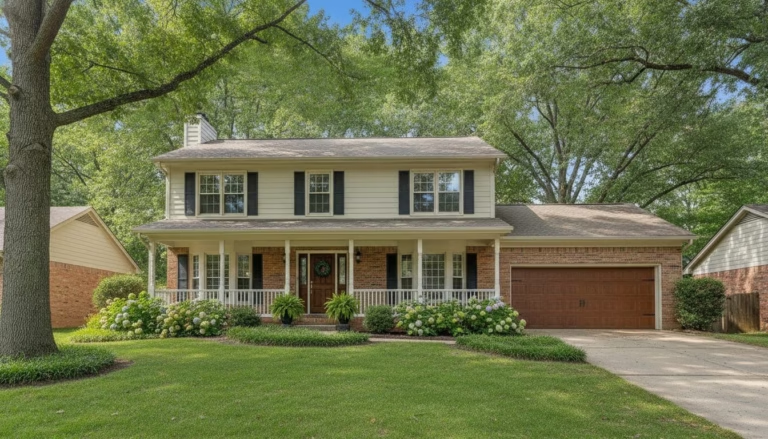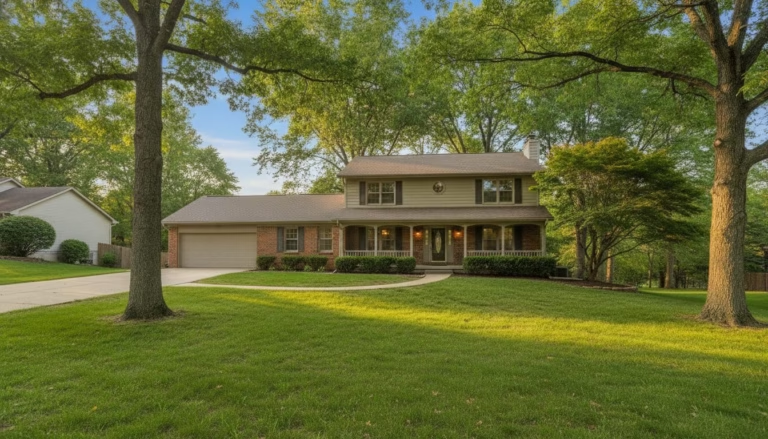
Summer heat drives Arnold residents indoors, cranking AC units to combat Missouri’s humid 90-degree days. But sealing homes tight for cooling comfort creates a hidden problem,trapped indoor air pollutants that worsen through July and August. Air Sense Environmental’s Jake Lusby sees this pattern yearly across Jefferson County homes, where poor ventilation combines with seasonal factors to degrade indoor air quality.
What to Do About Summer Air Quality in Arnold
• Run bathroom and kitchen exhaust fans during peak humidity hours (6 AM – 10 AM)
• Change HVAC filters monthly instead of quarterly during cooling season
• Open windows for 10-15 minutes during early morning when outdoor air quality is better
• Monitor humidity levels,keep below 50% to prevent mold growth in basement areas
• Schedule indoor air quality testing before peak summer months (May-June)
• Clean air conditioning coils and ductwork before heavy usage begins
Summer Home Air Quality Arnold: The Sealed House Problem
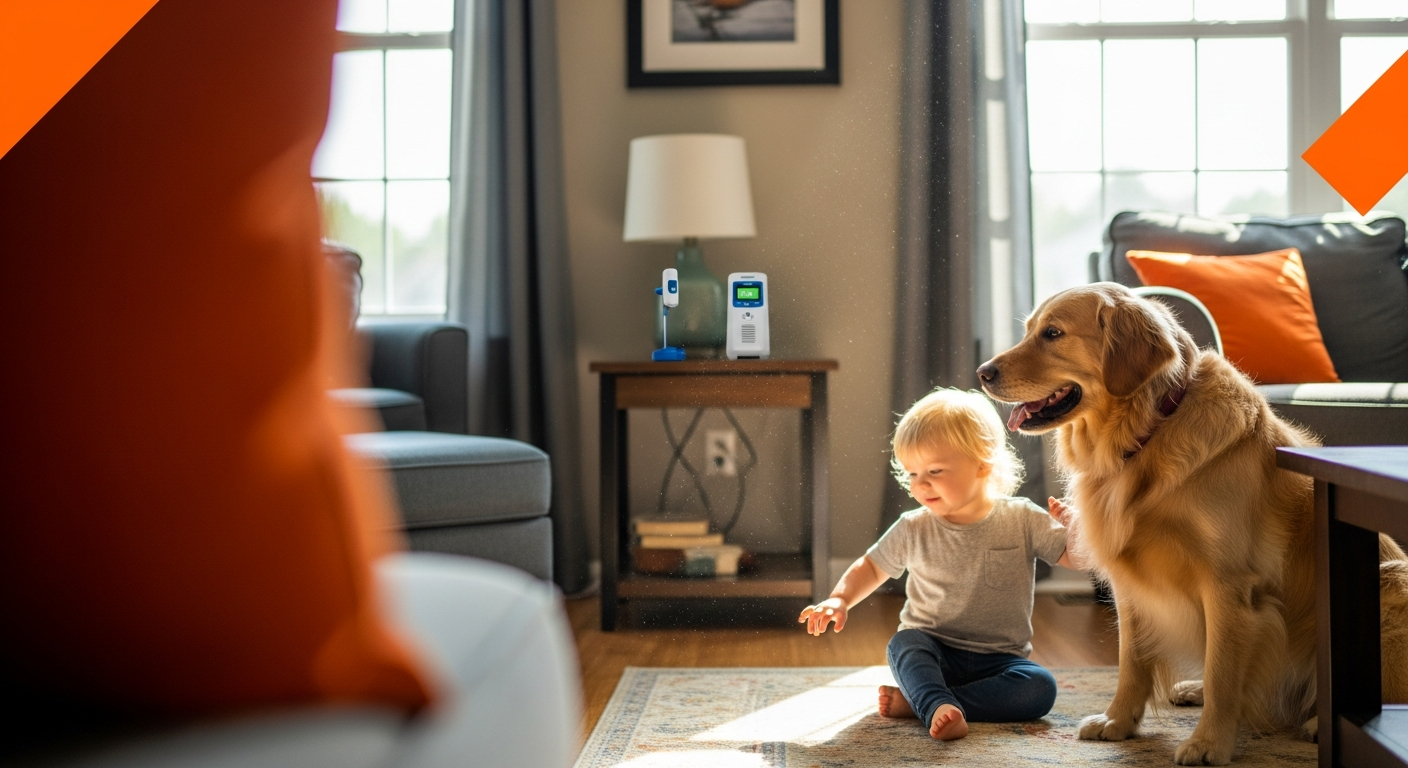
Missouri’s summer climate creates problems for indoor air quality in Arnold homes. When outdoor temperatures hit 88°F with 70% humidity,typical for July in Jefferson County,homeowners seal windows and rely heavily on air conditioning. This cooling strategy traps existing pollutants while creating new ones.
Air conditioning systems recirculate the same indoor air repeatedly, concentrating contaminants with each cycle. EPA studies show indoor pollutant levels can reach 2-5 times higher than outdoor levels during peak cooling months. Volatile organic compounds (VOCs) from furniture, cleaning products, and building materials off-gas more rapidly at higher temperatures, while humidity above 50% promotes mold and dust mite growth.
Arnold’s housing stock makes these issues worse. Many homes in neighborhoods like Fox Creek and Meadowbrook were built in the 1980s-1990s with tighter construction but minimal ventilation planning. These homes trap pollutants more effectively than older, naturally leaky structures.
VOCs Trapped in Homes Arnold MO: Local Climate Factors

Arnold’s summer conditions create indoor air quality challenges that differ from other St. Louis suburbs. The city sits in a Missouri River valley microclimate that holds moisture longer after storms, maintaining high outdoor humidity through August. This geography forces extended AC usage periods compared to higher elevation areas like Ballwin or Chesterfield.
Jefferson County’s clay-rich soil retains moisture, creating high humidity that seeps into basements and crawl spaces. Air Sense Environmental’s testing in Arnold consistently finds elevated moisture levels in lower-level areas, particularly in homes near Meramec River tributaries in neighborhoods like Arnold Commons and Imperial Main. These conditions promote mold growth and increase radon infiltration through foundation cracks.
Summer thunderstorms. Arnold averages 15-20 severe weather events from May through August according to National Weather Service data,create pressure changes that draw soil gases indoors. Combined with sealed windows and doors, these weather patterns trap ground-source pollutants alongside household contaminants.
The area’s industrial history adds another layer. Arnold sits downwind of manufacturing areas along the Mississippi River corridor. Summer’s prevailing southwest winds carry outdoor pollutants that infiltrate homes during the brief periods when doors and windows open. Once inside, these particles remain trapped in the sealed cooling environment.
Poor Ventilation Summer St. Louis: Warning Signs in Arnold Homes
Recognizing poor summer ventilation requires watching for specific indicators that become more pronounced during Arnold’s hot, humid months. Condensation on windows during AC operation signals inadequate air exchange,indoor humidity exceeds the system’s ability to remove moisture. This commonly occurs in Arnold’s split-level homes where basement humidity migrates upward.
Persistent odors that weren’t noticeable in spring intensify during summer cooling months. Cooking smells, pet odors, or musty basement scents that linger indicate insufficient fresh air circulation. Air Sense Environmental’s Jake Lusby frequently encounters this in Arnold’s ranch-style homes, where single-level layouts and minimal ventilation create stagnant air pockets.
Physical symptoms among household members provide clear warning signs. Increased allergy symptoms, morning headaches, or respiratory irritation that coincides with heavy AC usage suggests elevated indoor pollutant concentrations. These symptoms often worsen in Arnold during peak summer months when outdoor air quality also declines due to regional ozone formation.
Static electricity increases in over-conditioned, under-ventilated homes. If you notice more static shocks during summer months, your home’s air lacks adequate humidity balance and circulation,conditions that concentrate airborne particles and reduce natural pollutant removal.
Indoor Air Quality Testing Arnold MO Summer: Air Sense Environmental’s Approach

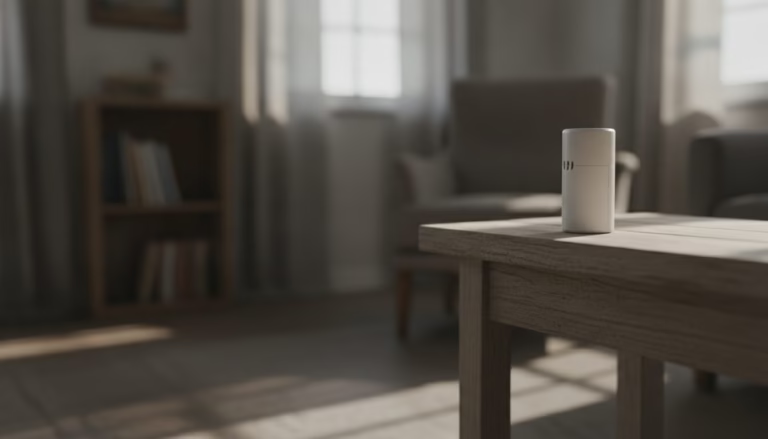
Air Sense Environmental addresses Arnold’s summer indoor air quality challenges with comprehensive testing designed for sealed cooling environments. Their Model 5200 IAQ monitors collect data at 1-minute intervals over 48 hours, capturing pollutant fluctuations that occur during AC cycling and daily activity patterns.
Jake Lusby’s NRPP certification extends beyond radon to general indoor air quality assessment. The team tests for specific summer-related pollutants: elevated VOC levels from increased off-gassing, mold spores in humidity-prone areas, and bacterial growth in HVAC systems. Their testing protocol accounts for Arnold’s clay soil conditions and basement moisture issues common in Jefferson County homes.
A recent Arnold Commons client contacted Air Sense Environmental about persistent summer allergies affecting their family. Testing revealed elevated mold spore counts in their finished basement and VOC concentrations 3x higher than spring levels. Jake installed a whole-home AprilAire dehumidification system and recommended strategic ventilation improvements. Follow-up testing showed 60% reduction in problem pollutants within 30 days.
The company’s turnkey approach includes immediate mitigation solutions. Rather than testing and recommending other contractors, Air Sense Environmental installs AprilAire ventilation systems, dehumidifiers, and air purification equipment. This integrated service proves especially valuable for Arnold homeowners dealing with multiple summer air quality factors simultaneously.
Summer indoor air quality testing in Arnold requires understanding both the regional climate and individual home characteristics. Air Sense Environmental’s local expertise, demonstrated through their Jefferson County project history and Jake’s field experience, provides Arnold residents with solutions specifically designed for Missouri River valley conditions. Their comprehensive indoor air quality services extend throughout the St. Louis region, with particular focus on summer-specific pollutant management.
Homeowners concerned about their sealed summer environment can schedule Air Sense Environmental’s free in-home consultation through their Arnold service area to assess current conditions and develop targeted improvement strategies. The company’s 140 five-star reviews reflect consistent success in resolving complex indoor air quality challenges across diverse home types and regional conditions.
Frequently Asked Questions

How does summer heat specifically worsen indoor air quality in Arnold homes?
Higher temperatures increase VOC off-gassing from furniture, flooring, and household products by 50-100%. Arnold’s typical summer temperatures of 88-92°F accelerate this process while sealed cooling systems prevent pollutant escape. Clay soil around Arnold also releases more moisture vapor into basements during hot weather, creating conditions for mold growth and increased radon infiltration through foundation materials.
When should Arnold homeowners test indoor air quality during summer months?
Schedule testing in early June before peak cooling season begins, or immediately if household members develop unexplained respiratory symptoms during AC operation. Air Sense Environmental recommends testing after extended periods of sealed cooling,typically after 2-3 weeks of daily AC usage above 6 hours. This timing captures accumulated pollutant levels while allowing time for mitigation before peak summer heat.
What indoor air pollutants increase most during Arnold’s humid summers?
Mold spores increase dramatically when indoor humidity exceeds 50%, common in Arnold basements during July-August. VOCs from cleaning products, air fresheners, and building materials concentrate in sealed homes, while dust mite populations explode in humid conditions. Bacterial growth in HVAC systems also accelerates during heavy cooling usage, particularly in Arnold’s older ductwork systems that lack proper moisture control.