
DIY radon test kits can be accurate, but only when they are used exactly the way the lab intends. The charcoal canister or electronic monitor you buy at a hardware store is capable of a reliable reading, yet the result depends far more on how and where you run the test than on the kit itself. For homeowners across St. Louis, MO, including St. Louis County and St. Charles County, that distinction matters, because radon is common in our soil and the EPA recommends fixing any home that tests at or above its action level of 4.0 pCi/L. This guide explains how accurate DIY radon test kits really are, the mistakes that throw off their results, and when a professional test is the smarter call.
Are DIY Radon Test Kits Accurate?
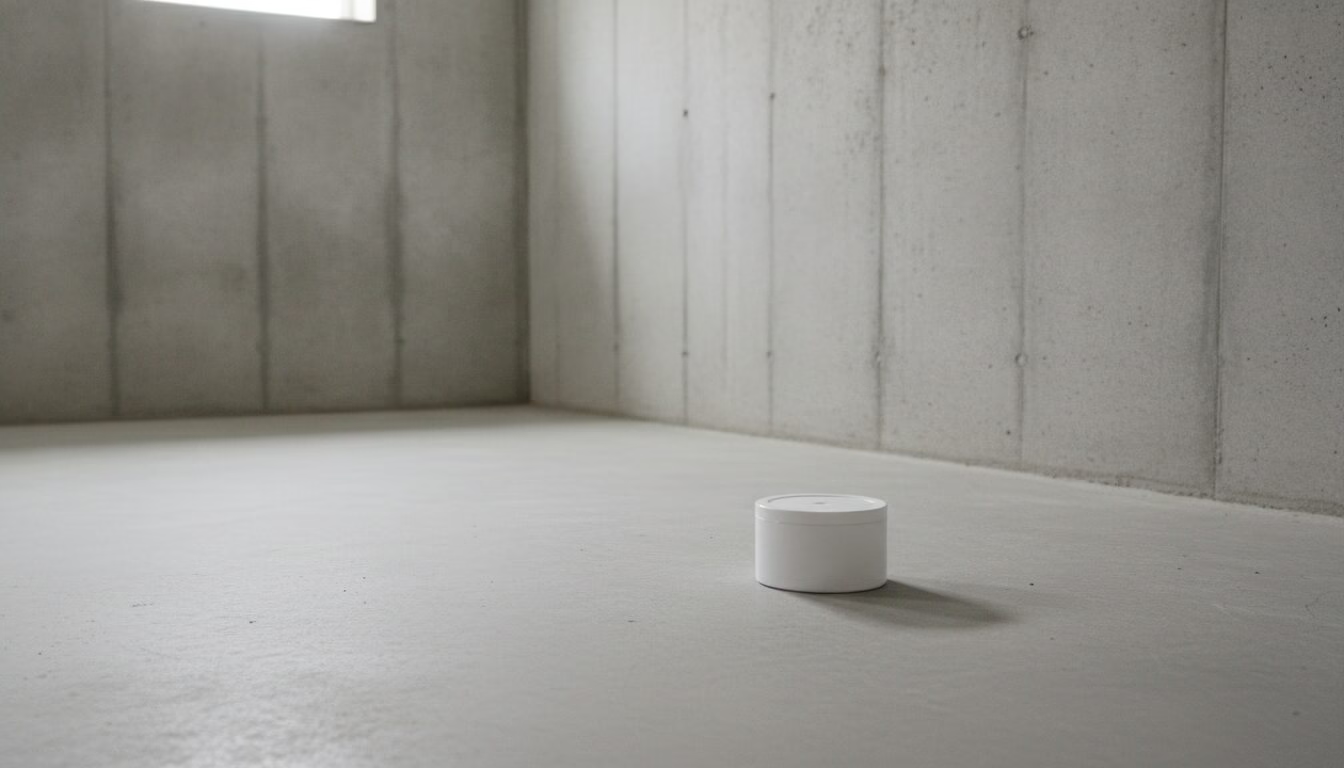
Yes, a DIY radon test kit can give an accurate reading, because the detector inside, whether activated charcoal or an electronic sensor, relies on the same basic science professionals use. The catch is that a radon kit only measures the air immediately around it during the hours it runs. If that air does not represent the air your family actually breathes, the number on the report will be off even though the device worked perfectly. Reviews of consumer kits generally find that quality short-term charcoal tests track professional measurements closely when they are placed and handled correctly, and drift when they are not. In other words, accuracy depends less on the brand of kit and more on following the protocol to the letter.
What Are the Common Types of DIY Radon Test Kits?
DIY radon kits fall into three categories, and each has a different accuracy profile.
- Activated charcoal canisters are short-term tests that absorb radon over 2 to 7 days before you mail them to a lab for analysis.
- Alpha track detectors are long-term tests that stay in place for 90 days to a year and record a truer year-round average.
- Consumer electronic monitors sit on a shelf and log readings continuously so you can watch trends over time.
Short-term charcoal tests are the cheapest and fastest, which is why most homeowners reach for them first. Because radon levels swing from day to day and season to season, the EPA notes that a single short-term test is less likely than a long-term test to reflect your year-round average. Alpha track detectors give a steadier picture but make you wait months for the answer. Inexpensive electronic monitors are convenient and reusable, though budget models are not held to the same calibration standards as the professional-grade instruments described below.
What Makes a DIY Radon Test Inaccurate?
Most inaccurate DIY results trace back to a short list of avoidable mistakes rather than a faulty device. These are the errors that quietly skew a reading, almost always toward a number that is lower than reality.
- Wrong placement. The EPA says to place the kit in the lowest lived-in level of the home, away from drafts, windows, exterior walls, and areas with high air movement. A kit on a windowsill or next to an HVAC vent reads artificially low.
- Open windows. Closed-house conditions matter. Windows and outside doors should stay closed for 12 hours before and during a short-term test. A breezy day mid-test dilutes the radon and can hide a real problem.
- Timing and weather. Heavy rain, snow, high winds, and seasonal shifts all move radon around. A two-day snapshot may happen to catch a low point or a spike.
- Lab delay. A charcoal canister keeps absorbing radon after the test window, so leaving it open too long or mailing it back late skews the lab result.
- Tampering. In a home sale, an opened window or a relocated kit, intentional or not, can quietly lower the reading with no record that anything changed.
How Accurate Is Professional Radon Testing Compared to a DIY Kit?
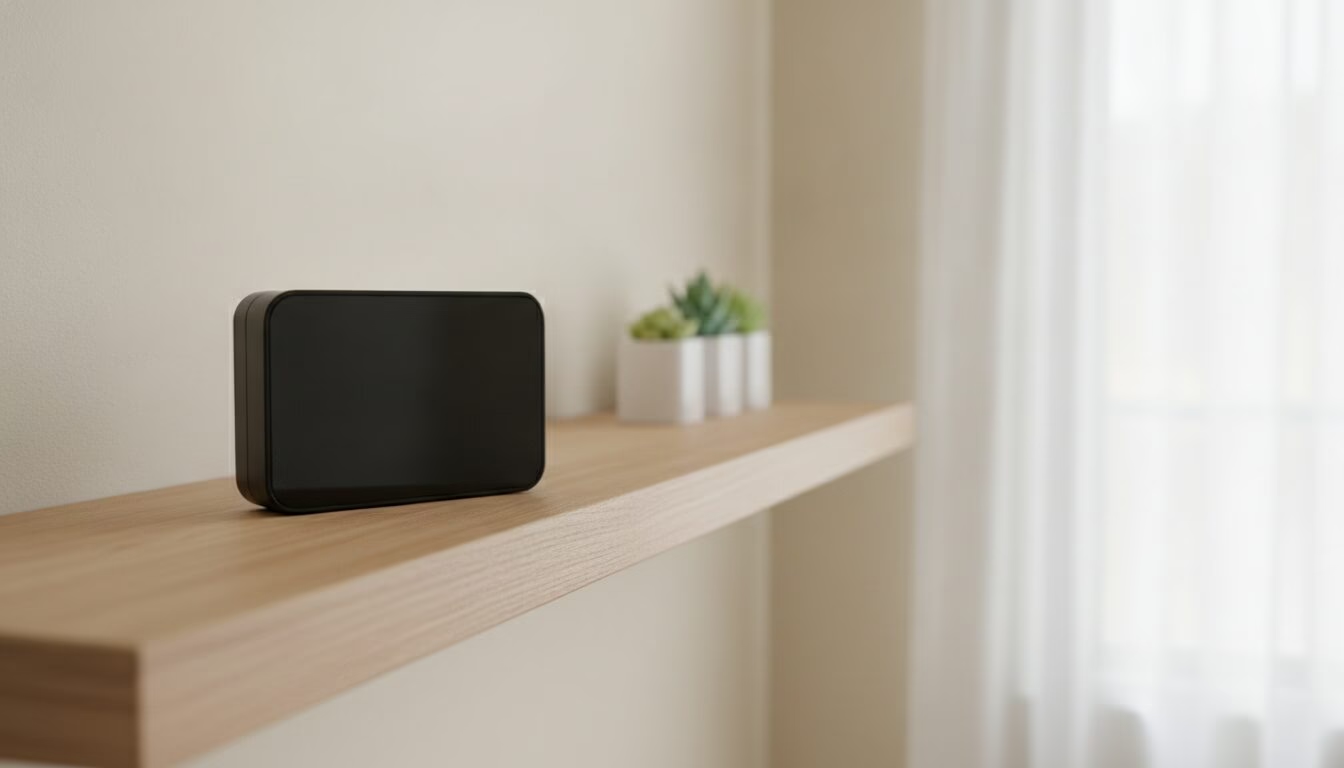
Professional testing is more accurate mainly because it removes the variables that trip up DIY kits. A certified measurement technician places a calibrated continuous radon monitor in the correct spot, runs it for a minimum of 48 hours under documented closed-house conditions, and logs a reading every hour instead of producing a single averaged number. These instruments are calibrated to NIST-traceable standards and follow the AARST placement protocols that a mail-in home lab cannot enforce. Many continuous monitors also record motion, temperature, and humidity, so they flag if a window was opened or the device was moved, which is exactly the tamper protection a real estate test needs. When a professional test confirms a home sits above 4.0 pCi/L, the next step is professional radon mitigation for your St. Louis home, with a follow-up test afterward to verify the fix worked.
When Is a DIY Radon Kit Fine, and When Should You Hire a Pro?
A DIY kit is fine for a low-stakes first look at your own home. It becomes the wrong tool the moment the result carries legal, financial, or health consequences. A short-term kit is a reasonable choice when you are simply curious about your own home, you want an inexpensive screening, and you are prepared to follow up on any high reading.
Call a certified professional instead when:
- You are buying or selling a home. Real estate radon contingencies across the St. Louis metro generally call for a test by an NRPP- or NRSB-certified professional, and a self-administered kit will not satisfy that requirement.
- You are verifying a newly installed mitigation system and need proof it brought levels down.
- Your DIY result lands near or above 4.0 pCi/L and you want a defensible confirmation before spending money.
- Two DIY tests disagree, or a result looks too good to be true.
What Should St. Louis Homeowners Do With a DIY Test Result?
Read the number against the EPA action level of 4.0 pCi/L, then decide based on how close you are. A result below 2 pCi/L is low, and the home can simply be retested every few years or after major foundation work. A result between 2 and 4 pCi/L sits in a gray zone where the EPA suggests considering a fix, and many homeowners retest to be sure. A result at or above 4.0 pCi/L is the level at which the EPA recommends fixing the home, though it is wise to confirm a high short-term reading with a second short-term test or a long-term test before installing a system.
Because a DIY reading can be thrown off by any of the errors above, confirming a high result with a professional test is the safest path before committing to mitigation. The EPA estimates that radon is responsible for about 21,000 lung cancer deaths in the United States each year, which is why a confirmed high reading is treated as worth acting on rather than ignoring.
Frequently Asked Questions About DIY Radon Test Kits
Are DIY radon test kits accurate enough to trust?
A quality DIY radon test kit is accurate enough for an initial screening of your own home when you follow the instructions exactly, keeping the house closed up and placing the kit correctly. For higher-stakes decisions like a home sale or confirming a mitigation system, a certified professional test is the standard you can rely on.
Do DIY radon kits tend to read too high or too low?
Most DIY accuracy problems push the reading too low. Open windows, drafty placement, or a kit left out past its window all dilute or distort the sample and can hide a real radon problem. That is why a borderline-low DIY result near the action level is worth confirming with a second test.
Can I use a DIY radon test for a home sale in the St. Louis area?
Usually not. Real estate transactions typically call for a test by an NRPP- or NRSB-certified professional with documented chain of custody, because a self-administered kit can be tampered with and is not independently verified. A professional continuous monitor test run for at least 48 hours is the accepted standard.
How long should a DIY radon test run?
A short-term charcoal kit runs 2 to 7 days under closed-house conditions, while a long-term alpha track detector runs 90 days to a year. The EPA recommends keeping windows and outside doors closed for 12 hours before and during any short-term test so the sample reflects normal living conditions.
What radon level from a DIY kit means I need mitigation?
The EPA recommends fixing a home that tests at or above 4.0 pCi/L. Because a single DIY reading can be skewed by placement or weather, confirm any result at or above that action level with a second test before installing a mitigation system.
Get a Professional Radon Test in St. Louis
If your DIY kit came back high, came back borderline, or you simply want a result you can rely on for a home sale, Air Sense Environmental can help. Owner Jake Lusby and is listed by Illinois IEMA as Mitigation Professional RNM20232346, with Air Sense Environmental as his employer, serving homeowners across the greater St. Louis metro from its base in Edwardsville. We place a calibrated continuous monitor, run the test under proper closed-house conditions, and hand you a clear, documented result you can act on with confidence. Schedule your free radon consultation and get an honest read on your home.