How long you should test for radon depends on the type of test: a short-term radon test should run for 2 to 7 days, and a long-term radon test should run for more than 90 days. The short-term test is the fast way to get a first reading, while the long-term test gives a result that better reflects your home’s year-round average. For most St. Louis, MO homeowners, including those in St. Louis County and St. Charles County, the right choice comes down to why you are testing and how quickly you need an answer. The EPA recommends taking action to reduce radon once a home tests at 4.0 pCi/L or higher, so the goal of any test is a reading accurate enough to trust. This guide explains how long each radon test takes, when to use each one, and why test duration matters for an accurate result.
How Long Does a Short-Term Radon Test Take?
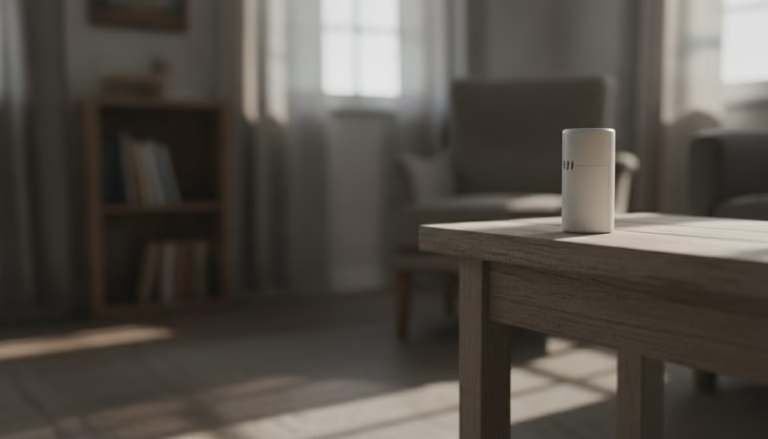
A short-term radon test takes 2 to 7 days in most cases, which makes it the quickest way to measure the radon level in a home. According to the EPA’s A Citizen’s Guide to Radon, a short-term test stays in the home from 2 to 90 days, and every radon test should run for a minimum of 48 hours. A 2 to 7 day window is the common choice when you want a reliable short-term reading without a long wait.
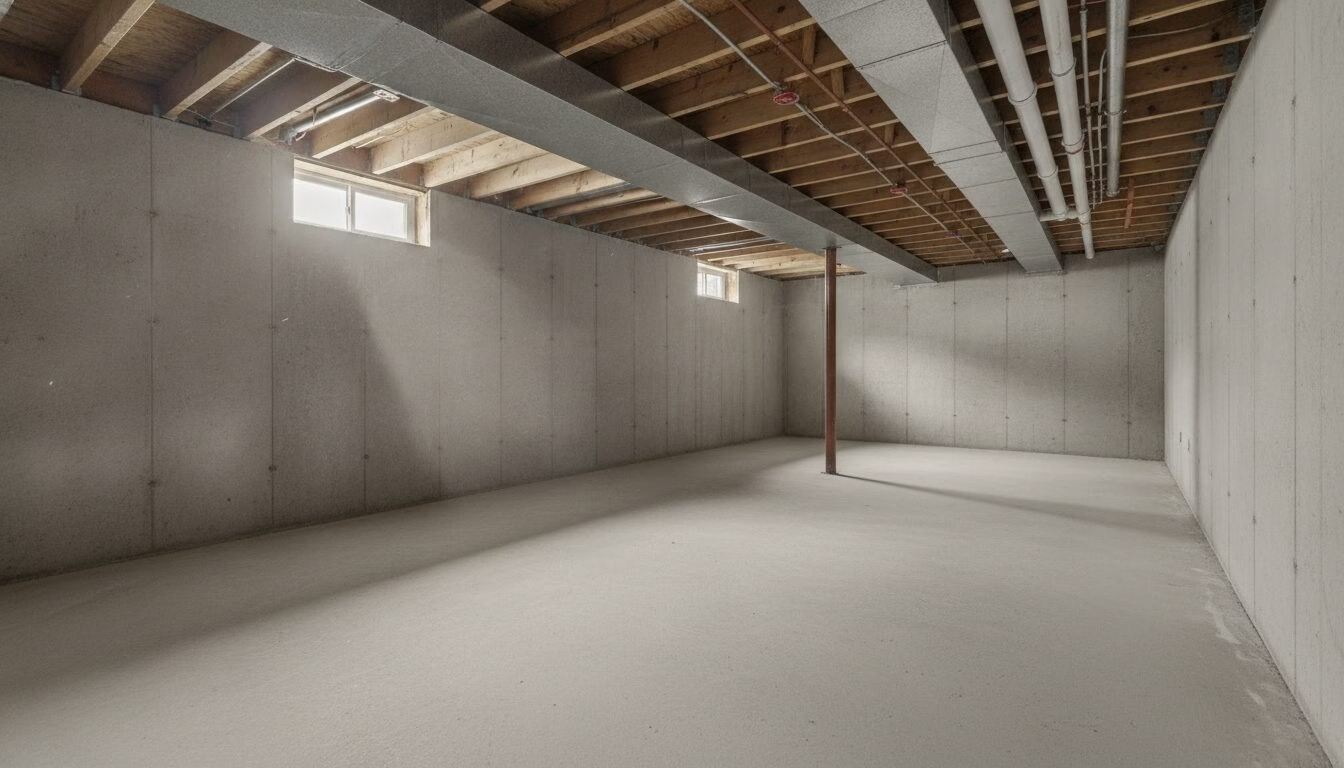
Short-term tests have one important condition: closed-house testing. The EPA advises keeping windows and exterior doors closed, opening them only for normal entry and exit, starting at least 12 hours before a test that lasts fewer than four days. Closed-house conditions keep weather and extra ventilation from pushing the reading artificially low. The test device should sit in the lowest level of the home that is regularly used, away from drafts, exterior walls, and high humidity.
A short-term test is the right tool when you need an answer soon, for example before a real estate closing, or when you simply want a first look at whether radon is a concern in the home at all.
How Long Does a Long-Term Radon Test Take?
A long-term radon test takes more than 90 days, and it can run for several months or up to a full year. The EPA notes that a long-term test will give you a reading that is more likely to tell you your home’s year-round average radon level than a short-term test. That is the trade-off: you wait longer, but you get a number that better represents normal, day-to-day living.
Radon levels are not constant. They rise and fall with the seasons, the weather, and how a home is used, and they often run higher in winter when houses are closed up and heating systems pull air through the foundation. A test that spans more than 90 days averages across those swings instead of capturing a single short window. For a homeowner who is not on a deadline and wants the most accurate picture of typical conditions, a long-term test is the stronger choice.
Short-Term vs. Long-Term Radon Testing: How to Choose
Choosing between a short-term and a long-term radon test comes down to speed versus accuracy. A short-term test answers the question fast. A long-term test answers it more precisely. Here is how the two compare side by side.
| Factor | Short-term test | Long-term test |
|---|---|---|
| Test duration | 2 to 7 days (48 hours minimum) | More than 90 days |
| Best for | Real estate deadlines and a first screening | The most accurate year-round average |
| Closed-house conditions | Required throughout | Not required for the full period |
| What it captures | A single short window | Seasonal highs and lows averaged together |
If your first short-term test comes back at or above the EPA action level of 4.0 pCi/L, the EPA recommends a follow-up test to confirm the result before you decide on a mitigation system. Many homeowners start with a quick short-term test and only move to a longer test if the first reading lands near that line.
How Long Should You Test for Radon Before Buying or Selling a Home?
For a home sale, you should usually test for radon with a short-term test of 2 to 7 days, because real estate timelines rarely allow for a 90-day measurement. The EPA’s Home Buyer’s and Seller’s Guide to Radon was written for exactly this situation, noting that real estate testing has to account for the time-sensitive nature of a purchase and the potential for a test to be disturbed.
During a real estate test, closed-house conditions matter even more, because the result can shape the deal. If the short-term test reads 4.0 pCi/L or higher, the buyer and seller can address mitigation before closing. Because the stakes and the timeline are both tight, many St. Louis-area buyers have a professional run the test rather than rely on a kit that could be moved or opened by mistake.
Why Test Duration Matters for an Accurate Radon Result
Test duration matters because radon is uneven, and a longer test smooths out that unevenness. A reading taken over a single dry, windy afternoon can look very different from one taken over a damp, still week. The EPA action level is 4.0 pCi/L, and a home that sits near that line is exactly where a test that is too short, or run with the windows open, can point a homeowner in the wrong direction.
This is also why follow-up testing exists. The EPA recommends that when a short-term test comes in at 4.0 pCi/L or above, you confirm it with a second test before committing to mitigation. Two readings that agree give you confidence the number is real and not a fluke of that week’s weather. Matching the length of the test to the decision you are making is the simplest way to trust the result.
What to Do After Your Radon Test
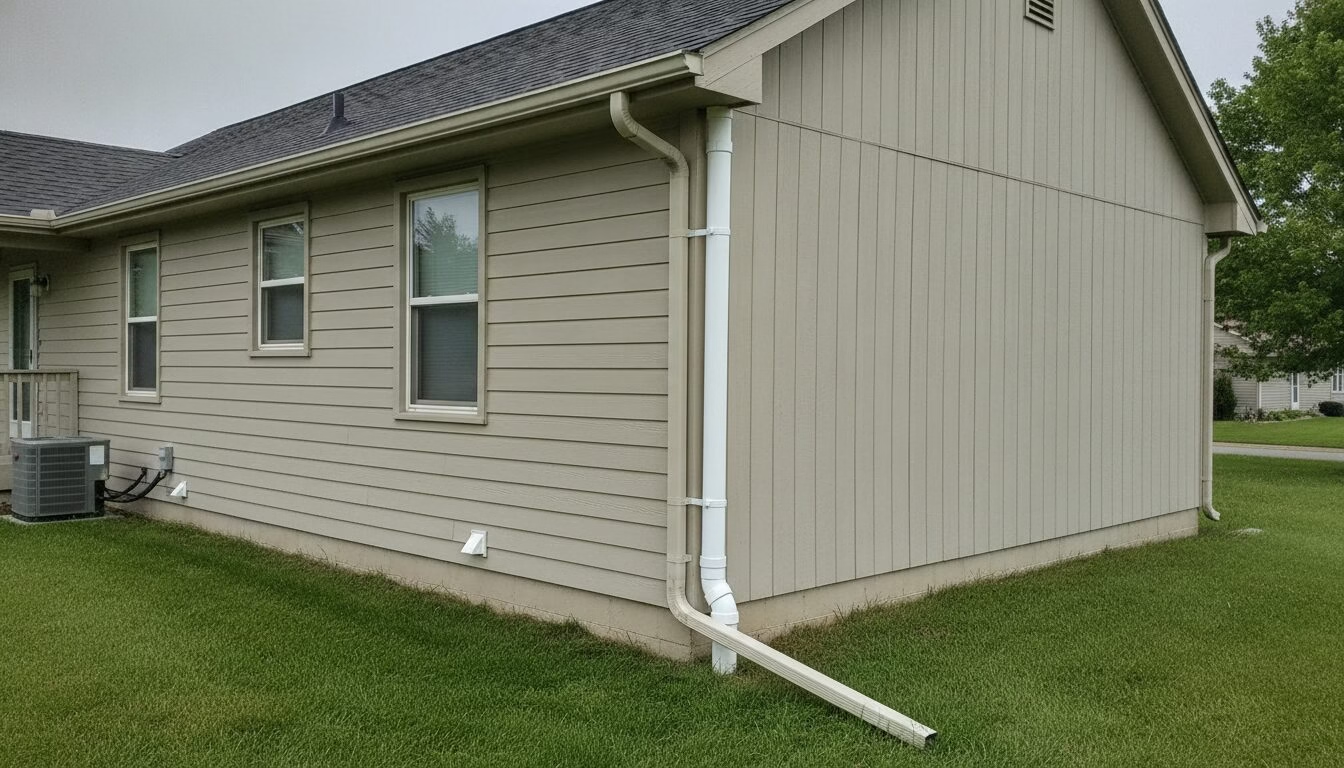
Once your radon test is finished, the next step depends on the number. If the result is below 4.0 pCi/L, the EPA suggests retesting periodically, since radon levels can change over time. If the result is at or above 4.0 pCi/L, the practical next step is a mitigation system that vents soil gas out from under the home before it can build up indoors.
Air Sense Environmental is licensed in Illinois under IEMA #RNM20232346 and is NRPP-certified, and the team confirms every install with post-mitigation verification testing. For homeowners who have a high reading in hand, professional St. Louis radon mitigation begins with an on-site evaluation that matches the right system to the home and the foundation.
Frequently Asked Questions About Radon Test Duration
How long should you test for radon?
You should test for radon with a short-term test of 2 to 7 days for a fast result, or a long-term test of more than 90 days for a year-round average. Every radon test should run for at least 48 hours. The right length depends on whether you need a quick answer or the most accurate one.
Is a 48-hour radon test long enough?
A 48-hour radon test meets the EPA’s minimum, so it is long enough for a valid short-term screening, especially during a real estate sale. It captures only a short window, though, so if the result lands near the 4.0 pCi/L action level, a longer follow-up test gives a more reliable reading.
Is a short-term or long-term radon test better?
A long-term radon test is more accurate because it averages radon levels across more than 90 days and reflects seasonal swings. A short-term test of 2 to 7 days is better when you need results quickly. Many homeowners start with a short-term test and follow up with a longer one if the first reading is borderline.
How long do you keep the house closed during a radon test?
For a short-term test under four days, the EPA advises closed-house conditions starting at least 12 hours before the test begins and continuing throughout. That means keeping windows and exterior doors shut except for normal entry and exit, so extra ventilation does not lower the reading artificially.
How often should you retest your home for radon?
The EPA recommends retesting your home for radon at least every two years, and again after any major renovation or change to your heating and ventilation system. Radon levels can shift over time, so periodic testing confirms the home stays below the 4.0 pCi/L action level.
Get a Free Radon Consultation in St. Louis
The right test length gives you a number you can trust, and the right next step depends on what that number says. Air Sense Environmental can help you make sense of your radon results and, if your home tests at or above 4.0 pCi/L, design a system to bring the level down. Schedule your free in-home consultation and get clear, no-pressure guidance for your St. Louis home.