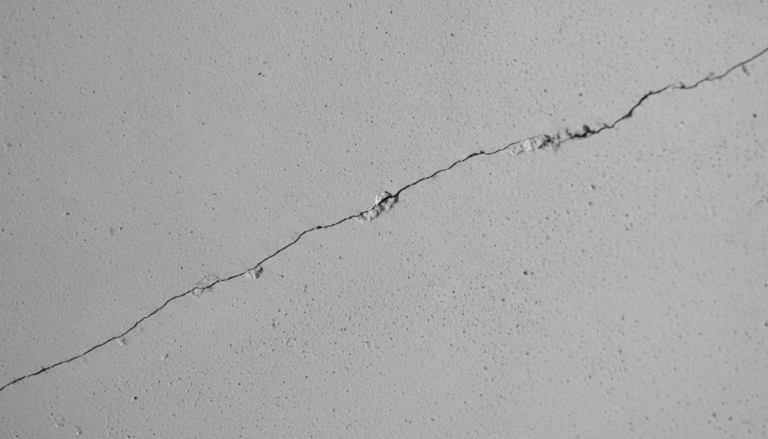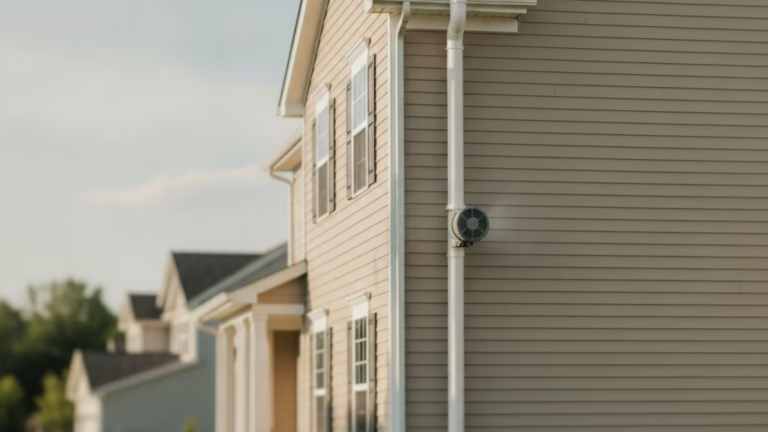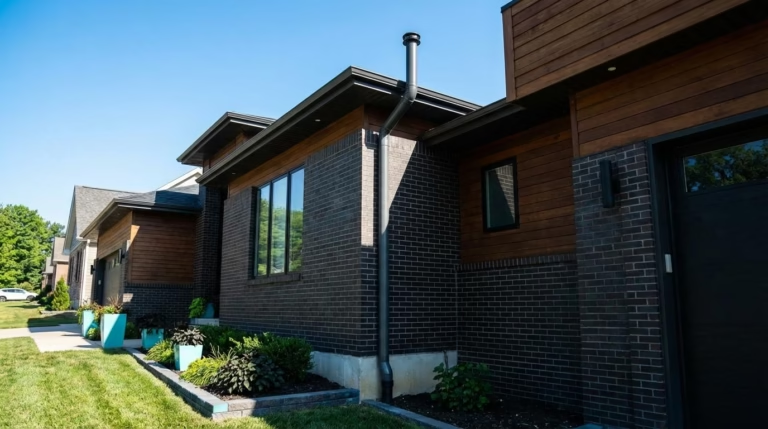
Foundation cracks and radon are closely connected, because the same hairline cracks, slab gaps, and openings that look harmless in a basement are the exact paths radon gas follows out of the soil and into a home. Radon is a naturally occurring radioactive gas produced as uranium breaks down in the soil and rock beneath a house, and it is invisible, odorless, and tasteless. Across the St. Louis, MO metro, including St. Louis County and St. Charles County, the local geology pushes radon up against the underside of homes, where it finds its way in through whatever openings the foundation offers. The EPA recommends taking action to lower radon once a home tests at 4.0 pCi/L or higher. This guide explains how foundation cracks and radon entry points actually work, why sealing those cracks alone will not solve the problem, and how sealing fits alongside an active mitigation system.
How Do Foundation Cracks Let Radon Into a Home?
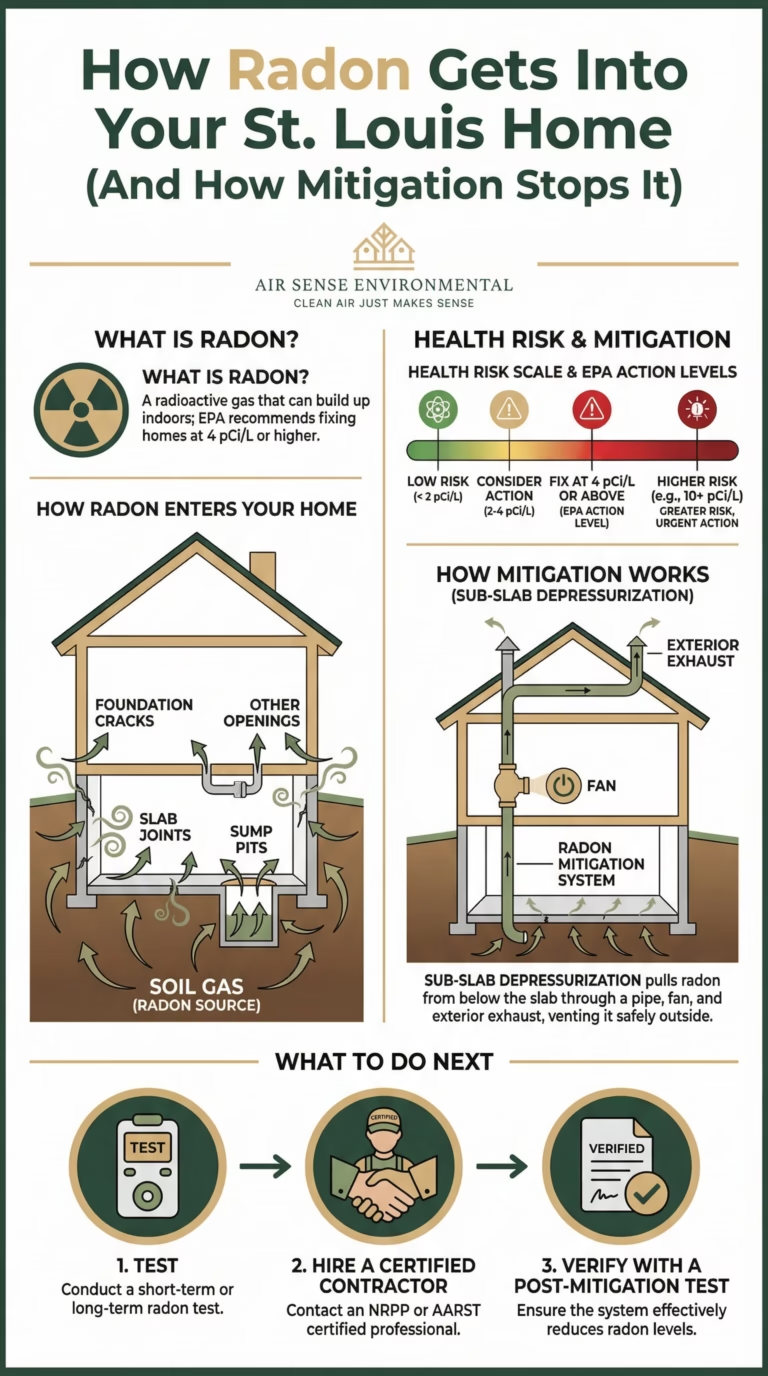
Foundation cracks let radon into a home because the air inside usually sits at a slightly lower pressure than the soil underneath it, so the home actively draws soil gas in through any available opening. Radon does not simply drift inside. It is pulled in. As warm air rises and escapes through the upper floors and roof, it creates a mild vacuum at the lowest level of the house, and that vacuum pulls soil gas up through cracks in the slab, gaps around pipes, and other openings. This effect is called the stack effect, and it runs strongest in winter when the indoor-outdoor temperature gap is largest.
The pressure difference that pulls radon inside
Because the house behaves a little like a chimney, sealing a single visible crack rarely changes the overall pressure picture. The home keeps pulling on every remaining opening, so the gas finds the next easiest path. That is why entry points have to be managed as a system rather than patched one at a time.
What Are the Most Common Radon Entry Points in a Home?
The most common radon entry points are foundation cracks, the gap where the floor slab meets the wall, sump pits, utility penetrations, and crawl space floors. Every home has some combination of these, and in most cases radon is entering through several of them at once rather than through a single dramatic crack.
| Entry point | Where it is | Why radon uses it |
|---|---|---|
| Foundation and slab cracks | Poured walls and concrete floors | Shrinkage and settling cracks open a direct path from the soil |
| Floor-to-wall joint | The seam where the slab meets the foundation wall | This perimeter gap is often the single largest opening in a basement |
| Sump pit | An open pit set into the basement floor | An uncovered pit exposes bare soil and drainage gravel to the room |
| Utility penetrations | Around water lines, sewer pipes, and conduits | Gaps where pipes pass through the slab leave soil gas an easy route |
| Crawl space floor | Exposed dirt or a thin slab under part of the home | Bare earth lets radon rise straight into the space above |
Older homes are not the only ones affected. Even a freshly poured slab develops shrinkage cracks as it cures, and construction joints are built into every foundation. Entry points are a normal feature of how homes are built, so the goal is to control them rather than to expect a flawless, crack-free foundation.
Do Foundation Cracks Always Mean You Have a Radon Problem?
No, a visible foundation crack does not automatically mean a home has a radon problem, and a crack-free basement does not guarantee a safe one. Radon levels depend on the soil gas under the specific house, the pressure pulling it in, and the paths available, so two neighboring homes can test very differently. The only way to know a home’s level is to test it.
The EPA sets a clear benchmark for when those levels call for action:
- 4.0 pCi/L or higher: the EPA recommends fixing the home with a radon mitigation system.
- Between 2.0 and 4.0 pCi/L: the EPA suggests considering a system.
- Any level: because radon is invisible and odorless, testing is the only way to know where a home falls.
The EPA estimates that radon is responsible for about 21,000 lung cancer deaths in the United States each year, which is why it treats 4.0 pCi/L as the point at which the benefit of taking action is clear. A test result, not the appearance of the foundation, is what determines whether a home needs mitigation.
Can You Just Seal the Cracks to Stop Radon?
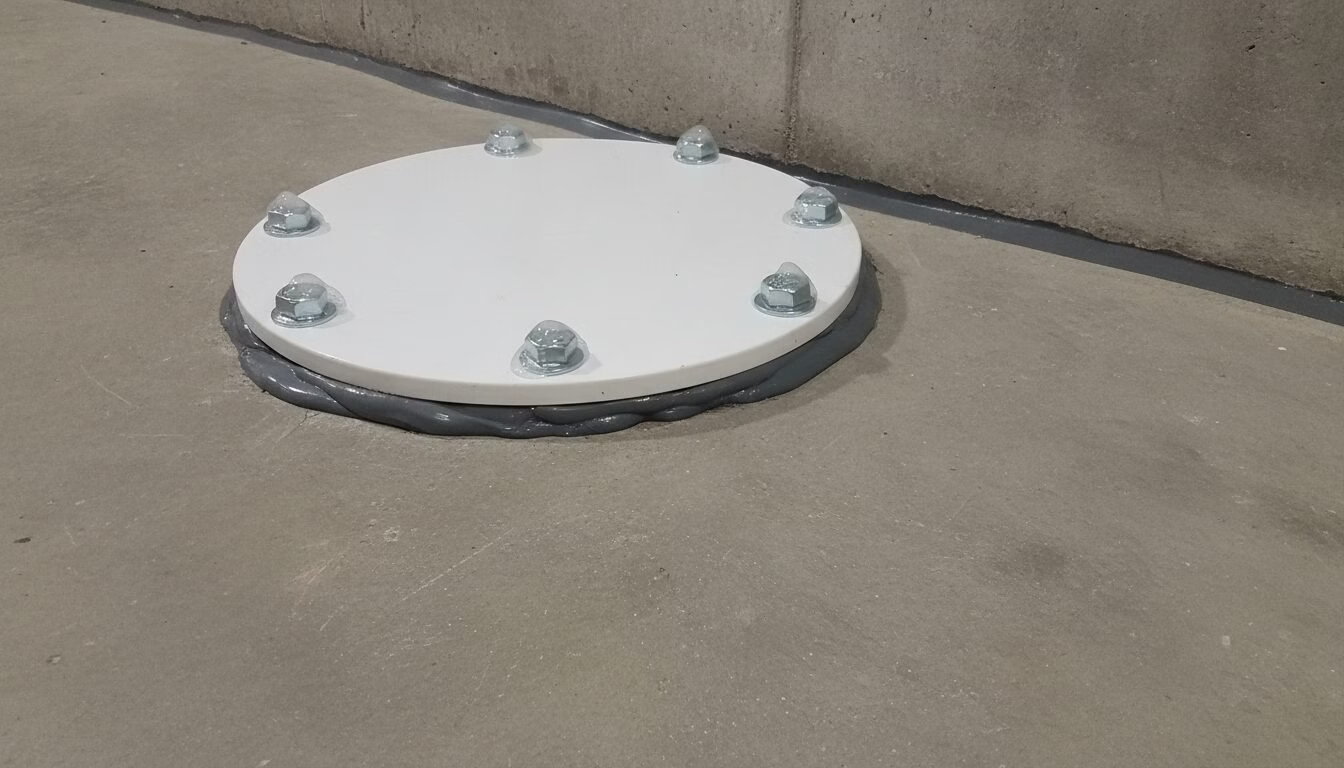
No, sealing foundation cracks by itself is not a reliable way to lower radon, and the EPA specifically advises against relying on sealing alone. In its Consumer’s Guide to Radon Reduction, the EPA explains that sealing has not been shown to lower radon significantly or consistently on its own, for two practical reasons. First, it is very difficult to find and permanently seal every place radon enters. Second, the normal settling of a house opens new cracks and reopens old ones, so a basement sealed one year has fresh openings the next.
There is also the pressure problem. As long as the home is pulling soil gas inward, blocking one path just sends the gas to another. Sealing is genuinely useful, but it is a supporting step, not a standalone fix.
How Does Sealing Work With Active Sub-Slab Depressurization?
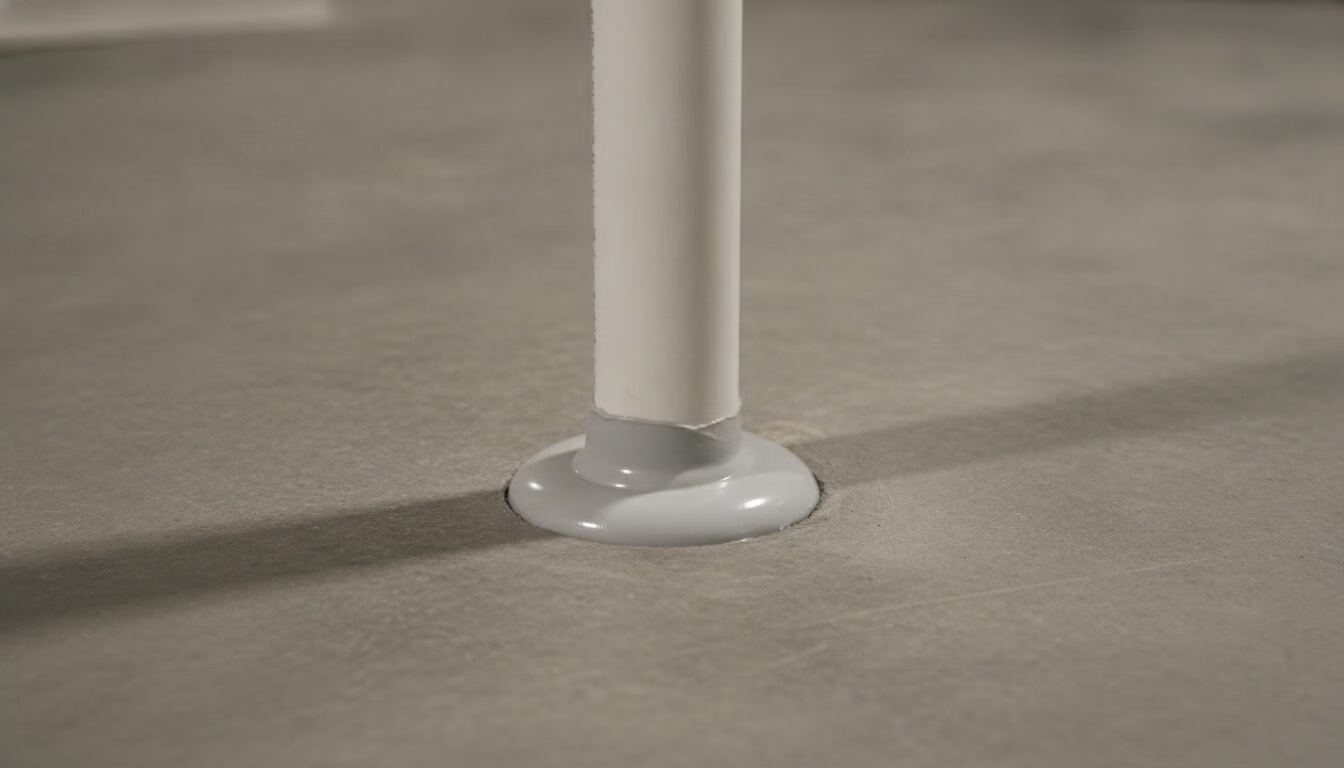
Sealing works best as a partner to active sub-slab depressurization, the standard radon mitigation method, where it makes the system more efficient instead of trying to do the job alone. An active sub-slab system uses a fan and a sealed vent pipe to draw soil gas from beneath the foundation and carry it above the roofline before it enters the home. That reverses the pressure pulling radon inside, holding the soil under the slab at a slight vacuum.
Sealing supports that system directly. When the large openings, meaning the floor-to-wall joint, the sump pit, and the major cracks, are sealed, the fan does not waste suction pulling conditioned air down through them. Instead it concentrates its pull on the soil itself, so one suction point can depressurize a wider area at a low operating cost. Sealing does not replace the system, it makes the system work better, which is why professional radon mitigation services in St. Louis treat sealing the entry points as one engineered component.
Why Radon Entry Points Matter for St. Louis-Area Homes
Radon entry points matter in the St. Louis area because the region’s soils and varied housing stock give the gas plenty of paths to use. Homes here range from older block-foundation basements in St. Louis County and the city to newer slab-on-grade builds across St. Charles County and crawl space and walk-out designs through Jefferson County and Franklin County, and each foundation style presents its own mix of entry points.
Air Sense Environmental approaches every home by mapping where radon is actually getting in, sealing those openings as part of an engineered system, and confirming the result with post-mitigation verification testing, so a homeowner knows levels were brought below the EPA action level of 4.0 pCi/L rather than assuming they were. The company is licensed in Illinois under IEMA #RNM20232346 and is NRPP-certified, and from its base in Edwardsville, Illinois it serves homes across the metro, including O’Fallon, Illinois and O’Fallon, Missouri. Treating foundation cracks and radon as one connected system is what makes mitigation hold up over time.
Frequently Asked Questions About Foundation Cracks and Radon
Can radon come through a sealed concrete floor?
Yes. Concrete is slightly porous, and hairline shrinkage cracks and the floor-to-wall joint provide paths that surface sealing does not fully close. This is why mitigation depressurizes the soil under the slab rather than trusting the slab to act as a barrier on its own.
Do all foundation cracks need to be sealed for radon?
Not every hairline crack has to be chased down individually. A radon professional seals the largest and most active entry points, such as the floor-to-wall joint, the sump pit, and major cracks, as part of an active system. Sealing every minor crack on its own would not reliably lower a home’s radon level.
Will fixing foundation cracks lower my radon level?
On its own, fixing foundation cracks usually will not lower a radon level in a meaningful, lasting way. The EPA notes that sealing alone has not been shown to reduce radon consistently. Sealing lowers radon effectively only when it is paired with an active mitigation system that depressurizes the soil.
How does radon get into a basement with no visible cracks?
Radon gets into a crack-free basement through the floor-to-wall joint, gaps around plumbing and utility penetrations, an open or loosely covered sump pit, and the natural porosity of concrete. A basement does not need an obvious crack for radon to enter, which is again why testing, not inspection, reveals a home’s level.
Is radon worse in older St. Louis homes?
Radon can be elevated in homes of any age, but older homes often have more entry points because block foundations, settling cracks, and open sump pits are more common in them. New construction develops shrinkage cracks and construction joints too, so age alone does not determine a home’s radon level. Only a test does.
Get a Free In-Home Radon Estimate
Foundation cracks and radon are easiest to handle when you know exactly where the gas is entering and how high the level actually is. Air Sense Environmental will test your home, identify the entry points that matter, design a system that seals and depressurizes them together, and verify the result. Schedule your free in-home estimate and get a clear, no-pressure plan for lowering the radon in your home.