
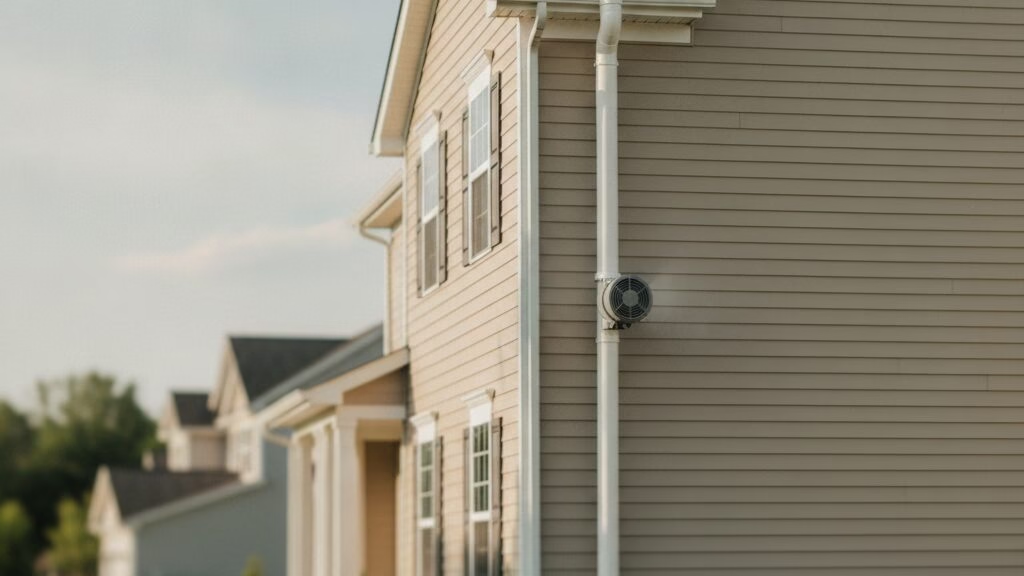
Post-mitigation radon testing is the follow-up radon measurement you run after a radon system is installed, and its only job is to prove the system actually worked. Installing the fan and pipe is the visible part of the project. The post-mitigation test is what confirms the radon level in your home has dropped below the EPA action level of 4.0 pCi/L. Without that verification test, a homeowner is only assuming the system is doing its job. Across the St. Louis, MO metro, including St. Louis County and St. Charles County, Air Sense Environmental recommends arranging a separate follow-up test after installation. Confirm the testing provider, timing and price in the written estimate because the test is not automatically included. This guide covers why the test matters, when to run it, what to expect, and what to do if levels are still high.
What Is Post-Mitigation Radon Testing?
Post-mitigation radon testing is a short-term radon measurement taken after a mitigation system is installed and running, used to confirm the system reduced the home’s radon to a safe level. It is the same kind of test used to screen a home in the first place, just run after the work instead of before.
The test answers one specific question: is the radon level now below the EPA action level of 4.0 pCi/L? A pre-installation test tells you that you have a radon problem; the post-mitigation test tells you the problem is solved.
Why Does Post-Mitigation Radon Testing Matter?
Post-mitigation radon testing matters because radon is invisible, and a running fan alone does not prove the radon level dropped. You cannot see, smell, or taste radon, so the only way to know a system worked is to measure the air after it is installed.
A verification test closes out a job for a few reasons:
- A finished-looking system is not a guaranteed result. Foundation quirks, an unsealed crack, or an undersized fan can leave radon higher than expected.
- Big reductions still have to be confirmed. A large drop on paper still has to be measured on the actual home, not assumed.
- It creates documented proof. A confirmation reading gives a homeowner, or a future buyer, evidence the home now sits below 4.0 pCi/L.
The EPA frames this plainly in its Consumer’s Guide to Radon Reduction: your home should be tested again after it is fixed to be sure radon levels have been reduced. Air Sense Environmental recommends that customers arrange a separate follow-up test after installation.
When Should You Test After a Radon System Is Installed?
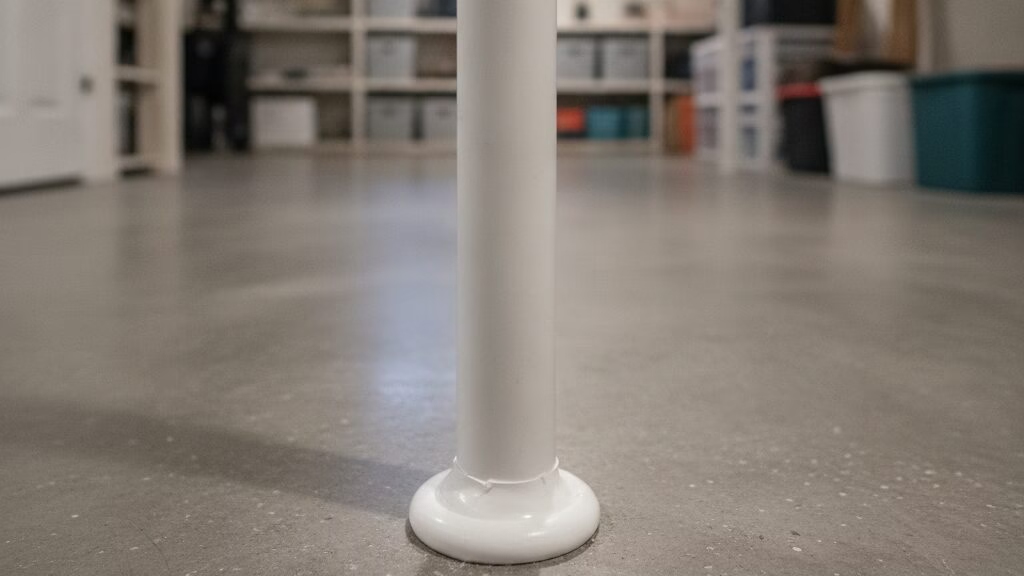
You should run a post-mitigation radon test no sooner than 24 hours after the system starts running, and within 30 days of installation. The 24-hour wait gives the new system time to draw down the radon already in the home, so the reading reflects normal operation rather than the spike that was there before.
The EPA’s guidance is specific. Its Consumer’s Guide states the post-mitigation measurement should be done within 30 days of system installation, but no sooner than 24 hours after your system is in operation with the fan on. For the test itself, the EPA recommends a two- to seven-day measurement to gauge how well the system is working. A short-term test in that window, often run for 48 hours, gives a reliable picture without waiting months.
Two practical points keep the reading trustworthy:
- Closed-house conditions. Windows and exterior doors stay closed for 12 hours before and during the test, except for normal entry and exit, so weather and ventilation do not skew the result.
- An independent reading. The EPA recommends getting an independent follow-up measurement in addition to any test the contractor runs, which removes any conflict of interest from the result.
What Radon Level Should You Expect After Mitigation?
After mitigation, you should expect the radon level to fall below the EPA action level of 4.0 pCi/L, and a well-designed system usually brings it comfortably under that. The EPA recommends action at 4.0 pCi/L or higher, and because there is no known safe level of radon, it also suggests considering a fix between 2.0 and 4.0 pCi/L.
The reductions are typically large. The EPA’s Consumer’s Guide reports that some radon reduction systems can reduce radon levels by up to 99 percent, and that even homes with very high readings can be brought below 4.0 pCi/L with a properly designed system. If the reading comes back under 4.0 pCi/L, the system passed.
How Often Should You Retest Radon After Mitigation?
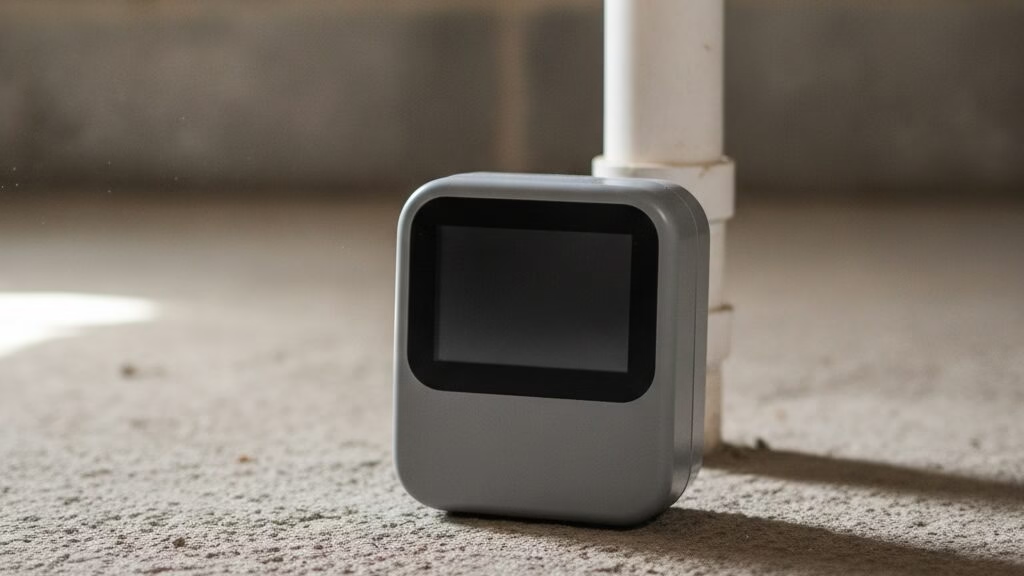
You should retest your home at least every two years after mitigation, even after a system passes its first verification test. Radon systems are mechanical and a fan will not run forever, so a periodic check confirms the home is still protected.
The EPA’s Consumer’s Guide advises that it is a good idea to retest your home at least every two years to be sure radon levels remain low, and to look at the system’s warning device on a regular basis to make sure the system is working correctly. That warning device, usually a simple manometer mounted on the pipe, shows at a glance that the fan is still pulling suction.
A few situations call for a retest sooner:
- After major work. A renovation or foundation repair can open a new radon entry path.
- If the warning device changes. A manometer reading that shifts can mean the fan has lost suction or stopped.
- After fan service. The EPA notes fans may last five years or more, and a repaired or replaced fan is worth confirming with a fresh test.
Between tests, the manometer is the homeowner’s everyday check; the every-two-year test is the formal confirmation.
What If Radon Levels Are Still High After Mitigation?
If a follow-up test still reads at or above 4.0 pCi/L, contact the installer for a system assessment. The appropriate next step depends on the property, diagnostic findings and the written service agreement.
Common fixes include:
- Sealing more entry points. Unsealed cracks, an open sump, or gaps around utility penetrations can let radon bypass the system.
- Adding a suction point. Larger or compartmentalized foundations sometimes need a second suction point to cover the whole slab.
- Adjusting the fan. An undersized fan can be upgraded to pull more soil gas from beneath the foundation.
This is why a separate follow-up test matters. If the result remains at or above the EPA action level of 4.0 pCi/L, contact Air Sense Environmental for an assessment. Testing responsibility, adjustments, warranty coverage and related costs depend on the written estimate and service agreement.
Why Post-Mitigation Testing Matters for St. Louis-Area Homes
Post-mitigation testing matters in the St. Louis area because the metro spans a part of Missouri and Illinois where elevated radon is common, and its mix of foundation types means results vary from house to house. A confirmation test turns a finished install into a documented, verified result.
Air Sense Environmental is based in Edwardsville, Illinois and installs systems across the St. Louis metro, including St. Louis County, St. Charles County, Jefferson County, and cities such as O’Fallon, Illinois and O’Fallon, Missouri. Owner Jake (Jacob) Lusby holds Illinois IEMA Mitigation Professional license RNM20232346, with Air Sense Environmental listed as his employer. Homeowners weighing their options can see how the whole process fits together through Air Sense Environmental’s St. Louis radon mitigation services and should confirm separate follow-up testing arrangements in the written estimate.
Frequently Asked Questions About Post-Mitigation Radon Testing
How long after radon mitigation should you wait to test?
You should wait at least 24 hours after the system starts running before testing, and complete the test within 30 days of installation, per EPA guidance. The 24-hour wait lets the system draw the home down to its normal operating level. A two- to seven-day short-term test then gives a reliable confirmation reading.
What is a good radon level after mitigation?
A good radon level after mitigation is anything below the EPA action level of 4.0 pCi/L, and many systems bring the home well under that. Because there is no known safe level of radon, a reading near or below 2.0 pCi/L is an even stronger result. The post-mitigation test confirms where your home landed.
Can the radon contractor do the post-mitigation test?
Yes, a contractor can run a post-mitigation test, but the EPA also recommends an independent follow-up measurement. An independent reading removes any conflict of interest and gives the homeowner documented, third-party proof the system works.
How often should you retest radon after installing a system?
You should retest at least every two years after installing a system, per EPA guidance, and sooner after a major renovation or if the warning device shows the fan has lost suction. Checking the system’s manometer regularly is the everyday way to confirm the fan is still running.
What happens if radon is still high after a mitigation system is installed?
If radon is still at or above 4.0 pCi/L after a system is installed, contact the installer for a system assessment. Possible next steps can include checking seals, suction points or fan performance, but the appropriate work and any coverage depend on the diagnostic findings and written service agreement.
Schedule Your Post-Mitigation Radon Test
A radon system is only proven once a follow-up test confirms the level dropped below 4.0 pCi/L. Air Sense Environmental installs radon mitigation systems and recommends a separately arranged follow-up test to measure the result. Schedule your free in-home consultation and confirm the testing provider, timing and price in the written estimate.