Edwardsville’s Humid Climate: Common Mold Problems and Prevention Tips for Illinois Homeowners
Driving through Edwardsville, from the historic homes lining Main Street near the courthouse to the newer developments in Esic and Governors Run, our Midwestern charm comes with a unique set of climate challenges. The warm, muggy summers and wet springs create an environment where moisture can quickly turn into a persistent problem for homeowners, especially in areas like Montclaire and the properties around Dunlap Lake. At Air Sense Environmental, founded by Jake Lusby and Jake Jackson, we’ve seen firsthand how Edwardsville’s weather patterns contribute to pervasive indoor air quality issues, with mold being a prime concern.
Addressing mold in Edwardsville isn’t just about cleaning up a visible patch; it’s about understanding and tackling the root cause: uncontrolled moisture. Our team, led by owner Jake Lusby, regularly assists Edwardsville residents in pinpointing these hidden culprits and implementing effective strategies. This article will explain why our specific climate makes mold a constant threat, how to spot early signs, and crucial mold prevention tips Edwardsville Illinois homeowners can implement to protect their properties and health.
Edwardsville’s Persistent Humidity and Its Impact
Edwardsville’s climate, classified as humid continental, means we experience significant temperature extremes alongside notable humidity fluctuations throughout the year. While we often focus on sweltering July highs, mold problems often begin much earlier. The “muggier period” in Edwardsville stretches for over four months, from mid-May to late September, with July experiencing the most “muggy, oppressive, or miserable” days – an average of 21.3 days per month that fit this description. This sustained period of elevated moisture sets the stage for mold proliferation.
Beyond the summer swelter, Edwardsville averages between 42.7 and 45 inches of rain annually, which is considerably wetter than the national average of 38 inches. May, in particular, stands out as the wettest month, with an average rainfall of 5.1 inches and around 12 rainy days. This consistent precipitation, combined with average annual humidity levels hovering around 69%, creates a dense, moisture-laden atmosphere. Your home acts like a sponge: when the surrounding air is perpetually damp, its structure and contents absorb that moisture, creating ideal conditions for mold spores—which are always present—to germinate and thrive. It’s not just about obvious leaks; it’s about the microscopic moisture that permeates everything.
Edwardsville Homes: Problem Escalation
Edwardsville’s architectural landscape is varied, with a substantial portion of homes built between 1970 and 1999, and another 20.47% dating back to 1940-1969. The median age of Edwardsville real estate is around 40 years old. Many of these older properties, particularly those found in established areas like the Edwardsville East district or near the original City Center, were constructed before modern vapor barrier standards and advanced moisture control techniques were widespread. This makes them particularly susceptible to the insidious creep of moisture, which often manifests as Edwardsville basement mold or issues in poorly ventilated crawl spaces.
Unchecked humidity has significant consequences. What starts as a musty smell in a finished basement in the Stonebridge subdivision can quickly escalate into visible mold growth on drywall, insulation, or stored items. In crawl space mold Edwardsville homes frequently grapple with, the problem often goes unnoticed until structural damage to floor joists or subflooring occurs, or until the musty odors begin to permeate living spaces. This isn’t just an aesthetic issue; mold can degrade building materials over time, compromising the integrity of your home. Moreover, the presence of mold significantly impacts indoor air quality Edwardsville residents breathe, potentially leading to allergic reactions, respiratory problems, and other health concerns, as highlighted by the Illinois Department of Public Health. Our skilled professionals at Air Sense Environmental are often called to homes where seemingly minor leaks or persistent dampness have silently fostered extensive mold colonies behind walls or under flooring, requiring detailed water damage restoration to resolve.
Edwardsville’s Environmental Factors Amplifying Mold Risk
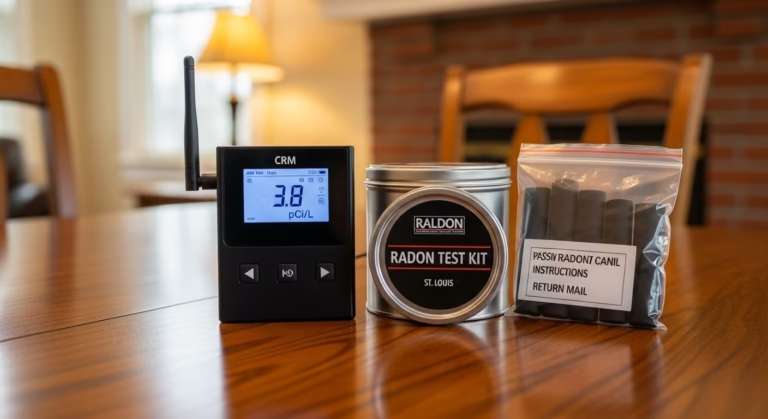
Edwardsville’s environment presents several factors that elevate the risk of mold growth. Beyond the general humidity and rainfall, the local geology and our built environment play significant roles. The soil composition in the Midwest, for instance, is a known contributor to naturally occurring radon gas, and while not directly causing mold, poor sealing against soil gases often correlates with pathways for soil moisture entry.
Consider the seasonal patterns: Edwardsville experiences warm, humid summers and very cold, snowy winters. In colder months, the “stack effect” can pull air, and with it, moisture from the ground and basements, upwards into the living spaces. Conversely, during the muggy summer, warmer, humid air can condense on cooler surfaces in basements and crawl spaces, leading to persistent dampness. The municipal water supply, drawn from deep aquifers passing through limestone bedrock, is notably “very hard,” with 430 ppm total dissolved solids, and has a “D” grade for health guideline compliance due to multiple contaminants. While hard water doesn’t directly cause mold, the presence of high TDS can exacerbate water damage issues and potentially leave residues that feed certain types of microbial growth if not properly cleaned after a leak.
Across Edwardsville, whether you’re in the historic character homes of Leclaire, the family-friendly streets of Glen Carbon (a neighboring community we serve), or the newer construction in Holiday Shores, these localized factors contribute to the pervasive challenge. Homes in flood-prone areas near Cahokia Creek or the Mississippi River bottomlands face obvious water intrusion risks, but even properties on higher ground in subdivisions like Bluff Woods Estates or Grand View Hills can experience significant moisture issues in their crawl spaces or basements due to the clay-rich soils retaining water. The International Residential Code – 2021 Edition, which Edwardsville has adopted, emphasizes foundational waterproofing and ventilation, yet older homes often lack these modern protective measures, making them prime candidates for `crawl space mold Edwardsville` homeowners often discover.
Practical Mold Prevention and Detection in Your Edwardsville Home
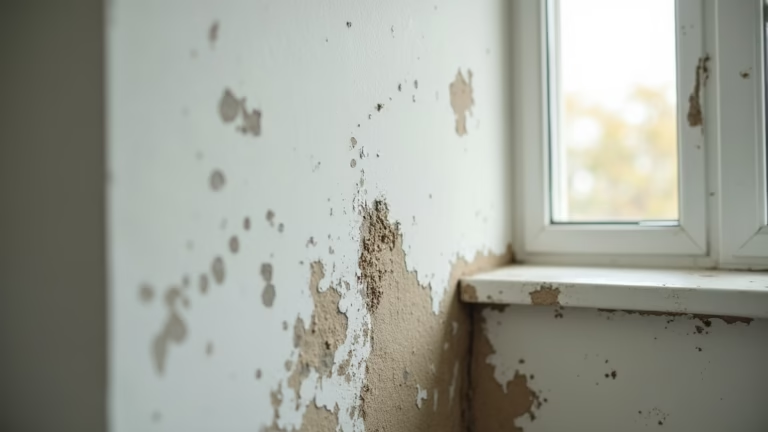
Early recognition of mold signs is critical for effective prevention in Edwardsville, Illinois. It’s not always about seeing fuzzy green patches. Often, the first indicator is a persistent, musty odor—like old, damp earth or rotting leaves—especially noticeable in areas like your basement in Cedar Ridge or a crawl space beneath a home in Arbor Lake. This smell is a strong signal that mold is present, even if hidden behind walls or under carpeting. Another key sign is the appearance of water stains or discoloration on walls, ceilings, or floors that don’t seem to dry completely. Peeling paint or wallpaper, especially in bathrooms or near exterior walls, can also indicate underlying moisture issues.
Keep an eye out for condensation on windows, pipes, or cold surfaces, particularly during humid seasons. This indicates an excess of moisture in your indoor air. For homeowners in older Edwardsville properties, checking around windows and doors for drafts or water intrusion after heavy rains is crucial, as even small leaks can introduce enough moisture for mold to begin. If you or family members experience unexplained allergy-like symptoms that seem to improve when you leave the house, it could be a sign of mold impacting your indoor air quality Edwardsville. Our team encounters scenarios where residents in areas like Goshen Meadows notice persistent sniffles or headaches, only to find hidden mold during a thorough indoor air quality assessment.
Air Sense Environmental: Edwardsville’s Mold Prevention and Indoor Air Quality Experts
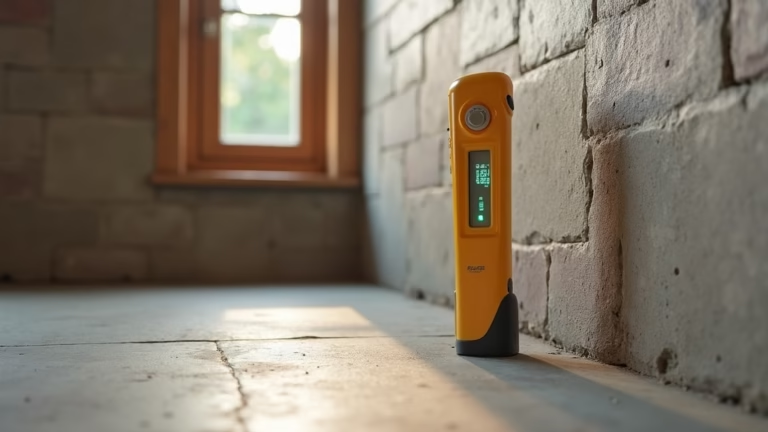
Effectively addressing mold in Edwardsville requires more than just surface cleaning; it demands a comprehensive understanding of environmental science and building diagnostics. At Air Sense Environmental, our approach to mold prevention and remediation is rooted in expertise and tailored solutions. While the Illinois Department of Public Health generally doesn’t recommend mold testing if visible mold or its odor is present, we offer comprehensive indoor air quality testing to identify hidden moisture problems and potential airborne contaminants that contribute to mold growth. Our licensed experts, including owner Jake Lusby, utilize advanced diagnostic tools to precisely locate moisture sources and assess the extent of the problem.
Our team specializes in creating customized solutions, whether it’s enhancing `humidity control Edwardsville homes` need through proper ventilation and dehumidification systems, or implementing robust `crawl space encapsulation` strategies. For instance, we’ve helped numerous Edwardsville homeowners, like one client in the Ebbets Field Estates, who was dealing with consistently high humidity levels in their basement that fostered a persistent musty smell. After our assessment, we installed an AprilAire whole-home dehumidifier, integrated with their HVAC system, and sealed several air leaks, reducing their indoor humidity from a problematic 70% to a healthy 45% within days. This meticulous approach extends to our radon mitigation system installation services, where we prioritize sealing entry points, which coincidentally helps prevent moisture intrusion that can lead to mold. We pride ourselves on quick response and scheduling, understanding that prompt action is key to mitigating environmental concerns.
Protecting Your Edwardsville Home Against Mold
Edwardsville offers a wonderful quality of life, but residents must be proactive about managing our local climate’s impact on homes. Effective mold prevention in Edwardsville, Illinois, hinges on vigilant moisture control and understanding our region’s unique challenges. By staying aware of the signs of mold and acting quickly when they appear, you can protect your property and the health of your family.
Don’t let Edwardsville’s humid climate compromise your indoor environment. For comprehensive indoor air quality solutions, including advanced humidity control and expert assessments, turn to the local specialists. Learn more about our services or visit our Edwardsville service area page for more information. Contact Air Sense Environmental today for a free estimate and let our skilled professionals help you ensure a healthy, mold-free home.
Frequently Asked Questions
How does Edwardsville’s average humidity specifically contribute to basement mold?
Edwardsville experiences an average annual humidity of 69%, with the summer months (May through September) being particularly muggy. This sustained high outdoor humidity means that basements, which are naturally cooler and often poorly ventilated, become prime locations for condensation. When warm, humid air from outside or upper floors meets the cooler basement surfaces, water vapor condenses, leading to perpetually damp walls, floors, and personal belongings. This creates the ideal moisture content for Edwardsville basement mold to develop and spread rapidly, often before it’s even visible.
What are the most common signs of hidden crawl space mold in Edwardsville homes?
Hidden `crawl space mold Edwardsville` homeowners encounter often manifests through a distinct, earthy, or musty odor that permeates the living spaces above, even if no visible mold is present in the main house. Other signs include unexplained allergy-like symptoms among residents, such as sneezing, coughing, or skin irritation, particularly when at home. You might also notice cupping or buckling of hardwood floors on the main level directly above the crawl space, or increased pest activity, as damp, moldy environments attract insects and rodents.
How can Edwardsville residents improve indoor air quality to prevent mold?
Improving `indoor air quality Edwardsville mold` prevention requires a multi-pronged approach. First, prioritize effective humidity control: aim for indoor relative humidity levels between 30-50% using a properly sized dehumidifier, especially in basements and crawl spaces during our humid summers. Ensure adequate ventilation in kitchens and bathrooms to exhaust moist air. Regularly inspect and maintain your HVAC system, replacing filters frequently, and consider an Energy Recovery Ventilation (ERV) system, which Air Sense Environmental often recommends, to exchange stale indoor air with fresh outdoor air without significant energy loss. Finally, promptly address any leaks or water intrusions, as even minor dampness can initiate mold growth.