
St. Louis Metro · Missouri & Illinois
Radon in Basements
Radon in basements is the highest concentration of radon found anywhere in a typical home, because the basement sits in direct contact with soil where uranium decays into radon gas.
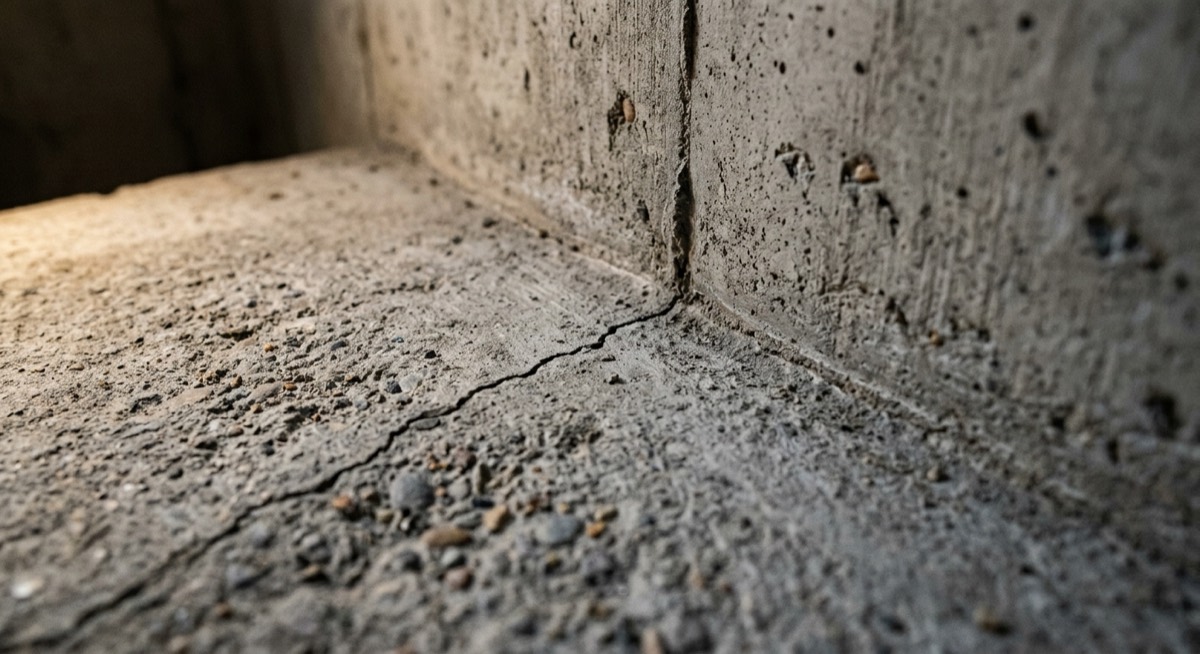
Radon enters the basement through slab cracks, the floor-wall joint, and sump pits, then settles there because radon is about nine times denser than air. The EPA estimates about 1 in 15 US homes, roughly 6.6 percent, test at or above the radon action level of 4.0 pCi/L, and the basement is where that reading is taken.
Radon in basements is routine across the St. Louis metro, including St. Louis County and Jefferson County.
Where Basement Radon Sits
Systems are engineered to bring your home below the EPA action level of 4.0 pCi/L.
Measured, not guessedEntry Points
What causes radon in basements?
Radon collects in basements because the basement is the part of the house in direct contact with soil, and the house itself pulls soil gas inward. Uranium in soil and rock decays into radon, the radon migrates upward through the ground, and the lower pressure inside a heated home draws it through any opening in the foundation.
The common entry points into a basement are:
- Cracks in the concrete slab and foundation walls
- The floor-to-wall joint, where the slab meets the foundation
- Sump pits and uncovered sump baskets
- Gaps around plumbing, electrical, and utility penetrations
- Construction joints and unsealed expansion gaps
- Exposed soil in an adjoining crawl space
Radon is roughly nine times denser than air, so once it enters, it settles into the lowest space it can reach. That density is why basement readings are higher than main-floor readings in the same house on the same day.
Prevalence
How common is radon in basements?
Radon is present in essentially every home, but the EPA estimates that about 1 in 15 homes in the United States, roughly 6.6 percent, exceed the action level of 4.0 pCi/L. Those two facts get confused constantly, and the distinction matters.
Every house has some measurable radon, because radon is produced by ordinary uranium decay in ordinary soil. What varies is concentration. A home reading 0.6 pCi/L and a home reading 12 pCi/L both have radon. Only one of them needs a mitigation system.
The EPA action level of 4.0 pCi/L is the line where the EPA recommends fixing the home, and in some regions of the country more than half of homes test above it.
Distribution
Are radon levels higher in the basement?
Yes. Radon levels are consistently highest on the lowest lived-in level of a house, and they typically drop by roughly 50 percent for each floor you go up.
A typical basement reading of 8 pCi/L distributes roughly like this:
- Basement: 8 pCi/L, twice the EPA action level of 4.0 pCi/L
- Main floor: near 4 pCi/L, at the action level
- Second floor: near 2 pCi/L, below the action level but above outdoor background
This gradient is the reason radon testing protocol places the test in the lowest lived-in level. Testing a second-floor bedroom on a house with a finished basement will understate the exposure of anyone who actually uses that basement.
Myth Correction
Is radon only in basements?
No. Radon is not confined to the basement, it is simply most concentrated there. The gas moves throughout the house through stairwells, HVAC ductwork, and ordinary air circulation, so a home with a radon problem in the basement has elevated radon on the floors above it as well.
The practical difference is one of degree:
- Basement: highest concentration, and where the test belongs
- Main floor: typically about half the basement reading
- Upper floors: lower again, but still above outdoor background
Treating radon as a basement-only problem leads homeowners to assume that avoiding the basement avoids the exposure. It does not, because the air in the basement does not stay in the basement.
No Basement
Can you have radon without a basement?
Yes. Homes with no basement at all get radon, and slab-on-grade and crawl-space houses regularly test above the EPA action level of 4.0 pCi/L. The requirement for a radon problem is soil contact and a pressure difference, and every house has both.
- Slab-on-grade: radon enters through slab cracks, control joints, and utility penetrations, exactly as it does through a basement floor
- Crawl space: an unsealed dirt or gravel crawl space is often the single largest radon entry point in a house, because there is no slab at all between the soil and the home
- Pier and beam: better natural ventilation underneath, but enclosed or skirted foundations can still trap and concentrate soil gas
Crawl-space homes deserve particular attention, since sealing the crawl space is frequently the step that does the most work. Crawl space encapsulation is treated as a key element of radon mitigation for exactly this reason.
Movement
Does radon travel upstairs from the basement?
Yes. Radon travels upstairs from the basement through two well-understood mechanisms, which is why an unused basement offers no protection to the rest of the house.
- The stack effect: warm indoor air rises and escapes through the upper part of the house, which creates a slight vacuum at the bottom. That vacuum pulls soil gas up through the foundation and then draws basement air upward into the living space.
- HVAC circulation: a furnace or air handler with a return vent in the basement will pull basement air into the ductwork and distribute it to every room in the house.
Because radon is denser than air, concentration still falls as you go up, roughly 50 percent per floor. But lower is not absent. A basement at 16 pCi/L can still put the main floor near the EPA action level of 4.0 pCi/L.
Risk
Is radon in the basement really that bad?
Radon is the second leading cause of lung cancer in the United States according to the EPA, and it is a risk that builds over years of exposure rather than one that produces any immediate symptom. That framing matters, because radon causes no cough, no headache, and no short-term illness that would prompt anyone to test.
Three things define how radon risk actually behaves:
- It is cumulative. Risk accrues from sustained exposure over years, not from a single day in the basement.
- It is delayed. The EPA and CDC describe a latency period of roughly 5 to 25 years between sustained radon exposure and the appearance of disease.
- It is silent. Radon produces no cough, fever, or short-term symptom that would prompt anyone to test.
Radon is also measurable and fixable, which separates it from most environmental risks. A test costs very little, and a home that reads above the EPA action level of 4.0 pCi/L can be brought down with a radon mitigation system.
Common Misconception
Do air purifiers remove radon from a basement?
No. Air purifiers do not remove radon from a basement, because radon is a gas that passes straight through HEPA filters and standard activated carbon.
What an air purifier can and cannot do about basement radon:
- Cannot remove radon gas. A HEPA filter captures particles, and radon is not a particle.
- Cannot stop radon entry. A purifier does nothing about the gas still moving through the foundation.
- Can capture some radon decay products. The solid radioactive particles that form as radon breaks down attach to household dust, and a filter catches some of those.
The only method that addresses the source is sub-slab depressurization, which pulls the gas from beneath the foundation and vents it outside before it enters the house.
Seasonality
In what month are basement radon levels highest?
Basement radon levels are highest from December through February, and remain elevated from roughly October through April. Winter readings are typically the highest a house will produce all year.
Three things stack up in cold weather:
- Closed-house conditions. Windows and doors stay shut, so there is far less air exchange to dilute the radon.
- A stronger stack effect. The temperature gap between indoor and outdoor air grows, increasing the suction that pulls soil gas through the foundation.
- Heating system pressure. Furnaces and air handlers add their own pressure differences that draw more radon inward.
This is why the EPA recommends testing during the heating season, and why a summer test can understate a home’s true annual average.
Local Conditions
How St. Louis basements compare on radon
The St. Louis metro sits on geology that produces meaningful radon, and readings differ noticeably across the region. Much of St. Louis County and St. Charles County is underlain by limestone and shale with enough uranium content to generate elevated soil gas, and the Illinois side of the metro, including Madison and St. Clair counties, carries its own elevated zones.
Local building stock matters as much as local geology. The St. Louis area has a very high proportion of homes with full basements, many of them older, with settled foundations, unsealed sump pits, and floor-wall joints that have opened over decades. A poured foundation from the 1950s in Kirkwood behaves differently from a 2015 slab in Wentzville.
That is why a neighbor’s radon result is a useful signal but never a substitute for testing the specific house, and why a system is designed around one home’s foundation rather than a regional average. See our service area for the communities we cover across Missouri and Illinois.
Common Questions
Frequently Asked Questions About Radon in Basements
How do you tell if a basement has radon?
The only way to tell if a basement has radon is to test it, because radon is invisible, odorless, and tasteless. Place a short-term test kit or a continuous radon monitor in the lowest lived-in level, about 20 inches above the floor, away from drafts and exterior walls, and keep windows and doors closed for the duration of the test. There are no reliable physical signs. Musty smells and foundation cracks indicate soil-gas pathways, not radon levels.
Can you get rid of radon in your basement?
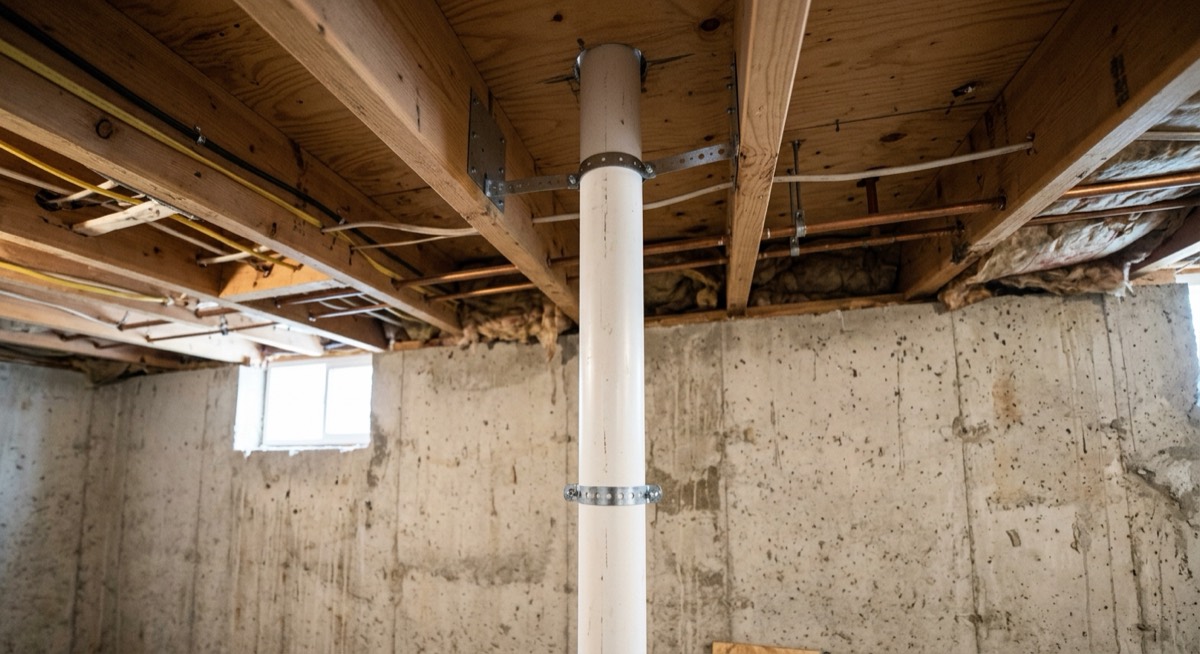
Yes, radon in a basement can be reduced reliably with an active sub-slab depressurization system. A contractor cores a hole through the basement slab, runs a sealed PVC pipe from beneath the foundation up and out above the roofline, and installs an inline fan that draws soil gas out continuously before it enters the house. Sealing cracks, the floor-wall joint, and the sump pit improves the system’s suction. Properly designed systems routinely bring homes well below the EPA action level of 4.0 pCi/L.
Does homeowners insurance cover radon mitigation?
No. Standard homeowners insurance does not cover radon testing or radon mitigation, because insurers classify radon as a gradual environmental condition rather than a sudden accidental loss. Standard home warranties exclude it as well. In a real estate transaction, however, radon mitigation is frequently negotiated between buyer and seller, and the cost is often split or credited at closing.
Can you live in a house with high radon?
Yes, you can live in a house with high radon while you arrange to fix it, because radon risk accumulates over years rather than causing immediate harm. There is no need to leave the home over a single elevated test result. The appropriate response is to confirm the reading and install a mitigation system, not to relocate.
What houses are most likely to have radon?
Houses most likely to have elevated radon are those with basements or crawl spaces in direct soil contact, homes built over uranium-bearing soil and rock, tightly sealed energy-efficient homes with limited air exchange, and older homes whose foundations have settled and cracked. Any of these raise the odds, but none of them are diagnostic. Homes with every risk factor test low, and homes with none test high.
References: EPA radon action-level guidance and A Citizen’s Guide to Radon.
Find Out For Certain
Test your basement for radon
Radon in a basement is not something you can see, smell, or infer from the age of the house. A radon test is the only thing that tells you whether the basement is above or below the EPA action level of 4.0 pCi/L.