
St. Louis Metro · Missouri & Illinois
Radon Fan Replacement
Radon fan replacement restores suction to a mitigation system when the fan slows down or stops running.
Most radon fans last five to ten years. When one fails, radon levels can climb back up with no obvious sign inside the house.
We replace fans on systems we installed and on systems installed by other companies.
The Target on Every Install
Systems are engineered to bring your home below the EPA action level of 4.0 pCi/L.
Built to performDiagnosis
Signs Your Radon Fan Has Failed
- The fan has gone silent, or the usual hum has changed pitch
- The manometer fluid has leveled out
- A new rattle or vibration from the pipe
- The fan housing is cracked or water has gotten in
- A recent radon test came back higher than the last one
Quick Check
How to Read Your Manometer
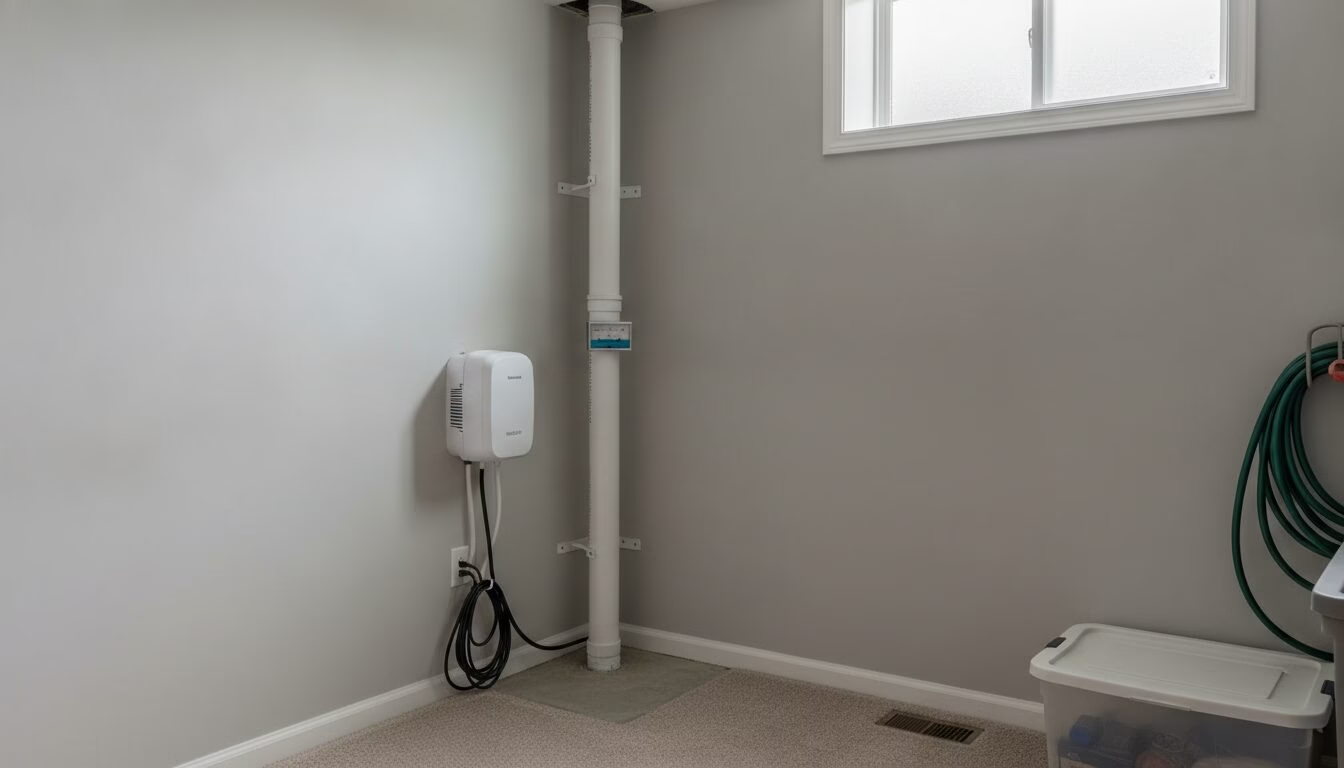
The manometer is the small U-shaped tube attached to your vent pipe.
When the system is pulling, the fluid sits at different heights on each side. When both sides are level, the system is not moving air, and the fan is the usual cause.
It takes about ten seconds to check, and it is worth doing a few times a year.
Hardware
Fans We Install
Fan selection depends on your foundation and how much resistance the system sees.
A fan sized for a slab-on-grade home will not perform the same on a house with a deep sub-slab layer or a large crawl space. We size the replacement to the system rather than fitting whatever matches the pipe.
Other Installers
Replacing a Fan on Another Company’s System
We service systems we did not install.
If the original installer is out of business or no longer responsive, we can assess the system and replace the fan without rebuilding the installation.
If we find other problems, we tell you before doing the work.
Timeline
What Replacement Involves
Most fan replacements are handled in a single visit.
The old fan comes off the stack, the new one goes on, and we confirm the manometer shows suction again before leaving.
We recommend a follow-up radon test afterward to confirm the level in your home.
Cost
What It Costs
Cost depends on the fan your system needs and whether any pipe work is required.
We quote the replacement before starting, so there is no open-ended charge.
In the Field
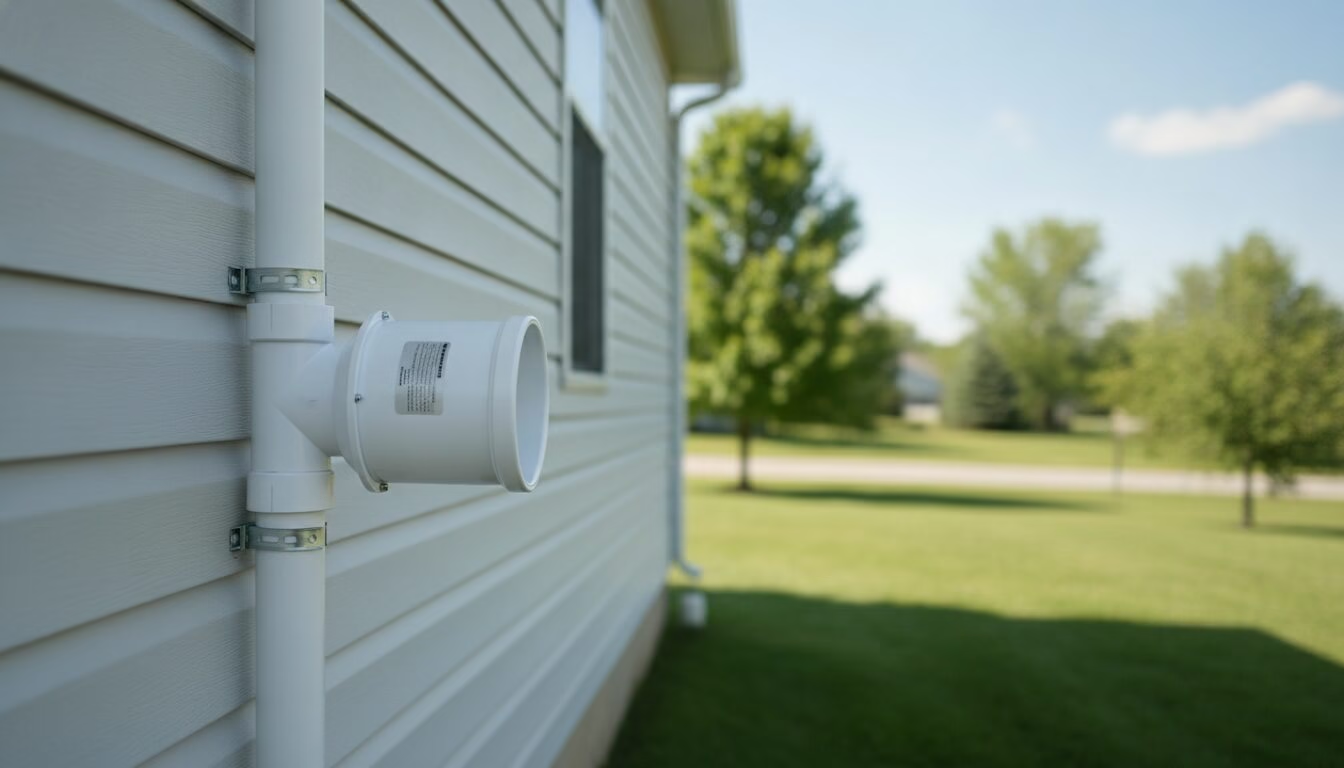
Fans and Systems We Service
Common Questions
Frequently Asked Questions About Radon Fan Replacement
How often should I replace my radon fan?
Replace a radon fan when it fails, not on a fixed calendar. Fans run around the clock and many last for years, but bearings and motors do wear out. Check the U-tube manometer on the vent pipe every few months. If the fluid levels out, the fan goes quiet or changes pitch, or a retest climbs back toward the EPA action level of 4.0 pCi/L, it is time for a replacement.
How does a radon fan work?
A radon fan is an inline fan mounted on the vent pipe outside the living space. It runs continuously to create suction under the slab or crawl space liner, pulling soil gas into the pipe before it can enter the house and exhausting it above the roofline. The manometer on the pipe shows the fan is pulling, and a follow-up radon test confirms the level actually dropped.
Can I turn my radon fan off at night?
No. A radon fan has to run 24 hours a day to keep suction under the foundation, and indoor radon often peaks overnight. Switching it off lets soil gas start entering again, so the system stops protecting you while you sleep. If noise is the reason you want it off, the fan, its mounting or the pipe usually needs attention instead, and Air Sense Environmental can diagnose a noisy fan.
How do you replace a radon fan motor?
Most radon fans are sealed units, so the whole fan is usually replaced rather than just the motor. Replacing one generally means shutting off the power, loosening the rubber couplings, removing the old fan, putting in a suitable new fan, reconnecting the wiring and checking the system’s pressure gauge. Which fan is right depends on the house and the existing system. Air Sense replaces radon fans, and a follow-up radon test shows how the system is working afterward.
Get It Running
System gone quiet?
Call and we will walk through the manometer check with you on the phone first.