
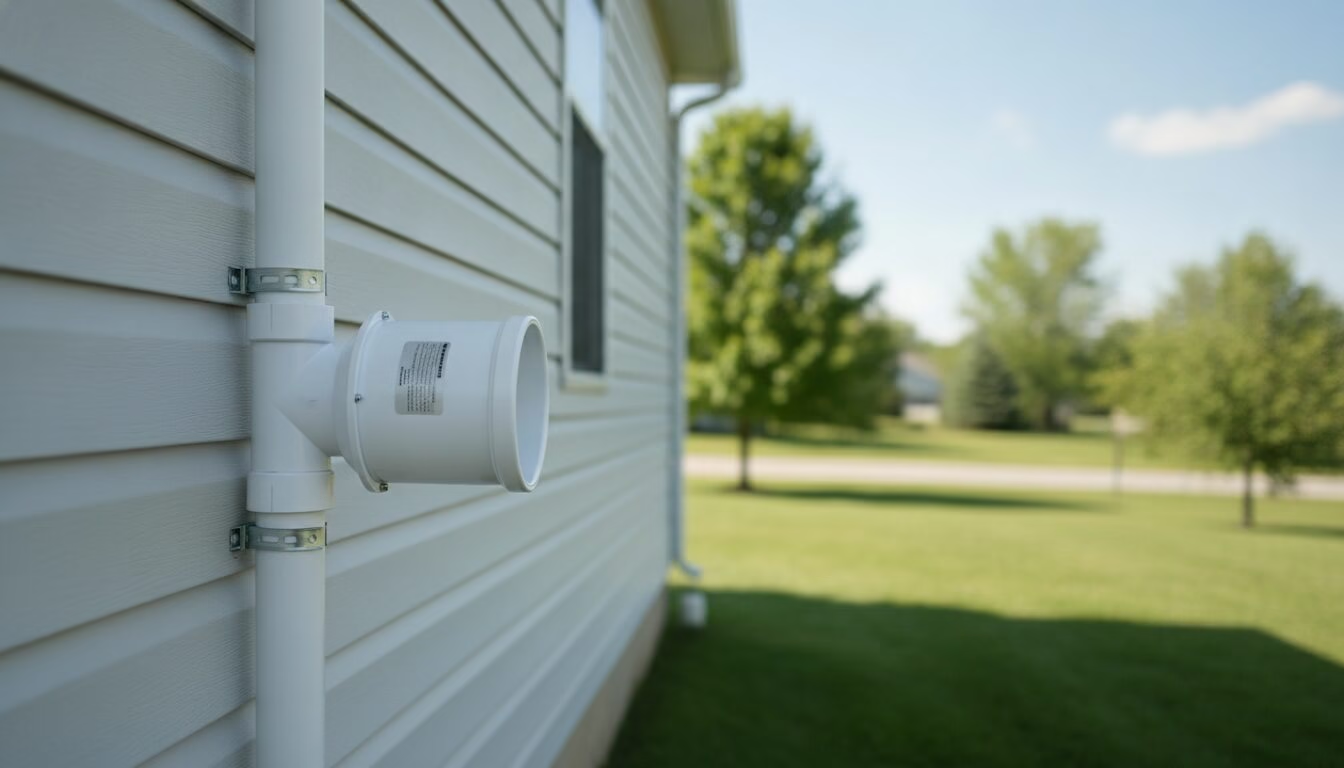
A radon mitigation fan does not use a lot of electricity. The fan is the only powered part of a radon system, it draws roughly 30 to 90 watts, and it runs continuously, which most industry sources estimate at about $4 to $12 a month, or somewhere between $50 and $150 a year, depending on the fan and your local rate. For homeowners across the St. Louis, MO metro, including St. Louis County and St. Charles County, that puts the radon mitigation fan electricity cost on par with leaving a single lightbulb on around the clock. This guide breaks down the wattage, the monthly and yearly cost, how the fan compares to everyday appliances, and how a properly sized fan keeps the number low.
Key Takeaways: Radon Fan Electricity Use
- A radon fan is the only powered part of a mitigation system and draws roughly 30 to 90 watts.
- Running one around the clock uses about as much power as a single incandescent lightbulb.
- The fan must run continuously to keep the soil under negative pressure.
- EC motors and correct fan sizing are the biggest levers on operating cost.
Does a Radon Mitigation Fan Use a Lot of Electricity?
No. A radon mitigation fan is a small, low-draw motor, not a major appliance. Most residential radon fans pull between 25 and 100 watts of power, and the common models are rated around 60 to 70 watts, according to radon supply specialists such as PDS Radon Supply. That rating is the maximum draw, and a fan often uses less once it is installed on a sealed system. A unit rated at 60 watts, for example, may settle at 30 to 40 watts during normal operation.
Just as important, the fan is the only part of the system that needs electricity. The vent pipe, the suction point, and the seals all work passively. So when people ask whether a radon system is expensive to run, they are really asking about one small fan motor, which is why the total number stays modest.
How Much Does It Cost to Run a Radon Fan Each Month and Year?
Monthly and Annual Operating Cost
Industry estimates put the cost of running a radon fan at roughly $4 to $12 a month, or about $50 to $150 a year. The exact figure comes down to two things: how many watts your fan draws and what you pay per kilowatt-hour. The U.S. Energy Information Administration reports that the average U.S. residential electricity price has run near 17 cents per kilowatt-hour through 2024 and 2025, and the table below uses that rate to show how wattage maps to cost.
| Fan wattage | Approx. yearly electricity | Approx. monthly |
|---|---|---|
| 30 watts (efficient, well sized) | about $45 | about $4 |
| 50 watts (typical) | about $75 | about $6 |
| 70 watts (common rating) | about $105 | about $9 |
| 90 watts (larger or multi-point system) | about $135 | about $11 |
How Wattage and Utility Rates Change the Total
These dollar figures are industry estimates based on continuous, year-round operation at an average residential rate near 17 cents per kilowatt-hour. Your actual cost depends on your specific fan and your local utility rate, so a home in St. Louis County may land at a slightly different number than the table suggests. The takeaway holds either way: the radon mitigation fan electricity cost is measured in single-digit dollars per month for most homes.
How Does a Radon Fan Compare to a Lightbulb?
Power Use Compared With an Incandescent Bulb
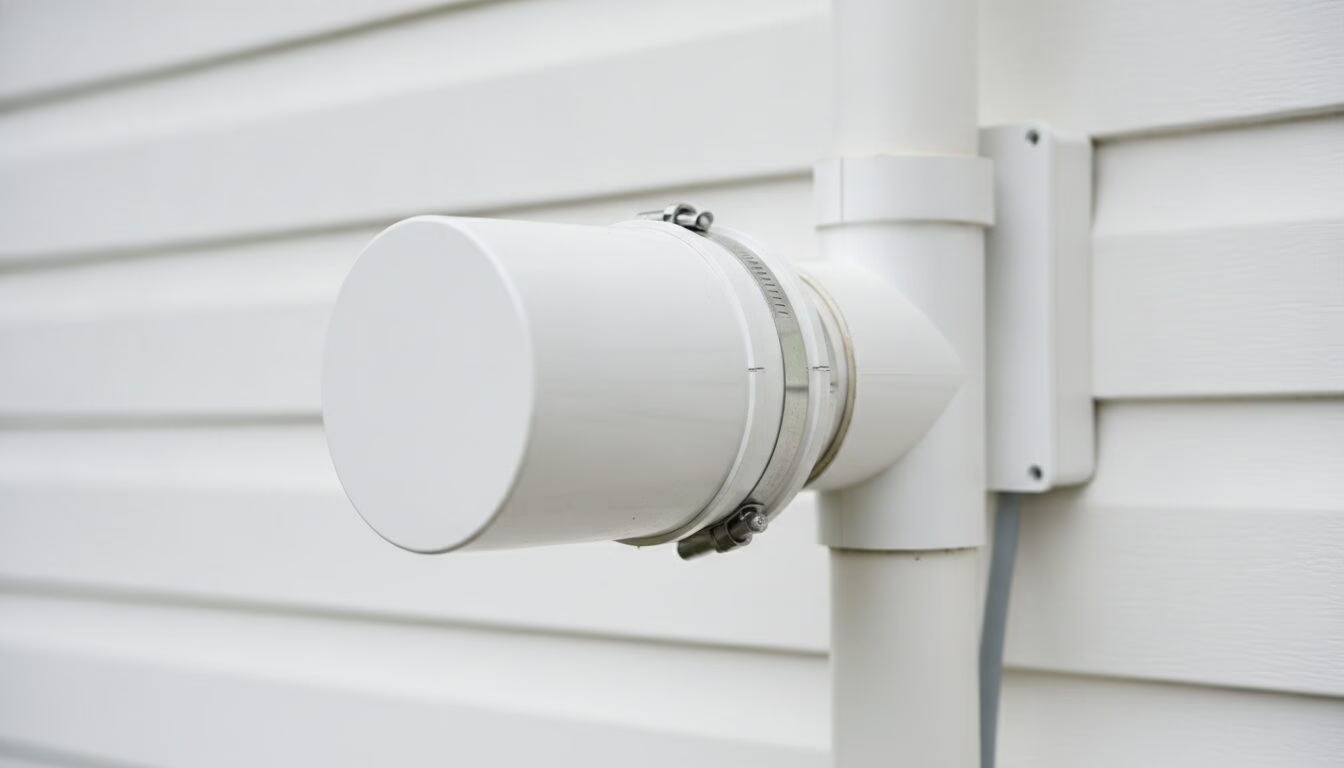
A continuously running radon fan uses about the same power as a single old-style incandescent lightbulb left on around the clock. Many in the radon industry describe the draw as roughly equivalent to a 75-watt bulb running nonstop, which is an easy way to picture it. Measured against today’s appliances, the fan is even more modest: it uses far less than a refrigerator, a dehumidifier, or a space heater, all of which cycle on and off at much higher wattages.
Put another way, a radon fan running 24 hours a day, 7 days a week is one of the smaller always-on loads in a typical home. That is by design. The system is meant to protect your air quality quietly in the background without becoming a line item you notice on the electric bill.
Why Does the Radon Fan Run 24 Hours a Day?
Continuous Negative Pressure Requires 24/7 Operation
The fan runs continuously because it holds the soil beneath your home under constant negative pressure, which keeps radon gas flowing out through the vent pipe instead of seeping up into your living space. The moment the fan switches off, that suction stops and indoor radon can begin climbing back toward where it started.
This is also why running the fan is not optional once levels are high. The EPA recommends installing a radon mitigation system when a home tests at 4.0 pCi/L or higher, and it is the fan’s steady, around-the-clock operation that keeps a treated home below that 4.0 pCi/L action level. The small, predictable electricity cost is simply the price of keeping the system doing its job every hour of the year.
Can an Energy-Efficient Radon Fan Lower the Electricity Cost?
EC Motors and Fan Efficiency
Yes. The single biggest lever on operating cost is the fan itself, specifically its motor type and whether it is sized correctly for your home. Standard radon fans use AC motors. Newer fans built with EC motors, sometimes called ECM motors, run roughly 40 percent more efficiently because they adjust their speed to the system’s actual demand rather than running at full power all the time.
Why Correct Fan Sizing Matters
Proper sizing matters just as much. An oversized fan can pull 100 watts or more, while a fan matched to the home often draws 20 to 60 watts for the same result. A right-sized EC fan can meaningfully cut the yearly number, which is part of why a careful diagnosis before installation pays off. The goal is the lowest wattage that still keeps the home safely below the action level, not the biggest fan available.
Does a Radon System Add to Heating and Cooling Costs?
The Small Heating and Cooling Tradeoff
There is one small secondary cost beyond the fan’s electricity. Because the system draws air from beneath the slab, it pulls a modest amount of already heated or cooled air along with the soil gas, a minor heating and cooling loss. The Minnesota Department of Health’s guidance on calculating energy costs for mitigation systems notes that this conditioned-air loss is real but is kept small when the suction point and floor cracks are well sealed.
In practice, a tightly sealed system limits that loss to a few dollars over a season for most homes, which is why thorough sealing is part of a quality installation rather than an afterthought. Good sealing also lets the fan work less hard, so it helps the electricity number too.
What the Radon Fan Electricity Cost Means for St. Louis Homeowners
What St. Louis Homeowners Should Budget
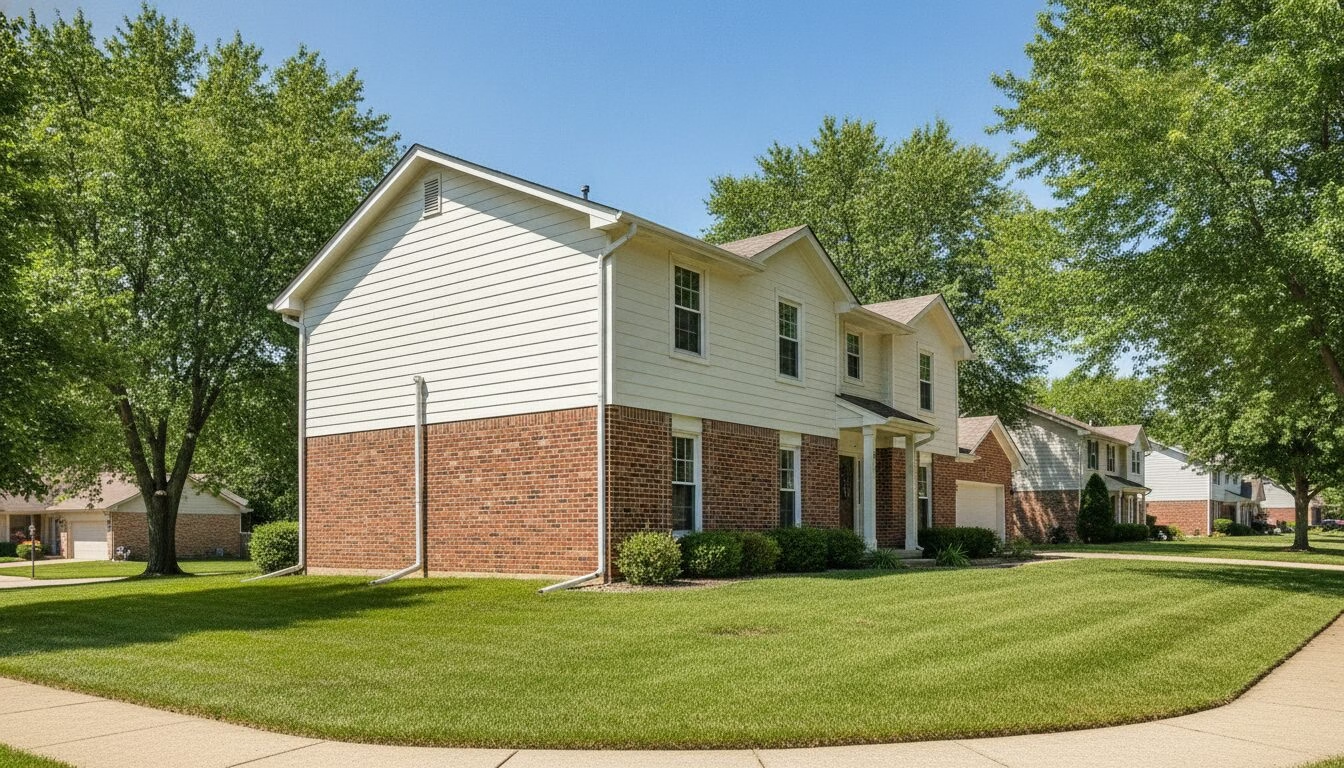
For St. Louis-area homeowners, the practical message is that operating cost should never be a reason to delay testing or mitigation. A few dollars a month is a small, fixed expense for keeping your home’s air below the EPA action level year-round. Where the number does move is in the design, because an oversized or poorly sealed system quietly costs more to run for as long as it is installed.
That is where the right contractor makes the difference. Air Sense Environmental sizes each fan to the individual home, seals the system properly, and verifies the result with post-mitigation testing, so you are not paying to run a bigger fan than your home needs. The company is licensed in Illinois under IEMA #RNM20232346 and is NRPP-certified, and from its base in Edwardsville, Illinois it installs and services efficient systems across the metro, including St. Louis County, St. Charles County, and cities like O’Fallon, Illinois and O’Fallon, Missouri. If you want a system built to keep both your radon levels and your operating cost low, start with professional radon mitigation services in St. Louis.
Frequently Asked Questions About Radon Fan Electricity Cost
How much does it cost to run a radon fan per month?
Industry estimates put the cost at roughly $4 to $12 a month for most homes. The exact figure depends on your fan’s wattage and your local electricity rate, but a typical fan running continuously lands in single-digit dollars per month.
Does a radon mitigation fan use a lot of electricity?
No. A radon fan draws about 30 to 90 watts and is the only powered part of the system. That is roughly the same as leaving one incandescent lightbulb on around the clock, far less than a refrigerator or a space heater.
Can I turn off my radon fan to save money?
It is not recommended. The fan has to run continuously to keep the soil under negative pressure, and turning it off allows indoor radon to climb back up. The small electricity cost is what keeps a treated home below the 4.0 pCi/L action level.
Are energy-efficient radon fans worth it?
For many homes, yes. Fans with EC motors run about 40 percent more efficiently than standard AC fans and a properly sized fan draws far fewer watts, so a right-sized efficient fan can lower the yearly operating cost over the life of the system.
Does a radon mitigation system raise my heating bill?
Only slightly. Beyond the fan’s electricity, the system pulls a small amount of conditioned air from under the home, a minor heating and cooling loss. A well-sealed installation keeps that loss to a few dollars over a season for most homes.
Get a Free In-Home Radon Estimate
A low operating cost starts with a system designed and sized for your specific home, not a one-size-fits-all fan. Air Sense Environmental will evaluate your home, recommend an efficient system that fits it, and verify the outcome with post-mitigation testing. Schedule your free in-home estimate and get a clear, no-pressure plan for lowering the radon in your home while keeping your energy cost low.