
St. Louis Metro · Missouri & Illinois
Radon Mitigation System Installation
Radon mitigation system installation is the process of sealing a suction point beneath your foundation, running a vent pipe from it to above the roofline, and adding an inline fan that pulls soil gas out of the ground before it enters the house.
Most radon mitigation system installations are finished in a single day. Nationally the work runs about $800 to $1,500, with roughly $1,200 being typical, and active systems reduce indoor radon by as much as 99 percent.
Air Sense Environmental installs systems across the St. Louis metro, on both the Missouri and Illinois sides, and every installation ends with a post-mitigation radon test.
What Installation Delivers
Systems are engineered to bring your home below the EPA action level of 4.0 pCi/L.
One-day installationThe Work
What does radon mitigation system installation involve?
Radon mitigation system installation involves creating a suction point under the slab, piping the soil gas out above the roofline, and sealing the openings that let radon in. The house is not torn up, and the work is done from the basement or crawl space in nearly every case.
A standard installation runs in this order:
- Diagnostics. A pressure-field test shows how air moves under the slab, which decides where the suction point goes and how strong a fan the system needs.
- Coring the slab. A hole is cut through the concrete and a pit is excavated in the aggregate below it.
- Piping. Sealed PVC runs from that pit up through the house or out the rim joist and above the roofline.
- Fan. An inline radon fan is mounted in an unconditioned space, either outside or in an attic, never in the living area.
- Sealing. The slab core, floor-wall joint, sump pit, and any open utility penetrations are sealed so the fan pulls from the soil rather than from the room.
- Manometer. A U-tube gauge is mounted on the pipe so the system’s suction can be checked at a glance.
Sealing on its own is not a substitute for any of this. The EPA is explicit that caulking and sealing alone do not lower radon levels consistently, because houses shift and open new pathways.
Cost
How much does radon mitigation system installation cost?
Radon mitigation system installation costs about $800 to $1,500 for a typical home, with roughly $1,200 being the common figure nationally. Larger homes, multiple foundation types, or a crawl space needing encapsulation push the range to $1,500 to $3,000 or more.
The pieces that move the number:
- Foundation type. A single basement slab is the simplest case. A house with a basement plus a crawl space plus an addition may need more than one suction point.
- Pipe routing. A straight exterior run is cheaper than routing through interior closets to hide the pipe.
- Fan sizing. Tight soil needs a stronger fan than loose aggregate.
- Testing. Professional radon testing before or after runs roughly $150 to $700.
- Permits. Where required, typically $25 to $150.
Running costs are modest. The fan uses about $50 to $150 of electricity a year, and fans are generally replaced every several years. Air Sense Environmental quotes the installation before starting, so there is no open-ended charge.
Code
Where does the radon vent pipe have to exit?
The radon vent pipe has to discharge above the roofline, not at ground level, because radon is denser than air and a low discharge gets pulled straight back into the house through windows, doors, and soffit vents.
The standard clearances are:
- At least 12 inches above the roof surface at the point the pipe exits
- At least 10 feet from any window, door, operable skylight, or air intake
- At least 10 feet above ground level
- Discharging straight up, with no flat rain cap that would deflect exhaust back down
These clearances are the difference between venting radon and recirculating it. A system that discharges under an eave or next to a bedroom window can measure fine at the pipe and still leave the house elevated.
DIY
Can a homeowner install their own radon mitigation system?
A homeowner can technically install their own radon mitigation system, but state health departments and radon professionals generally advise against it, because the parts that decide whether the system works are the parts that are hardest to do without diagnostic equipment.
The failure points are specific:
- Suction-point placement. Without a pressure-field extension test, the pit can end up somewhere that only depressurizes part of the slab.
- Fan sizing. An undersized fan will not pull through compact soil. An oversized one wastes energy and can pull conditioned air out of the house.
- Discharge placement. Getting the clearances wrong can recirculate radon rather than remove it.
- Backdrafting. A poorly designed system can depressurize the house enough to pull combustion gases back down a furnace or water heater flue.
A DIY system that lowers radon partway still reads as a system to a future buyer and to a home inspector, which is how underperforming installations tend to go unnoticed for years.
Verification
What happens after a radon mitigation system installation?
After a radon mitigation system installation, the house is retested. That post-mitigation radon test is the only thing that proves the system actually worked, and it is not optional.
The system’s manometer shows that the fan is pulling, but pressure in the pipe is not the same measurement as radon in the air. A system can be running correctly and still leave a house above the EPA action level of 4.0 pCi/L if the suction field does not reach the whole slab.
Air Sense Environmental performs post-mitigation radon testing on every installation, and the EPA recommends retesting at least every two years afterward.
Local Conditions
Radon mitigation system installation in St. Louis homes
St. Louis housing stock makes radon mitigation system installation less uniform than it looks from a catalog. The metro has an unusually high proportion of full basements, many of them decades old, alongside newer slab-on-grade subdivisions in St. Charles and Jefferson counties.
A 1920s brick home in south St. Louis with a stone-and-mortar foundation does not take the same system as a 2015 poured slab in Wentzville. Older foundations often need more sealing work before the fan can develop suction, while newer homes with sub-slab aggregate frequently depressurize easily from a single point.
On the Illinois side, Madison and St. Clair counties carry their own elevated zones, and Illinois requires radon professionals to be licensed through IEMA. Air Sense Environmental holds IEMA license #RNM20232346 and is NRPP-certified, and works across both sides of the metro. Every system is designed around the specific foundation rather than a regional template, which is the same principle behind sub-slab depressurization generally.
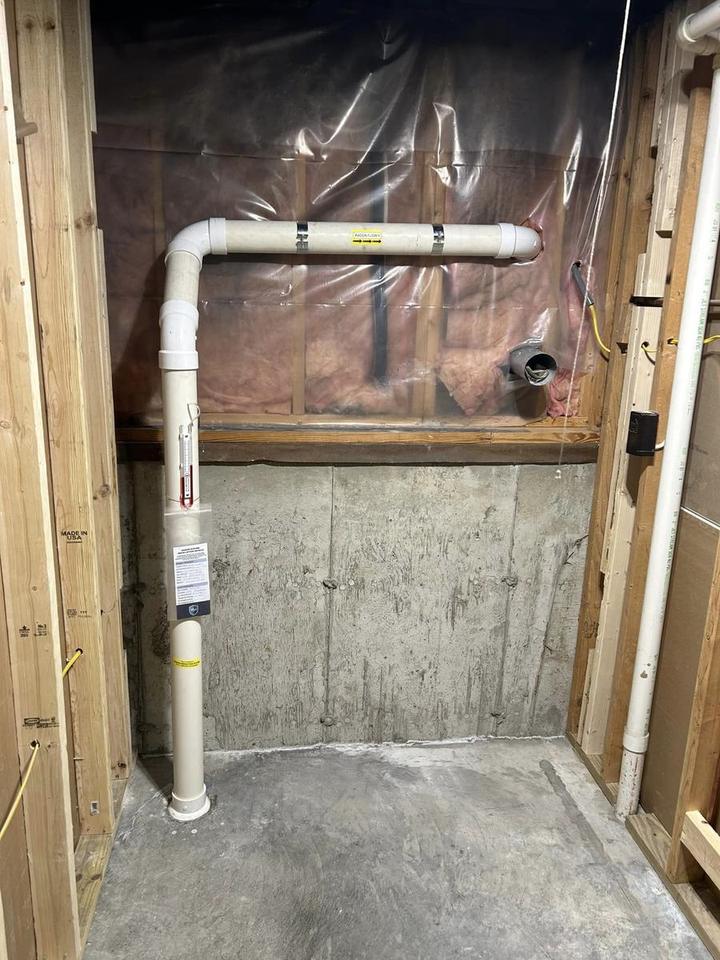
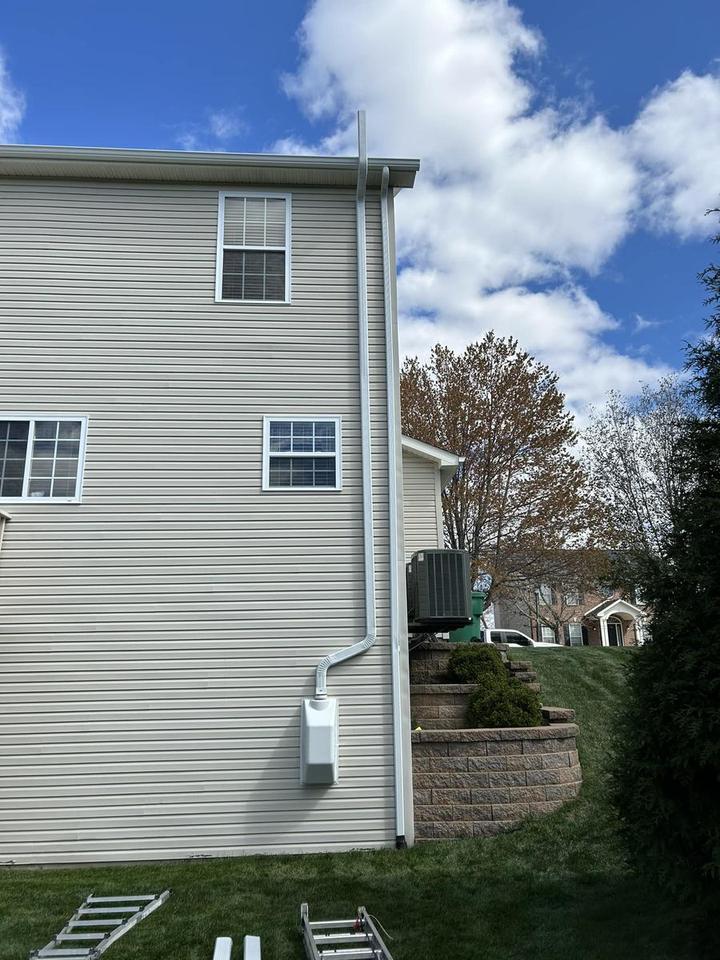
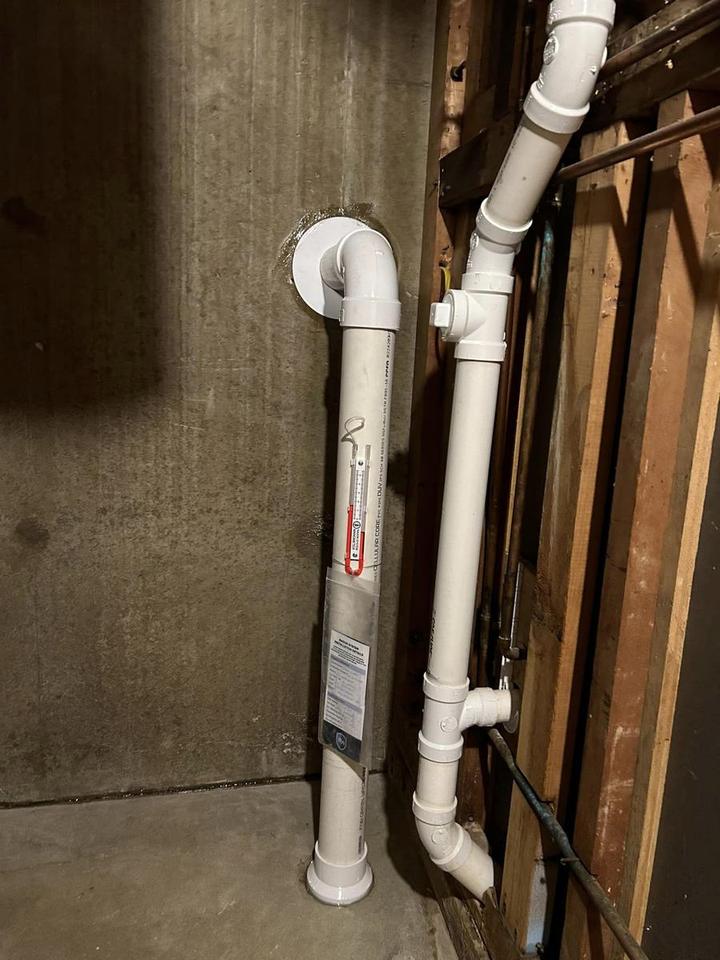
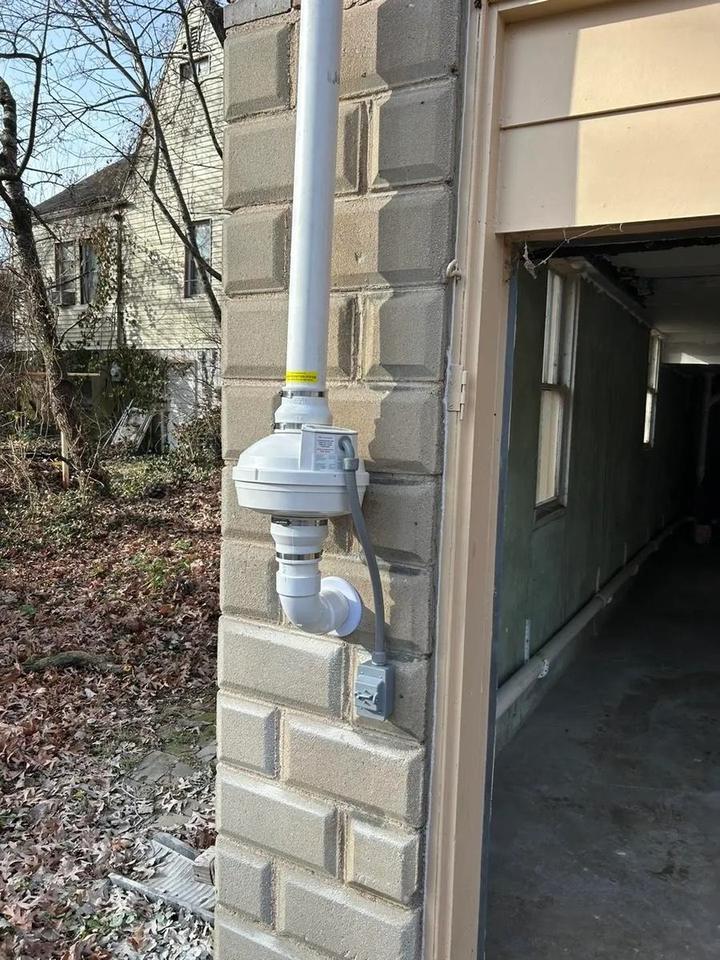
Recent radon mitigation system installations by Air Sense Environmental
Common Questions
Frequently Asked Questions About Radon Mitigation System Installation
Does a radon mitigation system have to run all the time?
Yes. A radon mitigation system is designed to run continuously, because radon enters the house continuously from the soil beneath it. Shutting the fan off allows levels to climb back toward where they were within hours. The fan uses roughly $50 to $150 of electricity per year, which is why leaving it running is the standard recommendation.
Does radon mitigation system installation require a permit?
It depends on the municipality. Some St. Louis area jurisdictions require a permit for radon mitigation system installation and some do not, with fees typically running $25 to $150 where they apply. Illinois additionally requires that radon mitigation professionals be licensed through IEMA. Air Sense Environmental handles permitting where it is required.
Will a radon mitigation system lower my radon below 4.0 pCi/L?
A properly designed radon mitigation system routinely brings homes well below the EPA action level of 4.0 pCi/L, and active soil depressurization systems can reduce indoor radon by as much as 99 percent. The only way to confirm the result in a specific house is a post-mitigation radon test, which is why one is performed after every installation.
How much electricity does a radon mitigation system use?
A radon mitigation fan uses roughly $50 to $150 of electricity per year, depending on the fan size and local rates. That is comparable to a single incandescent bulb left on continuously. Larger fans on high-resistance systems sit at the upper end of that range.
Can a radon mitigation system be installed on a house with a crawl space?
Yes. A house with a crawl space is mitigated with sub-membrane depressurization, where a sealed membrane is laid over the exposed soil and the suction point pulls from beneath it rather than from under a slab. Homes with both a basement and a crawl space often need the two approaches combined.
References: EPA radon action-level guidance and A Citizen’s Guide to Radon.
Get a Number First
Find out what your home needs
Every radon mitigation system installation starts with a test and a look at the foundation. We quote the work before anything begins.