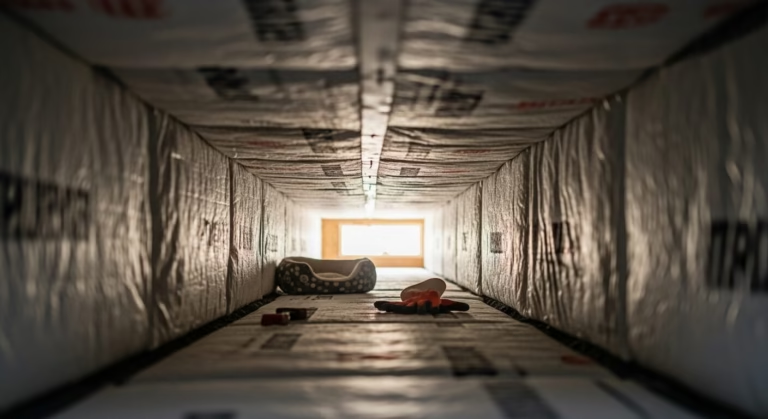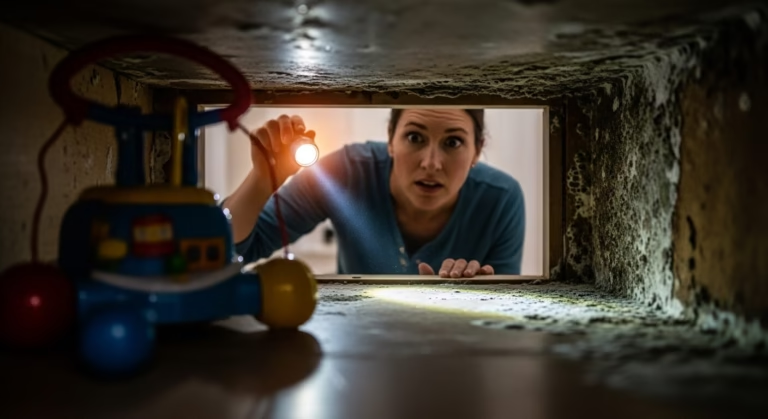
Historic homes in Kirkwood, Webster Groves, and Clayton often hide moisture problems behind charming period details and solid construction that has lasted over a century. These pre-1940s properties frequently feature stone foundations, pier-and-beam construction, and crawl spaces that weren’t designed with modern moisture control in mind. Air Sense Environmental’s Jake Lusby has worked on dozens of historic St. Louis area properties where crawl space encapsulation becomes both a preservation necessity and a complex technical challenge. ## What to Do About Crawl Space Moisture in Historic Kirkwood Homes – Schedule a moisture assessment before winter sets in, when St. Louis humidity drops and problems become less obvious
- Document any existing foundation materials like limestone blocks or clay tiles that need preservation consideration
- Check current radon levels with continuous monitoring – historic homes often trap radon more effectively than newer construction
- Identify any knob-and-tube electrical or old plumbing that might complicate encapsulation access
- Research your property’s historical designation status, as some Kirkwood neighborhoods have preservation guidelines
- Get multiple quotes specifically from contractors experienced with pre-war construction methods ## Crawl Space Encapsulation Cost Historic Homes Kirkwood MO Historic home encapsulation in Kirkwood typically runs 20-40% higher than standard projects due to unique structural challenges. While typical crawl space encapsulation averages $5,500-8,500 for newer homes, historic properties in Kirkwood’s older neighborhoods often require $7,000-12,000 for complete moisture control solutions. The difference stems from foundation complications common in homes built before 1940. Many Kirkwood historic properties sit on limestone block foundations that require specialized sealing techniques. Unlike poured concrete, these stone foundations have multiple mortar joints where moisture penetrates. St. Louis County building records show that roughly 60% of Kirkwood’s housing stock predates 1950, with many homes featuring crawl spaces that average 18-24 inches in height rather than the 36+ inches typical in modern construction. The restricted access means contractors often charge premium labor rates – typically $85-110 per hour compared to $65-85 for standard crawl space work. Material costs also increase because historic homes frequently need custom-cut vapor barriers to work around existing support beams, old utility runs, and irregular foundation shapes that weren’t built to standard dimensions. ## Foundation Repair Cost St. Louis Old House Challenges St. Louis County’s silt loam soil composition creates specific problems for historic foundations that directly impact encapsulation costs. The soil contains 61.7% silt, which retains moisture and expands during the region’s wet spring season when precipitation averages 10.5 inches from March through May. Historic homes in Kirkwood’s Meacham Park, Downtown Kirkwood, and North Kirkwood areas commonly show foundation settlement where original limestone blocks have shifted over decades of freeze-thaw cycles. The National Weather Service reports that St. Louis averages 40-50 thunderstorms annually, creating repeated moisture stress on foundations that lack modern waterproofing. Pre-encapsulation foundation repairs in historic homes typically add $2,000-5,000 to project costs. Common issues include repointing limestone mortar joints ($15-25 per linear foot), installing French drains around stone foundations ($25-35 per linear foot), and addressing structural settling that has created gaps where moisture enters. Many Webster Groves and Clayton historic properties also require asbestos testing before foundation work begins, adding $300-500 to upfront costs but mandated by Missouri Department of Health regulations for homes built before 1980. ## Moisture Control Solutions Historic Homes Historic homes present unique moisture challenges that standard encapsulation approaches don’t address. Original crawl spaces in Kirkwood’s older neighborhoods were designed for natural ventilation – a concept that worked when homes leaked more air but creates problems in partially weatherized historic properties. Many homes built in the 1920s-1930s feature crawl space vents that were never meant to be sealed, creating condensation issues when modern HVAC systems introduce temperature differentials. The regional humidity from the nearby Mississippi and Missouri Rivers compounds these problems. St. Louis averages 70% relative humidity during summer months, and poorly ventilated historic crawl spaces often reach 85-90% humidity levels that promote mold growth and wood rot in original floor joists. Jake Lusby from Air Sense Environmental frequently encounters historic homes where previous contractors attempted standard encapsulation without addressing the unique airflow patterns these older structures require. “You can’t just seal up a 1925 Kirkwood home the same way you’d handle new construction,” Lusby explains. “These houses need moisture control systems that work with their original ventilation design, not against it.” His approach often includes installing controlled ventilation systems alongside vapor barriers, adding $1,500-2,500 to standard encapsulation costs but preventing the moisture problems that plague improperly sealed historic crawl spaces. Historic properties also require specialized materials. Standard 6-mil plastic vapor barriers often fail around the irregular surfaces common in stone foundations. Professional-grade reinforced barriers rated for historic applications cost 40-60% more but provide the flexibility needed to seal around original foundation materials without cracking. ## Warning Signs in Kirkwood Historic Properties Historic homes show moisture problems differently than newer construction. Look for musty odors that seem stronger near interior walls adjacent to crawl spaces – this often indicates moisture is wicking up through original wood sill plates that lack modern moisture barriers. Check for floor squeaking or soft spots near exterior walls, particularly in rooms above crawl spaces. Many Kirkwood historic homes have original hardwood floors that telegraph moisture problems through movement or warping that wasn’t present when the house was drier. Peeling paint on interior walls near the floor level, especially in kitchens and bathrooms, often signals moisture migration from uncontrolled crawl space humidity. ## Kirkwood Crawl Space Contractors Pricing Factors Local contractors experienced with historic properties factor several cost elements that don’t apply to standard homes. Permit requirements vary depending on your property’s historical status – homes in Kirkwood’s locally designated historic districts may require preservation approval before major moisture control work begins. Access complications drive labor costs higher. Many historic Kirkwood homes have crawl space entrances that measure 16×24 inches compared to modern 18×30 inch standard openings. Contractors often need to temporarily expand access points to move equipment and materials, then restore original openings to maintain historic character. This process typically adds 6-8 hours of labor at $85-110 per hour. Material specifications also increase costs. Historic preservation guidelines in some Kirkwood neighborhoods require vapor barriers and insulation materials that don’t alter the visual character of foundation areas visible from exterior inspection. Air Sense Environmental stocks specialized materials that meet both moisture control performance standards and historic preservation requirements, though these products typically cost 25-30% more than standard options. ## Air Sense Environmental’s Historic Home Approach Air Sense Environmental has developed specific protocols for historic home encapsulation that address the unique challenges these properties present. Their process starts with comprehensive moisture mapping using advanced detection equipment to identify problem areas without invasive investigation that might damage original materials. Jake Lusby’s team uses state-of-the-art continuous radon monitors during initial assessments because historic homes often show elevated radon levels due to their construction methods and foundation types. “We had a 1928 Kirkwood home where the homeowner was focused on moisture control, but our testing revealed radon levels at 8.2 pCi/L,” Lusby recalls. “The encapsulation project became part of an integrated solution that addressed both moisture and radon – something you see frequently in these older properties.” Their encapsulation approach preserves historic foundation materials while creating effective moisture barriers. Rather than covering original limestone or stone block foundations completely, they use specialized sealing compounds that penetrate mortar joints while maintaining the visual character of historic masonry. The team partners with AprilAire to install controlled ventilation systems like the Model V22BEC Energy Recovery Ventilator, which manages moisture without disrupting the airflow patterns these older homes were designed around. One recent project in Webster Groves involved a 1920s home where previous moisture issues had damaged original floor joists. Air Sense Environmental coordinated the structural repairs with specialized historic preservation contractors, then installed a complete moisture control system that included vapor barriers, controlled ventilation, and an AprilAire E100 Dehumidifier calibrated for the home’s specific cubic footage and moisture load. The integrated approach cost $9,800 compared to $6,200 for standard encapsulation, but prevented the recurring moisture problems that had plagued the property for years. Historic home encapsulation requires contractors who understand both modern moisture science and traditional building methods. Air Sense Environmental’s experience with St. Louis area historic properties means they can navigate the technical challenges while preserving the character details that make these homes valuable. Their crawl space encapsulation services in St. Louis include specialized approaches for historic properties that standard contractors often can’t provide. For Kirkwood homeowners dealing with crawl space moisture in historic properties, the investment in proper encapsulation pays long-term dividends in structural preservation and indoor air quality. Air Sense Environmental offers free consultations that include historic-specific assessments and detailed cost breakdowns for the specialized materials and methods these properties require. Their radon mitigation expertise in Kirkwood also ensures that moisture control solutions address the full range of environmental concerns common in older homes. ## Frequently Asked Questions #### What permits do I need for crawl space encapsulation in a historic Kirkwood home? Most crawl space encapsulation projects don’t require building permits in St. Louis County, but historic properties may need preservation review if your home is in a locally designated historic district. Kirkwood’s Historic Preservation Commission reviews projects that alter foundation areas visible from the street or that might affect the structural character of designated properties. Contact Kirkwood’s Planning Department at 314-822-5872 to determine if your property requires historic review before starting encapsulation work. #### How does crawl space encapsulation affect home insurance for historic properties? Many insurance carriers offer premium reductions for historic homes with professional moisture control systems because encapsulation reduces claims related to mold, wood rot, and foundation damage. State Farm and Allstate both recognize crawl space encapsulation as a loss-prevention measure for properties over 50 years old. Document your encapsulation project with before/after photos and professional installation certificates – some carriers provide 5-10% discounts on homeowners policies for verified moisture control improvements. #### Can I encapsulate a crawl space with knob-and-tube electrical wiring? Historic homes with original knob-and-tube wiring require electrical assessment before encapsulation because these systems rely on air circulation for heat dissipation. Encapsulation that restricts airflow around knob-and-tube installations can create fire hazards. Most contractors require electrical upgrades or at minimum, certified inspection showing the wiring can safely operate in an enclosed environment. Budget an additional $2,000-4,000 for electrical modifications in historic homes with original wiring systems.