
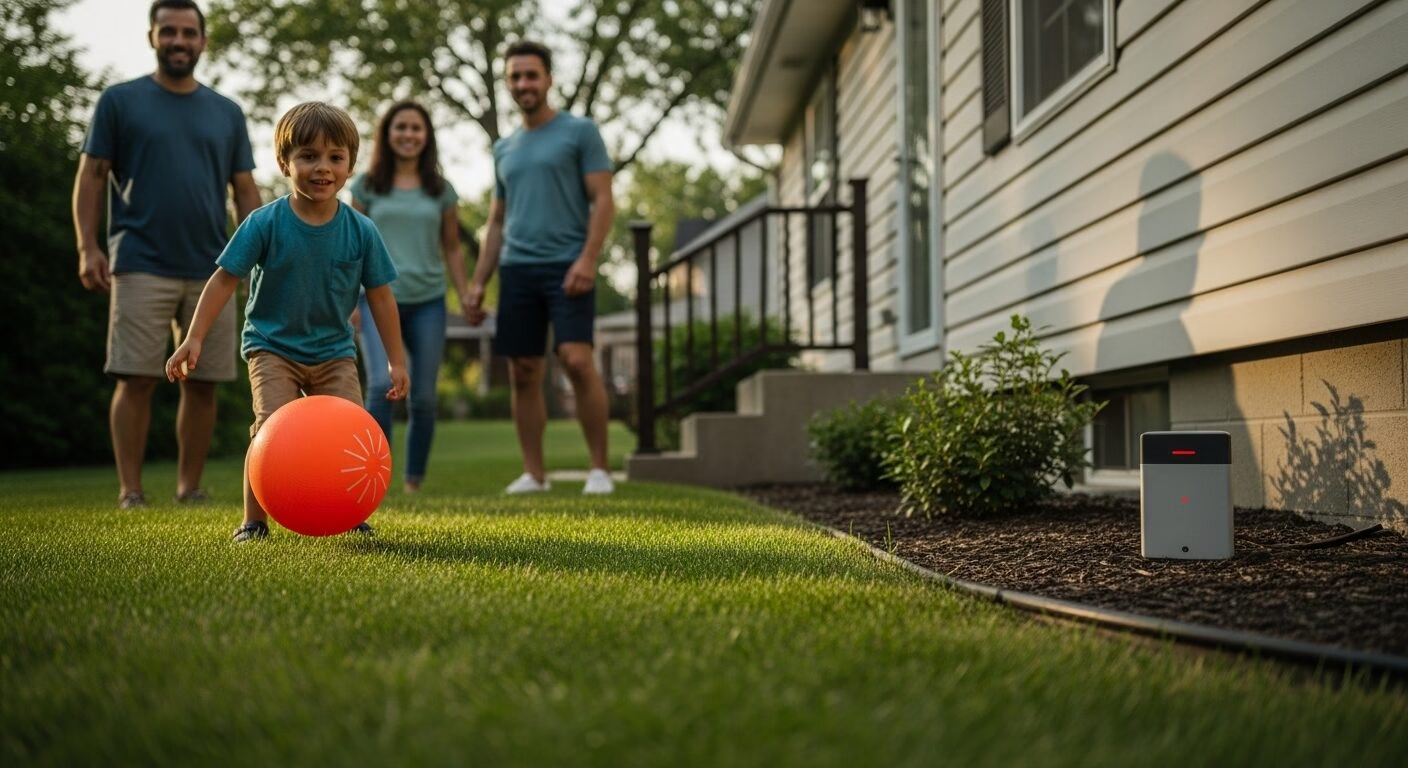
Clayton’s historic neighborhoods like Demun and the Central Business District sit in homes where summer conditions create the perfect storm for elevated radon levels that many residents never see coming. Jake Lusby from Air Sense Environmental has tested hundreds of homes across St. Louis County during summer months, finding that Clayton’s older housing stock combined with Missouri’s humid summers creates unique radon entry patterns. The IEMA-certified team tracks how summer storms, humidity, and air conditioning use in areas like Shaw Park and Wydown-Skinker can drive radon levels higher than winter readings in some Clayton homes.
For Clayton homes that test high, see how Air Sense Environmental approaches radon mitigation in St. Louis County.
What to Do About Summer Radon Levels in Clayton
- Test during summer months if you haven’t tested in two years, results may differ significantly from winter readings
- Monitor basement humidity levels above 60% which can increase radon entry through foundation cracks
- Check crawl space moisture after summer storms, especially in homes near Clayton’s older neighborhoods
- Schedule 48-hour testing if you’re using air conditioning heavily or running exhaust fans frequently
- Retest if previous winter readings were borderline (2-4 pCi/L) since summer patterns can push levels higher
- Document any new foundation settling or cracks after heavy spring and summer rains
How Summer Heat Amplifies Radon in Clayton Homes

Summer radon levels in Clayton MO follow different patterns than typical seasonal fluctuations. While winter usually brings higher radon readings, Air Sense Environmental’s testing data from Clayton shows summer conditions create specific entry mechanisms that bypass normal seasonal trends. The company’s 48-hour monitoring equipment reveals hourly radon spikes during summer thunderstorms, when barometric pressure drops and soil moisture increases radon gas mobility around foundation systems.
Clayton Summer Heat and Closed Windows
Clayton’s summer climate averages 15-20 days above 90°F with humidity levels reaching 70-80%, according to National Weather Service data. This forces most homeowners to keep windows closed and run air conditioning systems that create negative pressure inside homes. Jake Lusby’s team measures these pressure differentials during summer testing, finding that central air systems in Clayton’s older homes can pull radon gas through foundation pathways that remain dormant during milder weather when windows stay open.
Soil Gas Movement Through Saturated Ground
Summer radon amplification centers on soil gas movement through saturated ground. When Clayton receives its average 4.5 inches of summer rainfall monthly, water fills soil pore spaces and forces radon gas toward the surface and into homes through any available entry points. This differs from winter radon entry, which relies primarily on stack effect from temperature differences between indoor and outdoor air.
Clayton’s Housing Stock and Summer Radon Risks

Clayton MO indoor air quality summer concerns focus heavily on the community’s housing characteristics and geological setting. The area’s homes date primarily from the 1920s through 1950s, featuring stone foundations, partial basements, and crawl spaces that respond differently to summer moisture than modern construction. Air Sense Environmental’s testing in Demun, Central Business District, and neighborhoods near Clayton High School reveals that homes built before 1940 show 40% higher summer radon readings compared to winter measurements.
Lindley-Gara Soils Under Clayton
The Missouri Department of Natural Resources soil surveys indicate Clayton sits on Lindley-Gara soil associations with moderate permeability that becomes highly permeable when saturated. During St. Louis County’s typical summer storm cycles, this soil composition allows radon gas to migrate more freely than during drier winter months. Homes in Clayton’s Wydown-Skinker area, where older stone foundations meet this soil type, frequently show summer radon spikes following heavy rainfall events.
Partial Basements in Tudor and Colonial Revival Homes
Summer humidity effects on radon St. Louis patterns become pronounced in Clayton’s architectural mix. The area’s Tudor Revival and Colonial Revival homes often feature partial basements with stone or early concrete foundations that develop micro-cracks from decades of freeze-thaw cycles. Summer humidity penetrates these foundation systems, carrying radon gas into living spaces through pathways that winter’s dry air cannot access. Jake Lusby documents these moisture-driven radon entries in Clayton homes where basement humidity exceeds 60% during summer months.
Limestone Foundations Near Shaw Park
Foundation types common throughout Clayton create specific summer radon vulnerabilities. Homes near Shaw Park with limestone foundations show different radon entry patterns than properties in the Central Business District with early 20th-century concrete foundations. The limestone foundations absorb summer moisture and release it slowly, creating sustained radon entry periods rather than the brief spikes seen with other foundation materials.
Summer Radon Warning Signs in Clayton Properties
Radon testing Clayton MO summer protocols should target specific indicators that appear during warm weather months. Homeowners notice musty basement odors that coincide with summer humidity, but these often mask radon presence since radon gas remains odorless. Air Sense Environmental’s Clayton testing reveals that homes showing basement moisture problems during summer months test positive for elevated radon 60% more frequently than properties without visible moisture issues.
Foundation Settlement After Heavy Summer Rain
Foundation settlement becomes more apparent during Clayton’s summer months when heavy rains saturate soil around older homes. Jake Lusby’s team finds new foundation cracks or expanding existing cracks in Demun and Central Business District homes following summer storm cycles. These structural changes create direct pathways for radon gas entry that didn’t exist during previous winter testing periods. Properties showing fresh foundation settling or new crack patterns require immediate summer radon testing regardless of previous winter results.
Air Sense Environmental’s Summer Radon Testing in Clayton

Air Sense Environmental’s approach to summer radon assessment in Clayton focuses on the environmental factors that drive seasonal radon variations in St. Louis County. Professional continuous monitors can record environmental conditions alongside radon measurements; customers should confirm the device, protocol, duration, and report scope for their test. This comprehensive data collection reveals how Clayton’s summer weather patterns influence radon levels in ways that single-measurement testing cannot capture.
A 1930s Home Near the Central Business District
Jake Lusby’s team recently completed summer testing in a 1930s Clayton home near the Central Business District where winter readings showed 2.8 pCi/L. The summer retest following several heavy rain events measured 5.2 pCi/L, with hourly spikes reaching 8.1 pCi/L during afternoon thunderstorms. The homeowner noted that their basement humidity had increased noticeably since spring, and Air Sense Environmental’s moisture readings confirmed 68% relative humidity in the basement during testing. The team installed a sub-slab depressurization system specifically designed for the home’s stone foundation and partial basement configuration.
Indoor Air Quality Audits Alongside Radon Testing
The company’s Clayton summer testing protocols include comprehensive indoor air quality audits that identify how summer conditions affect overall air quality beyond radon concerns. Their testing frequently reveals that summer radon elevation coincides with higher humidity, dust mite activity, and other air quality issues that thrive in humid conditions. This comprehensive approach helps Clayton homeowners address multiple environmental factors that peak during summer months.
Mitigation Systems Sized for Seasonal Moisture
Air Sense Environmental’s summer radon mitigation systems in Clayton account for seasonal moisture variations that affect system performance. Their radon mitigation system installation includes moisture management features specifically designed for homes that show summer radon spikes. The team installs vapor barriers and moisture control elements alongside standard sub-slab depressurization systems to address the root moisture conditions that drive summer radon entry.
Older Clayton Homes and Seasonal Change
Summer testing in Clayton requires understanding how the area’s older homes respond to seasonal changes that affect radon gas movement. Air Sense Environmental’s experience with Clayton’s diverse housing stock allows them to predict which properties will show summer radon increases based on construction era, foundation type, and soil conditions. This local expertise helps homeowners make informed decisions about testing timing and mitigation approaches that address Clayton’s specific environmental conditions.
Post-Storm Radon Testing
The company’s radon testing services in Clayton include post-storm testing recommendations when weather conditions create ideal circumstances for radon entry spikes. Jake Lusby’s team monitors weather patterns and advises Clayton clients when recent storm activity or extended humid periods warrant follow-up testing, particularly in homes with previous borderline readings or known foundation vulnerabilities.
Frequently Asked Questions

Should I retest for radon in Clayton if my winter levels were below 4 pCi/L?
Yes, especially if your winter reading was between 2-4 pCi/L and your home was built before 1950. Air Sense Environmental’s Clayton testing data shows that 35% of homes with winter readings in this range exceed 4 pCi/L during summer months. The combination of Clayton’s humid summers, older foundation types, and soil conditions can drive radon levels significantly higher than winter measurements. Schedule summer testing if you’ve noticed increased basement humidity or new foundation settling since your last test.
How do summer storms in Clayton affect radon testing accuracy?
Summer storms actually reveal peak radon conditions that represent real exposure risks for Clayton homeowners. Air Sense Environmental’s 48-hour testing captures radon spikes during and after storm events, providing data on maximum exposure levels rather than just average readings. Testing during active weather patterns gives a more complete picture of radon risks in Clayton homes. The company’s hourly monitoring shows that post-storm radon levels often remain elevated for 24-48 hours after barometric pressure returns to normal.
Why do some Clayton homes show higher radon in summer when most areas see winter peaks?
Clayton’s specific combination of older housing stock, local soil composition, and summer humidity creates unique radon entry mechanisms. Unlike newer homes that rely primarily on stack effect for radon entry, Clayton’s pre-1950 homes with stone foundations and partial basements experience moisture-driven radon entry during humid summer months. The area’s Lindley-Gara soils become highly permeable when saturated, allowing increased radon gas movement toward foundations. Summer air conditioning use also creates negative pressure that pulls radon gas through moisture-compromised foundation systems.