Radon mitigation in older homes is the work of installing a soil-suction system in an aging house to pull radon gas out of the ground and lower the level inside, and it takes more planning than the same job in newer construction. An older home tends to give radon more ways in, from hollow concrete-block walls to fieldstone foundations and partial basements, all of which are common in older St. Louis, MO homes and across St. Louis County and St. Charles County. The U.S. Environmental Protection Agency recommends radon mitigation once a home tests at 4.0 pCi/L or higher, a level older homes reach often enough that age alone is a reason to test. This guide explains what to expect from radon mitigation in an older home: how radon gets into an older foundation, which mitigation system fits an older foundation, what installation day looks like, what it costs, and how the work affects an older home.
What Makes Radon Mitigation Different in an Older Home?
Radon mitigation is different in an older home because the foundation is usually more porous and was almost never built with radon control in mind. Newer houses are often roughed-in with a gravel layer and a capped pipe under the slab, so a fan can be added cleanly. An older home rarely has that head start, and its foundation has had decades to settle, crack, and shift.
A few traits separate older houses from new construction when a system is designed:
- Mixed foundation types under one roof. Many older St. Louis homes combine a poured or block basement with a crawl space or a slab addition, and each section can need its own approach.
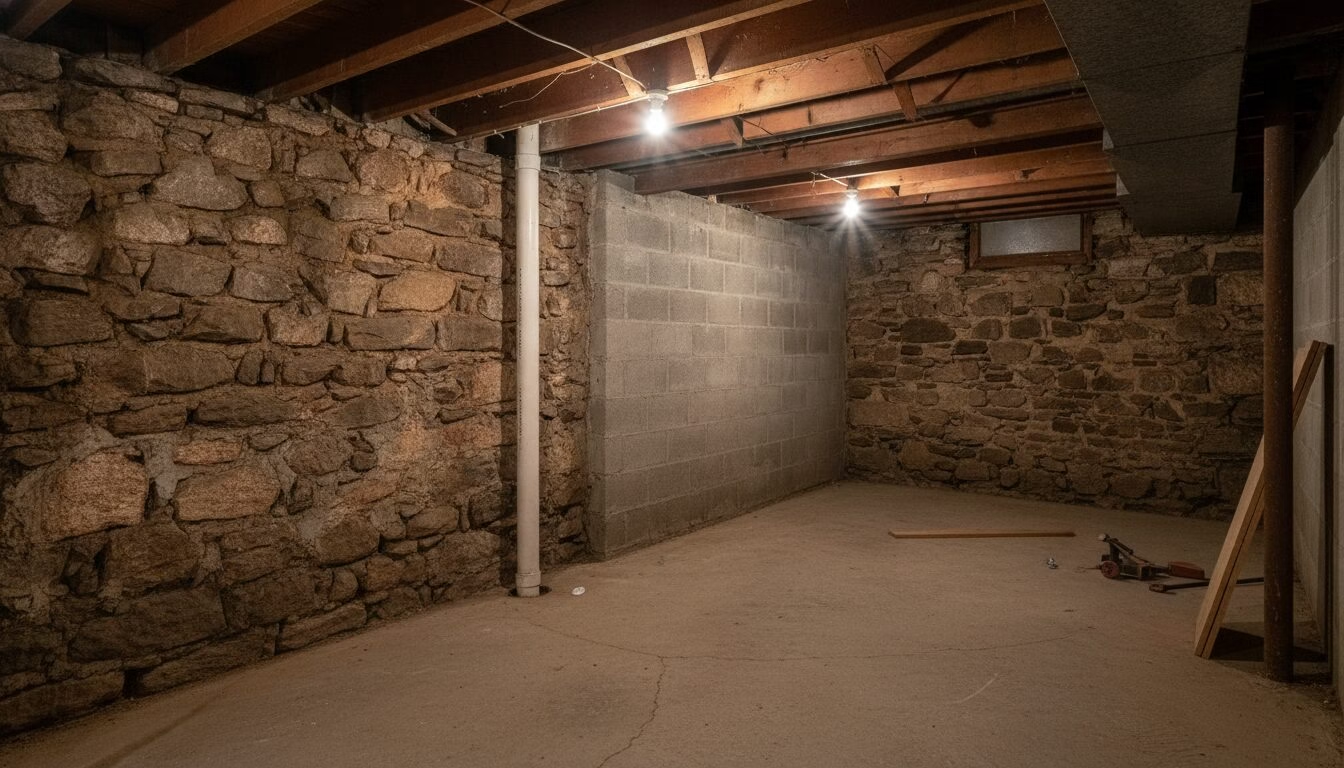
- Hollow block or stone walls. Block and fieldstone foundations have interconnected voids and gaps that let gas move freely, which a poured wall does not.
- Settling cracks and open joints. Years of seasonal movement open cracks in the floor, the floor-to-wall joint, and around penetrations, adding entry points.
- No engineered gravel base. Older slabs were often poured over compacted dirt rather than clean aggregate, so suction has to be planned more carefully to move air under the floor.
These traits do not make an older home harder to fix, they just mean the system has to be matched to how the house was actually built. Understanding where the gas enters is the first step in that match.
How Does Radon Get Into an Older St. Louis Home?
Radon enters an older home through the soil contact points in the foundation, drawn upward because the warm house acts like a chimney and pulls air from the ground below. This pressure difference, often called the stack effect, is stronger in older homes with less air sealing, so soil gas gets pulled in faster.
The common entry routes in an older St. Louis-area home include:
- Cracks in the basement floor and the floor-to-wall joint.
- The hollow cores of concrete-block foundation walls.
- Gaps and mortar joints in a fieldstone or brick foundation.
- An open sump pit or untrapped floor drain.
- Exposed soil in a crawl space or a dirt-floor cellar.
- Penetrations where pipes, conduit, and utilities pass through the slab.
The St. Louis metro sits on soils and bedrock that release radon at varying rates from one block to the next, which is why two neighboring homes can test very differently. The only way to know a specific home’s level is to test it, and the EPA recommends action once a result reaches the 4.0 pCi/L action level. A reading at or above that number is the signal to move from testing to mitigation, and the right system depends entirely on the foundation the gas is coming through.
Which Radon Mitigation System Works Best for an Older Home?
The best radon mitigation system for an older home is the one that matches its foundation, because the suction has to be applied where the gas actually travels. Most older homes are solved with an active soil-suction system, meaning a sealed pipe and a continuously running fan pull soil gas from under or inside the foundation and vent it above the roofline. The EPA’s Consumer’s Guide to Radon Reduction reports that soil-suction systems can lower indoor radon by up to 99 percent when they are designed and installed correctly.
| Older-home foundation | System that usually fits |
|---|---|
| Hollow concrete-block walls | Block-wall depressurization, often with a sub-slab point |
| Poured basement or concrete slab | Active sub-slab depressurization |
| Crawl space or dirt floor | Sub-membrane depressurization |
| Existing perimeter drain tile or sump | Drain-tile or sump-hole suction |
Block-wall depressurization for hollow-block foundations
Block-wall depressurization fits the hollow concrete-block foundations common in older St. Louis County and city homes. The connected voids inside a block wall act as a hidden highway for radon, so a technician seals the top course of block and draws suction directly from the wall cavities, frequently pairing it with a sub-slab point so the floor and the walls are both covered.
Sub-slab depressurization for poured basements and slabs
Active sub-slab depressurization is the default for an older home with a poured basement or a concrete slab. A technician cores a small hole through the slab, hollows out a suction pit in the soil below, seals a pipe into the opening, and connects it to an inline fan that vents above the roof, reversing the pressure so gas flows out the pipe instead of up through the floor.
Sub-membrane depressurization for crawl spaces and dirt floors
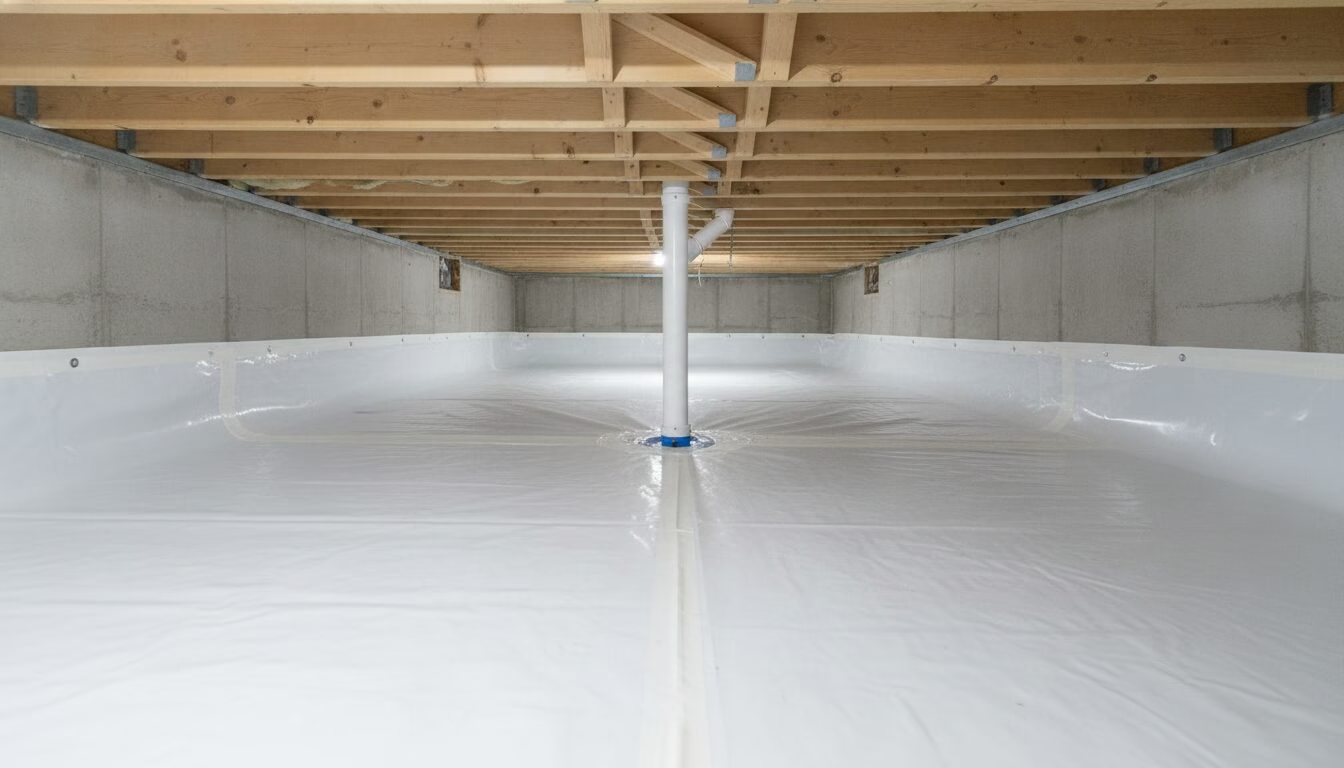
Sub-membrane depressurization is the answer for the crawl spaces and dirt-floor cellars found under many older homes. A heavy polyethylene membrane is laid across the exposed soil and sealed to the foundation, and a fan draws gas from beneath the sheeting, which has the added benefit of blocking ground moisture. Once the right design is chosen, the work itself is faster than most homeowners expect.
What to Expect on Installation Day
Most radon mitigation installations in an older home are finished in a single day, often in three to six hours. The crew arrives, confirms the system design against the foundation, and protects the work area before any drilling starts.
A typical install runs in this order:
- Layout and protection. The technician marks the suction point and the pipe route, then lays down tarps to catch concrete dust.
- Coring and the suction pit. A core bit opens a small hole through the slab, and a pit is hollowed in the soil beneath so the fan can pull air across a wide area. The drilling itself is brief and loud for only a few minutes.
- Sealing entry points. Visible cracks, the floor-wall joint, and a sump lid are sealed so the fan pulls soil gas rather than conditioned indoor air.
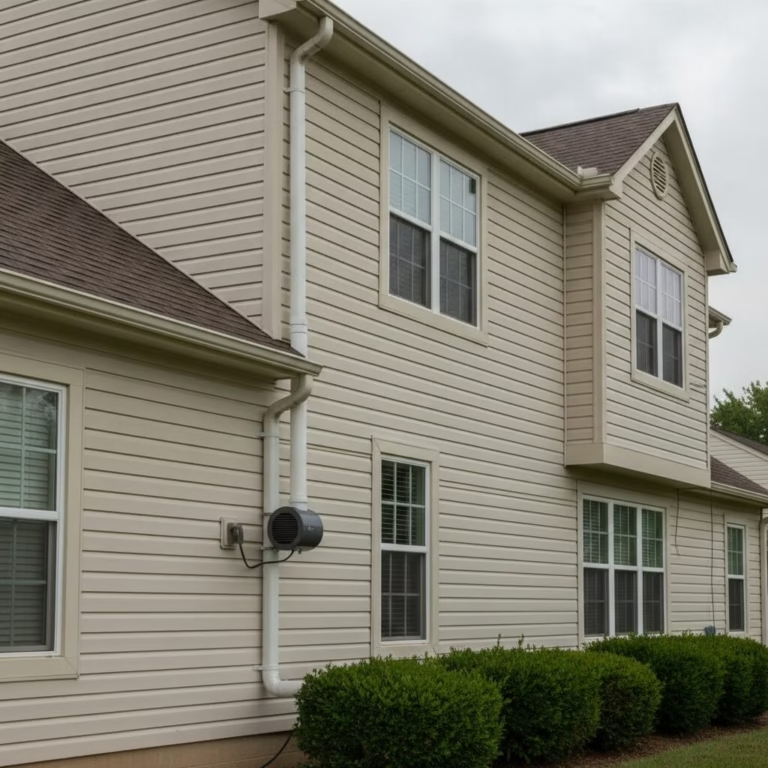
- Pipe and fan. Sealed PVC pipe runs from the suction point to an inline fan, typically mounted in the attic, the garage, or outside, and vents above the roofline where the gas disperses.
- Manometer and startup. A simple U-tube gauge is mounted on the pipe to show the system is pulling suction, and the fan runs from the moment it is switched on.
There is no curing or waiting period, the system is working as soon as the fan starts. Post-mitigation testing follows a couple of days later to confirm the result, which leads naturally to the question of cost.
How Much Does Radon Mitigation Cost in an Older Home?
A radon mitigation system in an older home typically costs between $800 and $2,500 installed, with older and more complex foundations landing toward the higher end. Block-wall systems, multiple suction points, and crawl space membranes all add labor and material, so a home that combines a block basement with a crawl space costs more than a simple slab.
The ongoing cost is modest:
- The inline fan draws less than 90 watts and adds roughly $15 to $30 a month to an electric bill while running continuously.
- A manometer check and an occasional fan replacement are the only routine maintenance, and a quality fan commonly runs for years before it needs service.
Cost should be weighed against the reading, not guessed at over the phone. The EPA recommends mitigation at 4.0 pCi/L or higher and suggests considering a system between 2.0 and 4.0 pCi/L, and a certified contractor sets the price after seeing the actual foundation. Spending more on the right design for an older home is cheaper than installing the wrong system twice.
Will a Radon Mitigation System Damage My Older Home?
A properly installed radon mitigation system does not damage an older home, and a good contractor designs the install to respect the character of the house. The pipe route is planned to be as discreet as possible, the fan is placed out of living space, and the discharge is run to a code-compliant point above the roofline.
For owners of older and historic St. Louis homes, the work is additive rather than destructive:
- Sealing foundation cracks and the sump lid also slows moisture and soil-air infiltration, which helps an old basement feel drier.
- The system mounts to existing structure with sealed penetrations, so it does not weaken a foundation or alter load-bearing walls.
- Exterior pipe runs can be routed and painted to blend with the home, and interior runs can follow utility chases to stay out of sight.
The goal is a system that lowers radon without changing how the home looks or lives, which is exactly why an older house calls for a tailored approach rather than a template.
Why Older St. Louis Homes Need a Tailored Radon Approach
Older St. Louis homes need a tailored radon approach because the metro’s housing stock spans several building eras and foundation styles, and no single system fits all of them. A block-foundation home in a century-old city neighborhood, a mid-century slab ranch, and a walk-out with a crawl space addition each move radon differently and each needs a system designed around it.
Air Sense Environmental designs every system around the individual home and confirms the outcome with post-mitigation verification testing, so a homeowner knows the installed system actually brought the level below the EPA action level of 4.0 pCi/L rather than assuming it did. The company is licensed in Illinois under IEMA #RNM20232346 and is NRPP-certified, and from its base in Edwardsville, Illinois it installs and services systems across the metro, including O’Fallon, Illinois, O’Fallon, Missouri, and the older neighborhoods of St. Louis County, St. Charles County, Jefferson County, and Franklin County. Because radon is invisible and odorless, the EPA estimates it is responsible for about 21,000 lung cancer deaths in the United States each year, which is the reason older homes are worth testing and fixing correctly. For homeowners weighing the work, that diagnosis is the starting point for professional radon mitigation in St. Louis.
Frequently Asked Questions About Radon Mitigation in Older Homes
Do all older homes have high radon levels?
No, not all older homes have high radon levels, because radon depends on the soil and rock under a specific house, not on age alone. Older homes do tend to have more entry points, so they are more likely to test high, but the only way to know a home’s level is to test it against the EPA action level of 4.0 pCi/L.
Can you install a radon system in a house without a basement slab?
Yes, you can install a radon system in a house without a slab by using sub-membrane depressurization. A sealed polyethylene membrane is laid over the exposed soil in a crawl space or dirt-floor cellar, and a fan draws the gas out from beneath it, which works well in older homes that were never poured with a full basement floor.
Does radon mitigation work on a stone or fieldstone foundation?
Yes, radon mitigation works on a stone or fieldstone foundation, though it usually takes a more customized design. Because stone and mortar foundations have many gaps, the system often combines sealing with sub-slab or sub-membrane suction, and post-mitigation testing confirms the design brought the level down.
How long does a radon mitigation system last?
A radon mitigation system lasts for many years, and the pipe and sealing are essentially permanent. The inline fan is the only part that wears, and a quality fan commonly runs for years before it needs replacement, which is a straightforward swap that keeps the system at full performance.
Is radon worse in older homes than in newer ones?
Radon is not automatically worse in older homes, but older homes often test higher because they have more cracks, hollow block walls, and exposed soil that let gas in. The EPA recommends the same 4.0 pCi/L action level for every home regardless of age, so testing is what settles the question for any individual house.
Get a Free In-Home Radon Assessment for Your Older Home
The right system for an older home starts with a look at the actual foundation and the home’s test results, not a guess. Air Sense Environmental will evaluate your older St. Louis home, recommend the design that fits its foundation, and verify the outcome with post-mitigation testing. Schedule your free in-home estimate and get a clear, no-pressure plan for lowering the radon in your home.