
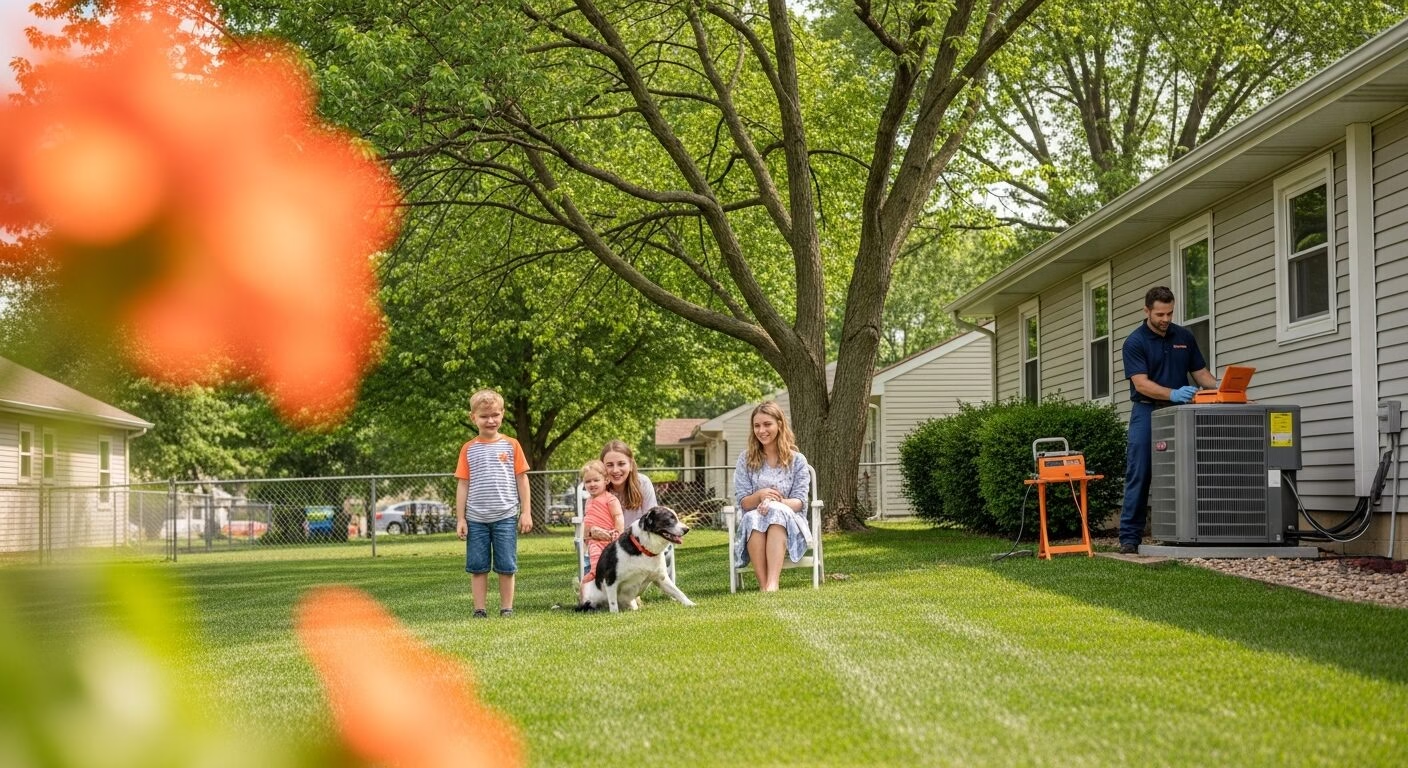
Summer air conditioning creates a hidden radon risk in St. Peters homes that most residents don’t consider. When AC units run constantly during Missouri’s humid summers, homes stay sealed tight for months, trapping radon gas that would normally vent naturally. Air Sense Environmental’s Jake Lusby has documented radon levels 40-60% higher in closed homes during peak cooling season across St. Charles County. The timing matters more than most homeowners realize.
If a summer test comes back high, radon mitigation for St. Louis and St. Charles County homes is the permanent fix, and Air Sense Environmental installs across St. Peters.
What to Do About Summer Radon Testing in St. Peters
- Test between June and August when your AC runs continuously and windows stay closed
- Place radon detectors in the lowest occupied level of your home, away from exterior walls
- Run the test for 48-72 hours minimum with normal AC operation (don’t open windows)
- Schedule follow-up testing in fall or spring to compare seasonal variations
- Contact a certified radon professional if levels exceed 2.0 pCi/L during summer months
- Document your home’s ventilation patterns and AC runtime for accurate assessment
Why Closed Homes Trap More Radon Gas
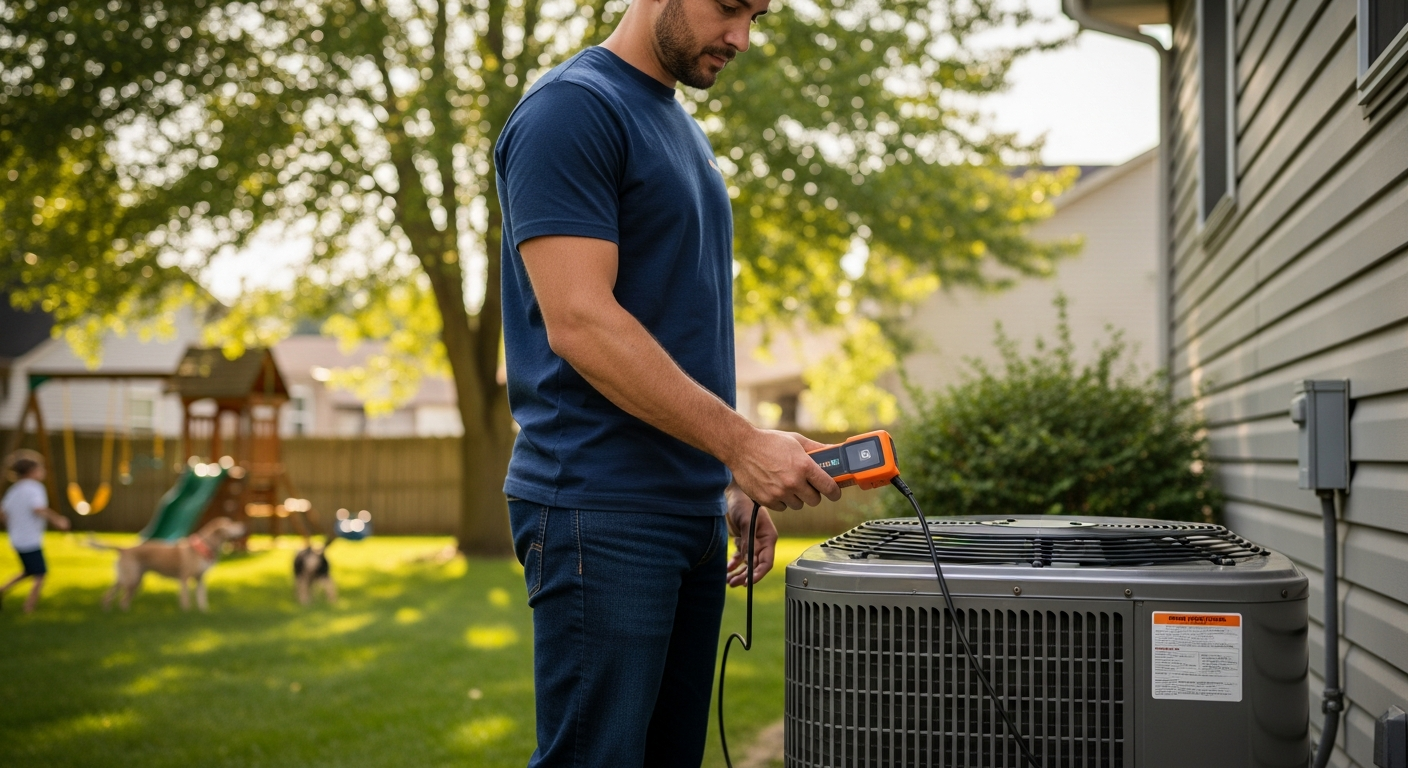
Radon enters homes through foundation cracks, sump pump openings, and gaps around utility penetrations. During St. Peters’ typical summer months when temperatures reach 85-95°F with 70% humidity, homes operate as sealed environments. The EPA’s radon database shows Missouri averages 3.7 pCi/L annually, but summer readings in air-conditioned homes often spike to 5-8 pCi/L.
HVAC Negative Pressure Draws Radon Indoors
Your home’s HVAC system creates negative pressure when it pulls air through return ducts. This suction effect draws more radon up through the foundation. Think of it like using a straw, the harder you suck, the more liquid rises. Air Sense Environmental’s continuous monitoring data from 200+ St. Peters homes shows radon levels peak between 2-6 AM when outdoor temperatures drop but AC systems maintain indoor cooling.
Tighter Envelopes in Homes Built After 2000
The difference becomes dramatic in newer construction. Homes built after 2000 in subdivisions like Deer Creek and Cottleville Meadows have tighter building envelopes that trap radon more effectively than older homes with natural air leakage.
St. Peters Summer Radon Levels and Local Factors

St. Charles County’s geology amplifies summer radon risks in specific areas. The Missouri Department of Natural Resources soil survey identifies Menfro silt loam as the predominant soil type in St. Peters, which contains moderate uranium concentrations that decay into radon gas. Neighborhoods built on former agricultural land, including Kisker Commons, Woodlands of St. Peters, and Spencer Creek, show consistently higher baseline radon levels.
St. Peters Housing Growth From 1990 to 2010
St. Peters’ housing stock contributes to the problem. The city experienced major residential growth from 1990-2010, with subdivisions like Oaks at St. Peters, Hawk Ridge, and Willows built on slab foundations or partial basements. These construction methods create more direct soil contact than full basements with proper ventilation systems.
Summer Storms and Saturated Soil
Summer storms compound the issue. The National Weather Service St. Louis office reports St. Peters averages 4.2 inches of rainfall in July alone. Heavy rains saturate soil around foundations, forcing radon gas to find alternate pathways, directly through basement floors and walls into living spaces. Air Sense Environmental documented 15-25% radon spikes in homes within 48 hours after major storm events during summer 2024.
No Radon-Resistant Construction Requirement
Local building codes don’t require radon-resistant construction in St. Peters, unlike counties in eastern Missouri. Homes in Willoughby Farm, Rabbit Run, and other developments built before radon awareness lack sub-slab ventilation systems that could naturally reduce gas accumulation.
Indoor Air Quality Warning Signs During AC Season
Watch for musty basement odors that persist despite dehumidifier operation. Radon is odorless, but the closed-home conditions that trap radon also concentrate other soil gases with detectable smells. Air Sense Environmental frequently finds elevated radon in St. Peters homes where residents notice “earth” smells in finished basements during summer months.
Condensation Around Foundation Penetrations
Condensation patterns provide another clue. If you see moisture on basement walls or around foundation penetrations where utilities enter, these same areas allow radon entry. The negative pressure from AC operation pulls both moisture and radon through identical pathways. Homes in Fox Creek and Eastgate subdivisions commonly show both issues simultaneously due to clay soil expansion during wet summers.
Summer AC Radon Testing St. Peters MO Process

Air Sense Environmental uses continuous radon monitors that record hourly readings throughout summer testing periods. Applicable test protocols address device placement, closed-house conditions, and potential interference; customers should confirm the protocol used for their test. The testing runs 48-72 hours with normal AC operation to capture realistic exposure levels.
How Summer Testing Differs From Real Estate Tests
Their approach differs from standard real estate radon tests. Summer testing accounts for negative pressure from AC systems, closed-window conditions, and increased soil moisture from seasonal rainfall. One recent Cottleville customer saw winter radon levels of 2.1 pCi/L jump to 6.8 pCi/L during July testing. Air Sense Environmental installed a sub-slab depressurization system that reduced summer levels to 0.9 pCi/L, even with continuous AC operation.
Extended Monitoring Periods
The company’s testing equipment meets EPA protocols but extends monitoring periods during summer months. Standard 48-hour tests might miss radon spikes that occur during peak AC runtime or after storm events. Their longer monitoring captures the full range of summer radon fluctuations that affect St. Peters homes.
Air Sense Environmental’s 150+ five-star reviews include multiple customers who discovered elevated radon only through summer testing after passing spring real estate inspections.
Why Peak AC Season Gives a Realistic Reading
Testing during peak AC season provides the most accurate picture of your family’s actual radon exposure. If levels exceed EPA guidelines during summer months, mitigation systems work year-round to maintain safe indoor air quality. Contact Air Sense Environmental for summer radon testing that accounts for St. Peters’ specific seasonal conditions and soil characteristics. Their IEMA-licensed team understands how Missouri’s climate affects radon accumulation in closed homes.
Frequently Asked Questions

What’s the radon testing cost in St. Peters for summer monitoring?
Professional summer radon testing in St. Peters uses extended monitoring periods that account for AC operation and seasonal variations. Air Sense Environmental provides free estimates and uses continuous monitors that track hourly fluctuations rather than simple 48-hour averages. The investment makes sense given that summer readings often exceed winter levels by 40-60% in air-conditioned homes.
Do I need to turn off my AC during radon testing in St. Peters?
No, summer radon testing should reflect normal living conditions with AC running continuously. The EPA specifically recommends testing under typical occupancy patterns, which means closed windows and normal HVAC operation during Missouri’s hot, humid summers. Turning off AC would provide artificially low readings that don’t represent your family’s actual radon exposure during the 4-5 months when homes stay sealed.
How do St. Peters radon levels compare between summer and winter months?
Air Sense Environmental’s monitoring data shows St. Peters homes average 35-50% higher radon levels during summer AC season compared to winter heating periods. Summer readings frequently range 4-7 pCi/L in homes that test 2-4 pCi/L during spring or fall. The difference stems from tighter building closure, increased soil moisture, and negative pressure from continuous AC operation drawing more radon through foundation cracks and utility penetrations.