
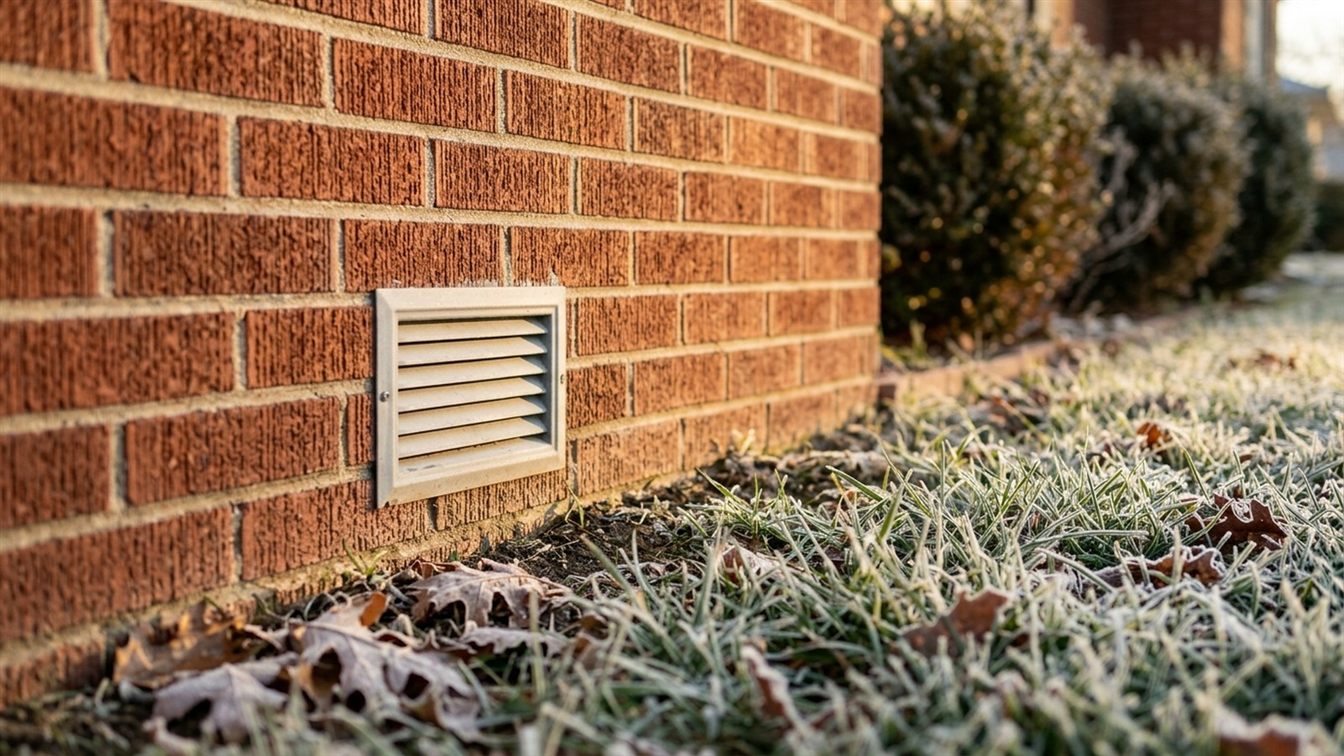
In a vented crawl space, close the vents for the freezing months to keep cold air off pipes and ducts, but treat it as a seasonal patch: crawl space vents do little to dry the space in a humid St. Louis summer, and the lasting fix is a sealed, moisture-controlled crawl space rather than opening and closing vents by the calendar.
The question lands every November across St. Louis, MO, St. Louis County, St. Charles County and the Madison and St. Clair County side of the river, where many 1940s to 1990s homes sit on vented crawl spaces with ducts and water lines underneath. Someone says “close the vents,” and someone else says that traps moisture.
Both are partly right. Here is when to close the vents, whether that protects pipes, what happens in summer, when sealing them for good makes sense, and how any change affects radon.
Should crawl space vents be open or closed in winter?
Crawl space vents should be closed in winter in a vented crawl space when freezing nights begin, because open vents pull below-freezing air across water lines, ducts and the underside of the floor. That is common homeowner practice, not a building code requirement, and it does not solve the moisture problems that vented crawl spaces have the rest of the year.
On the NWS St. Louis frost and freeze page, the Lambert airport station (KSTL) shows an average first fall freeze (32°F or below) of November 2 and an average first hard freeze (28°F or below) of November 15, as of November 2026. The same table shows suburban stations freezing sooner: the average first freeze is October 19 at Chesterfield, October 22 at St. Charles, October 21 at Cahokia and October 14 at Belleville.
Closing the vents is not a cure-all. Advanced Energy, the North Carolina nonprofit whose crawl space research the EPA cites, answers the question in Closed Crawl Spaces and Warmer Floors: merely closing the vents does not deliver warmer floors, frozen-pipe protection or fewer pests, and a crawl space that is truly closed “24/7” takes “more than just closing the vents.”
The answer depends on which kind of crawl space you have:
- Vented crawl space, no liner or dehumidifier: close or cover the vents for freezing weather and watch the humidity the rest of the year.
- Encapsulated or closed crawl space: the vents should already be sealed year-round.
- Furnace or water heater in the crawl space: check how it gets combustion air before closing anything.
Why do crawl spaces have vents in the first place?
Crawl spaces have vents because builders long assumed that outside air moving through the space would carry moisture away. The EPA’s Moisture Control Guidance for Building Design, Construction and Maintenance allows either approach, stating that “crawl space foundations may be vented to the outdoors or air sealed” (p. 41 of the PDF).
The theory breaks down in a humid climate. Advanced Energy’s field research, summarized in Taking the Vents Out of Vented Crawl Spaces, found that “the outside air contains more water vapor than the air in the crawl space during the warm seasons and has no potential to dry the crawl space.”
What the dew point does under a house
The physics is dew point. The same EPA guidance gives a worked example: air at 85°F and 60 percent relative humidity has a dew point of 70°F, so it “will begin to condense moisture when it contacts any surface that has a temperature of 70°F or below” (p. 21). In July, a crawl space floor, a cold water line and an air conditioning duct are all cooler than that.
How much water a damp crawl space adds
The moisture does not stay below the floor. The EPA notes that “damp basements or crawlspaces may add as much water vapor to the air in a day as all the other internal sources combined” (p. 22). In its construction checklist, the same guide treats outdoor-air ventilation as a crawl space drying tool only “if outdoor air dew points are lower than 55˚F,” and otherwise points to dehumidifiers (p. 82).
What temperature should you close crawl space vents?
There is no official temperature for closing crawl space vents. No EPA guidance, NWS product or model code sets one, so any figure online is a rule of thumb.
The practical trigger is freezing weather. Close or cover the vents when the forecast starts showing overnight lows near 32°F, which across the St. Louis metro usually means mid-October to early November. The NWS freeze table above is the best local guide: KSTL’s median first freeze is November 1, and the average last spring freeze is April 2.
What is under the floor matters more than the exact degree reading: exposed plumbing, bare ductwork, and any furnace or water heater that may draw combustion air through those vents.
Does closing crawl space vents keep pipes from freezing?
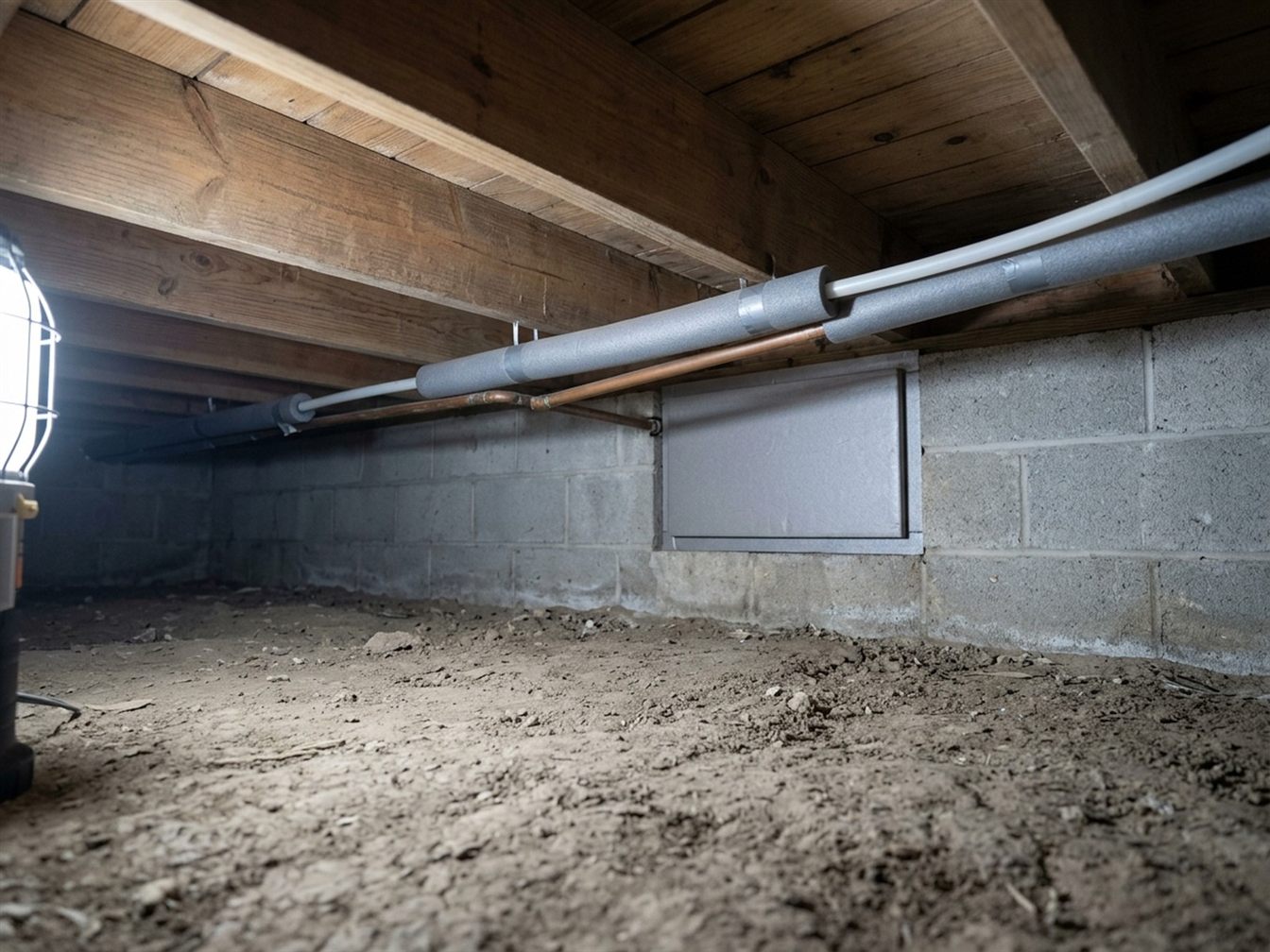
Closing crawl space vents reduces the cold air reaching the pipes, but it does not guarantee they will not freeze. Vent covers are not air seals, rim joists leak, and an uninsulated line can still freeze in a long cold spell.
The EPA’s A Consumer’s Guide to Radon Reduction makes the same point from the other direction. When a crawl space is ventilated, “in colder climates,” the EPA says, “water pipes, sewer lines and appliances in the crawlspace may need to be insulated against the cold.”
Pipe protection in a vented crawl space usually comes down to a short list:
- Insulation on exposed water supply lines, especially near vents and the rim.
- Vent covers in place and the crawl space access door closed and weatherstripped.
- A check after the first hard freeze for drafts, wet insulation or frost on pipes.
Should crawl space vents be open in summer in St. Louis?
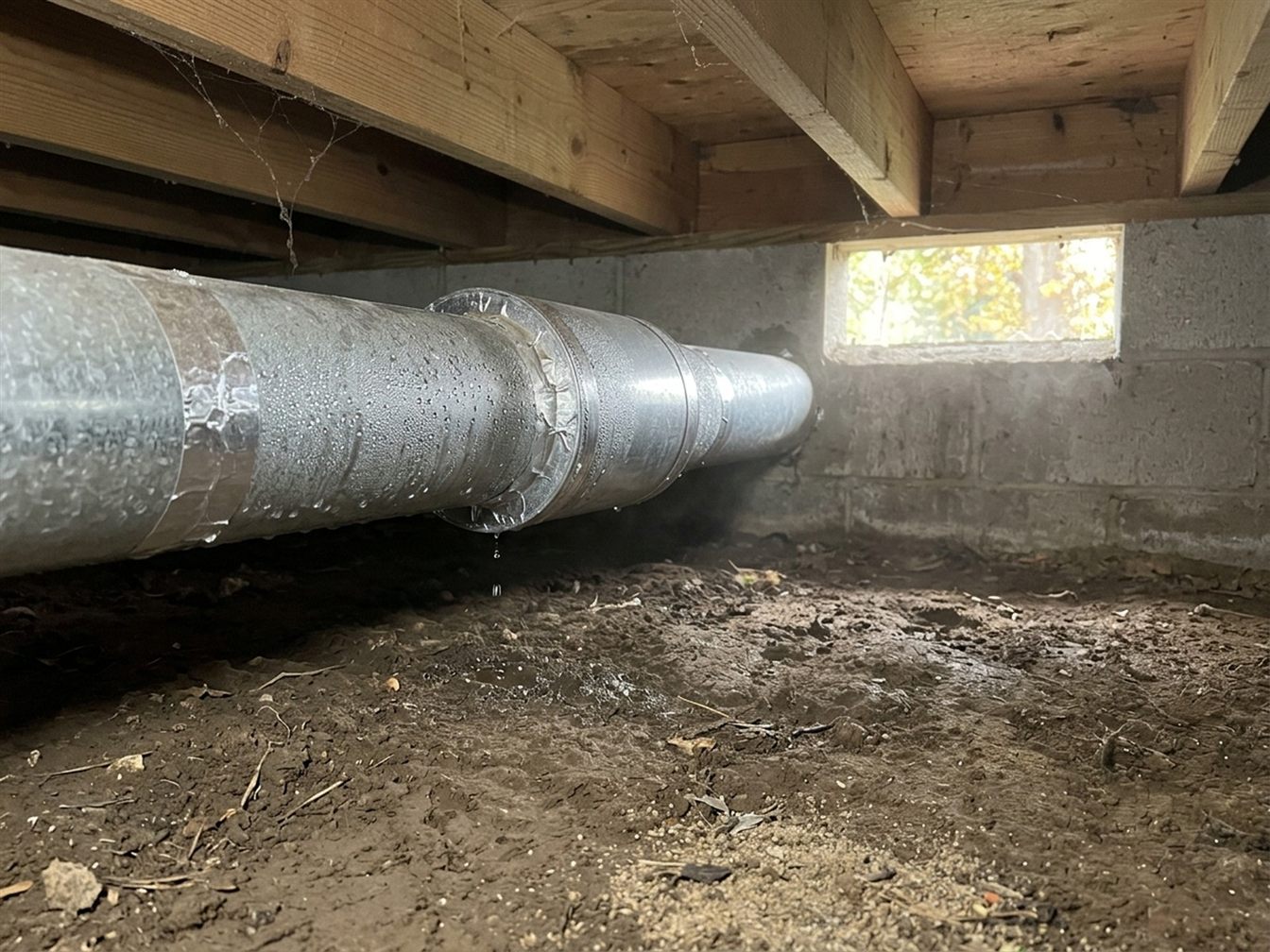
Open crawl space vents in a St. Louis summer usually add moisture rather than remove it. On a humid day like the EPA’s 85°F, 60 percent example, outdoor air condenses on any crawl space surface at 70°F or below, which includes the soil-cooled floor, joists and ducts.
The Air Sense Environmental crawl space encapsulation page describes the same cycle locally: a vented crawl space pulls in moist summer air that condenses under the house, feeding mold, wood rot and pests.
If your home has a traditional vented design, follow it, but measure. The EPA’s Brief Guide to Mold, Moisture and Your Home advises keeping indoor humidity “below 60 percent (ideally between 30 and 50 percent)” and notes that a humidity meter costs about $10 to $50. A crawl space that sits well above 60 percent for days in summer has a moisture problem the vents are not fixing.
Is it OK to seal crawl space vents permanently?
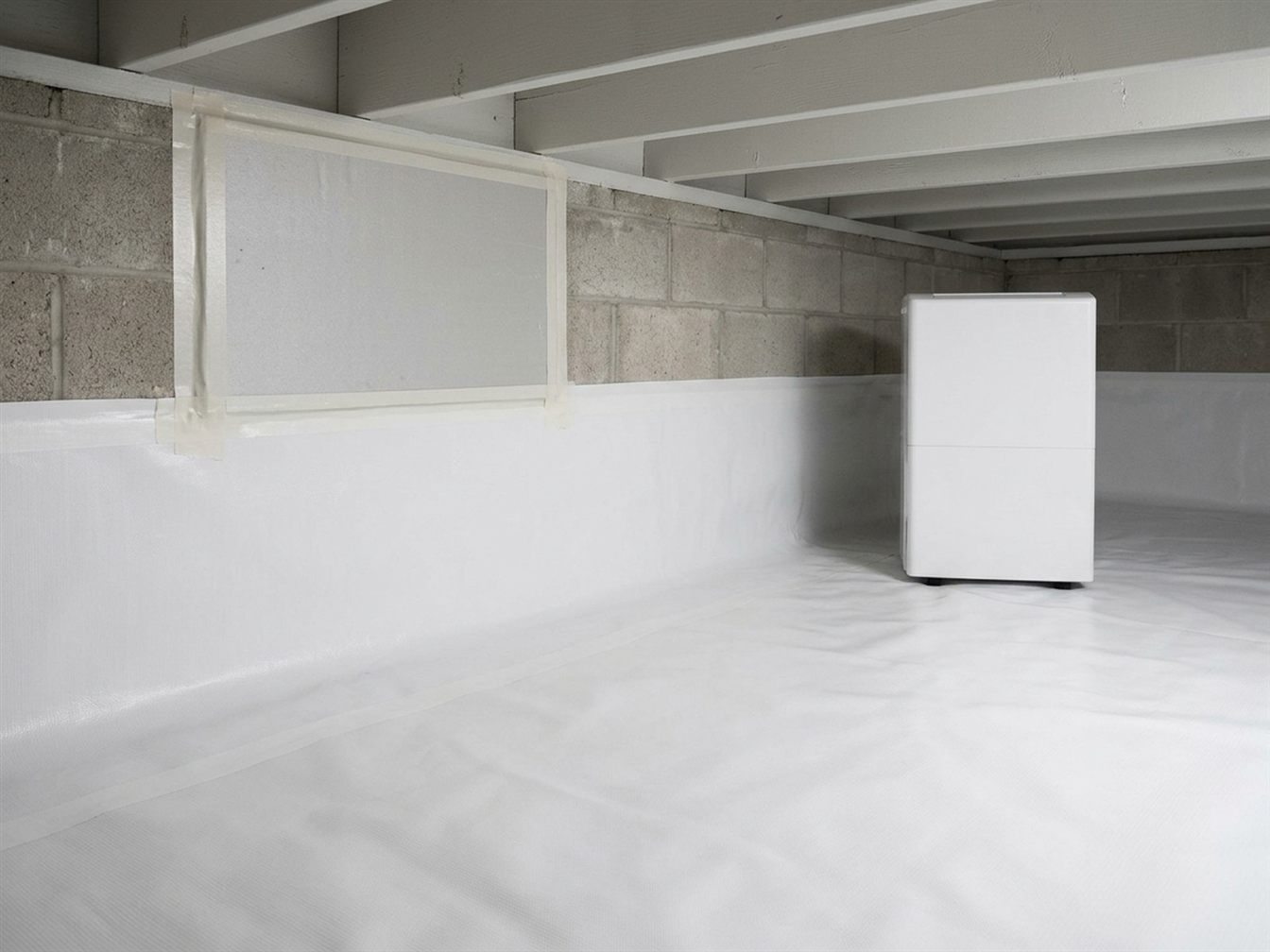
Sealing crawl space vents permanently is OK only as part of a fully closed crawl space. Sealing the vents alone, with an open dirt floor and nothing removing moisture, can make conditions worse.
A closed crawl space has four parts, consistent with the EPA’s moisture guidance and Advanced Energy’s closed crawl space research:
- A ground vapor barrier. The EPA says a non-vented crawl space follows the same specification as a basement, except that “a plastic or elastomeric membrane can be used instead of a concrete slab” to stop evaporation from the soil.
- Air-sealed vents, rim joists and penetrations. Outside air stays outside.
- Active moisture control. Advanced Energy lists “a dehumidifier or a simple and cheap air supply from the HVAC system,” and warns that a dehumidifier without air sealing is like running one “at a backyard cookout.”
- A plan for water. Drainage, a sump or both, so a plumbing leak or heavy rain does not pool on the liner.
The Air Sense Environmental encapsulation page warns that sealing vents without adding dehumidification can make moisture worse, which is why its encapsulation work pairs a sealed liner, vents and rim joists with an AprilAire crawl space dehumidifier. The crawl space moisture control guide compares a vapor barrier alone with full encapsulation.
The combustion appliance caveat
If a furnace or water heater in the crawl space draws its combustion air from that space, do not seal the vents without a professional assessment. Advanced Energy states that a gas water heater or furnace in a closed crawl space “needs to be a direct-vent or power-vent” appliance.
Vented, closed seasonally, or sealed: how the options compare
| Vents open year-round | Vents closed for winter only | Sealed and encapsulated | |
|---|---|---|---|
| Summer moisture | High in humid weather, outside air adds water vapor | Same as open in summer | Controlled by liner and dehumidifier |
| Winter pipes | Cold air reaches pipes and ducts | Less cold air, pipes still need insulation | Fewer drafts and warmer floors, per Advanced Energy |
| Energy | Cold or humid air against ducts and floor | Some winter improvement | Advanced Energy reports possible savings when HVAC is in the crawl space |
| Radon | Ventilation can dilute crawl space radon | Dilution drops when vents close | Changes soil-gas flow, so test afterward |
| Mold risk | Elevated in summer | Elevated in summer | Low if humidity is held below 60% |
| Maintenance | None, but damage builds unseen | Two trips a year to open and close | Dehumidifier filter and drain, periodic inspection |
Does closing crawl space vents change radon levels?
Closing crawl space vents can raise radon levels in the house, because open vents dilute the radon that collects under the floor. The EPA’s A Consumer’s Guide to Radon Reduction explains that crawlspace ventilation “may lower indoor radon levels both by reducing the home’s suction on the soil and by diluting the radon beneath the home,” and lists natural crawlspace ventilation at a typical 0 to 50 percent reduction (p. 18).
Take that dilution away, seasonally or for good, and the indoor reading can rise, especially in heating season.
The rule is simple: test after any change to the crawl space. The EPA recommends fixing a home at 4.0 pCi/L or higher and considering a fix between 2.0 and 4.0 pCi/L. If a crawl space home tests at or above 4.0 pCi/L, radon mitigation for St. Louis homes with a crawl space usually means submembrane suction under a sealed liner, which the same EPA guide rates at 50 to 99 percent reduction.
Frequently asked questions
Do I need to close my crawl space vents if my crawl space is encapsulated?
No. An encapsulated crawl space should already have its vents sealed year-round. If they are open, the dehumidifier is fighting outdoor air.
Will closing the crawl space vents cause mold?
Closing crawl space vents can contribute to mold when the crawl space has a bare dirt floor or another moisture source and nothing removing that moisture. The bigger risk is sealing vents year-round without a vapor barrier and dehumidification.
Do closed crawl space vents raise or lower my heating bill?
Closed crawl space vents generally help the heating bill by keeping cold air off ducts and the floor, though no reliable percentage applies to every home. Advanced Energy notes that energy savings may be realized in a fully closed crawl space when the HVAC system sits in that crawl space.
Should I close the crawl space vents if my furnace is in the crawl space?
Not until you know where the furnace gets its combustion air. Advanced Energy advises that a gas furnace or water heater in a closed crawl space be direct-vent or power-vent, so have it assessed first.
When should you open crawl space vents again in spring?
Crawl space vents are traditionally reopened after the last spring freeze, which NWS St. Louis puts at an average of April 2 at Lambert. Because open vents bring in summer moisture, check the crawl space humidity before deciding.
Get your crawl space checked before the hard freezes
If you open and close vents twice a year and still smell the crawl space upstairs, the vents are not the real issue. Air Sense Environmental assesses crawl spaces across the St. Louis bi-state metro, measures humidity on site, and handles crawl space encapsulation with a radon test afterward, so a moisture fix does not create a radon surprise.
Call 314-664-9807 or request a free estimate.