
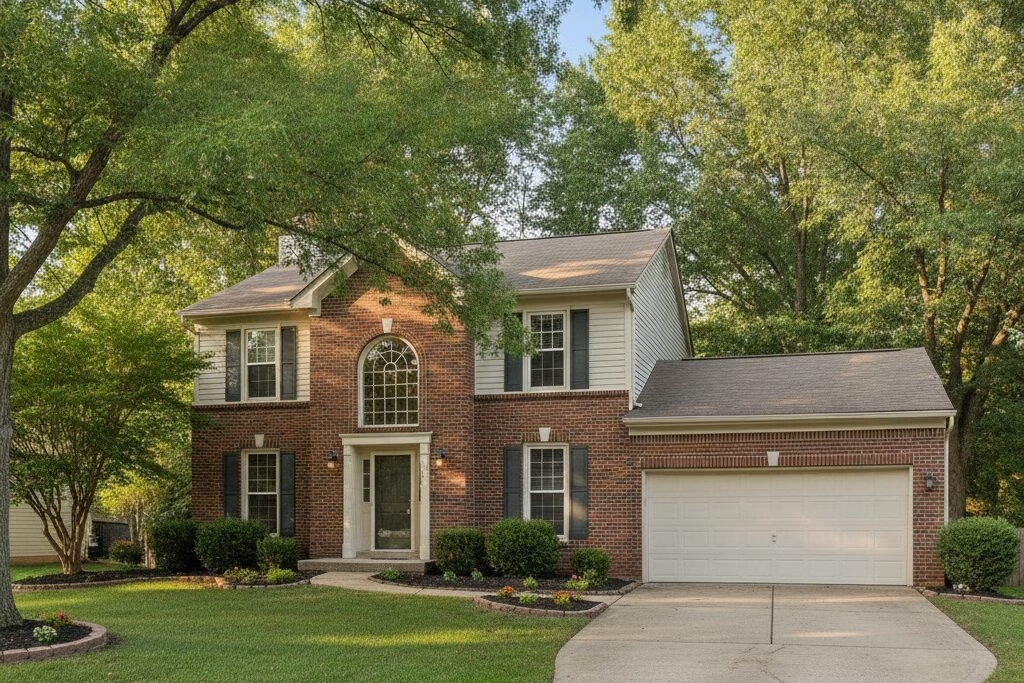
A dangerous radon level is any reading at or above 4.0 pCi/L, which is the action level the U.S. Environmental Protection Agency set for homes. The unit pCi/L, short for picocuries per liter of air, is what your radon test reports, and that single number tells you whether your home sits in a safe range, a watch zone, or a level that calls for action. For homeowners across St. Louis, MO and neighboring St. Charles County, reading that number correctly is the difference between guessing and knowing. This guide explains what pCi/L measures, what the EPA’s 4.0 threshold means, how to interpret a result in the 2 to 4 range, and what to do when a test comes back high.
What Does pCi/L Mean on a Radon Test?
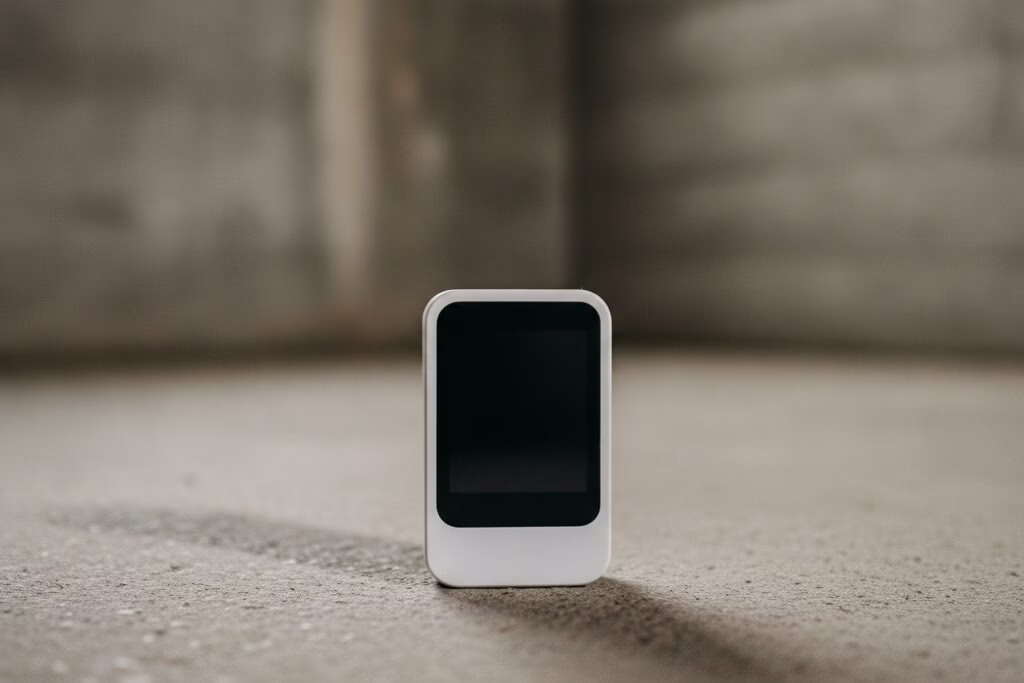
pCi/L stands for picocuries per liter of air, the standard unit used to measure how much radon is in the air you breathe. One picocurie per liter describes a specific rate of radioactive decay happening in every liter of air inside your home, so the higher the pCi/L figure, the more radon is present.
Radon itself is a naturally occurring, radioactive gas that forms when uranium breaks down in soil and rock. You cannot see it, smell it, or taste it, so the pCi/L reading on a test is the only practical way to know how much is in your home. For context, the EPA reports that the average indoor radon level in U.S. homes is about 1.3 pCi/L, while outdoor air averages roughly 0.4 pCi/L. A result well above those everyday figures is a signal that radon is concentrating inside your living space.
What Is Considered a Dangerous Radon Level?
A radon level is considered dangerous, or actionable, at 4.0 pCi/L or higher, which is the EPA recommended action level for homes. At or above that threshold, the EPA advises homeowners to reduce the radon in their home rather than leave it untreated.
It is worth being clear about what the 4.0 figure represents. The EPA states that there is no known completely safe level of radon, because exposure carries some risk at any concentration. The 4.0 pCi/L action level is the point at which the agency recommends action, not a line where risk suddenly begins. Radon is the second leading cause of lung cancer in the United States, and the EPA estimates that radon contributes to about 21,000 lung cancer deaths each year. Those are population-level statistics, not a prediction about any single home, but they are the reason the agency set a clear action threshold.
How Do You Read Your pCi/L Result at a Glance?
Reading a radon result comes down to where your number falls relative to the EPA’s 4.0 pCi/L action level. Here is how the common ranges break down:
- Below 2.0 pCi/L: a typical indoor result, close to the national average of 1.3 pCi/L. No action is recommended, though periodic re-testing is still wise.
- 2.0 to 3.9 pCi/L: a watch zone. The EPA suggests considering mitigation, and a long-term retest helps confirm the average.
- 4.0 pCi/L or higher: at or above the EPA action level. The agency recommends installing a mitigation system to reduce the level.
- 10 pCi/L or higher: a notably high reading. Mitigation is still the same solution, though the home may need a more robust system design to reach the target.
No single reading is a verdict on its own, because radon fluctuates, but knowing which band your result falls into tells you whether to relax, retest, or act.
What Does a Radon Reading Between 2 and 4 pCi/L Mean?
A radon reading between 2.0 and 4.0 pCi/L falls into a watch zone, below the action level but still elevated above typical outdoor air. The EPA recommends that homeowners consider reducing radon when results land in this 2 to 4 pCi/L range.
A result here does not require immediate mitigation the way a reading of 4.0 or higher does, but it is not a number to ignore. Radon levels fluctuate with the seasons, the weather, and how a home is used, so a 3.0 pCi/L reading in summer could test higher during a sealed-up Midwest winter. Practical steps for a watch-zone result include:
- Retesting with a long-term test to capture a more accurate yearly average.
- Considering mitigation, especially if the lower levels of the home are used as bedrooms or a finished basement.
- Re-testing after any major foundation or HVAC change.
What Should You Do If Your Radon Level Is 4.0 pCi/L or Higher?
If your radon test reads 4.0 pCi/L or higher, the EPA recommends taking steps to reduce the level, and the path forward is straightforward. The goal is to confirm the result, then bring the home below the action level and verify that it stayed there.
- Confirm the reading. Follow an elevated short-term test with a second short-term test or a long-term test, so you are acting on a reliable number rather than a single snapshot.
- Contact a certified professional. A qualified contractor evaluates your foundation and designs a system suited to your home. You can learn more through professional radon mitigation in St. Louis.
- Verify the result. After a system is installed, a post-mitigation test confirms the home now reads below 4.0 pCi/L.
A high reading is a measurement, not an emergency. It tells you exactly what to fix and gives you a clear target to confirm against.
Why Do Radon Levels Vary So Much Between St. Louis Homes?
Radon levels vary from house to house because the gas depends on the soil, the foundation, and the construction of each individual home, not on the neighborhood as a whole. Two homes on the same street can post very different pCi/L results, which is why a neighbor’s test never substitutes for your own.
Across the St. Louis metro, that variation shows up clearly. Older block-foundation homes in St. Louis County and the city, newer slab-on-grade construction throughout St. Charles County, and the crawl space and walk-out designs common in Jefferson County and Franklin County all interact with soil gas differently. The EPA Map of Radon Zones places much of eastern Missouri in elevated-potential areas, but a map only describes the general risk, not your address.
The only way to learn your home’s actual number is to test it, and the only way to confirm a high reading was fixed is to test again. Owner Jake (Jacob) Lusby holds Illinois IEMA Mitigation Professional license RNM20232346, and Air Sense recommends that customers arrange a separate follow-up test to measure the result rather than assume the outcome.
Frequently Asked Questions About Radon Levels
What is a safe radon level?
There is no level of radon that the EPA labels completely safe, since some risk exists at any concentration. In practical terms, the lower the pCi/L number the better, and readings below the EPA’s 4.0 pCi/L action level are generally considered acceptable, while the agency suggests considering action between 2.0 and 4.0 pCi/L. Outdoor air averages about 0.4 pCi/L, which is the realistic floor for indoor results.
Is 4.0 pCi/L dangerous?
A reading of 4.0 pCi/L is the EPA’s action level, the point at which the agency recommends reducing radon in a home. At that level the EPA advises mitigation, so 4.0 pCi/L is treated as the threshold for taking action rather than a number to simply monitor. Confirming the result with a second test is the recommended first step.
Can radon levels change over time?
Yes. Radon levels rise and fall with the seasons, weather, soil moisture, and how a home is heated and ventilated, and they often read higher in winter when a house is sealed against the cold. Because of this fluctuation, a long-term test gives a more reliable yearly average than a single short-term snapshot, and re-testing every few years is sensible.
Does a low radon test mean I never have to test again?
Not necessarily. A low result is reassuring, but radon levels can change after foundation work, a new HVAC system, or significant settling. The EPA suggests re-testing every two years and after any major renovation or change to your home’s structure, so a single low reading is a good baseline rather than a permanent guarantee.
How do I lower a high radon level?
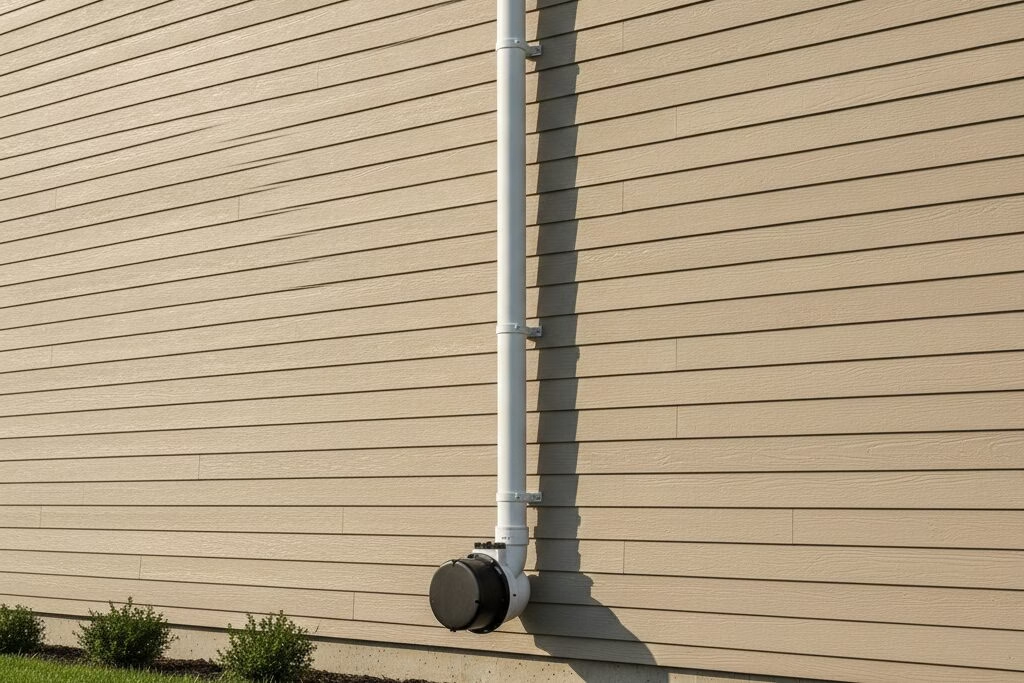
A high radon level is reduced with a mitigation system, most commonly an active soil-suction system that uses a sealed vent pipe and a fan to draw soil gas from beneath the foundation and vent it safely above the roofline. A certified contractor designs the system to your specific foundation, then a post-mitigation test confirms the home reads below 4.0 pCi/L.
Find Out Your Home’s Radon Number
Understanding your pCi/L result starts with an accurate test and a clear explanation of what the number means for your home. Air Sense Environmental serves homeowners across the greater St. Louis metro, from St. Louis County to St. Charles, Jefferson, and Franklin counties, with testing, mitigation, and post-mitigation verification. Schedule your free consultation and get a straightforward read on where your home stands.