Edwardsville’s Four Seasons: How Local Climate Swings Impact Your Indoor Air Quality
Edwardsville experiences a dramatic interplay of weather, from the bustling academic halls near Stone Meadows / Southern Illinois University Edwardsville to the historic homes of City Center / Leclaire and the serene lakeside living in Holiday Shores. These seasonal shifts directly dictate the unseen battle for healthy indoor air quality within our homes. Air Sense Environmental, an IEMA-accredited radon testing and mitigation contractor serving Edwardsville, understands these local climate pressures intimately.
The unique climate patterns of Edwardsville, from sweltering, humid summers to frigid, sealed-up winters, create a dynamic environment for indoor air quality challenges that demand more than generic solutions. Our team, including Partner Jason Jackson, has seen firsthand how these seasonal shifts exacerbate issues like radon intrusion, mold growth, and persistent allergens in homes across the Riverbend area. This article explains the precise connections between Edwardsville’s climate and your home’s air, providing knowledge to protect your family’s health.
The Humid Embrace and Winter’s Tight Seal: Edwardsville’s IAQ Dynamic
Edwardsville’s position in a humid continental climate zone means significant seasonal temperature swings and often-saturated air, which directly influence the air within our homes. During the warmer months, especially from June to August, average relative humidity often hovers between 70% and 90% in the mornings, sometimes remaining above 60% for extended periods throughout the day. This constant moisture acts as a prime catalyst for biological growth. For instance, mold spores, ubiquitous in our environment, thrive when indoor relative humidity consistently exceeds 60%. Prolonged exposure to high humidity allows homes to soak up moisture, creating ideal conditions for these microscopic invaders.
Conversely, Edwardsville’s winters, characterized by average daily temperatures below 40°F from December through February, lead homeowners to seal their properties tightly against the cold. While crucial for energy efficiency, this practice drastically reduces natural ventilation, trapping pollutants inside. According to the Environmental Protection Agency (EPA), indoor air can be two to five times, and occasionally more than 100 times, more polluted than outdoor air. This phenomenon is particularly acute in Edwardsville during winter, as homes in areas like Pinebrook Estates and Enclave become veritable pressure cookers for airborne contaminants like radon, volatile organic compounds (VOCs) from cleaning products, and pet dander, without adequate fresh air exchange.
When Edwardsville’s Weather Wears Down Your Home
Edwardsville’s climate can take a silent toll on homes, particularly the diverse housing stock ranging from early 20th-century builds in Downtown Edwardsville to mid-century ranches in Country Club Manors. Many older properties, especially those with traditional crawl spaces, are uniquely susceptible to moisture intrusion. During heavy spring rains and humid summers, these unencapsulated crawl spaces become breeding grounds for mold and mildew. The spores released can circulate into the living spaces above, aggravating seasonal allergies and respiratory issues for residents, beyond just a musty smell. Our experience at Air Sense Environmental reveals that properties in low-lying areas or those with poor drainage, common in some sections of Bluff Junction, are particularly vulnerable to sub-slab moisture and subsequent mold development.
This compounding problem often goes unnoticed until structural damage or pervasive odors become evident. The dampness not only fosters biological growth but also attracts pests and can compromise the integrity of wooden structures, leading to costly repairs. Furthermore, high indoor humidity can cause off-gassing from building materials and furnishings to increase, releasing more VOCs into the air. Without proper indoor air quality testing, homeowners might mistake these symptoms for typical “old house smells” or general dampness, missing the underlying issue. Air Sense Environmental’s specialized capabilities allow us to precisely identify these hidden issues, from elevated humidity levels to specific airborne pollutants, before they escalate into significant health hazards or structural damage.
Edwardsville’s Unique Environmental Blueprint for Indoor Air Quality
Edwardsville’s geography, geology, and local regulations forge a distinct set of indoor air quality challenges. The area’s water supply, drawn from deep aquifers, is classified as “extremely problematic” and “very hard,” with total dissolved solids reaching 430 ppm. It has a “C” grade for overall water quality and a “D” grade for health guideline compliance, with nine contaminants, including radioactive elements and carcinogens, exceeding health guidelines. While primarily a water quality concern, the presence of these elements, particularly radium (combined -226 and -228), hints at the underlying geological conditions contributing to other issues like radon. Radon, a naturally occurring radioactive gas, forms from the decay of uranium in Edwardsville’s extensive limestone bedrock formations beneath the Mississippi River valley. This geological reality means radon gas can easily seep into homes, especially in neighborhoods like Edwardsville East with diverse foundation types, posing a significant health risk.
Beyond geology, Edwardsville’s outdoor air quality also impacts indoor environments. According to some reports, Edwardsville’s air quality index is 28% worse than the national average, and its pollution index is 122% worse. While specific reasons for this difference aren’t always explicitly detailed in public data, factors such as proximity to the industrial areas of Granite City to the west and agricultural activities in surrounding rural Madison County can contribute to elevated particulate matter and other outdoor pollutants. These outdoor contaminants, especially during periods of stagnant air or prevailing westerly winds, can infiltrate homes through cracks, open windows, and ventilation systems, further compromising Edwardsville IL climate indoor air quality. The City of Edwardsville’s adoption of the International Residential Code with amendments – 2021 Edition, and the Illinois Energy Conservation Code – 2018 Edition, while improving new construction, still means many existing homes in areas like Pinebrook Estates were built before these stringent codes were in place, making them more susceptible to these environmental pressures.
Subtle Clues to Compromised Air in Your Edwardsville Home
Recognizing early warning signs of poor indoor air quality is crucial for Edwardsville homeowners, especially given the local climate’s impact. Beyond musty smells, persistent dampness in your basement or crawl space after spring thaws or heavy summer downpours is a common occurrence in many older homes in Godfrey or Maryville. Condensation on windows or cold surfaces, particularly in bathrooms or kitchens, even with exhaust fans running, can indicate excessive indoor humidity, a primary driver for mold. Additionally, an unexplained increase in allergy-like symptoms among family members, such as persistent coughing, sneezing, or irritated eyes, especially when indoors, might signal elevated levels of dust mites, pollen, or mold spores that thrive in our seasonal humidity.
A sudden spike in energy bills without a corresponding increase in usage is another critical indicator for Edwardsville residents. While not a direct air quality symptom, it can point to inadequate sealing or ventilation issues that allow pollutants in and conditioned air out. If you’ve recently completed renovations or brought new furniture into your home in Glen Carbon, new chemical odors that linger are a sign of off-gassing VOCs. The skilled home inspectors at Air Sense Environmental often hear from Edwardsville clients about these seemingly minor issues, which, upon investigation, reveal significant underlying indoor air quality problems exacerbated by our local climate swings.
Air Sense Environmental’s Tailored Approach to Edwardsville’s IAQ
Air Sense Environmental provides Edwardsville-specific expertise, born from a deep understanding of the local climate and housing stock. Our approach to improving Edwardsville IL climate indoor air quality begins with state-of-the-art continuous radon monitors, certified by both NRPP and NRSB, which provide real-time data over a 48-hour period. This offers far more accurate insights than basic charcoal tests, especially vital when assessing radon levels influenced by winter’s sealed-up homes. Partner Jason Jackson and our team, including Jake Lusby and Kate, work closely with homeowners to interpret these detailed reports, ensuring clear communication and education without pushy sales tactics.
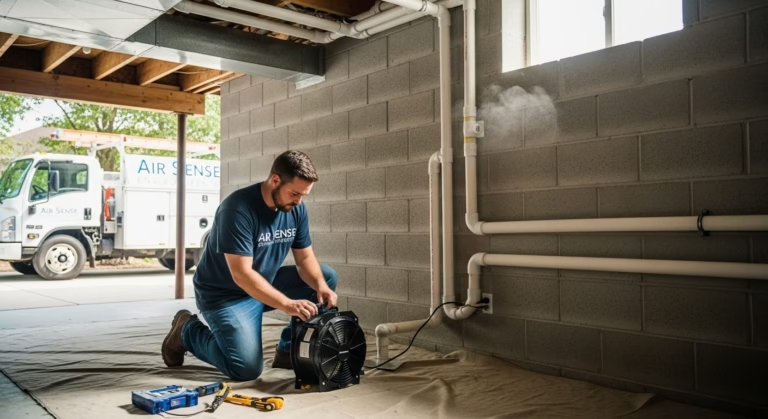
For homes struggling with moisture, particularly those older properties with prevalent crawl spaces, our specialized crawl space encapsulation process is a game-changer. We install a high-durability vapor barrier over the soil, tucking the mitigation suction beneath it. This not only significantly reduces moisture and eliminates musty odors but also prevents future mold growth, a persistent problem given Edwardsville’s humid summers. We pride ourselves on offering customized mitigation plans tailored to the unique characteristics of each home, ensuring a permanent and effective solution. Whether it’s a home in Collinsville needing comprehensive radon mitigation system installation or a property in O’Fallon, IL requiring water damage restoration, our IEMA-accredited team uses durable materials and attention to detail to ensure lasting results.
Our commitment extends beyond installation. Air Sense Environmental is known for its quick response and scheduling, understanding the urgency of environmental hazards. We’ve seen homeowners in Troy, IL breathe easier after our team addressed their severe crawl space moisture, transforming a damp, odor-filled area into a clean, dry environment that no longer contributed to their indoor air quality woes. Our diverse expertise in real estate, air quality, and construction allows us to offer ongoing maintenance support, ensuring your Edwardsville home remains a healthy sanctuary through every seasonal swing.
Protecting your Edwardsville home from the impacts of dynamic climate swings on indoor air quality is an investment in your family’s health and peace of mind. Understanding how the region’s humidity, geology, and even local air pollution contribute to issues like mold, radon, and general indoor pollutants is the first step. For comprehensive radon testing or to discuss effective crawl space encapsulation strategies tailored to your Edwardsville property, reach out to Air Sense Environmental today for a free in-home estimate.
Frequently Asked Questions
How does Edwardsville’s “extremely problematic” water quality impact indoor air?
While Edwardsville’s water quality directly affects consumption, the underlying geological factors contributing to its hardness and contaminant profile (like radium) are also relevant for indoor air. The presence of radioactive elements in the water source can indicate a higher likelihood of radon gas in the soil and rock, which can then seep into your home’s air, especially if you have a well or older foundation.
Why is Edwardsville’s outdoor air quality reported as worse than national averages, and how does this affect my indoor air?
Reports indicate Edwardsville’s air quality index is 28% worse and its pollution index 122% worse than the national average. This can be attributed to factors like proximity to industrial hubs in the broader St. Louis metro area and agricultural activities in surrounding rural Madison County. These outdoor pollutants can easily infiltrate homes through natural ventilation, cracks, and open windows, especially during high-pollution days or periods of thermal inversion, directly impacting your Edwardsville IL climate indoor air quality.
What specific measures can Edwardsville homeowners take to prevent mold growth during humid summers?
Edwardsville’s prolonged periods of high humidity make homes highly susceptible to mold. Beyond basic ventilation, consider installing a dehumidifier in basements or crawl spaces, especially if you live in an older home in areas like Leclaire. Crucially, address any water leaks promptly. For persistent issues, professional solutions like crawl space encapsulation by Air Sense Environmental are highly effective at creating a dry, sealed environment, drastically reducing the moisture source for mold.