
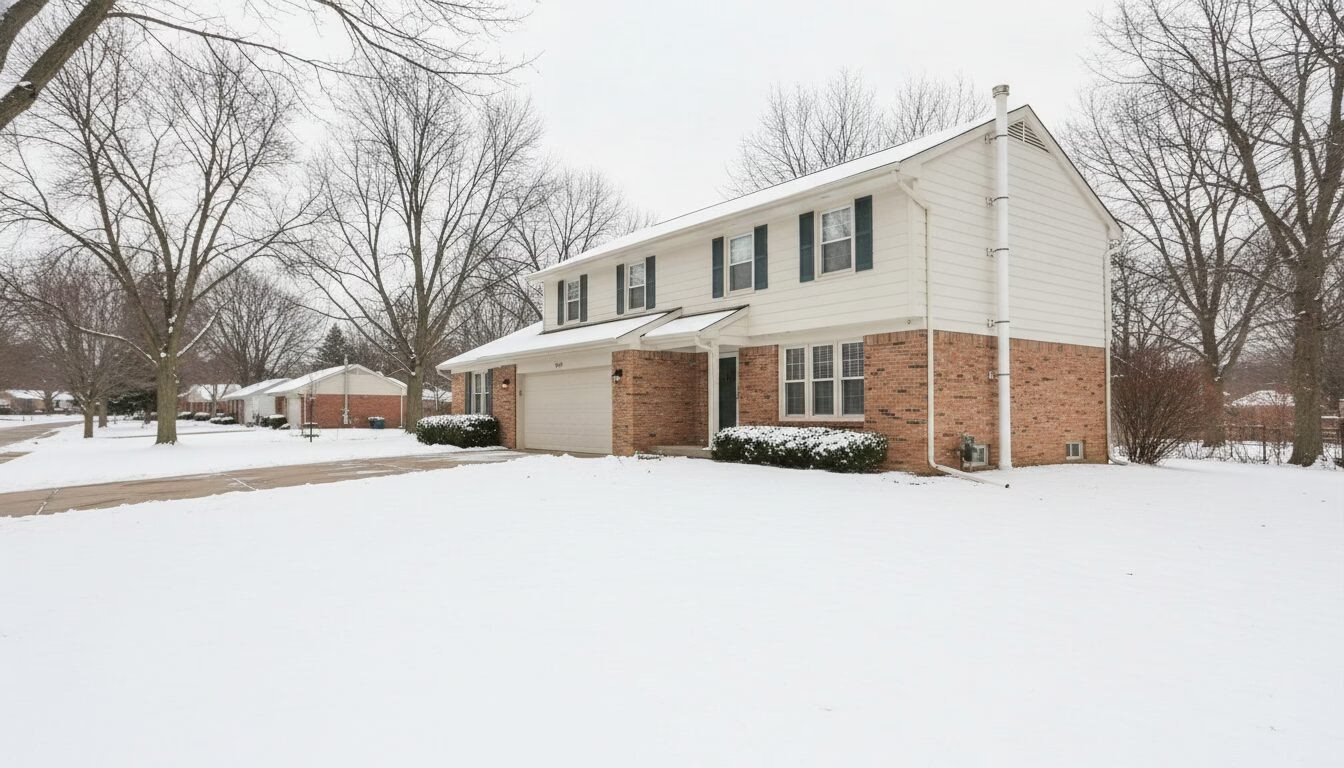
Radon levels usually run higher in winter than in summer, often by a wide margin. When you compare radon levels winter vs summer, the cold months trap more of the gas indoors because homes are sealed tight against the weather, while warmer months let more of it escape. For homeowners across the St. Louis, MO metro, including St. Louis County and St. Charles County, that seasonal swing is why test timing matters, and why a July reading can look very different from a January one. The EPA recommends taking action when a home tests at 4.0 pCi/L or higher, and because winter is typically the worst case, it gives the most honest picture of your year-round risk. This guide explains why winter radon is usually higher, how summer differs, what the pattern means for when you test, and why a properly designed mitigation system keeps levels low all year.
Key Takeaways: Radon Levels in Winter vs Summer
- Radon levels usually run higher in winter than in summer in the same home.
- The stack effect, closed windows and frozen or snow-covered ground pull more soil gas indoors during cold months.
- A winter test shows worst-case exposure, so a low summer result deserves a confirming winter test.
- An active radon mitigation system holds levels low in every season because its fan runs continuously.
Are Radon Levels Higher in Winter or Summer?
Radon levels are usually higher in winter than in summer. The same home can read in the low single digits during warm weather and then climb well above the EPA action level of 4.0 pCi/L once the heating season begins. Radon itself does not change with the calendar. What changes is how your home interacts with the soil gas beneath it, and winter conditions push more of that gas indoors and hold it there longer.
Measured Seasonal Radon Swings
Studies of seasonal radon patterns have measured dramatic swings within a single building, with summer readings around 1.8 to 2.2 pCi/L rising to roughly 28 to 32 pCi/L in winter. Not every home moves that far, but the direction is consistent: colder, sealed-up months concentrate radon, which is exactly when most short-term tests are meant to run.
Why Are Radon Levels Higher in the Winter?
Winter radon is higher for three connected reasons, and all of them come down to pressure and ventilation. Together they pull more soil gas into the house and give it fewer ways out.
- The stack effect. Warm indoor air rises and escapes through the upper floors, which lowers the pressure in the basement and lowest level. That negative pressure acts like a vacuum on the soil under the foundation, drawing radon up through cracks and openings. The stack effect is strongest in winter because the indoor-outdoor temperature difference is largest.
- Closed-up homes. Through the heating season, windows and exterior doors stay shut to hold in warmth. With far less fresh-air exchange, radon that enters has little chance to dilute and instead accumulates indoors.
- Frozen and saturated ground. Snow cover, frozen topsoil, and saturated soil cap the earth around the foundation. With its usual escape routes to open air sealed off, more radon is funneled toward the path of least resistance, the warm, depressurized home above it.
What Happens to Radon Levels in the Summer?
In summer, radon levels usually fall because the same forces ease off. Milder temperatures shrink the stack effect, open windows and doors ventilate the lowest levels, and thawed, drier ground gives soil gas more room to disperse outdoors before it reaches the house. A summer test often shows a home its lowest readings of the year.
Why Some Homes Stay High in Summer
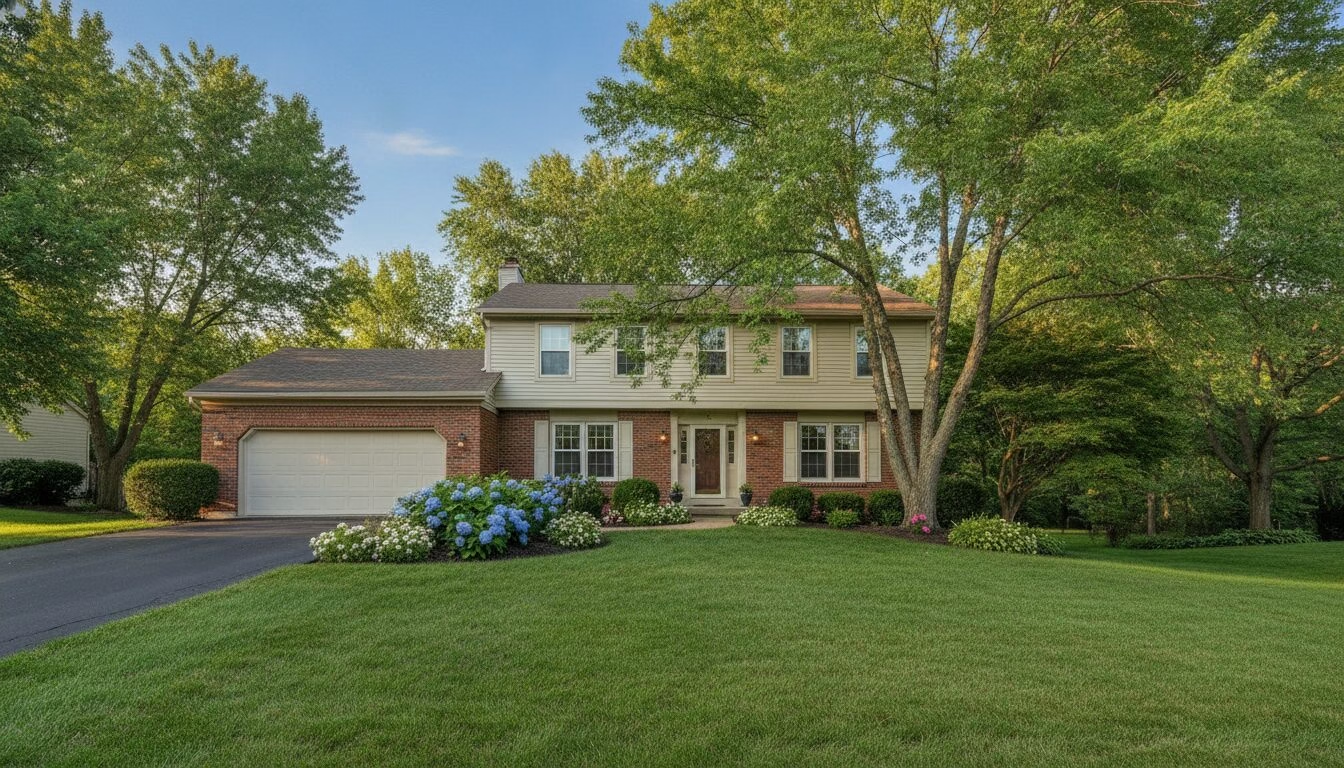
Lower is not the same as zero, though. Air conditioning keeps windows shut, and tightly built or heavily cooled homes can hold radon in even during warm weather. Some homes now show readings that are nearly even across the seasons, and a few even peak in summer. A low summer number is reassuring, but it is a best-case snapshot, not the year-round average.
Why Does Seasonal Variation Affect Radon Test Timing?
Seasonal variation matters for test timing because a short-term test only captures the conditions during the days it runs. To make those few days comparable and repeatable, the EPA calls for closed-house conditions. Keep windows and exterior doors closed, except for normal entry and exit, for at least 12 hours before the test and for its full duration, run the device for a minimum of 48 hours, and place it in the lowest lived-in level of the home. Those conditions essentially recreate winter behavior, stabilizing the reading.
Why Winter Testing Shows the Worst Case
Because winter naturally produces closed-house conditions and the strongest stack effect, a winter test reveals your worst-case exposure. If a winter test comes back below 4.0 pCi/L, you can be confident your year-round average is below the action level too. A low summer test is encouraging but less conclusive, since the same home may read higher once the heating season returns.
Should You Test for Radon in Winter or Summer?
You can test at any time of year, but if you only test once, winter gives the most protective result. A reading taken during the heating season, roughly November through March in the St. Louis area, reflects the conditions under which radon concentrates most. A summer test still has value, and the right next step depends on what it shows.
- If you tested in spring or summer and the result was low, consider a confirming test in winter to rule out a cold-season spike.
- If a summer test already reads at or above 4.0 pCi/L, there is no reason to wait, because winter will almost certainly be higher and the EPA recommends acting at that level regardless of season.
How Does a Radon Mitigation System Keep Levels Low Year-Round?
A radon mitigation system removes the seasonal guesswork because it does not depend on the weather. An active soil-suction system uses an inline fan and a sealed vent pipe to hold the soil under the foundation at constant negative pressure, capturing radon before it can enter and venting it safely above the roofline. The fan runs continuously, so the system counters the winter stack effect and the summer air-conditioning effect alike.
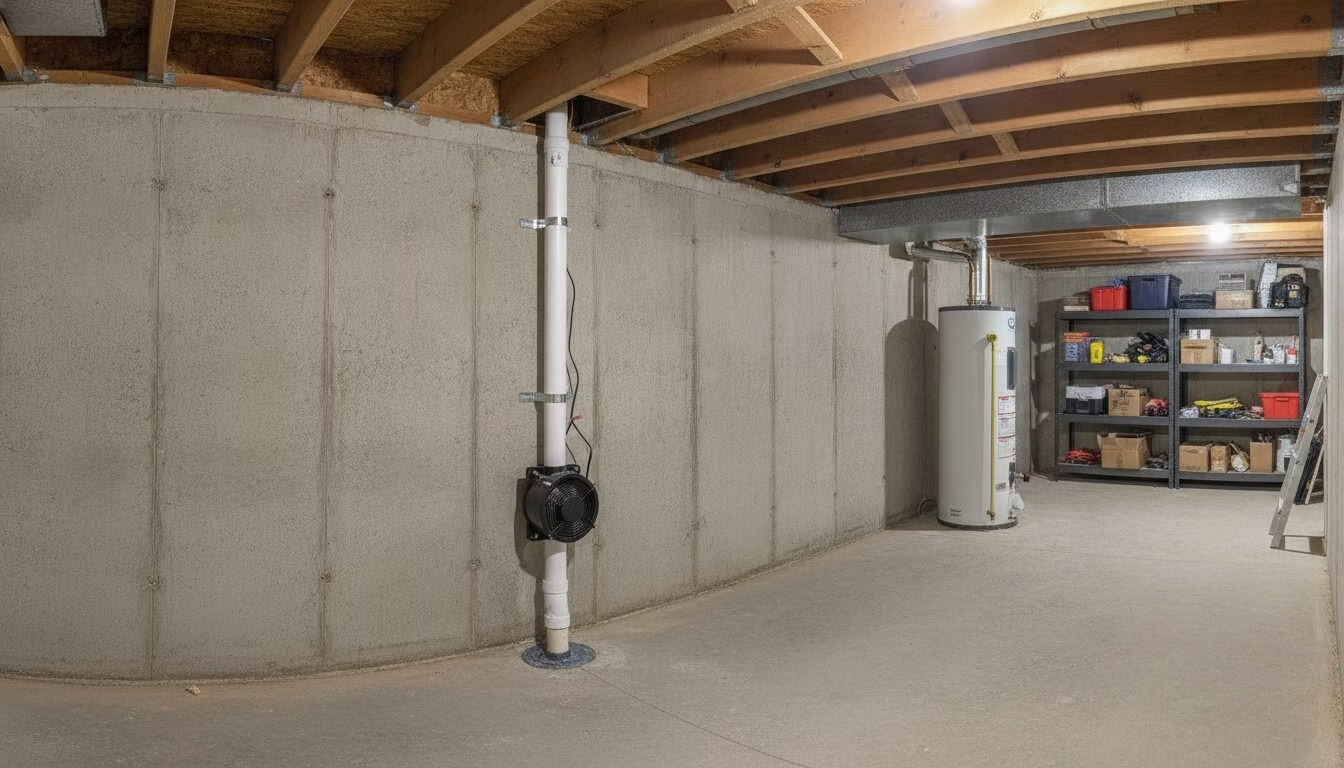
That year-round consistency is the whole point. The EPA’s Consumer’s Guide to Radon Reduction reports that soil-suction systems can lower indoor radon by up to 99 percent when they are designed and installed correctly. A homeowner with a working system keeps levels below the 4.0 pCi/L action level in January and July alike, without timing tests around the seasons. You can see how the different designs work on our page covering radon mitigation services in St. Louis.
Why Seasonal Radon Testing Matters for St. Louis-Area Homes
Seasonal testing matters in the St. Louis metro because the region’s cold, sealed winters create textbook conditions for radon to concentrate, and the area’s varied housing stock responds differently from one block to the next. A block-wall basement in St. Louis County, a newer slab house in St. Charles County, and a walk-out design in Jefferson County or Franklin County can each show their own seasonal pattern.
Post-Mitigation Verification Across Seasons
Air Sense Environmental tests under the EPA’s closed-house protocol and recommends arranging a separate follow-up test after installation to measure whether levels are below the EPA action level of 4.0 pCi/L. Owner Jake (Jacob) Lusby holds Illinois IEMA Mitigation Professional license RNM20232346, and from its base in Edwardsville, Illinois it serves homes across the metro, including O’Fallon, Illinois and O’Fallon, Missouri. Understanding the winter-versus-summer pattern is what turns a single test result into a clear decision.
Frequently Asked Questions About Seasonal Radon Levels
Are radon levels higher in winter or summer?
Radon levels are usually higher in winter. Sealed homes, the stronger winter stack effect, and frozen or snow-covered ground all push more soil gas indoors and hold it there, so the same house can read several times higher in January than in July. That is why the EPA treats winter as the worst-case season for measurement.
What radon level is considered too high?
The EPA recommends taking action to reduce radon at 4.0 pCi/L or higher, and suggests considering action between 2.0 and 4.0 pCi/L. Because radon is invisible and odorless, testing is the only way to know your level. The EPA estimates that radon is responsible for about 21,000 lung cancer deaths in the United States each year.
Can I trust a summer radon test?
A summer radon test is valid when it is run under EPA closed-house conditions, but it tends to capture a home’s lowest readings of the year. If it comes back low, a confirming winter test is worth doing. If it is already at or above 4.0 pCi/L, you can act right away, since winter levels are typically higher still.
Does a radon mitigation system work in every season?
Yes. An active radon mitigation system runs its fan continuously and holds the soil under constant negative pressure, so it counters both the winter stack effect and summer air conditioning. A correctly designed soil-suction system keeps radon below the 4.0 pCi/L action level year-round, which the EPA reports can mean reductions of up to 99 percent.
How long does a radon test take?
A short-term radon test runs for a minimum of 48 hours under closed-house conditions, with windows and exterior doors kept closed for at least 12 hours beforehand and throughout the test. The device should sit in the lowest lived-in level of the home. Long-term tests run for more than 90 days and average out the seasonal swings.
Get a Free In-Home Radon Consultation
Whether your last test was in winter or the middle of summer, the surest way to know where your home stands is a professional evaluation that accounts for the season. Air Sense Environmental will review your results, test under proper closed-house conditions if needed, and design a system that keeps your levels low all year. Schedule your free in-home consultation and get a clear, no-pressure plan for the radon in your home.