
Sump pump radon mitigation uses the sump pit your home already has as the suction point for a radon reduction system. Because the pit connects to the drain tile looping around your foundation, it can draw soil gas from the entire footprint of the house, which often makes it the most effective place to pull radon from. Air Sense Environmental installs sealed sump-pit radon systems throughout the St. Louis metro.
How Does a Sump Pit Radon System Work?
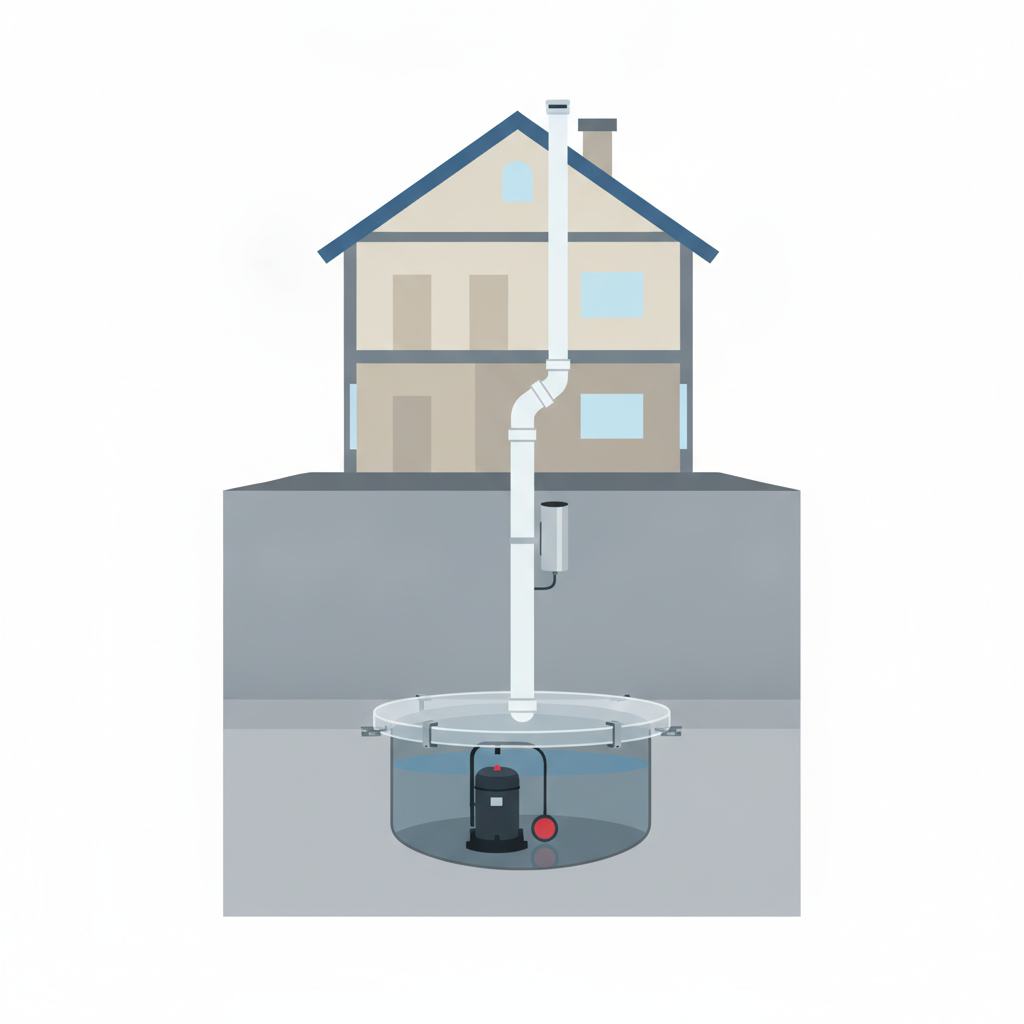
The system converts your sump pit from an open hole in the slab into a sealed collection chamber. Four pieces make it work:
- An airtight lid seals the pit, with gasketed openings for the pump cord and discharge line.
- A suction pipe runs from the lid up the basement wall and out of the house.
- An in-line radon fan runs continuously, keeping the pit and the soil beneath the slab under negative pressure.
- The drain tile around your foundation acts as a ready-made collection network, extending the system’s reach to the whole perimeter.
Do Sump Pumps Give Off Radon?
A sump pump itself does not create radon, but an uncovered sump pit is one of the most direct radon entry routes in a house. The pit is an open hole through the slab, connected to the same soil the gas comes from, so radon flows freely up through it.
That weakness is exactly what mitigation turns into a strength: seal the pit, put it under suction, and the same opening becomes the system’s collection point.
Does Sealing a Sump Pump Cover Help with Radon?
Sealing the cover alone usually lowers radon somewhat, but it rarely holds a home below the EPA action level of 4.0 pCi/L. The pressure difference that drives radon into the house is still there; the gas simply finds the next opening.
A sealed lid paired with an active fan is what makes the fix reliable. If you want the fuller picture of what works and what does not, see our guide on how to get rid of radon in your house.
Can You Still Use Your Sump Pump After Mitigation?
Yes. Your pump keeps doing its job exactly as before. The sealed lid includes a service access, the discharge line and float switch work normally, and a clear lid lets you check water levels at a glance. Your flood protection is unchanged.
Sump-Pit Suction vs. Standard Sub-Slab Suction
| Sump-pit suction | Standard sub-slab suction | |
|---|---|---|
| Suction point | Existing sump pit, sealed | Hole drilled through the slab |
| Reach | Entire drain-tile loop around the foundation | Gravel layer around the suction hole |
| Best for | Homes with perimeter drain tile and a sump | Slabs without drain tile or a pit |
| Pump access | Gasketed service access in the lid | Not applicable |
Is a Sump-Pit System Right for Your St. Louis Home?
Many St. Louis area homes sit on heavy clay soil with a high water table, which is why sump pumps are so common here, and why the sump pit is often the natural suction point. During the estimate we verify how well the pit communicates with the soil under the slab; if it does not, a standard sub-slab system is the better design.
Either way, the result is verified the same way: a post-mitigation radon test confirming the home is below 4.0 pCi/L.
What Does Sump Pump Radon Mitigation Cost?
A sump-pit system typically falls in the same range as a standard installation, and sometimes lower, since the suction point already exists. Our St. Louis radon mitigation cost guide has current local pricing, and if you have an older system with a tired fan, fan replacement is often all it needs.
Frequently Asked Questions About Sump Pump Radon Mitigation
These are the questions homeowners ask most often about sump pump radon mitigation, covering how the pit is sealed, what happens if the pump fails, and how the result is verified.
How do you seal a sump pump cover for radon?
The pit gets a rigid lid set in a bead of sealant, with gasketed grommets for the pump cord and discharge pipe and a gasketed access panel for service. The goal is an airtight seal that still leaves the pump fully serviceable.
What happens if my sump pump fails under a sealed lid?
The lid’s access panel opens for repair or replacement just like an ordinary cover, and it reseals afterward. A clear lid also makes it easy to spot rising water before it becomes a problem.
Do I still need a radon test after the system is installed?
Yes. A post-mitigation test a few days after the fan starts confirms the home is below the action level, and a retest every two years verifies the system is still performing.
Get a Free Sump-Pit Radon System Estimate
If your home has a sump pump and a high radon reading, you may already have the best mitigation route built in. Schedule your free in-home estimate or call 314-664-9807, and Air Sense Environmental will design the system, seal the pit, and provide guidance for arranging separate post-mitigation testing.