
How to get rid of radon in your home: a radon mitigation system is the only reliable radon removal method. Radon is a radioactive soil gas that seeps through the slab, and getting rid of radon means depressurizing the soil beneath the house so radon vents outside instead of inside. A properly designed system cuts indoor radon by up to 99 percent and holds it there year round. Opening windows, sealing cracks, and running air purifiers do not get rid of radon for long. This guide covers what actually removes radon, what only helps at the margins, and what radon removal involves for homes in the St. Louis area.
Can You Get Rid of Radon Naturally Without a System?
No, not in any lasting way. Radon enters because the air pressure inside your home is slightly lower than the pressure in the soil beneath it, so the house quietly draws soil gas up through the foundation. Any method that does not change that pressure relationship can only soften the problem temporarily.
- Opening windows dilutes radon while they are open. Levels climb back within hours of closing up.
- Sealing cracks and gaps reduces entry points, but the pressure difference still pulls gas through whatever remains.
- Air purifiers and dehumidifiers treat particles and moisture. Radon is a gas; they do not remove it.
- Fans and ventilation help while running, then the house returns to its normal equilibrium.
What Actually Removes Radon: Active Mitigation
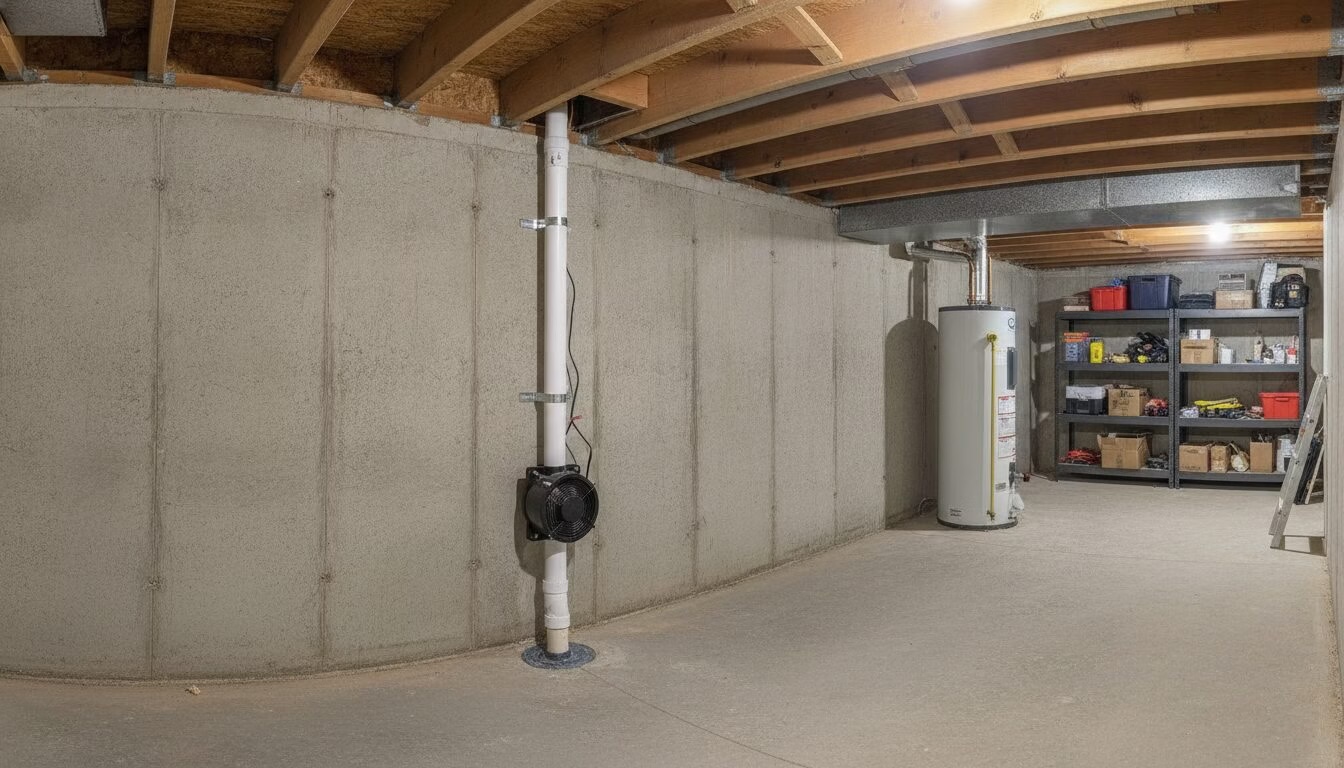
An active radon mitigation system, also called sub-slab depressurization, reverses the pressure relationship instead of fighting the symptoms. A suction point is created beneath your foundation, a PVC pipe carries the soil gas up and out, and an in-line fan runs continuously to vent it above the roofline, where it disperses harmlessly.
Done correctly, this reduces indoor radon by up to 99 percent, and the reduction holds year-round because the system never stops changing the pressure under the house.
How Radon Removal Works in Different Homes
The right suction point depends on how your home is built. The system is the same idea in every case: move the suction to where the soil gas collects.
- Basement or slab homes: a suction point is drilled through the slab into the gravel layer beneath it.
- Homes with a sump pit: the pit is sealed with an airtight lid and used as the suction point. See our guide to sump pump radon mitigation.
- Crawl space homes: a heavy membrane is sealed over the exposed soil and the system draws from beneath it, which pairs naturally with crawl space encapsulation.
Which Radon Fixes Work? A Quick Comparison
Which radon fixes work comes down to whether the method changes the pressure under the slab. The comparison below shows which radon fixes work, which help only at the margins, and which do nothing measurable.
| Method | Typical result | Verdict |
|---|---|---|
| Opening windows | Temporary drop; returns within hours | Not a fix |
| Sealing cracks alone | Small reduction | Helpful, not sufficient |
| Air purifiers / dehumidifiers | No effect on radon gas | Not a fix |
| Passive vent stack (no fan) | Modest reduction | Mainly for new construction |
| Active mitigation system | Up to 99% reduction, holds year-round | The proven fix |
Can You Prevent Radon from Entering in the First Place?
You can prevent radon from entering in the first place in new construction, where radon-resistant building techniques install the collection piping before the slab is poured. That is why new homes still test high for radon when those passive systems are skipped or left unfinished.
In an existing home, sealing entry points is worth doing as part of a mitigation project, but on its own it is a supporting measure. The dependable path from a high reading to safe air is an active system, verified by a follow-up test.
How Long Does It Take to Get Rid of Radon?
Installation usually takes a single day, and levels begin dropping within about 24 hours of the fan switching on. A post-mitigation test a few days later confirms the home is below 4.0 pCi/L. If you are starting from a high test result, our guide on what to do when a radon test comes back high walks through the full sequence.
Why St. Louis Homes Need Active Mitigation
The EPA places the St. Louis metro, on both the Missouri and Illinois sides, in its highest-risk zone for radon, because the limestone-rich geology beneath the region produces the gas steadily. Roughly 4 in 10 area homes test above the action level.
That is why the sequence matters here: test your home, understand what your pCi/L number means, and mitigate if it is at or above 4.0.
Frequently Asked Questions About Getting Rid of Radon
These are the questions homeowners ask most often about getting rid of radon, covering ventilation, air purifiers, cost, and whether radon comes back after mitigation.
Can opening windows get rid of radon?
Only while they are open. Ventilation dilutes radon temporarily, but levels return to where they were within hours of closing the house up, so it is not a solution, especially through a St. Louis summer or winter.
Does a dehumidifier or air purifier remove radon?
No. Radon is a radioactive gas, not a particle or moisture problem. HEPA filters and dehumidifiers improve other aspects of air quality but have no meaningful effect on radon levels.
How much does it cost to get rid of radon?
What it costs to get rid of radon depends on the foundation type, how many suction points the home needs, and how far the vent pipe travels to reach the roofline. Most St. Louis area homes fall in a predictable range, and our radon mitigation cost guide breaks down current local pricing in detail.
Will radon come back after mitigation?
Not while the system is running. The fan operates continuously, and a periodic retest, every two years or after major renovations, confirms it is still doing its job. If the fan ever fails, it can be replaced without redoing the system.
Ready to Get Rid of Radon for Good?
To get rid of radon for good you need an active system, not a temporary fix. Air Sense Environmental designs and installs radon mitigation systems across the St. Louis metro on both sides of the river, and recommends arranging a separate follow-up radon test after each install. Schedule your free in-home estimate or call 314-664-9807 to get radon out of your home permanently.