
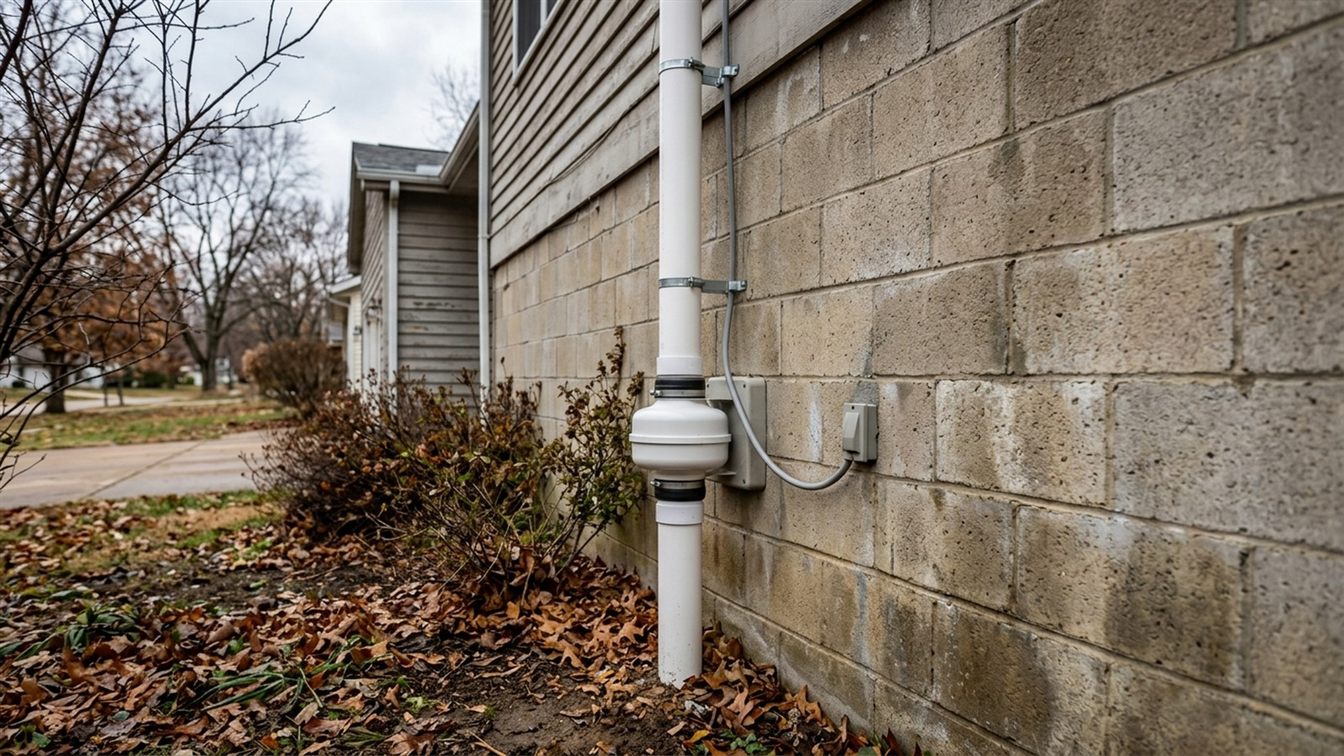
A well-installed radon mitigation system’s pipe, seals, and slab penetration can last the life of the house, while the fan is the wear part, and the EPA notes that fans may last five years or more, with manufacturer warranties that tend not to exceed five years. In practice a system does not fail all at once. One component ages out, and the rest keeps working if someone notices in time.
That distinction matters for anyone in St. Louis, MO, St. Louis County, or the Metro East who inherited a system with the house and has no paperwork for it. A 2012-vintage installation is not obsolete. It is very likely on its second fan, or overdue for one.
This guide breaks the system into its parts, gives a realistic service life for each, explains the warning signs for each failure mode, and covers what a replacement actually involves.
How long does each part of a radon system last?
| Component | Typical service life | What ends it | Sign it is due |
|---|---|---|---|
| Radon vent fan | EPA: five years or more; warranties typically five years | Bearing wear, moisture ingress, motor failure | New noise or vibration, manometer levels out, silence |
| Manometer (U-tube gauge) | Many years | Fluid evaporation, tube discoloration, physical damage | Fluid low or gone, tube cloudy, unreadable |
| PVC riser and fittings | Decades | UV degradation on the exterior run, physical damage, joint separation | Chalky or brittle exterior pipe, visible crack, joint gap |
| Suction point seal | Decades | Slab movement, freeze cycles, poor original sealing | Visible gap at the collar, air whistle at the penetration |
| Sump lid seal and gaskets | 5 to 15 years | Gasket compression set, repeated lid removal | Lid no longer seats, visible gap, loss of suction |
| Sealed foundation cracks | Varies widely | Continued settlement, the wrong sealant for the joint | Crack reopened, sealant pulled away |
| Exterior electrical connection | Decades | Weather exposure, failed weatherproof cover | Cracked cover, corrosion, tripping breaker |
The theme is that the mechanical parts outlive the moving part by a wide margin. That is why “how long does a radon mitigation system last” is really two questions: how long before the fan needs replacing, and how long before the installation needs revisiting.
How long does a radon fan last?
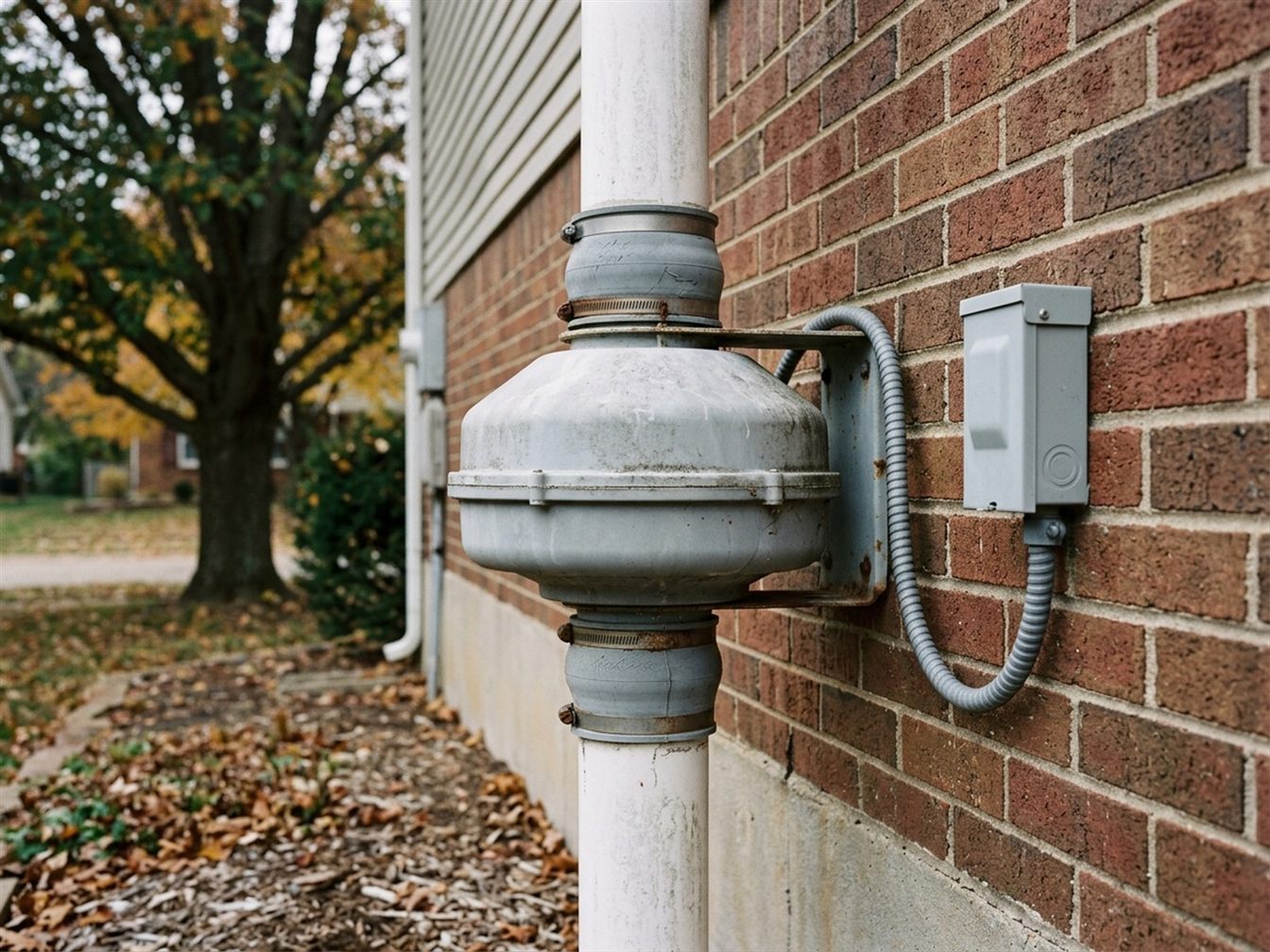
The EPA’s guidance in A Consumer’s Guide to Radon Reduction is that fans may last five years or more, and that manufacturer warranties tend not to exceed five years. That is the honest framing. Five years is the warranty floor, not the expected end.
What actually determines it:
- Continuous duty. The fan runs 24 hours a day, every day, for years. The EPA is emphatic that it should never be switched off. That is roughly 44,000 hours in five years.
- Where it is mounted. A fan in an unconditioned attic or on an exterior wall, which is where code requires it, sees temperature swings and weather. A well-shielded exterior mount with the right fan rated for exterior use lasts longer than an exposed one.
- Moisture. Soil gas carries water vapour. Condensate that cannot drain back to the suction point sits in the housing, and moisture in a motor is what usually ends it.
- Sizing. A fan fighting a system it was never sized for, too much static pressure or too little, works harder and wears faster. Our page on radon fan replacement covers matching the replacement to the system rather than to the old fan’s label.
When it does fail, the EPA’s published figure for replacement is around $200 to $350 including parts and labour. That is the EPA’s number, not an Air Sense quote, and actual cost depends on the fan model, the mounting location, and the electrical work involved. Ask for an estimate before work begins.
How do you know the system is still working?
You look at the warning device, and you retest.
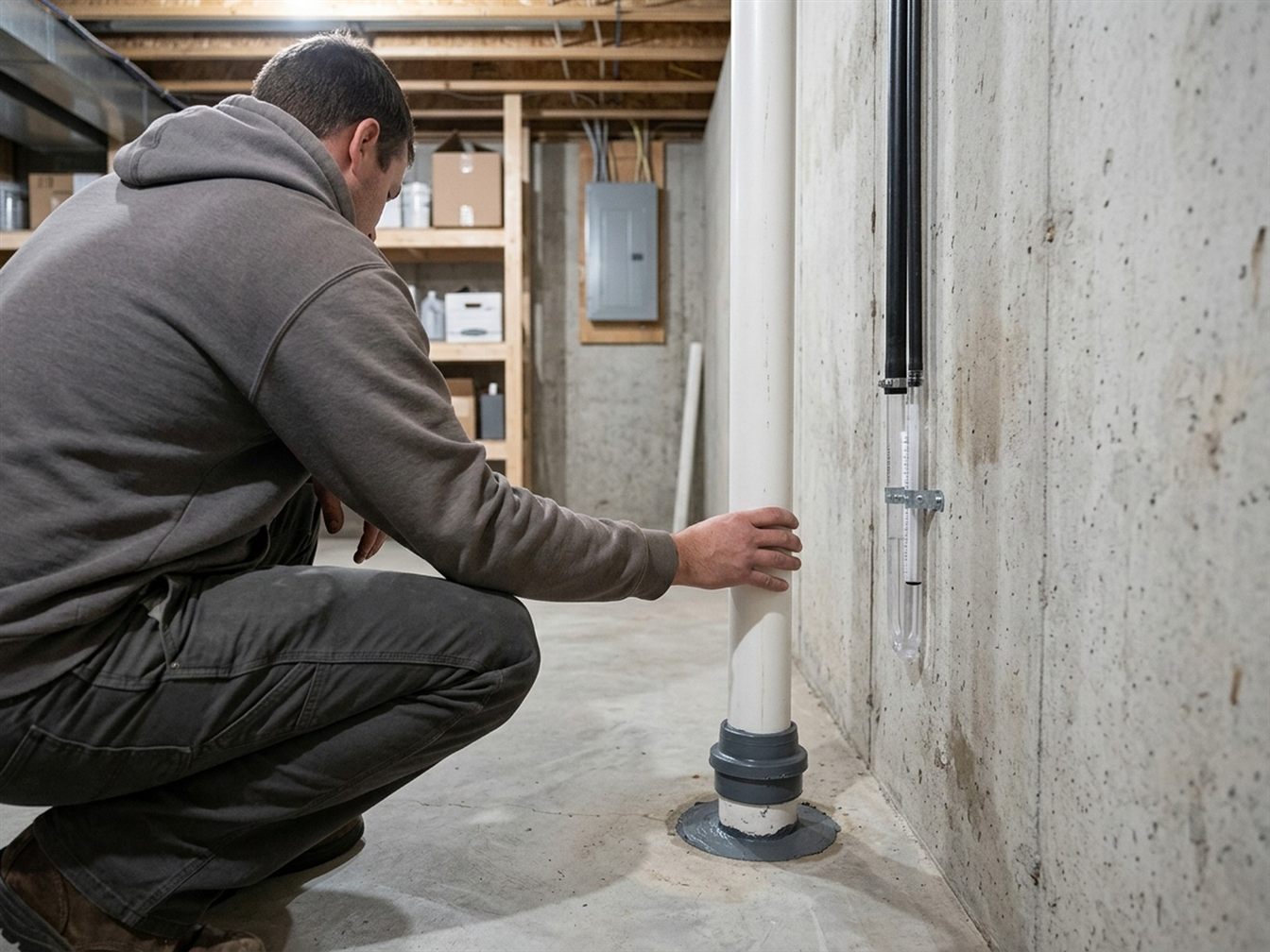
Every active system must have a failure warning device. The EPA lists the accepted types as a liquid gauge, a sound alarm, a light indicator, or a dial or needle display gauge, and requires that it be placed where it can be seen or heard easily. On almost every residential installation in this market that device is a U-tube manometer clipped to the riser.
The manometer tells you the fan is pulling. Two unequal fluid columns mean there is suction on the pipe. Level columns mean there is not, which usually means the fan has stopped or the pipe is blocked.
The manometer does not tell you the radon level. It is a pressure gauge, not a concentration gauge. A system can show good suction while a failed seal or a new foundation crack lets radon in around it. That is why the EPA recommends retesting at least every two years even with a system in place. Our guide to how often you should test for radon has the full schedule.
If the reading is at or above the EPA action level of 4.0 pCi/L on a retest, the system needs diagnosis rather than another test. What to do if your radon test comes back high covers the sequence.
What are the warning signs a radon system needs service?
Six signals, roughly in order of urgency.
The manometer columns are level. The fan is not pulling. Check that the fan has power and that a breaker or GFCI has not tripped, then call. Do not simply leave it.
The fan has gone silent. An active fan makes a low continuous hum. Silence in a system that used to hum is a stopped fan.
New noise, grinding, or vibration. Bearing wear. The fan is still running, but it is telling you it is near the end. This is the most common failure we are called about in the first cold week of October, because that is when people are back in the basement listening.
Water in the pipe or a gurgling sound. Condensate that cannot drain. It loads the fan and, in a hard freeze, can partially block the riser.
The manometer fluid is low, cloudy, or gone. The gauge itself has aged out. It is inexpensive to replace and it is the only routine indicator you have, so replace it.
A retest above 4.0 pCi/L despite good suction. The system is running but no longer sufficient. Usually this follows a change to the house: a finished basement, a new sump, a foundation repair, an addition.
Does a radon system ever need full replacement rather than repair?
Rarely as a wear-out, commonly as a redesign.
A correctly installed system that has had its fan replaced on schedule does not reach a point where the pipe and seals must be torn out. What does happen is that the house changes and the original design stops matching it.
Four situations that call for redesign rather than repair:
- The house was altered. Finishing a basement, adding a foundation for an addition, replacing a sump, or extensive foundation work all change the sub-slab pressure field. The EPA advises asking your radon contractor before major structural changes and retesting in the lowest lived-in area afterward.
- The original installation does not meet current standards. Systems installed before the current ANSI/AARST soil gas mitigation standards sometimes have a fan in conditioned space or a discharge point that does not meet the clearances. Those are safety and effectiveness issues, not cosmetic ones.
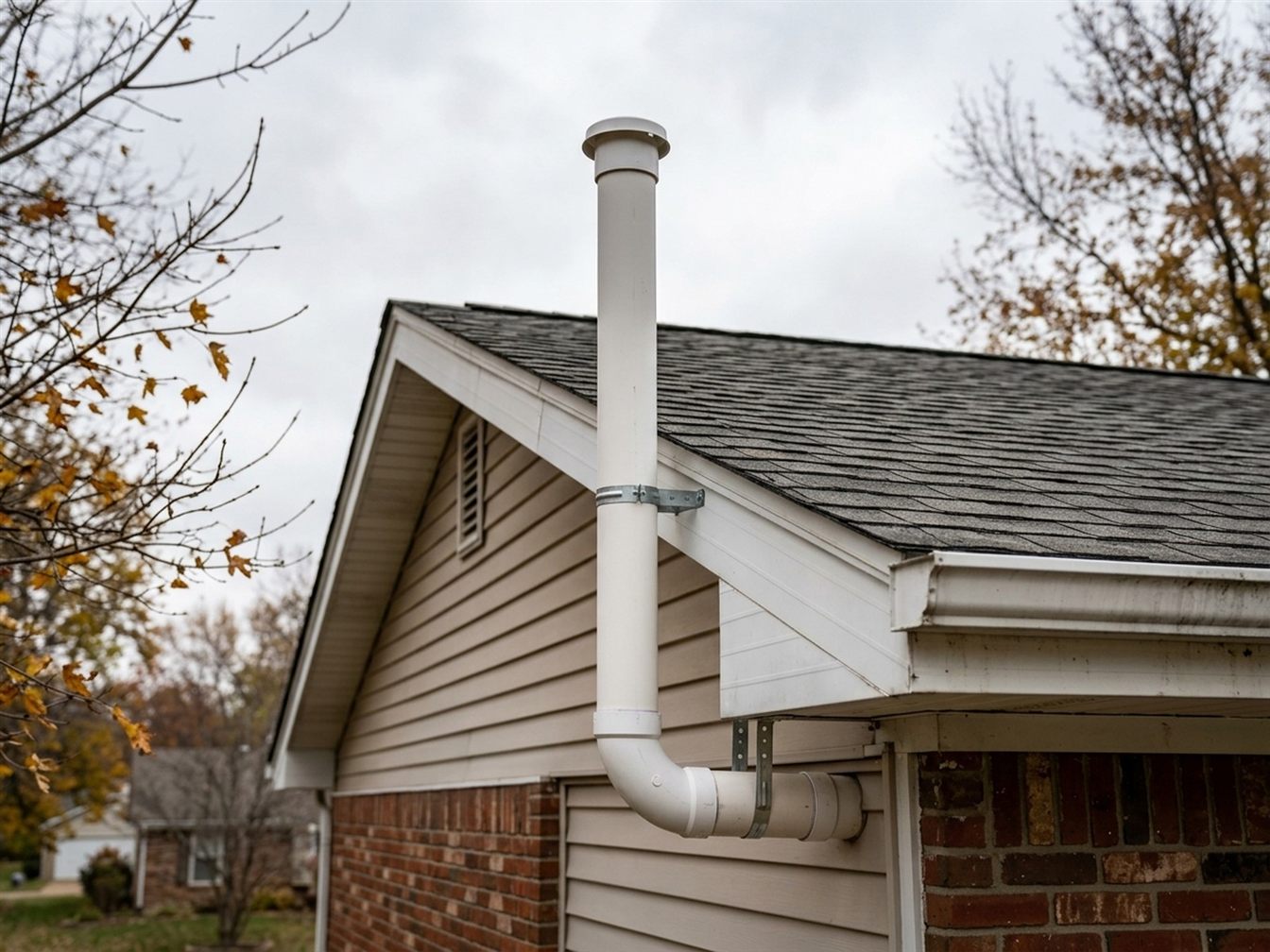
- The discharge is wrong. The EPA requires the exhaust to vent above the roof surface and at least 10 feet above the ground, and at least 10 feet away from windows, doors, or other openings unless it vents at least 2 feet above them. The reason is re-entrainment: radon concentration at the discharge point can be extremely high, and it falls to background only a few feet away, so a low or close discharge can feed the gas straight back into the house.
- One suction point is no longer enough. Mixed foundations, a very common older St. Louis pattern of part basement and part crawl space, sometimes need a second suction point or a sub-membrane addition as the building changes. See types of radon mitigation systems.
What maintenance keeps a system at the long end of its life?
Four habits, none of them expensive.
- Look at the manometer monthly. It takes two seconds and it is the only continuous indicator the system gives you. Put it on the same mental schedule as the smoke alarm check.
- Never turn the fan off. The EPA states the fan must run continuously for the system to work correctly. There is no season in which switching it off is appropriate.
- Keep the discharge and the exterior fan clear. Leaves, nests, ice, and shrub growth all matter. October is the right month for this in the St. Louis metro.
- Retest at least every two years, and after any remodel, HVAC change, or foundation work. Our radon mitigation system maintenance guide goes deeper on the seasonal checks.
Frequently asked questions
How long do radon mitigation systems last?
The pipe, seals, and slab penetration can last the life of the house when correctly installed. The fan is the wear item, and the EPA notes fans may last five years or more, with warranties that typically do not exceed five years.
How long does a radon fan last?
Five years or more under continuous duty, according to EPA guidance. Mounting location, moisture, and correct sizing all shift where a given fan lands in that range.
How much does it cost to replace a radon fan?
The EPA’s published figure is around $200 to $350 including parts and labour. That is a national reference rather than a quote, and the actual price depends on the fan, the mounting, and the electrical work. Get an estimate before work begins.
Can you turn a radon mitigation system off to save electricity?
No. The EPA states the fan must run continuously for the system to work correctly. A typical radon fan is a small continuous load, and shutting it off means the house is unprotected.
Does a radon system need to be inspected before selling a house?
There is no universal requirement, but buyers routinely ask for a current radon test, and a documented post-mitigation result plus a working manometer is the strongest position a seller can be in.
What happens if the radon fan stops working?
Radon levels in the house will begin rising back toward their pre-mitigation concentration over hours to days. Get the fan diagnosed promptly and retest once it is running again.
Get the system checked before winter
If the manometer is flat, the fan has changed its note, or nobody has retested since the system went in, the fix is usually small and the cost of ignoring it is not. Air Sense Environmental services and installs radon mitigation systems across the greater St. Louis metro and handles radon fan replacement on both sides of the river.
Call 314-664-9807 or request a free estimate.