
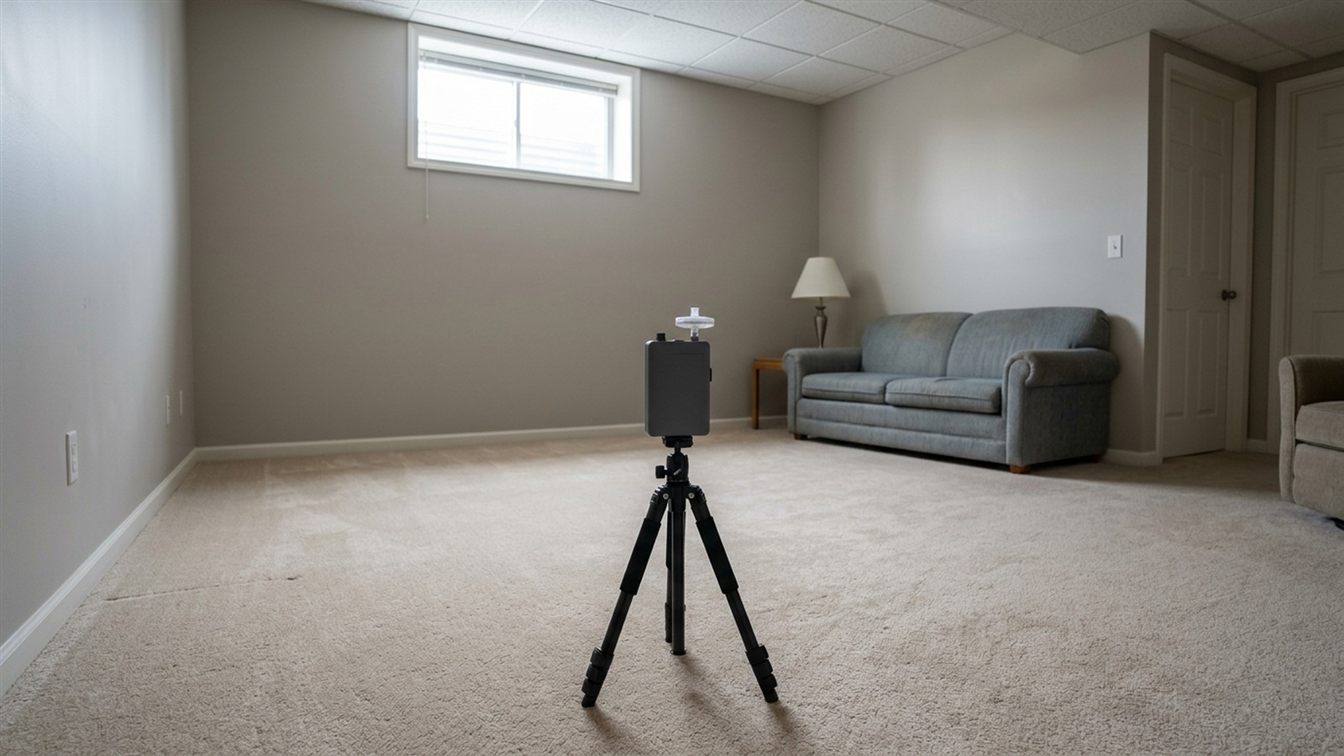
An air quality test can detect mold when it includes mold air sampling: a lab compares the spores in your indoor air with the spores outdoors, and a big gap points to mold growing somewhere inside. If you can already see mold, the EPA says testing is usually unnecessary, and the money is better spent fixing the moisture and removing the growth.
That distinction matters for homeowners across St. Louis, MO, St. Louis County, St. Charles County and the Metro East, where humid summers, damp basements and older crawl spaces make a musty smell a common complaint. Not every air test looks for mold, and not every mold question needs a test.
This guide explains what a mold air test measures, how it differs from a general air quality monitor, when testing is worth it, and what to do once the result comes back.
What does a mold air test actually measure?
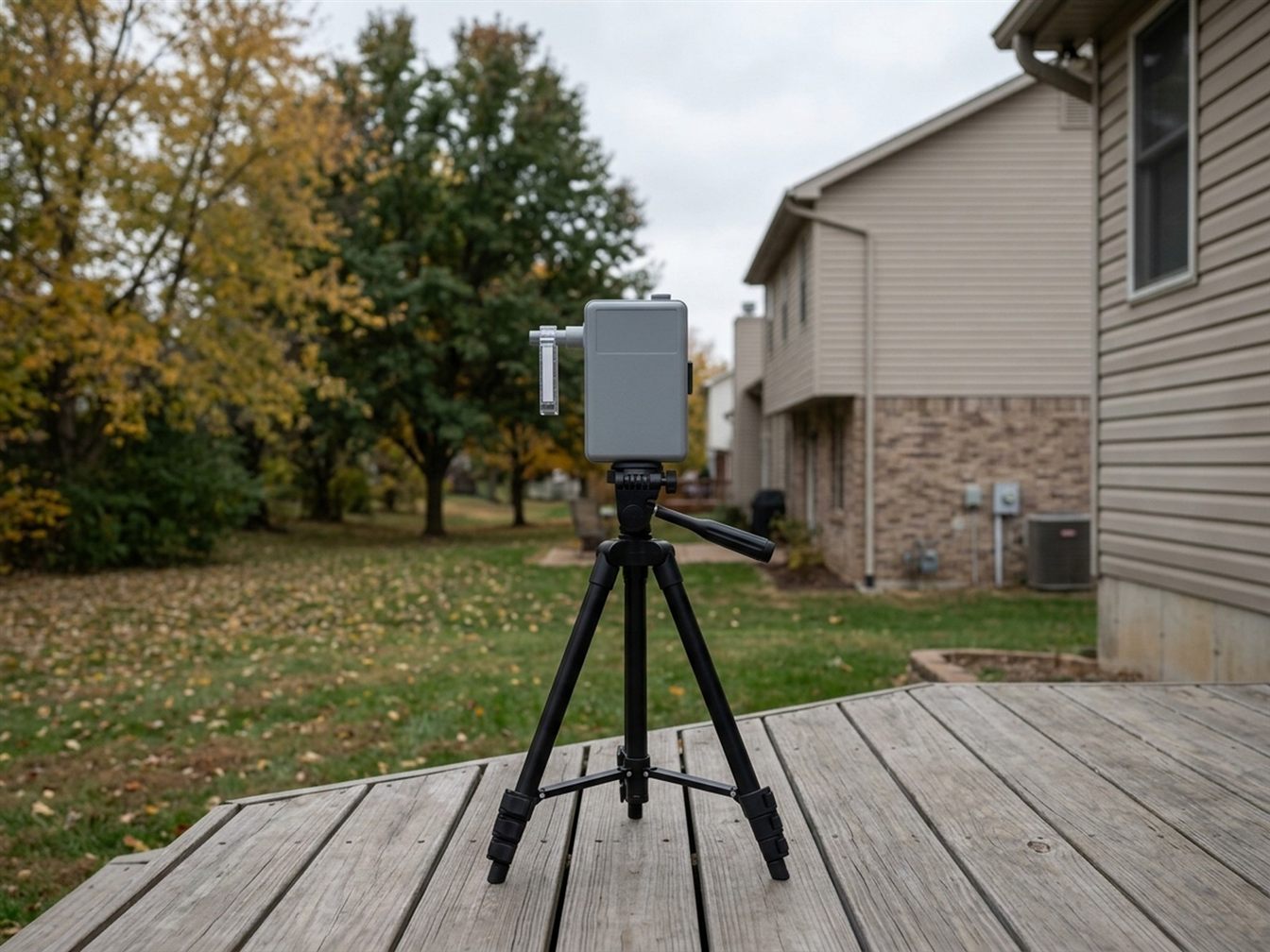
A mold air test measures the mold spores in a sample of indoor air at one moment and compares them with an outdoor sample taken at the same time. A professional collects the indoor sample and an outdoor control sample, and a laboratory analyzes the spores in each.
The comparison is the result. In the EPA’s words, “mold spores waft through the indoor and outdoor air continually,” so an indoor count means little on its own. The EPA’s Mold Remediation in Schools and Commercial Buildings guide sets the benchmark: once a mold problem is resolved, “the types and concentrations of mold in indoor air samples should be similar to what is found in the local outdoor air.”
The same EPA guide lists what sampling can and cannot do:
- It can help locate a mold source, identify some of the mold species present, and tell mold apart from soot or dirt.
- It can confirm whether a cleanup worked, through samples taken before and after remediation.
- It cannot give a pass or fail grade, because no EPA or federal limits exist for mold or mold spores.
- It is a snapshot. Air sampling “provides information only for the moment in time in which the sampling occurred.”
Can an indoor air quality monitor detect mold?
An indoor air quality monitor cannot identify mold, but it can flag the conditions that let mold grow. Monitors that track particulate matter count particles of a given size without telling a mold spore from dust or pollen, so a high particle reading is a clue rather than a finding.
Humidity is the more useful signal. The EPA advises keeping indoor humidity “below 60 percent (ideally between 30 and 50 percent)” in A Brief Guide to Mold, Moisture and Your Home, and a monitor that logs humidity for two days shows whether a house sits above that line.
Air Sense Environmental’s indoor air quality testing in St. Louis uses a 48-hour continuous monitor that records particulate matter (PM2.5 and PM10), VOCs, carbon dioxide, carbon monoxide, temperature and relative humidity at one-minute intervals. That data shows whether the air and the moisture in a home point toward a mold problem. Identifying the mold itself takes air or surface samples analyzed by a lab.
Do you need a mold test if you can see mold?
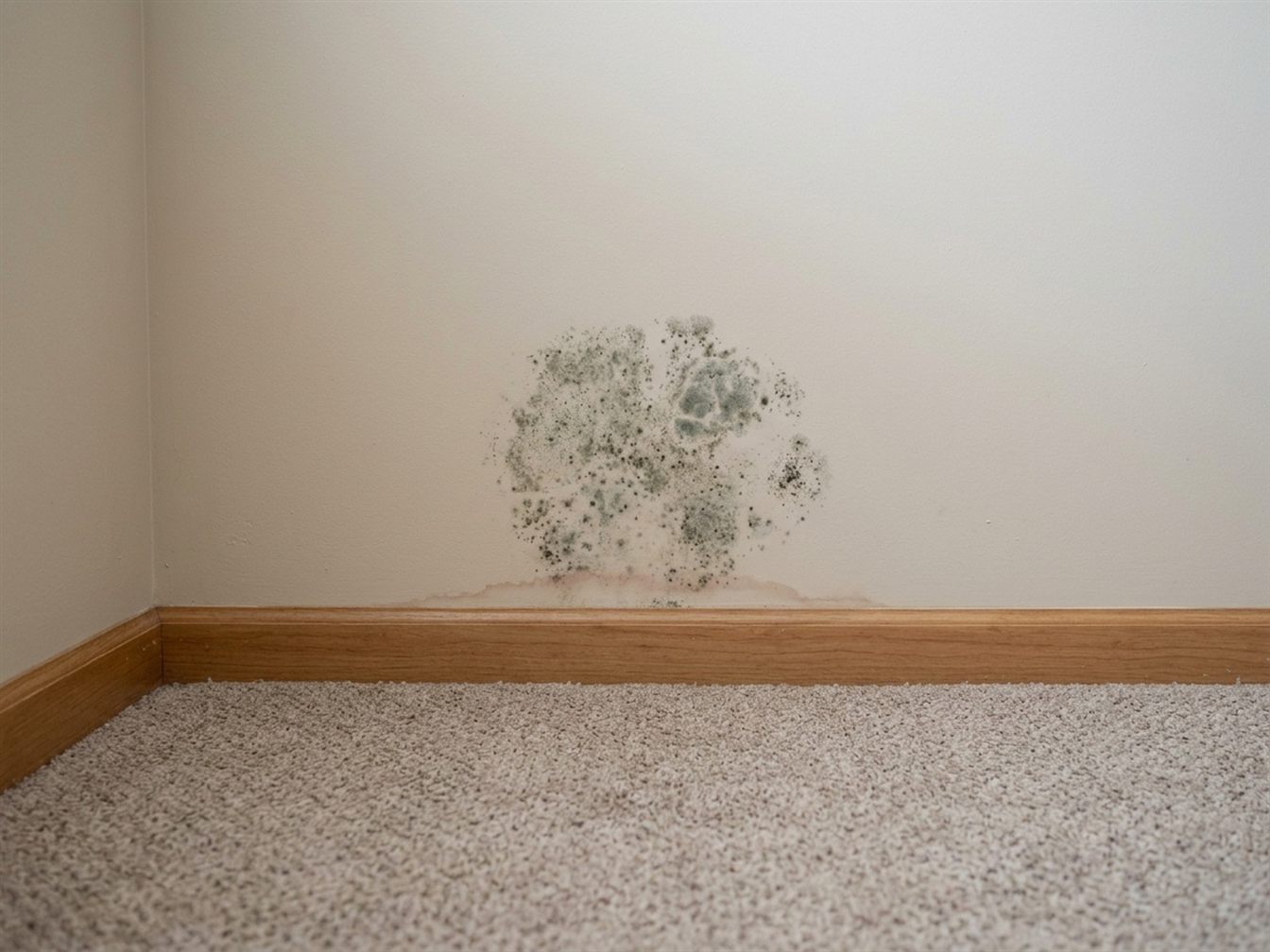
No, you usually do not need a mold test if you can see mold. The EPA’s guidance on mold testing or sampling is direct: “In most cases, if visible mold growth is present, sampling is unnecessary.”
Visible mold has already answered the question a test would ask. Knowing the species rarely changes the fix, which in every case is to stop the water and remove the growth. The EPA’s own cleanup guidance draws the line by size: a moldy patch under about 10 square feet is usually a job a homeowner can handle, while larger growth or heavy water damage should follow the EPA’s professional remediation guidance.
The money a test would cost usually does more good spent on the moisture source.
Are DIY mold test kits accurate?
DIY mold test kits detect mold spores, but a positive result tells you very little, because mold spores are present in nearly every home. Most kits are settle plates or swabs with no outdoor comparison, no measured air volume and no lab interpretation, which are the three things that make a professional air sample meaningful.
The EPA adds two points that apply to any test a homeowner buys:
- There is no number to compare against. The EPA states that standards or threshold limit values “for airborne concentrations of mold, or mold spores, have not been set.”
- Interpretation takes experience. The EPA recommends that sampling be done by professionals who design sampling protocols and interpret results, with lab analysis following methods from the American Industrial Hygiene Association (AIHA) or the American Conference of Governmental Industrial Hygienists (ACGIH).
Our guide on how to test indoor air quality covers home kits and consumer monitors in more depth.
When is an indoor air quality test worth it for mold?
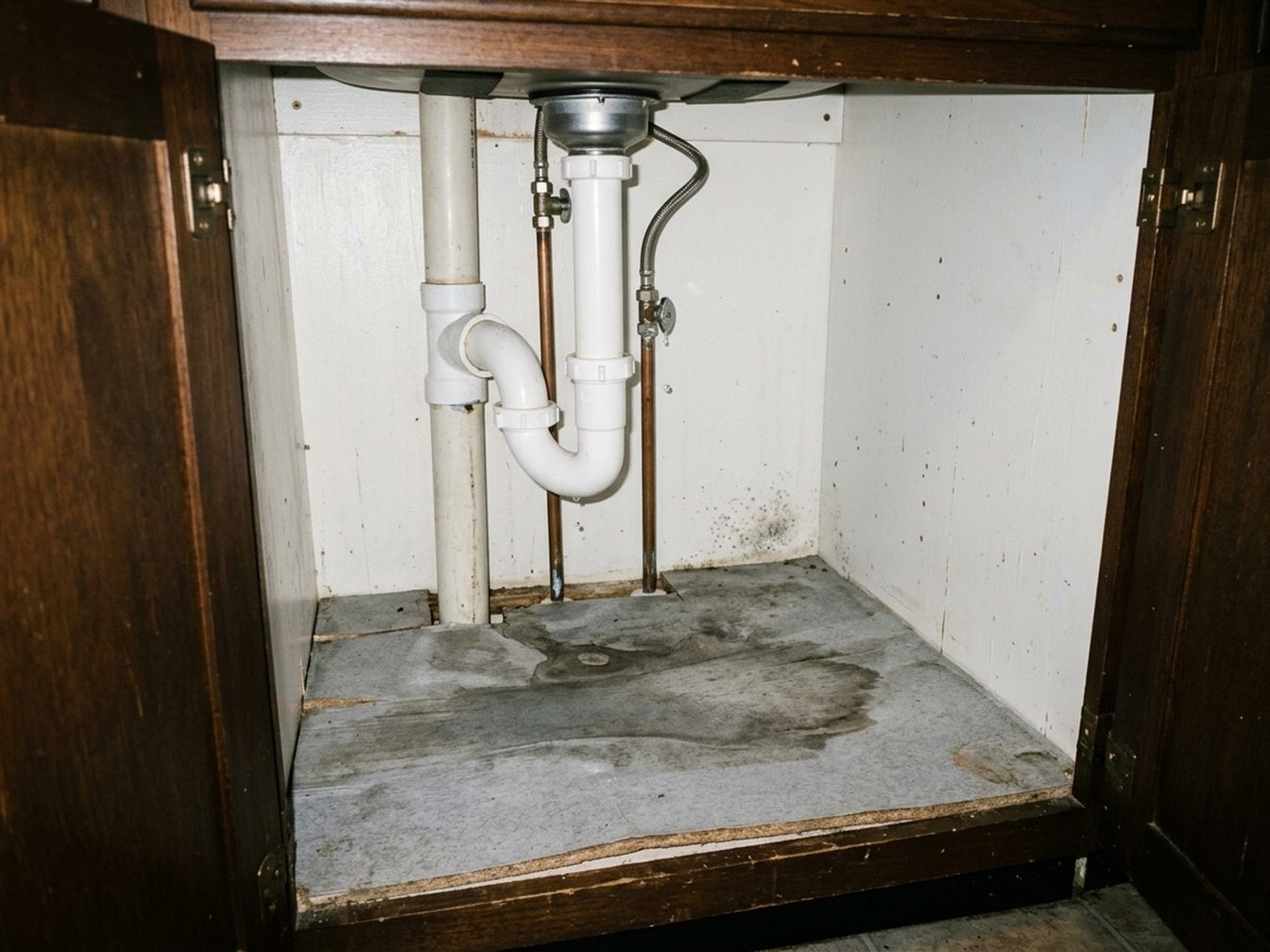
An indoor air quality test is worth it for mold when you suspect mold but cannot find it. The EPA describes the classic case: “You may suspect hidden mold if a building smells moldy, but you cannot see the source, or if you know there has been water damage and residents are reporting health problems.”
Hidden mold grows in places a homeowner never sees. The EPA lists the back side of drywall, wallpaper or paneling, the underside of carpets and pads, inside walls around leaking or condensing pipes, and inside ductwork. Opening those areas carelessly can release a large burst of spores, which is why the EPA suggests an experienced professional for hidden mold.
Testing tends to pay off in five situations:
- A musty smell with no visible source, especially after rain or in summer.
- Allergy-type symptoms that ease away from home, such as sneezing, a runny nose or red eyes.
- After a leak, flood or renovation that left materials wet.
- Humidity that stays above 60 percent in a basement or crawl space.
- After a cleanup, to confirm indoor spores now look like outdoor spores.
The EPA notes that molds produce allergens and irritants and can trigger asthma attacks in people with asthma who are allergic to mold. Anyone with health concerns should talk with a health professional.
Which mold test fits your situation?
The right mold test depends on what you already know. The table below sorts the common situations by whether a test helps and which kind.
| Situation | Is a test needed? | Which kind |
|---|---|---|
| Visible mold growth | Usually not (EPA) | None. Fix the moisture and clean up or remediate. |
| Musty smell, nothing visible | Often worth it | Professional air sampling with an outdoor comparison, plus moisture readings |
| Allergy-type symptoms that ease away from home | Can help | Air quality monitoring for humidity and particles, with mold sampling if moisture is high |
| After a leak, flood or renovation | Can help | Moisture readings first. Sampling if a hidden source is suspected. |
| After a mold cleanup | Useful | Post-remediation air or surface samples compared with outdoor air |
| Buying a home with a damp basement or crawl space | Can help | Inspection and humidity readings, with sampling if a source is unclear |
What happens after a mold result comes back?
After a mold result comes back, the next step is to find and fix whatever moisture the result points to, because moisture is what mold needs to grow. The EPA puts it plainly in its mold and moisture guide: “The key to mold control is moisture control.” The same guide warns that if you clean up the mold but do not fix the water problem, “most likely, the mold problem will come back.”
A useful result tells you where to look, and each common outcome points to a different next step:
- Indoor spores similar to outdoor spores, no musty smell. The sample does not point to an indoor source. Keep humidity below 60 percent and watch for changes.
- Indoor spores well above outdoor levels, or types not found outside. Something indoors is likely growing mold. The next step is an inspection with moisture readings to find the wet material.
- A post-cleanup sample that now matches outdoor air. This is the EPA’s sign that remediation worked: indoor types and concentrations “similar to those found outside, once cleanup activities have been completed.”
- A musty smell but a normal result. Air sampling is a snapshot, so a single normal sample does not rule out hidden growth. Moisture readings and inspection carry more weight here.
Why do mold, humidity and radon often get tested together?
Mold, humidity and radon often get tested together because all three are tied to the same lower level of the house. Basements and crawl spaces hold the most moisture, and they are also where soil gas enters. The EPA’s introduction to indoor air quality notes that “high temperature and humidity levels can also increase concentrations of some pollutants.”
A damp crawl space can feed mold under the floor while the same upward airflow carries soil gas, including radon, into the living space. That is why a full picture of a home’s air usually pairs humidity and particle monitoring with a separate radon test, and why moisture control and radon mitigation are often planned for the same foundation. The EPA recommends fixing a home when radon reaches 4.0 pCi/L or higher.
Frequently asked questions
Does a radon test detect mold?
No, a radon test does not detect mold. A radon test measures radon only, so mold questions need humidity readings, an air quality assessment or mold sampling run alongside it.
Can an air purifier fix a mold problem?
No, an air purifier cannot fix a mold problem. The EPA’s guide to air cleaners in the home states that portable air cleaners and HVAC filters “do not address the cause of mold and musty odors” and “will not resolve a mold and moisture problem,” even if they remove some particles.
How long does an indoor air quality test take?
An indoor air quality test from Air Sense Environmental runs for at least 48 hours, recording readings at one-minute intervals. Any mold sampling sent to a laboratory adds the lab’s turnaround time after collection.
Can crawl space mold affect the air upstairs?
Yes, crawl space mold can affect the air upstairs. Warm air rising through a house pulls replacement air from the lowest level, so in a home over a crawl space, damp and musty crawl space air moves into the living space through gaps around pipes, ducts and the subfloor.
Is there a safe level of mold spores?
No official safe level of mold spores exists. The EPA states that no federal limits or threshold values have been set for airborne mold, so results are judged by comparing indoor air with outdoor air rather than against a fixed number.
Find out what is in your air
If your home smells musty, has had water damage, or stays humid through the summer, testing gives you data instead of guesswork. Air Sense Environmental provides indoor air quality testing across the St. Louis bi-state metro from its Edwardsville headquarters, with radon testing available alongside it.
Call 314-664-9807 or request a free estimate.