
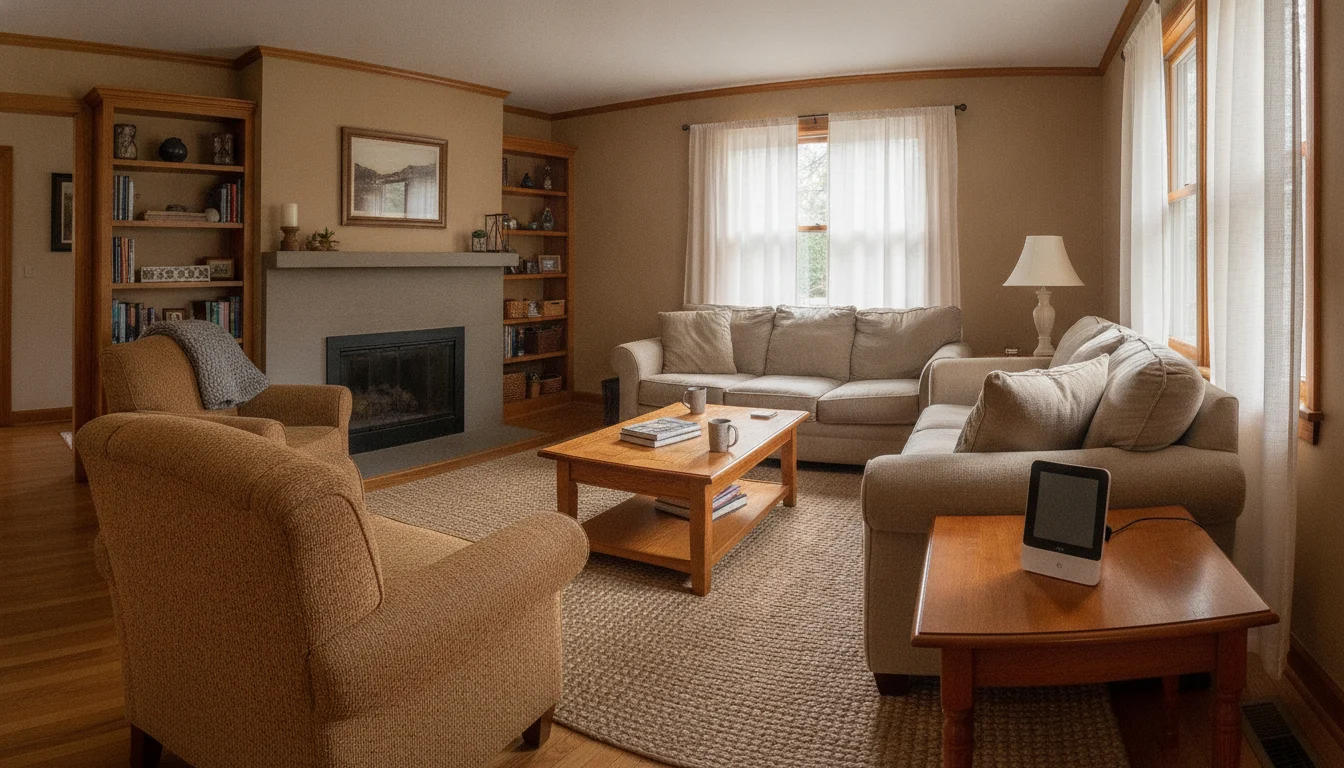
How to test indoor air quality in a home: indoor air quality testing measures humidity, airborne particulates, carbon monoxide, volatile organic compounds, mold spores, and radon. Each indoor air quality test targets one pollutant, so testing indoor air quality properly means combining several tests rather than looking for a single device that covers everything. A consumer air quality monitor handles humidity, particles, carbon monoxide, and VOCs continuously, while radon requires its own dedicated test running 2 to 7 days with the house closed up. This guide covers what can be tested, what home monitors miss, and when a professional indoor air quality test is worth booking.
What can be tested in your home’s indoor air quality?
What can be tested in your home’s indoor air quality is a short, specific list, and each indoor air quality test measures one item on it. An indoor air quality test can measure humidity, airborne particulates, carbon monoxide, volatile organic compounds, mold spores, and radon.
- Radon: an odorless soil gas that enters through the foundation.
- Humidity: the moisture level in the air, which drives mold and dust mites.
- Mold and moisture: surface growth and hidden wet materials.
- Particulates: dust, pollen, and smoke, measured as PM2.5 and PM10.
- Volatile organic compounds: gases from paint, adhesives, new flooring, and cleaners.
- Carbon monoxide: a combustion gas from furnaces, water heaters, and attached garages.
A full indoor air quality testing visit looks at several of these together, along with the conditions that explain the readings.
| What to test for | How it is measured | DIY or professional |
|---|---|---|
| Radon | Charcoal or alpha track kit sent to a lab, or a continuous radon monitor | Both. DIY kits work; professional monitors give hour by hour data |
| Humidity | Digital hygrometer, placed on each level of the house | DIY |
| Mold and moisture | Visual inspection, moisture meter on materials, air or surface samples sent to a lab | Mostly professional |
| Particulates (PM2.5, PM10) | Laser particle counter built into a consumer or professional monitor | DIY for trends, professional for verified readings |
| Volatile organic compounds | Total VOC sensor for trends, or lab canister sampling to identify specific compounds | DIY for trends, professional to identify compounds |
| Carbon monoxide | Listed CO alarm, plus a low level monitor or combustion analyzer | DIY alarm required, professional for appliance testing |
Can you test indoor air quality yourself?
Yes, you can test a meaningful share of your indoor air yourself, and for humidity, particulates, and carbon monoxide a DIY approach is often all you need. The tools are cheap, run continuously, and show patterns over days rather than a single snapshot.
- Put a hygrometer on each floor and in the basement. Indoor relative humidity is generally kept between 30 and 50 percent.
- Use a consumer particulate monitor to see how cooking, vacuuming, and outdoor air affect a room.
- Keep listed carbon monoxide alarms on every level and replace them on schedule.
- Buy a lab-analyzed radon kit if you want a first number for the house.
DIY data is genuinely useful. It shows whether a problem is constant or tied to an activity, a time of day, or a season, which is the context a technician wants on arrival.
What do consumer indoor air quality monitors miss?
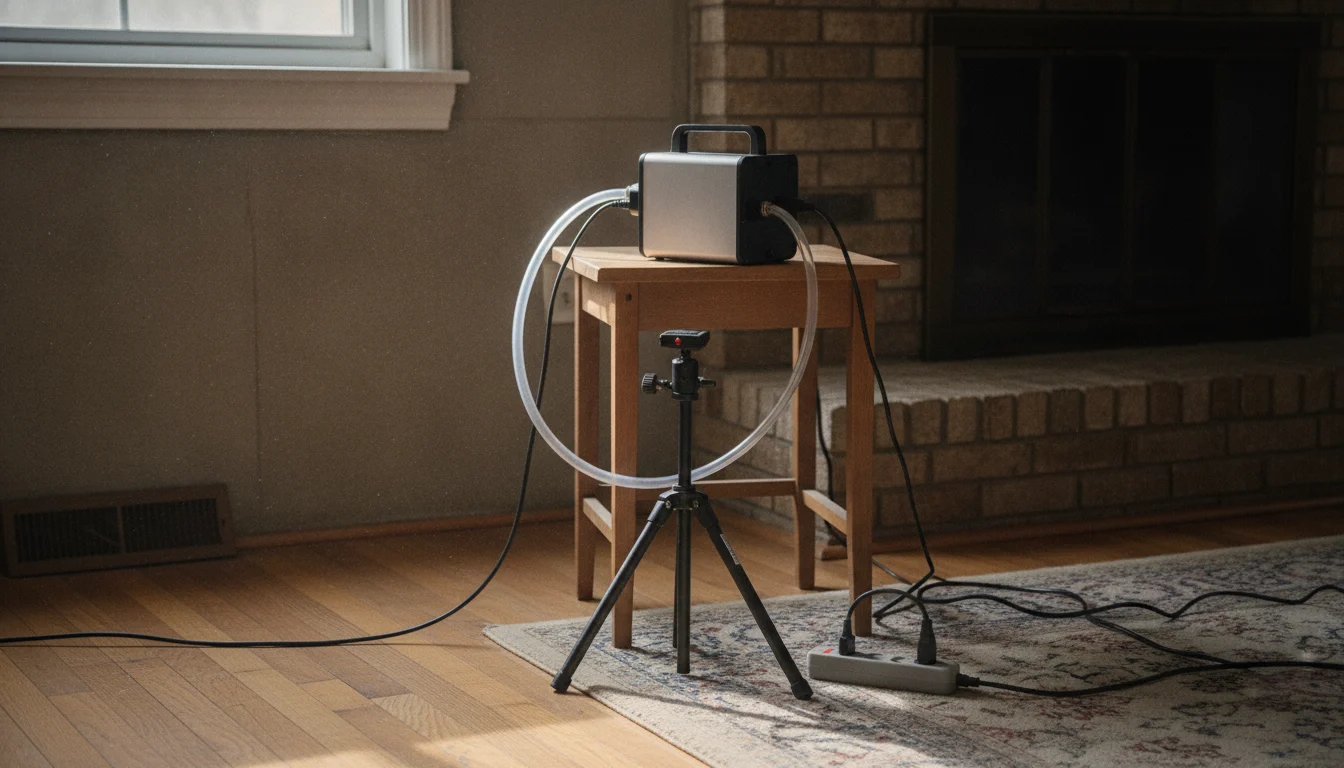
What consumer indoor air quality monitors miss is most of what makes indoor air quality genuinely hazardous. A home indoor air quality monitor tracks trends well, but it cannot identify a specific mold species, and almost none of them measure radon.
- Radon: no consumer monitor detects it. Radon needs its own device or kit.
- Mold: monitors do not identify mold. Elevated humidity or particles is a clue, not a finding.
- Specific VOCs: most units report one combined total, so paint fumes and a cleaner look the same.
- Source location: a monitor sits in one room and cannot trace air from a crawl space or duct.
- Calibration: low cost sensors drift, so read the numbers as changes rather than exact values.
That gap is why professional indoor air quality testing still matters once a monitor flags something unusual.
How is radon tested differently?
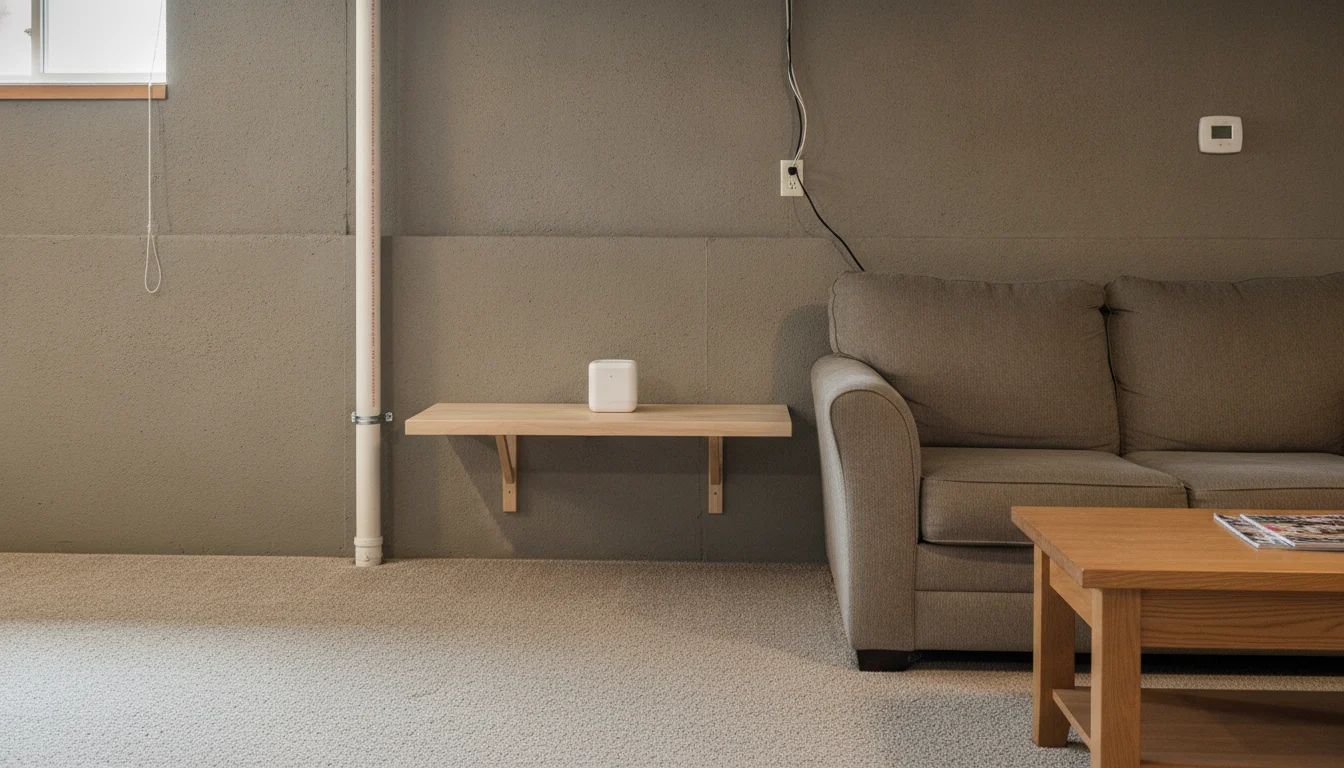
Radon is tested separately and under controlled conditions, because the result depends on how the house was operated during the test. A short-term test runs 2 to 7 days with the house closed up: windows and exterior doors stay shut except for normal entry and exit, and the HVAC system runs as usual.
The EPA action level is 4.0 pCi/L. At or above that number, mitigation is recommended. Our guide to a dangerous radon level in pCi/L explains how to read the result you get back.
Location matters. The St. Louis metro sits in the EPA’s highest-risk radon zone, and roughly 4 in 10 area homes test above the action level, on both the Missouri and Illinois sides. That makes radon testing worth doing even if the air otherwise seems fine.
What are the signs you should test your indoor air?
Test when something specific has changed in the house, or in how people feel inside it.
- A musty smell that is stronger in the basement or on humid days.
- Allergy or congestion symptoms that ease when you leave and return when you come back.
- Condensation on windows, damp storage boxes, or a clammy lower level.
- A recent renovation, new flooring, or fresh paint, which raises VOC levels for a while.
- A new baby on the way, or a household member with asthma.
- A home never tested for radon, or one tested before foundation work.
Crawl spaces deserve their own mention. Crawl space air rises into the living space, so conditions down there directly affect the air upstairs, as our look at how crawl spaces impact indoor air quality explains.
When should you get a professional indoor air quality test?
You should get a professional indoor air quality test when a consumer monitor shows a problem it cannot identify, or when symptoms persist without an obvious cause. A professional indoor air quality test identifies the specific pollutant rather than just flagging that something is off.
Heavy clay soil and humid summers make crawl space moisture a recurring issue here, so a visit often looks at drainage, vents, and the ground surface as much as at the air. Where moisture is the driver, crawl space encapsulation addresses the source rather than the symptom.
Air Sense Environmental handles radon mitigation, radon testing, and indoor air quality in the St. Louis area on both the Missouri and Illinois sides, from our home base in Edwardsville, IL. Jake (Jacob) Lusby holds Illinois IEMA Mitigation Professional license RNM20232346, with the company listed as his employer.
Frequently Asked Questions About Testing Indoor Air Quality
These are the questions homeowners ask most often about testing indoor air quality, covering consumer monitors, radon testing, and when a professional test is worth booking.
How long does an indoor air quality test take?
It depends on what is being measured. Humidity, particulate, and carbon monoxide readings can be taken during a single visit, while a short-term radon test runs 2 to 7 days with the house closed up. Mold sampling adds lab turnaround time after the samples are collected.
Can I test for mold with a home kit?
Home mold kits can confirm that mold spores are present, but spores are present in nearly every house, so a positive result on its own tells you very little. What matters is whether there is active growth and what is keeping the material wet. That question is answered by inspection and moisture readings, not by a settle plate.
Does a radon test cover other air quality problems?
No. A radon test measures radon only and says nothing about humidity, mold, particulates, or VOCs. If you want a broader picture, radon testing is run alongside an indoor air quality assessment rather than in place of one.
How often should I test my home’s air?
Retest radon every two years, and again after any work on the foundation, HVAC system, or basement. Humidity is worth watching year round with a hygrometer, since it shifts with the season. Other testing is best driven by a change you notice rather than a fixed schedule.
Ready to Test the Indoor Air Quality in Your Home?
Ready to test the indoor air quality in your home? Air Sense Environmental provides indoor air quality testing and radon testing across the St. Louis metro, measuring what is actually in your air instead of guessing. Schedule your free in-home estimate or call 314-664-9807.