
Case Studies · Chesterfield, Missouri
Radon Mitigation in Chesterfield With an Active Sump Pit and a High Water Table
A Chesterfield homeowner with a very active sump pit and a higher-than-usual water table needed a radon system that sealed the pit without losing access to it. Air Sense Environmental installed a one-suction-point sub-slab system, sealed the pit under a custom cover with a viewing window, and routed the vent through the garage and attic.
The homeowner’s EcoQube monitor read 4–5+ pCi/L before mitigation. After installation, its 72-hour average settled below 1.0 pCi/L.
Homeowner’s Monitor Readings
Readings from the homeowner’s EcoQube consumer monitor. The EPA action level is 4.0 pCi/L.
At a Glance
Project Summary
- Location: Chesterfield, St. Louis County, Missouri
- Installed: September 2026
- Challenge: very active sump system and a higher-than-usual water table
- System: sub-slab depressurization with one suction point; sump pit sealed under a custom cover with a viewing window
- Routing: vent through the garage and attic, with the fan in the attic
- Installation time: under four hours
- Scheduling: installed less than two weeks after the first call
- Result: homeowner’s monitor went from 4–5+ pCi/L to a 72-hour average below 1.0 pCi/L
The Situation
A Sump Pit That Had to Stay Accessible
Andrew Newbold had been tracking radon in his Chesterfield home with an EcoQube monitor, which showed levels in the 4–5+ pCi/L range. The EPA recommends fixing a home at or above 4.0 pCi/L.
His sump pump runs often because the water table around the house is high. An unsealed sump pit lets soil gas into the house and leaks the vacuum a radon system creates under the slab. Andrew also needed to keep watching the pump and check valves.
Before the appointment, he sent Jake his EcoQube data and photos of possible installation locations. Jake replied with feedback and sent photos of a recent garage installation so Andrew could picture one of the routing options.
What We Did
One Suction Point and a Sealed, Accessible Sump
On installation day, Jake Lusby, owner of Air Sense Environmental, worked through the routing options with Andrew and explained each step as the system went in. The system uses a single suction point under the slab.
Before sealing the pit, Jake had Andrew hold his hand near the opening to feel the suction under the slab. Strong negative pressure there shows the system is pulling air from beneath the house, a sign of good sub-slab communication.
The sump and check valves were laid out in a way a standard cover would not fit. Jake built a custom cover that seals the pit airtight but can still be opened, and added a viewing window so Andrew can watch the pump without breaking the seal.
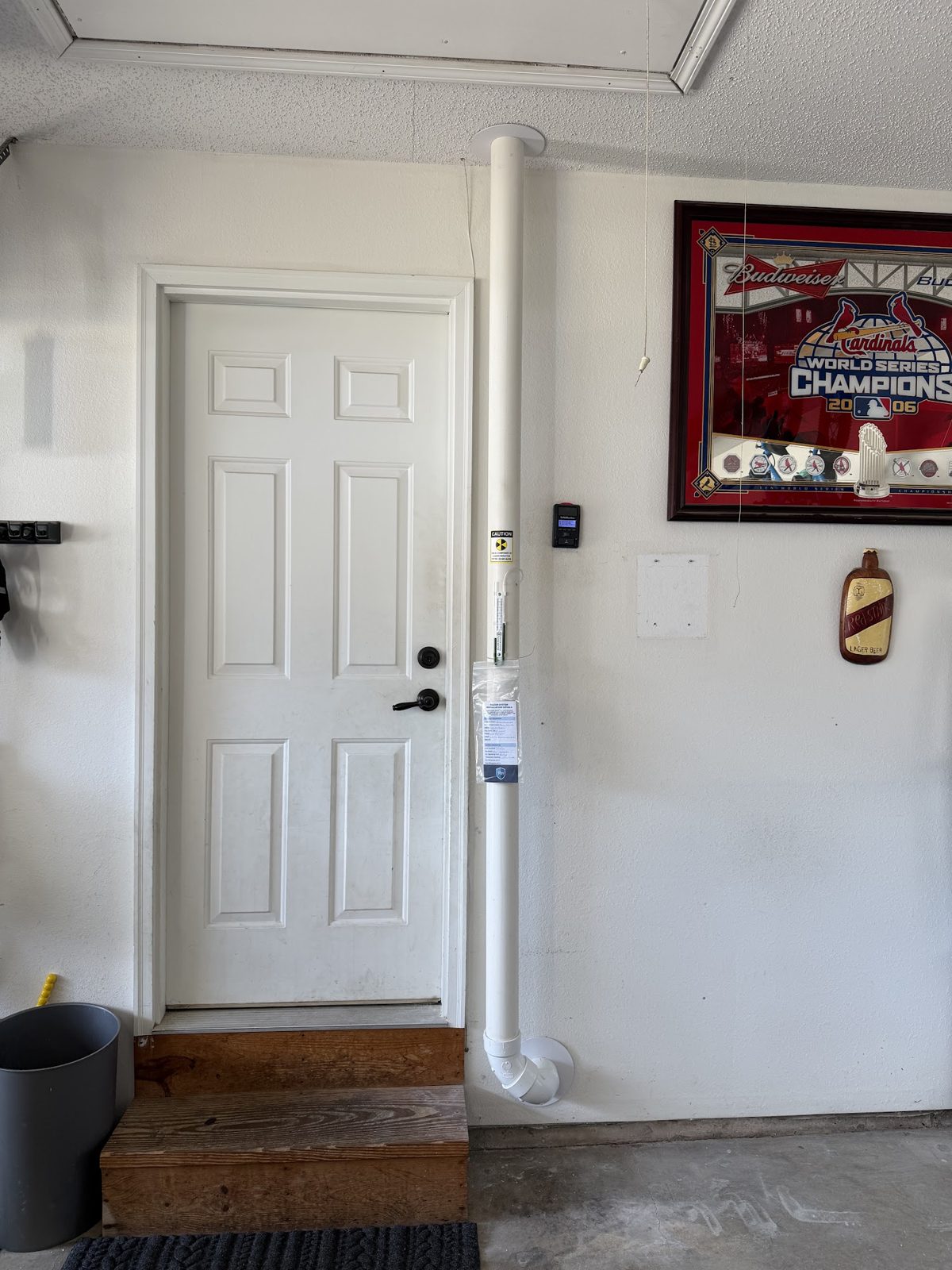
The vent runs up the garage wall and through the attic, with the fan in the attic where it is protected from the weather. Jake and his son finished the installation in under four hours and cleaned up the work area.
The Result
From 4–5+ pCi/L to Below 1.0
Andrew’s EcoQube readings began falling within hours of the system being turned on and read 0.4 pCi/L the next morning. Over the full 72-hour period, his average settled below 1.0 pCi/L.
“My EcoQube was showing radon levels in the 4–5+ pCi/L range before mitigation. Within hours of the system being turned on, the readings began steadily falling, and by the next morning my EcoQube was reading 0.4 pCi/L.”
“Before sealing it, Jake actually had me put my hand near the opening so I could feel the strong negative pressure being created beneath the slab. That was an immediate indication that the system had good communication beneath the house and gave me a lot of confidence in how well the mitigation would perform.”
“Being able to continue seeing what is happening inside my sump without compromising the radon seal is extremely helpful for my situation.”
— Andrew Newbold, Chesterfield, MO · Google review, September 15, 2026
These readings come from a consumer monitor. Radon levels change from hour to hour and season to season, so Air Sense Environmental recommends a follow-up radon test after mitigation to confirm the level.
Takeaways
What This Project Shows
- Seal the sump pit. An open pit is a radon entry point and leaks the vacuum under the slab. See sump pump radon mitigation.
- Sealed does not have to mean inaccessible. A cover with a viewing window keeps the pump visible in homes where it runs often.
- Good sub-slab communication matters. One suction point was enough here because suction reached across the slab. See how sub-slab depressurization works.
- Routing is a design decision. Running the vent through the garage and attic kept the fan protected and the exterior clean.
- Monitor data helps planning. Sharing readings and photos before the visit let the routing options be discussed ahead of time.
- Confirm with a follow-up test. A post-mitigation radon test confirms what a monitor shows.
Your Home
Tricky sump, crawl space or routing?
Send us your test results and a few photos, and we will talk through the options before we visit.