
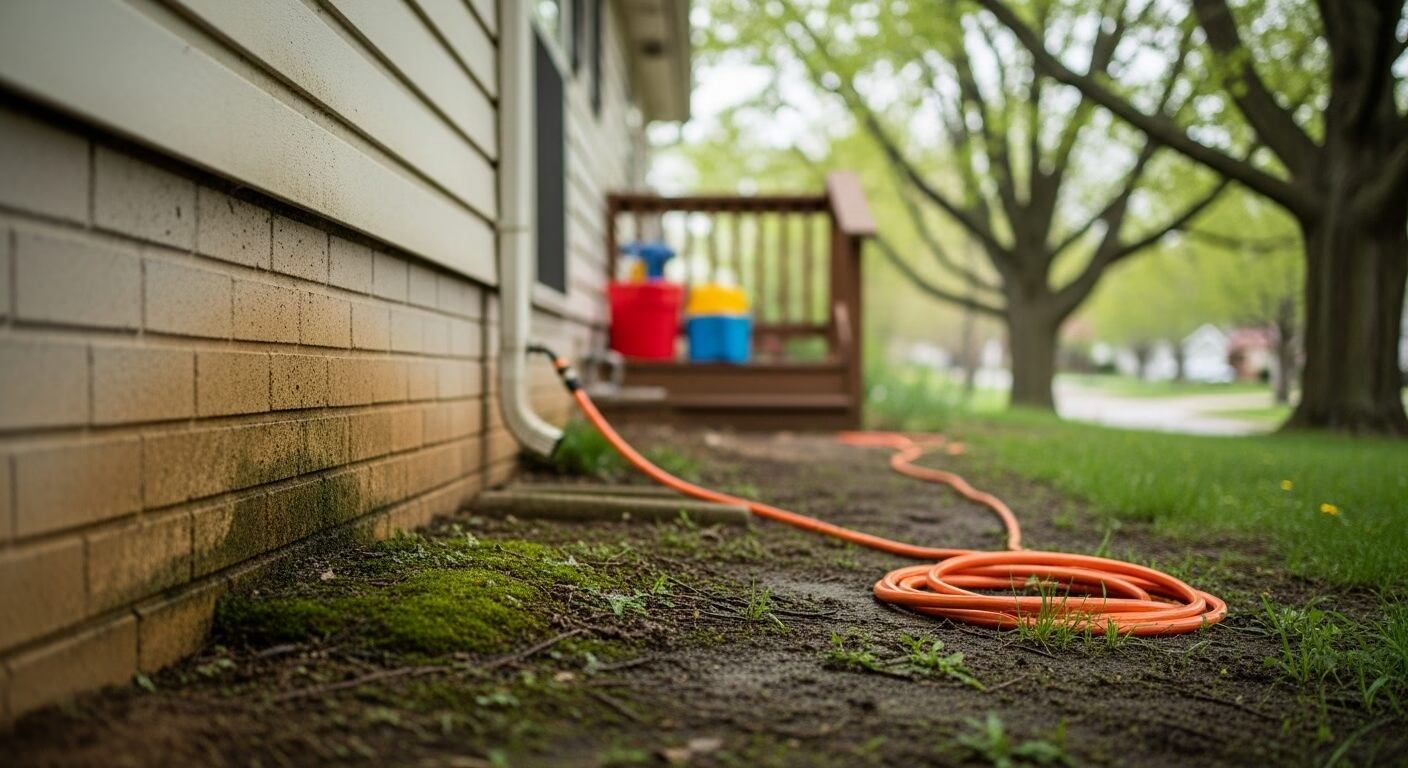
Fenton residents know what late spring brings: heavy rains that push the Meramec River toward flood stage, humidity that turns basements sticky, and crawl spaces that suddenly smell musty. Air Sense Environmental’s team, led by IEMA-certified radon professional Jake Lusby, has spent three years documenting how Fenton’s late spring moisture creates perfect conditions for mold growth, foundation settling, and indoor air quality problems that linger well into summer.
What to Do About Late Spring Moisture in Fenton
- Check your basement and crawl space weekly during April and May for standing water or new dampness
- Run dehumidifiers when indoor humidity exceeds 50% (common in Fenton homes near the Meramec River flood plain)
- Inspect foundation walls for new cracks or white chalky deposits after heavy spring rains
- Test indoor air quality if you notice musty odors or increased allergy symptoms
- Clean gutters and extend downspouts at least 6 feet from your foundation before spring storms hit
- Schedule crawl space inspection if your home was built before 1990 in Fenton’s older subdivisions
How Fenton’s Geography Creates Moisture Problems
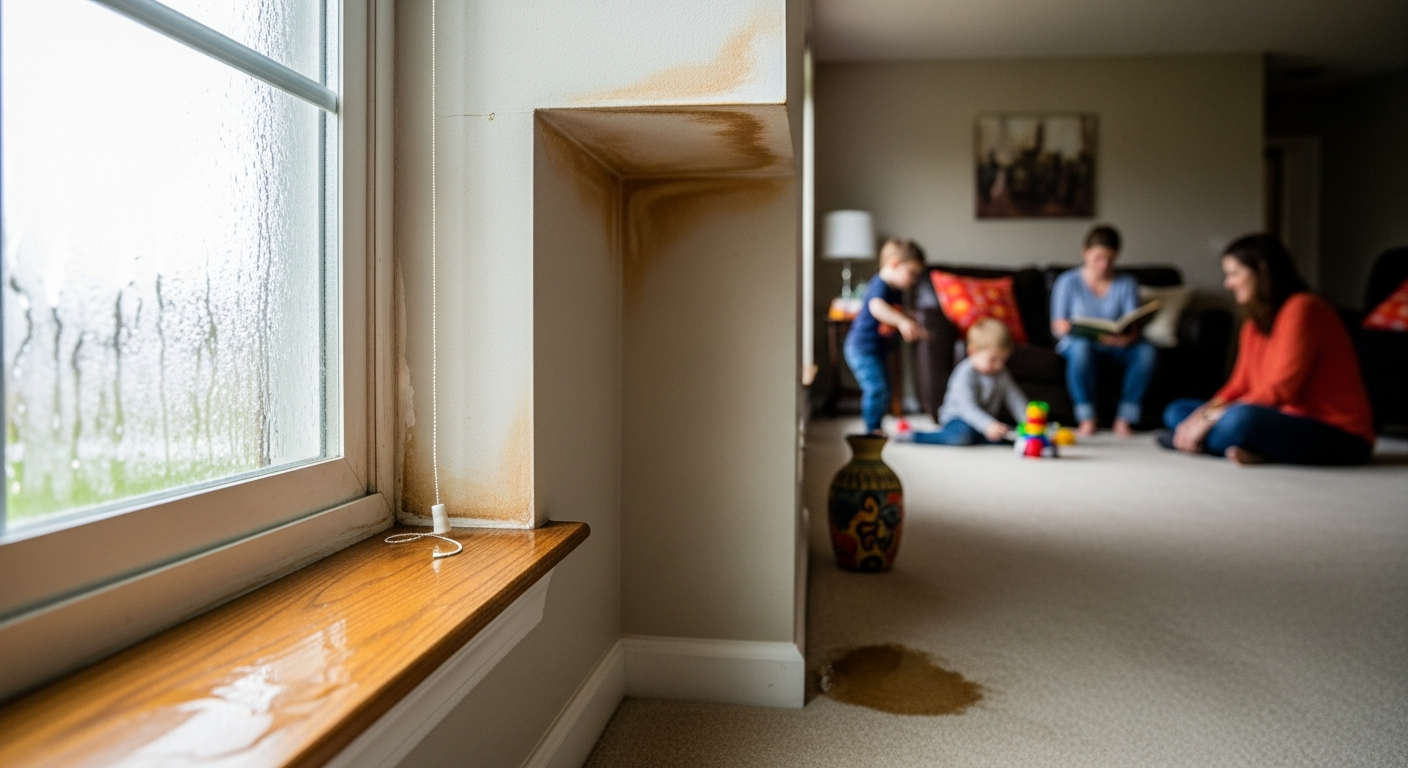
Fenton sits in the Meramec River flood plain, where clay-heavy soil holds water like a sponge. The National Weather Service reports the Meramec at Fenton gauge reaches minor flood stage at 20 feet, which happened 8 times between 2019 and 2024. Even when the river doesn’t flood, this geography means Fenton homes deal with higher groundwater levels than communities on higher ground like Wildwood or Chesterfield.
Clay Soil and Hydrostatic Pressure
The clay soil common throughout Jefferson County creates hydrostatic pressure against foundation walls. Think of it like a wet sponge pressed against your basement, the water wants to move from high pressure outside to low pressure inside your home. Fenton humidity and crawl space problems get worse because many homes here were built in the 1970s and 1980s with minimal vapor barriers.
Late Spring Weather Patterns in Fenton
Fenton averages 4.2 inches of rain in April and 4.8 inches in May, according to NOAA climate data. But it’s not just the total rainfall, it’s how it comes. Late spring storms dump 1-2 inches in a few hours, overwhelming drainage systems and saturating the already clay-heavy soil around foundations.
Temperature Swings and the Stack Effect
The combination of warm days and cool nights creates temperature differentials that pull moisture from crawl spaces up into living areas through stack effect. Air Sense Environmental’s indoor air quality testing shows Fenton homes commonly hit 60-70% humidity levels during late spring, well above the 30-50% range needed to prevent mold growth. Meramec River flood plain moisture makes this worse because the river acts like a giant humidifier, especially during high water periods.
Gravois Bluffs and Natural Drainage Paths
Homes in Fenton’s Gravois Bluffs area and neighborhoods along Chrysler Avenue see the most severe problems. These areas sit in natural drainage paths where spring runoff collects before reaching the river. The Larkin Williams Road corridor experiences similar issues because of its proximity to both the Meramec and several tributary creeks.
Warning Signs of Spring Moisture Damage
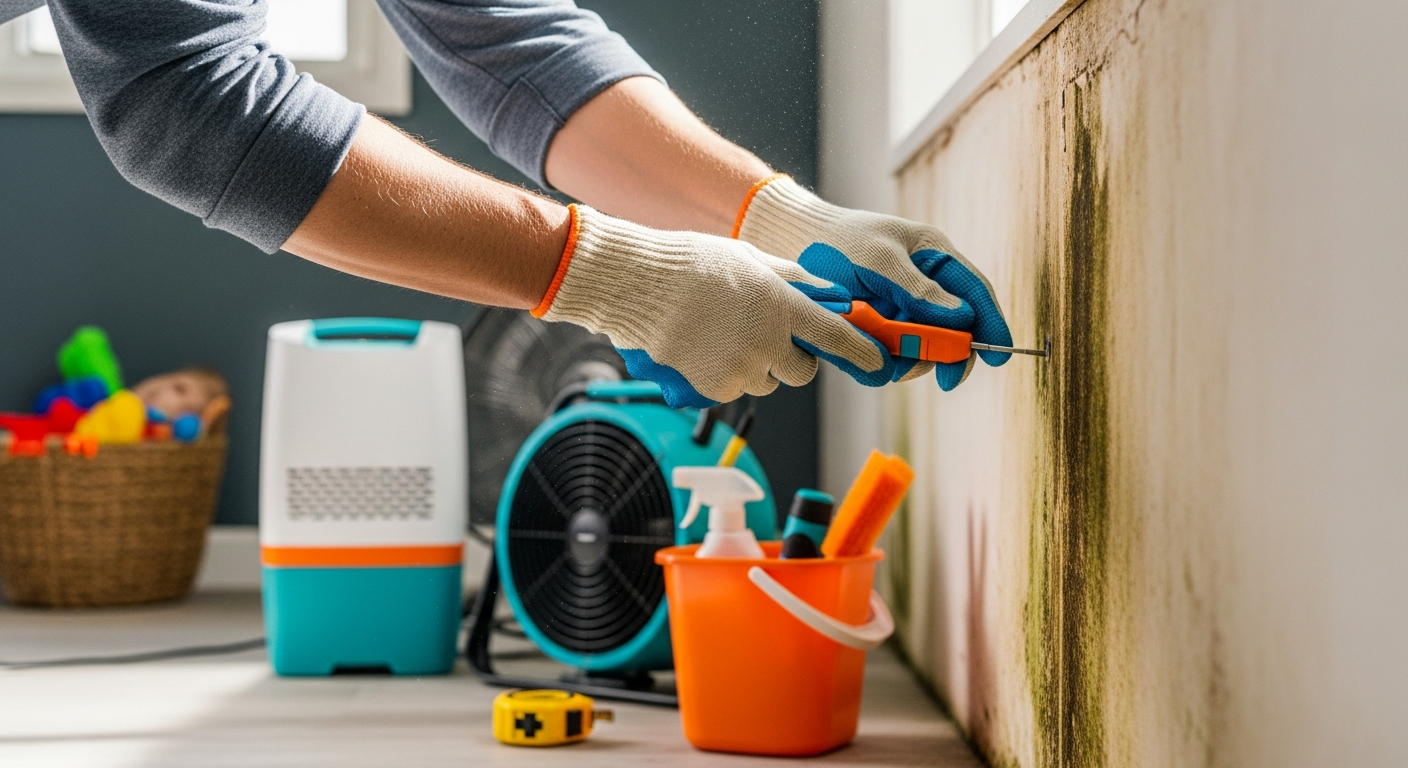
Watch for white, chalky deposits on basement walls, that’s efflorescence, and it means water is moving through your foundation. You’ll see this most often on north-facing walls that stay cooler and on foundation walls below grade level. In Fenton’s clay soil, efflorescence appears within 24-48 hours of heavy rain.
Musty Odors on Humid Days
Musty odors that get stronger on humid days signal mold growth in hidden areas. The smell often starts in lower levels and moves upward as warm air rises through the house. Indoor air quality problems Fenton homeowners notice include increased allergy symptoms, especially in children and elderly family members who spend more time indoors during spring weather.
Foundation Settlement in Fenton’s Clay Soil

Clay soil expands when wet and shrinks when dry, creating a cycle that stresses foundations. Preventing mold in Fenton basements starts with controlling moisture, but foundation issues from humidity can be more serious. New cracks in foundation walls, doors that suddenly stick, or windows that won’t close properly all indicate foundation movement.
How Home Age Changes the Symptoms
Fenton foundation issues from humidity show up differently depending on your home’s age. Houses built before 1980 in neighborhoods like Riverside Meadows often have poured concrete foundations without proper waterproofing. Newer homes in subdivisions off Highway 30 typically have better moisture barriers but can still develop problems if gutters and grading direct water toward the foundation.
Why Problems Surface in Spring
Jake from Air Sense Environmental explains that spring is when most Fenton homeowners discover foundation problems that actually started during winter freeze-thaw cycles. “The clay soil here holds water all winter, then spring rains add pressure just when the ground starts to move,” he notes. “We see more foundation cracks reported in April and May than any other time.”
How Air Sense Environmental Addresses Spring Moisture
Air Sense Environmental’s approach starts with comprehensive moisture mapping using professional-grade equipment to find hidden water sources. Their team identifies whether moisture enters through foundation walls, floor slabs, or crawl space vents, each requires different solutions. For Fenton homes, they often find multiple entry points because the clay soil creates pressure from several directions.
Vapor Barriers for a Flood Plain Location
Their crawl space encapsulation service includes installing vapor barriers rated for high-moisture environments like Fenton’s flood plain location. The process involves sealing outside vents, installing dehumidifiers sized for local humidity levels, and creating negative pressure to prevent moisture migration into living areas.
A Riverside Meadows Example
One Riverside Meadows homeowner contacted Air Sense Environmental after noticing increased allergy symptoms every spring. Testing revealed 75% humidity in their crawl space. After encapsulation, humidity dropped to 45% and air quality testing showed significant improvement. The family now runs their HVAC system 20% less during humid months, saving on energy costs while maintaining comfort.
Indoor Air Quality Testing During Moisture Events
Air Sense Environmental’s indoor air quality testing uses calibrated instruments to measure humidity, particulates, and volatile organic compounds that often spike during spring moisture events. Their IEMA certification ensures testing follows protocols that insurance companies and health departments recognize.
Spring moisture problems in Fenton require local expertise because generic solutions don’t account for the Meramec River’s influence on groundwater or the unique challenges of clay soil. Air Sense Environmental’s three years serving Jefferson County gives them insight into which neighborhoods face recurring issues and which solutions work long-term. Contact their team for water damage restoration if you discover standing water, or schedule moisture assessment before small problems become expensive repairs.
Frequently Asked Questions
Why do Fenton homes have more moisture problems than other St. Louis County areas?
Fenton’s location in the Meramec River flood plain means higher groundwater levels and clay soil that holds moisture against foundations. The river creates a microclimate with higher humidity, especially during spring when water levels rise. Homes in Ballwin or Kirkwood, built on higher ground with different soil composition, typically see fewer moisture-related issues.
When should I test indoor air quality after spring storms in Fenton?
Test within 48-72 hours if you notice musty odors, see visible moisture in basements or crawl spaces, or if family members develop respiratory symptoms. Mold spores multiply rapidly in Fenton’s humid conditions, and early detection prevents more extensive contamination. Humidity monitoring flags the conditions that favor mold before visible growth appears.
Can spring moisture damage cause radon problems in Fenton homes?
Yes, because water in soil can change how radon gas moves toward your foundation. Clay soil that becomes saturated can actually increase radon concentrations by creating different pressure patterns underground. If you’re dealing with moisture issues, consider radon testing as part of your overall indoor air quality assessment, especially in older Fenton neighborhoods where homes lack modern vapor barriers.