
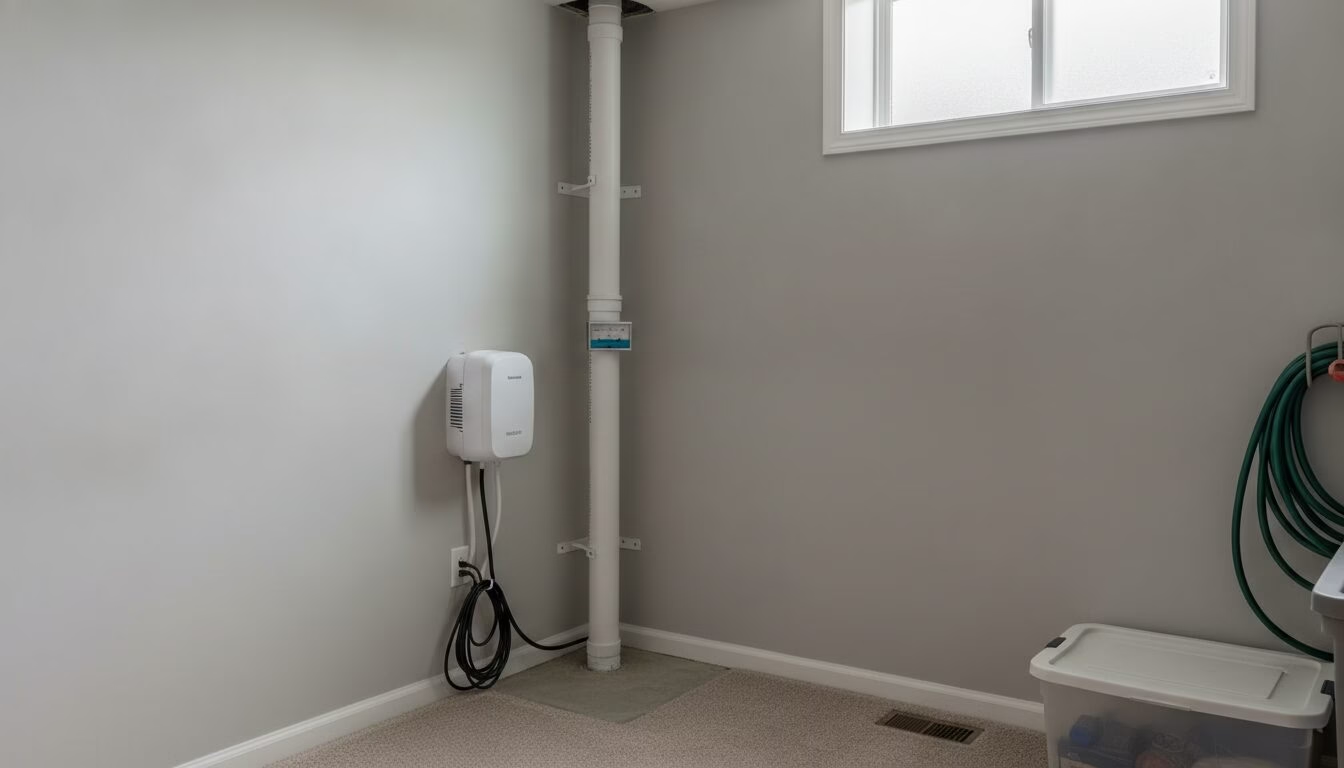
How long does radon mitigation take? Radon mitigation takes about one day to install, usually 3 to 5 hours of on-site work, and the full timeline from your first radon test to confirmed results takes about one to three weeks. The installation is the fast part of the timeline. What takes longer is the radon test beforehand and the follow-up test afterward. Across the St. Louis, MO metro, including St. Charles County and Jefferson County, the EPA recommends a radon mitigation system once a home tests at 4.0 pCi/L or higher.
How Long Does Radon Mitigation Take From Start to Finish?
From start to finish, radon mitigation usually takes one to three weeks, and only one day of that is the actual installation. Most of the calendar time goes to testing: a short-term radon test before the work and a confirmation test after it. The hands-on installation is a single visit.
Here is how a typical St. Louis-area radon mitigation timeline breaks down.
| Phase | Typical time | What happens |
|---|---|---|
| Initial radon test | 2 to 7 days | A short-term test measures the home’s radon level |
| Estimate and scheduling | A few days to a week | A contractor inspects the home and books the install |
| System installation | One day (3 to 5 hours) | The suction point, pipe, and fan go in |
| Post-mitigation re-test | 24 hours, then a 2 to 7 day test | A follow-up test confirms levels dropped |
The single longest stretch is usually the wait for test results on either end, not the construction. A homeowner who already has a recent test in hand can often move straight to scheduling.
How Long Does It Take to Install a Radon Mitigation System?
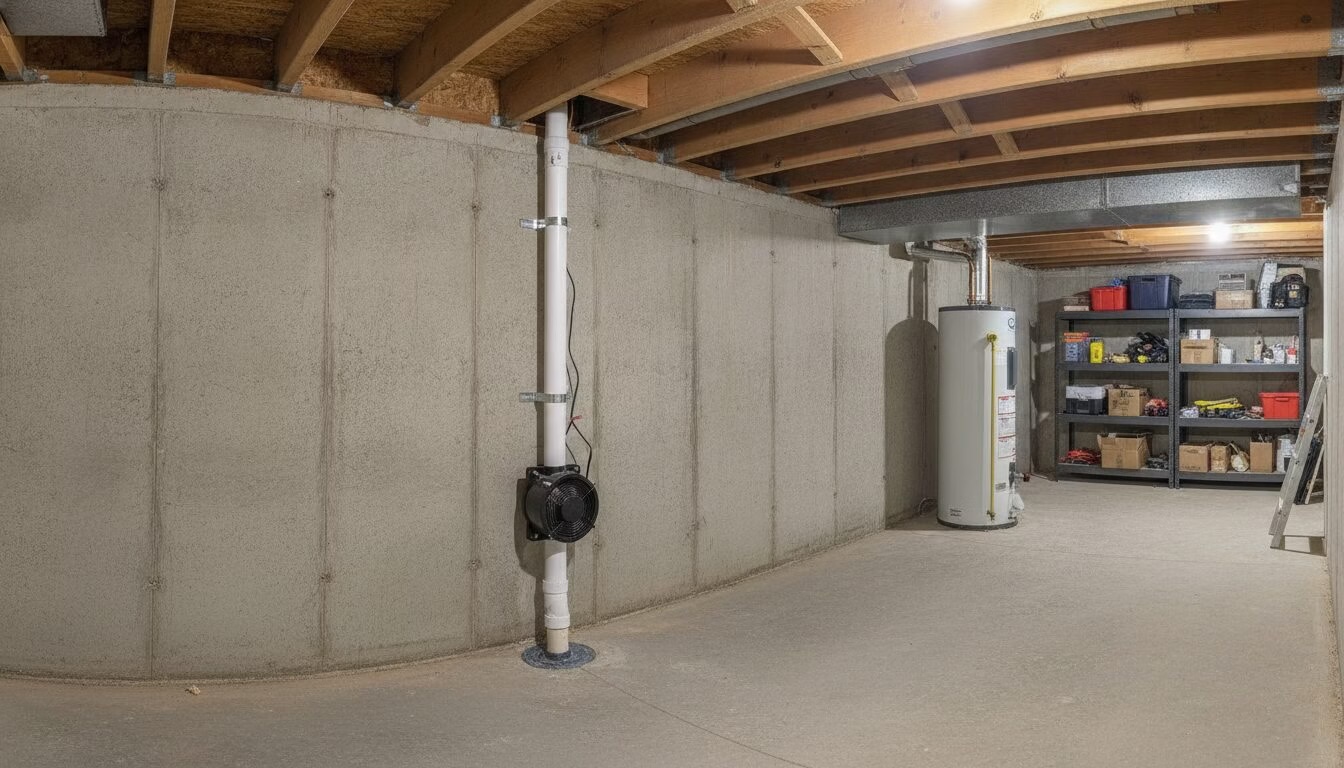
Installing a radon mitigation system takes one day, typically 3 to 5 hours of work for a standard single-suction-point home. A technician arrives in the morning, installs the complete system, and the home is back to normal by the afternoon. There is no need to vacate the house for days.
The install covers everything the system needs to run:
- The suction point, a small hole cored through the basement slab or sealed into the crawl space, where the system draws soil gas.
- The vent pipe, routed from the suction point up and out above the roofline.
- The inline fan, mounted in an attic, garage, or on the home’s exterior, which runs continuously.
- A warning device, a manometer or gauge that shows at a glance the system is working.
A larger home, a complex foundation, or a system that needs more than one suction point can push the install toward a full day. The EPA advises homeowners to confirm “the time needed to complete the work” in the contract before any job starts, so the schedule is clear up front.
What Happens on Radon Mitigation Installation Day?
On installation day, a radon mitigation crew works through a predictable sequence that takes a few hours. Knowing the order helps a homeowner plan around it.
- Walkthrough and diagnosis (15 to 30 minutes). The technician confirms the foundation type, locates the best suction point, and plans the pipe route.
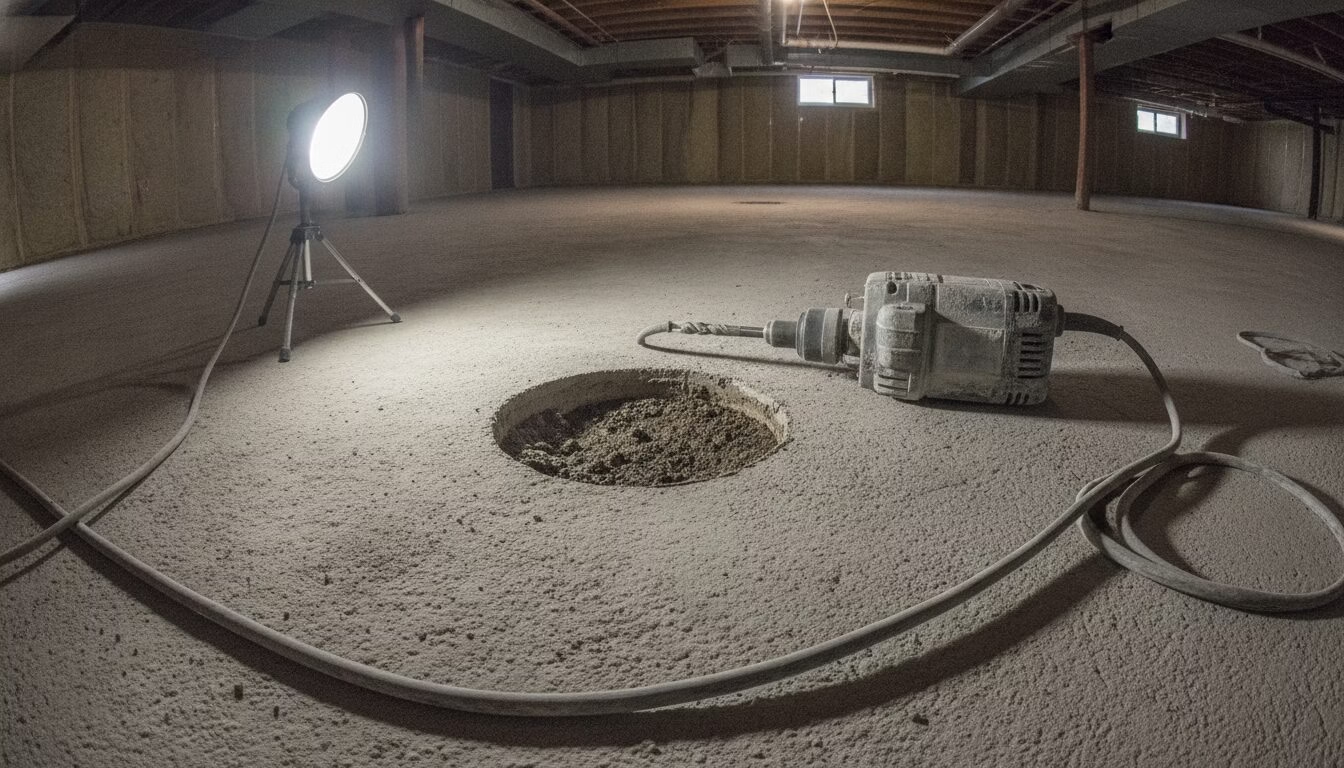
- Coring the suction point (30 to 60 minutes). A hole is cut through the slab, or a membrane is set in a crawl space, and a suction pit is hollowed out below.
- Running the vent pipe (1 to 2 hours). Sealed PVC pipe is routed from the suction point to a point above the roofline.
- Mounting the fan and wiring (about 1 hour). The inline fan is installed in an unconditioned space and connected to power per local electrical code.
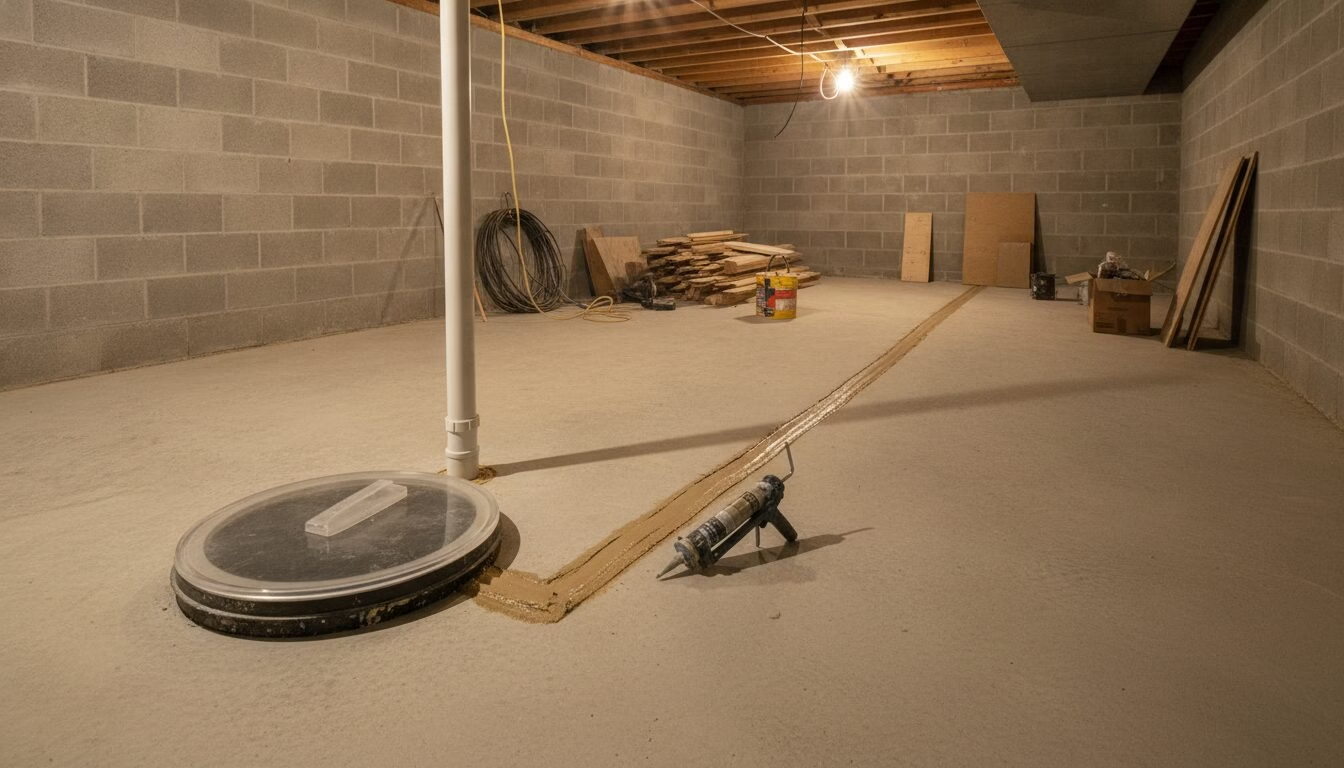
- Sealing and finishing (30 to 60 minutes). Foundation cracks and the suction point are sealed, and the warning device is mounted.
- System check and walkthrough (15 to 30 minutes). The technician confirms suction, then explains how the system runs and how to read the gauge.
By the end of the visit, the fan is running and the system is already pulling radon out from under the home. The fan stays on continuously from that point forward.
How Long Until Radon Levels Drop After Mitigation?
Radon levels begin dropping within hours of the fan switching on, and a properly designed system reaches its full effect within about 24 hours. The fan creates constant suction under the foundation, so soil gas is pulled out and vented above the roof instead of seeping into living space.
Confirming the drop takes a little longer, because measuring radon accurately requires a multi-day radon test. The EPA’s guidance is specific: a post-mitigation radon test “should be done within 30 days of system installation, but no sooner than 24 hours after your system is in operation,” and “a two- to seven-day measurement is recommended” to gauge effectiveness. Air Sense Environmental builds this verification step into every job rather than assuming the system worked.
The results are usually substantial. The EPA’s Consumer’s Guide to Radon Reduction reports that radon reduction systems “can reduce radon levels in your home by up to 99 percent.” The goal of that follow-up test is to confirm the home now sits below the EPA action level of 4.0 pCi/L, the level at which the EPA recommends action.
What Factors Affect How Long Radon Mitigation Takes?
The factors that affect how long radon mitigation takes are the foundation type, the size of the home, and how many suction points the system needs. Those three factors affect how long radon mitigation takes far more than the size of the crew does.
The biggest factors in how long radon mitigation takes are the home’s foundation, its size, and how many suction points the system needs. A simple basement system goes in quickly, while a layered foundation takes longer.
- Foundation type. A single basement or slab is the fastest. Crawl spaces require laying and sealing a membrane, which adds time.
- Home size and layout. Larger homes, additions, and homes with both a basement and a crawl space can need more than one suction point.
- Sealing work. Homes with many foundation cracks or an open sump need extra sealing before the system can hold suction.
- Pipe routing. A clean interior route through a garage or attic is quick. An exterior run or a long path to the roofline takes longer.
- Scheduling and weather. Lead time to book the job, plus heavy rain or snow during an exterior install, can shift the calendar.
These variables explain why two neighbors can get very different timelines, which matters in a metro as architecturally mixed as St. Louis.
Why Radon Mitigation Timelines Vary Across St. Louis Homes
Radon mitigation timelines vary across the St. Louis area because the region’s housing stock spans several building eras and foundation styles, and the system design follows the home. An older home and a new build rarely take the same amount of time.
- Older block-foundation homes in St. Louis County and the city often need extra sealing and sometimes block-wall suction.
- Newer slab-on-grade construction across St. Charles County usually allows a fast, single-point install.
- Crawl space and walk-out designs through Jefferson County and Franklin County call for membrane work that adds hours.
Air Sense Environmental is based in Edwardsville, Illinois and installs systems across the metro, including O’Fallon, Illinois and O’Fallon, Missouri, so the crew schedules each job around the specific foundation rather than a one-size estimate. Owner Jake (Jacob) Lusby holds Illinois IEMA Mitigation Professional license RNM20232346, and it recommends a separately arranged follow-up test after installation. For homeowners comparing options, professional St. Louis radon mitigation starts with an on-site evaluation that sets a realistic timeline for the specific home.
Frequently Asked Questions About Radon Mitigation Timing
How long does a radon mitigation system take to install?
A radon mitigation system takes one day to install, usually 3 to 5 hours for a standard single-suction-point home. Larger homes, crawl spaces, and systems that need multiple suction points can take closer to a full day. The home does not need to be vacated during the work.
How long does it take for radon levels to drop after mitigation?
Radon levels start dropping within hours of the fan turning on and reach full effect within about 24 hours. The EPA reports that radon reduction systems can lower indoor radon by up to 99 percent. A follow-up test confirms the home is below the 4.0 pCi/L action level.
How long after radon mitigation should you retest?
You should retest no sooner than 24 hours after the system starts running and within 30 days of installation, per EPA guidance. A two- to seven-day measurement gives a reliable reading of how well the system is working. The EPA also recommends retesting at least every two years afterward.
Do you have to leave the house during radon mitigation?
No, you do not have to leave the house during radon mitigation. The installation is a single visit of about 3 to 5 hours, and a homeowner can stay home throughout. There is some drilling noise while the suction point is cored, but no part of the process requires vacating the home.
How long does a radon mitigation system last?
A radon mitigation system lasts for years, with the fan being the main wear part. The EPA notes that fans “may last for five years or more,” and a fan can be replaced individually without redoing the whole system. The vent pipe and sealing typically last the life of the home.
Can radon mitigation be done in one day?
Yes, most radon mitigation can be done in one day. A standard residential system installs in a single 3 to 5 hour visit. The longer part of the overall timeline is the radon testing before and after the install, not the construction itself.
Get a Free In-Home Radon Mitigation Estimate
A realistic timeline for your home starts with a look at your actual foundation and your most recent test results. Air Sense Environmental will evaluate your home, lay out exactly how long the work will take, and confirm the result with post-mitigation testing once the system is running. Schedule your free in-home estimate or call 314-664-9807 and get a clear, no-pressure plan for lowering the radon in your home.
Related reading: what to expect on installation day, radon mitigation costs in St. Louis, and how effective radon mitigation systems are.
The factors that affect how long radon mitigation takes are the home’s foundation, its size, and how many suction points the radon mitigation system needs. These are what turn a single-visit radon mitigation into a longer job.