
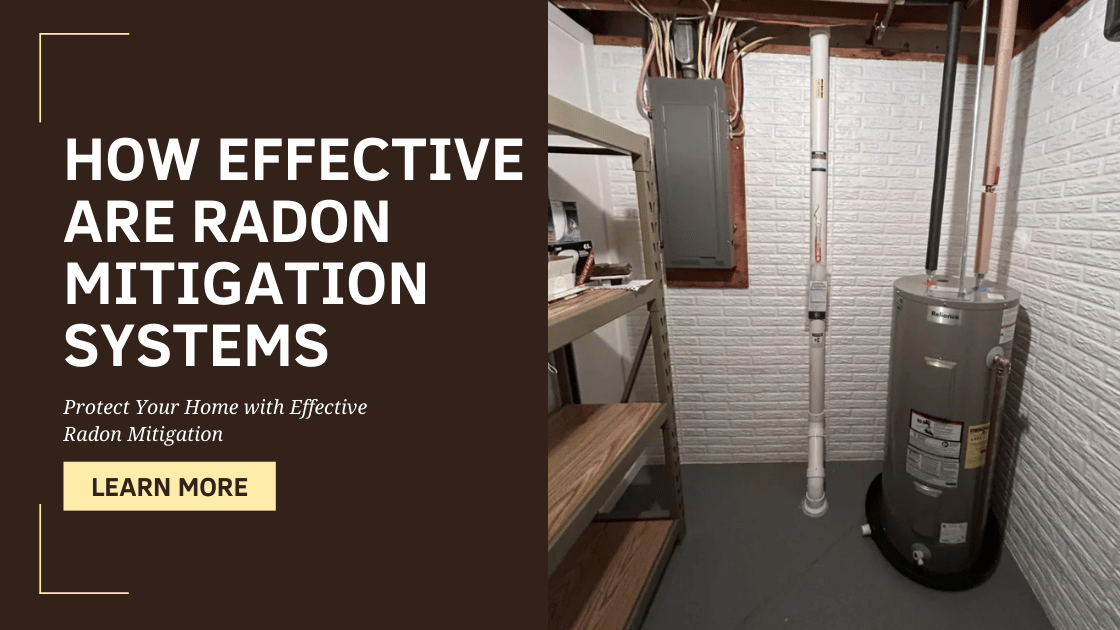
How effective are radon mitigation systems? A properly designed active system reduces indoor radon by up to 99 percent, and levels begin falling within about 24 hours of the fan starting. Most homes that test well above the EPA action level of 4.0 pCi/L end up comfortably below it, and radon mitigation systems hold that reduction year round as long as the fan runs. What separates radon mitigation systems that perform from ones that disappoint is design and installation quality, not brand or price. This guide covers how much reduction to expect, what affects it, and how the result is verified. Air Sense Environmental serves the St. Louis metro; Jake (Jacob) Lusby holds Illinois IEMA Mitigation Professional license RNM20232346, with Air Sense listed as his employer. Air Sense recommends arranging a separate follow-up radon test after installation to measure the result.
Every figure below comes from systems installed through our radon mitigation services in the St. Louis metro.
How Much Do Radon Mitigation Systems Actually Reduce Radon?
A correctly installed active system commonly cuts radon by 80 to 99 percent, and reductions at the top of that range are routine in homes with good sub-slab conditions. A home testing at 12 pCi/L can reasonably end up around or below 1 pCi/L.
The goal is not simply to cross under 4.0 pCi/L. A well designed system usually lands well beneath it, which leaves margin for the seasonal swings covered in radon levels in winter versus summer.
How Quickly Do Levels Drop After Installation?
Levels start dropping as soon as the fan is switched on, with most of the reduction showing up within about 24 hours. The system changes the air pressure beneath the slab immediately rather than gradually.
You cannot sense the change, which is why the result is measured rather than assumed. For the full sequence from first call to confirmed result, see how long radon mitigation takes.
What Determines How Effective a Radon Mitigation System Will Be?
What determines how effective a radon mitigation system will be is how well it draws soil gas from beneath the entire footprint of the house. The main variables:
- Suction point placement determines how much of the slab the system can influence, and a poorly placed point limits effectiveness more than any other factor.
- Sub-slab conditions determine how far suction travels. Clean gravel makes a radon mitigation system highly effective, while tight clay reduces effectiveness until a second suction point is added.
- Sealing determines whether the fan pulls soil gas or room air. Unsealed cracks, the floor-to-wall joint, and an open sump pit waste suction and reduce effectiveness.
- Fan sizing determines whether the radon mitigation system is effective against the resistance your soil presents. Too small underperforms; too large adds cost without adding effectiveness.
- Discharge location determines whether vented gas disperses or re-enters, which affects how effective the finished system is.
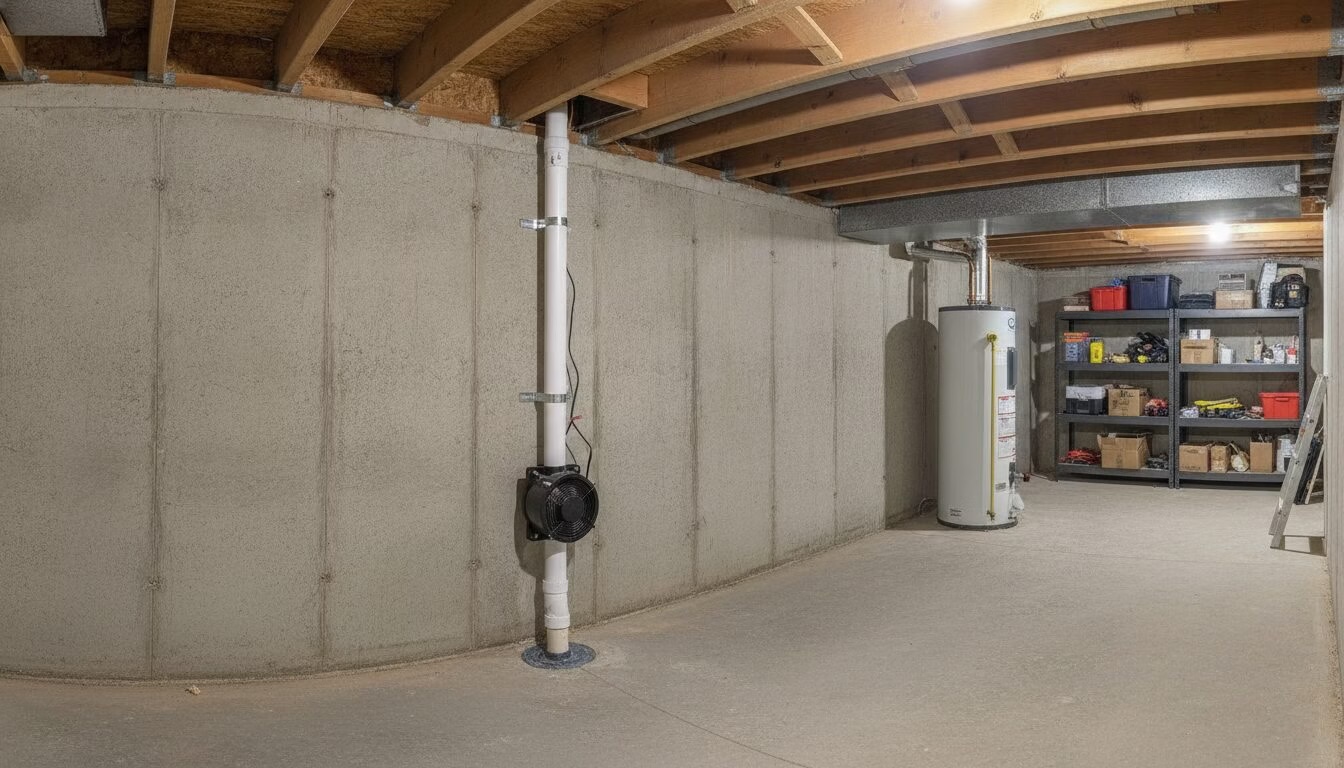
Foundation type shapes the design too. A basement is usually handled with a through-slab suction point, a home with a sump pit is often best served through the sealed pit, and a crawl space needs a sealed membrane to draw beneath.
Are Some Radon Reduction Methods More Effective Than Others?
Yes, and the gap is large. Active systems that mechanically change the pressure under the slab outperform passive and partial measures by a wide margin.
| Method | Typical reduction | Holds over time? |
|---|---|---|
| Active sub-slab depressurization | Up to 99% | Yes, while the fan runs |
| Sealed sump pit suction | Up to 99% | Yes, while the fan runs |
| Sub-membrane system (crawl space) | Up to 99% | Yes, while the fan runs |
| Passive stack, no fan | Modest | Varies with weather and season |
| Sealing cracks only | Small | No, gas finds other openings |
| Ventilation or opening windows | Temporary | No, levels return within hours |
Our guide on how to get rid of radon goes into why the partial measures fall short.
How Do You Confirm the Radon Mitigation System Worked?
You confirm a radon mitigation system worked with a post-mitigation test, which is the only real proof. Air Sense Environmental recommends arranging one separately after installation under the applicable closed-house protocol. Confirm the provider, timing, price, and scope in the written estimate.
If the reading is not where it should be, the system gets adjusted: an added suction point, more sealing, or a different fan. Understanding what your pCi/L number means makes the before-and-after comparison easier to read.
A St. Louis Before-and-After Example
One St. Louis-area home tested at 13.5 pCi/L before mitigation. Air Sense Environmental reviewed the home’s radon entry points and system placement, then started the active system. After 24 hours, the team deployed a monitor for a 48-hour post-mitigation test; that follow-up confirmed the system had reduced the home’s radon.

Watch the St. Louis radon mitigation walkthrough to see how the home was tested and mitigated.
Does a Radon Mitigation System Stay Effective Over the Years?
A radon mitigation system stays effective over the years, provided the fan keeps running and nothing disturbs the sealing. The pipework and seals generally last as long as the house; the fan is the wearing part.
- Glance at the manometer occasionally. Uneven liquid levels mean the fan is pulling.
- Retest every two years, and after any major renovation or foundation work.
- Replace the fan when it fails. See radon fan replacement; the rest of the system stays in place.
Frequently Asked Questions About Radon Mitigation Effectiveness
These are the questions homeowners ask most often about radon mitigation effectiveness, covering realistic reduction targets, why a system underperforms, and how often to retest.
Can a radon system get levels to zero?
No, and no system should promise that. Radon exists naturally in outdoor air at low levels, so the realistic goal is getting well below the EPA action level of 4.0 pCi/L rather than eliminating radon entirely.
Why would a radon system fail to lower levels enough?
Usually because of design rather than equipment: a poorly placed suction point, unsealed slab cracks or sump pit, an undersized fan, or sub-slab material too tight for suction to travel. A post-mitigation test catches this, and the fix is normally an added suction point or more sealing.
Does turning the fan off for a while matter?
Yes. Radon enters continuously, so levels climb back within days of the fan stopping. The fan is built to run all the time and uses roughly the electricity of a light bulb left on.
How often should I retest after mitigation?
Every two years is a sensible interval, plus a retest after major renovations, foundation work, or a fan replacement. Radon testing is inexpensive relative to the system it verifies.
Get a Radon Mitigation System That Is Verified, Not Assumed
Get a radon mitigation system that is verified, not assumed. Air Sense Environmental designs each radon mitigation system around your foundation and recommends a separately arranged follow-up radon test after installation, so the reduction is measured rather than promised. Schedule your free in-home estimate or call 314-664-9807.