
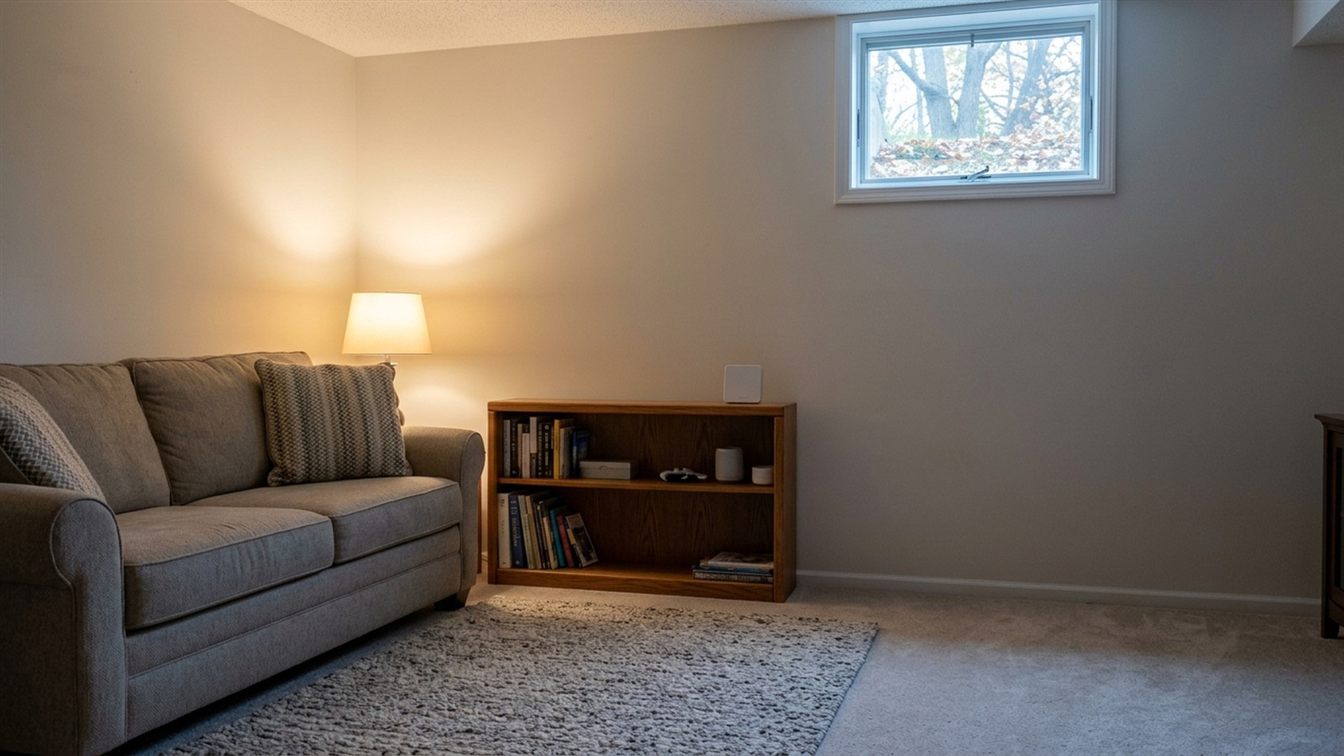
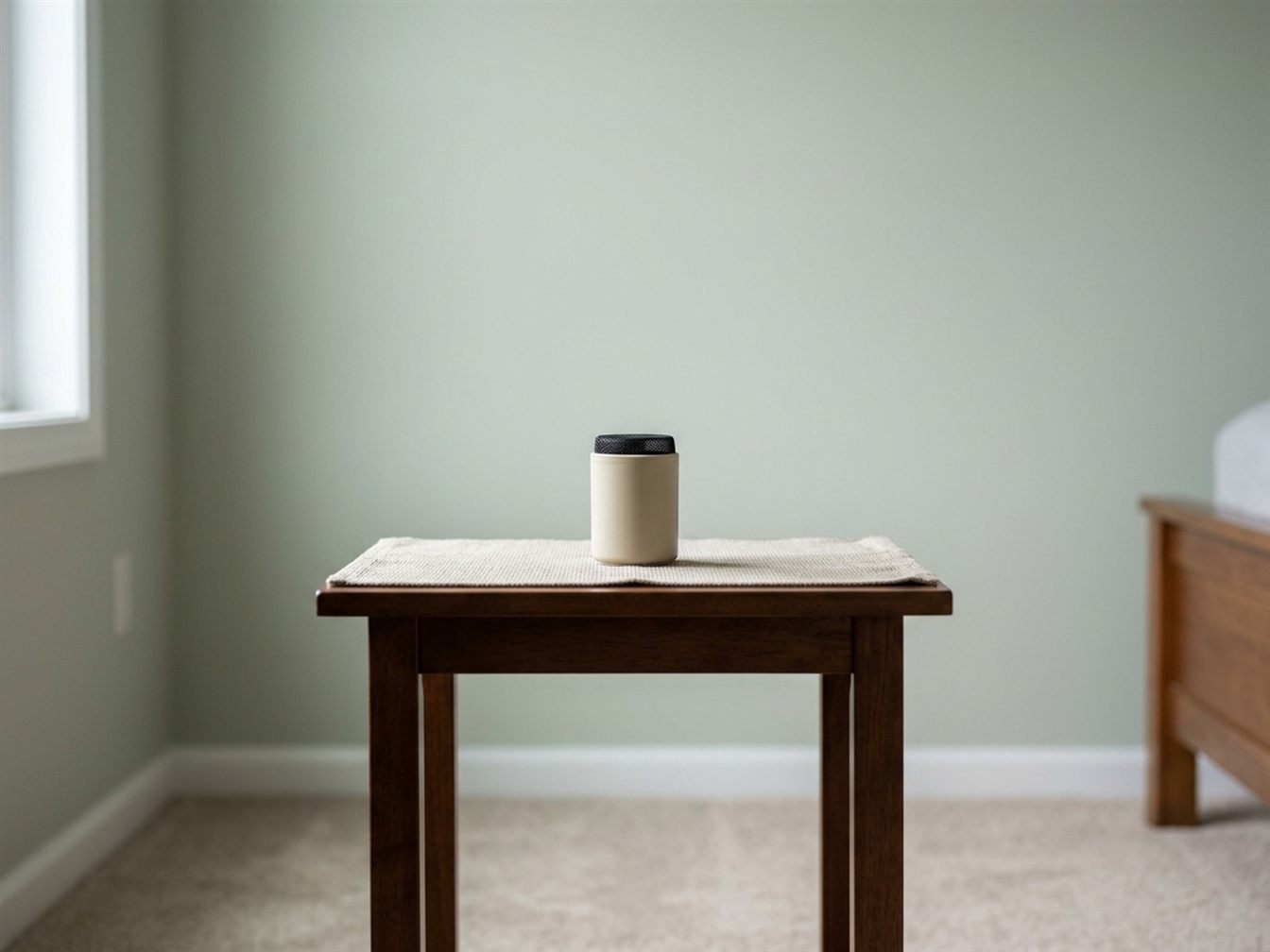
Put the detector in the lowest lived-in level of the home, in a room you actually use, at least 20 inches above the floor, away from drafts, exterior walls, heat, and high humidity, and leave it undisturbed for the whole test. Placement is not a detail. It is the single largest source of wrong radon results in homes that were tested honestly.
We see this constantly in St. Louis, MO and across St. Louis County, Jefferson County, and the Metro East. A homeowner buys a kit, puts it on a basement windowsill next to the dryer vent because that seems like where the radon would be, and gets a number that has almost nothing to do with the air the family breathes.
This guide covers the rules the EPA and the national measurement standard actually specify, the seven places people put detectors that quietly ruin the result, how placement differs for a digital monitor you keep permanently, and what to do with the number once you have it.
Where does the EPA say to place a radon test?
In the lowest lived-in level of the home. A Citizen’s Guide to Radon puts it this way: place the kit in the lowest lived-in level, for example the basement if it is frequently used, otherwise the first floor. Put it in a room that is used regularly, like a living room, playroom, den, or bedroom, but not the kitchen or bathroom. Place it at least 20 inches above the floor in a location where it will not be disturbed, away from drafts, high heat, high humidity, and exterior walls.
That is six separate constraints in one paragraph, and each one exists for a reason.
Lowest lived-in level because radon enters from the soil and concentrations are highest nearest the source. An unfinished basement nobody uses is not lived in; a basement family room is.
A room used regularly because the point of the measurement is exposure, not the maximum number the house can produce.
Not the kitchen or bathroom because exhaust fans, cooking moisture, and shower humidity all interfere with the measurement.
At least 20 inches above the floor because that approximates the breathing zone and keeps the device out of the settled, still layer at floor level.
Away from drafts, heat, humidity, and exterior walls because all four bias the result, usually downward, and a falsely low result is the expensive kind of wrong.
Undisturbed because moving a detector mid-test invalidates it, and on a professional continuous monitor it triggers a tamper flag.
What is the placement checklist for a short-term test?
| Requirement | Specification | Why |
|---|---|---|
| Level | Lowest lived-in level | Closest to the soil-gas source that people actually occupy |
| Room type | Bedroom, den, living room, playroom, finished basement room | Reflects real exposure |
| Rooms to avoid | Kitchen, bathroom, laundry, utility room, closet, crawl space, garage | Exhaust fans, humidity, and heat interfere |
| Height | At least 20 inches above the floor | Breathing zone, out of the floor layer |
| Distance from exterior walls | Keep the device well away from them | Exterior walls carry drafts and temperature swings |
| Distance from vents and windows | Away from supply registers, returns, ceiling fans, and openable windows | Local air movement dilutes the sample |
| Sunlight and heat | No direct sun, no radiators, no appliance heat | Heat and UV affect both charcoal and electronic devices |
| Disturbance | Left in place, undisturbed, for the full duration | Moving it invalidates the measurement |
| House conditions | Windows and outside doors closed 12 hours before and throughout a 2 to 3 day test | The closed-house condition the protocol assumes |
| Weather | Do not run a 2 to 3 day test during unusually severe storms or high winds | Extreme pressure swings distort short tests |
The closed-house and weather conditions come straight from the EPA’s guidance. The professional version of these requirements lives in ANSI/AARST MAH, the national protocol for conducting radon measurements in homes, which is the standard a licensed or certified measurement professional works to.
Where should you never put a radon detector?
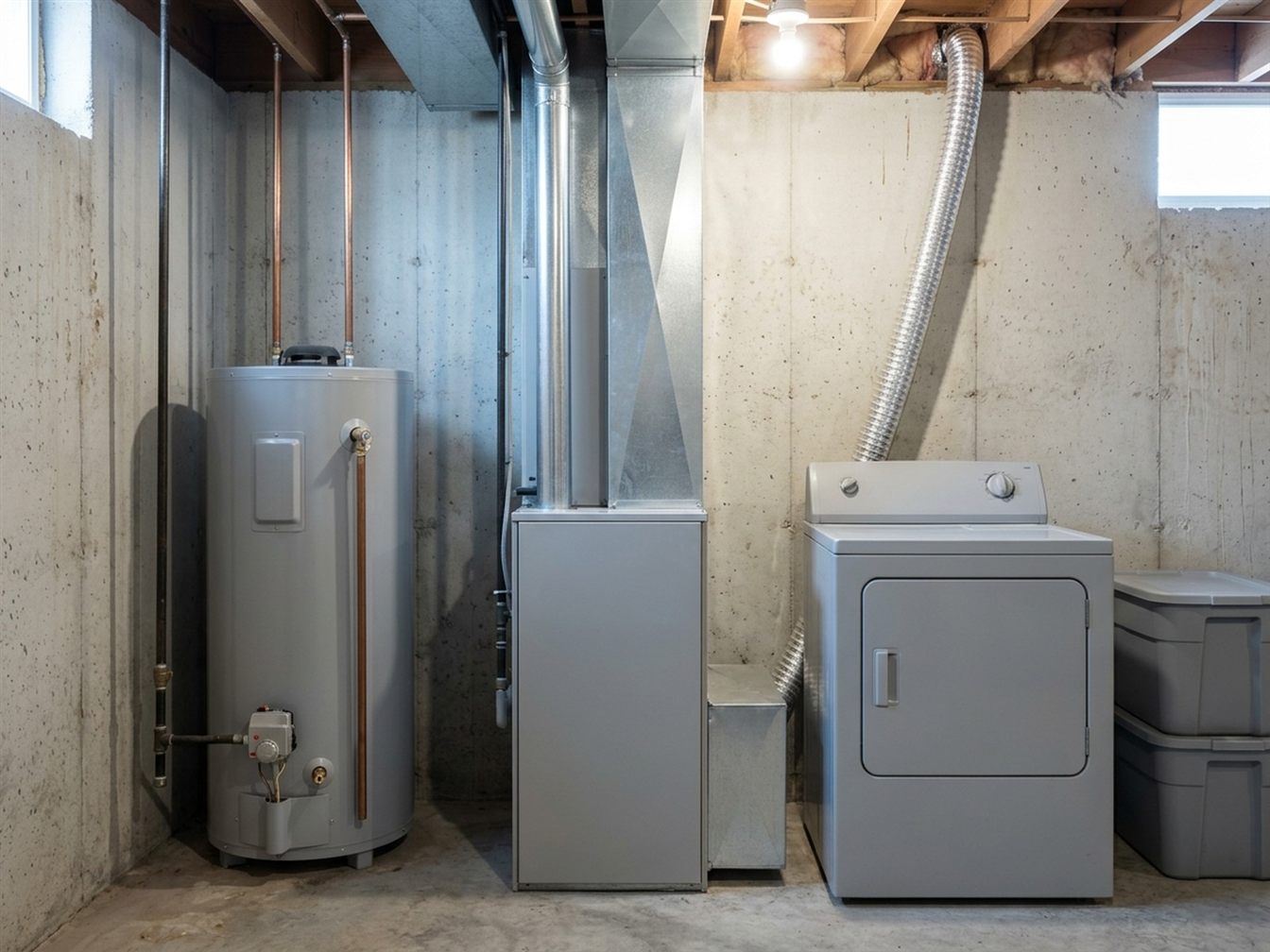
Seven locations, all common, all ruinous.
On a windowsill. It is an exterior wall, a draft source, and a temperature swing, all at once. It will read low.
Next to the furnace, water heater, or dryer. Combustion appliances and dryers move large volumes of air and create local pressure effects. The utility room is also not a lived-in space.
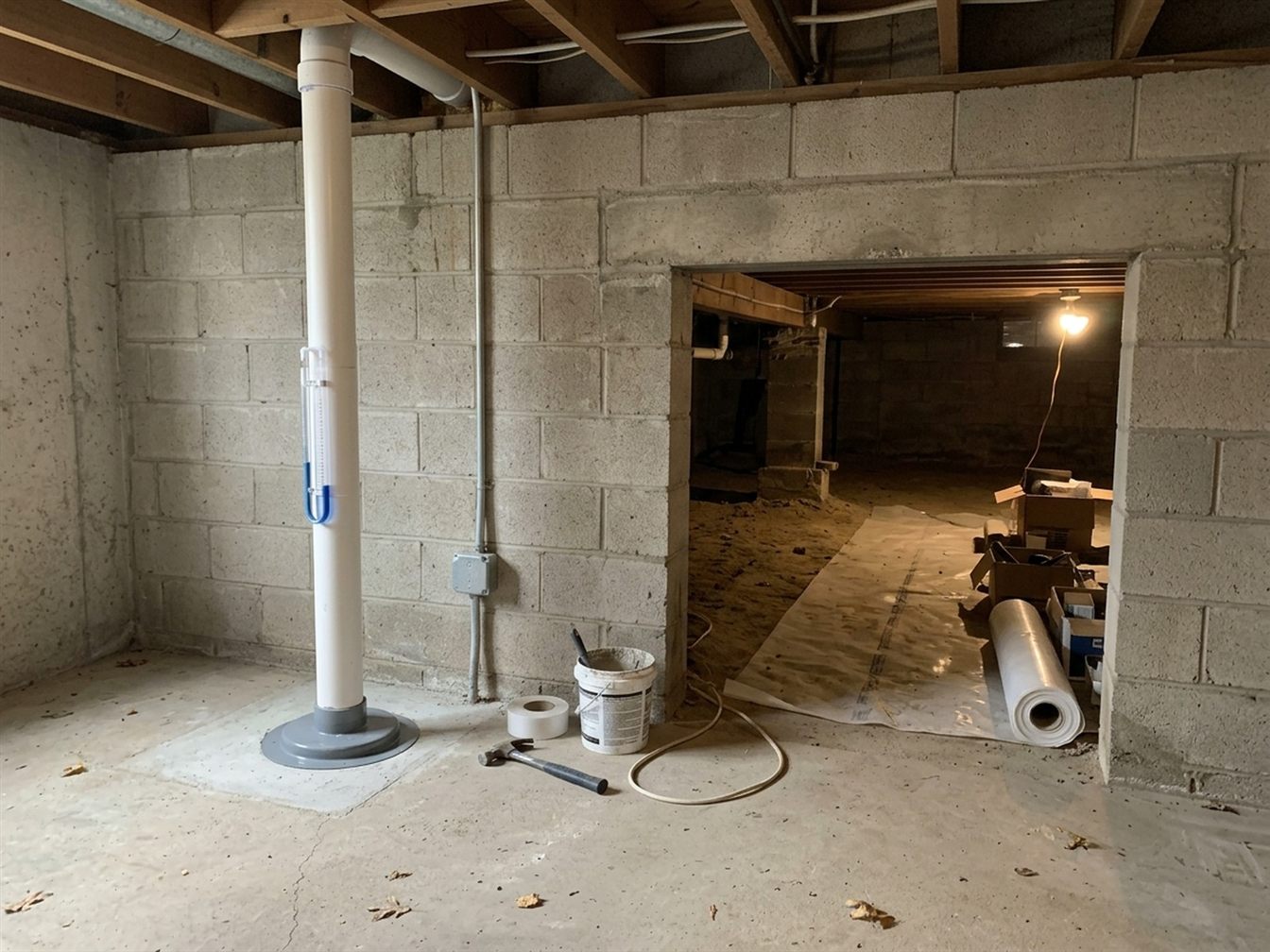
In the sump pit area or right over a floor drain. Tempting, because that is often where radon enters, but you would be measuring the entry point rather than the room. Diagnostic sniffing near a suction point is a professional technique with a different purpose.
In a bathroom or kitchen. Exhaust fans and humidity. Both explicitly excluded by the EPA.
Inside a closet or cabinet. Stagnant air, not representative, and often adjacent to an exterior wall.
In a crawl space or attached garage. Neither is lived-in space. A crawl space reading tells you about the crawl space, which matters for system design but not for the occupied-home result.
On the floor. Below the 20-inch minimum, and in the layer most affected by floor-level drafts and dust.
Does placement change for a digital monitor you keep permanently?
The rules are the same, but the habits are different.
A consumer continuous monitor is not a test. It is a long-running observation, and its value comes from staying in one compliant location for months so its averages mean something. Moving it around the house to “check different rooms” produces a series of short, noisy, incomparable numbers.
Pick one location that satisfies the placement checklist, ideally the room where the household spends the most waking hours on the lowest lived-in level, plug it in, and leave it. Give it at least a week before treating the average as meaningful. If you want a second device, put it on a different floor and leave that one alone too.
One more distinction worth holding onto: a monitor reading is not a result you can hand to a buyer. For that you need a professional measurement, and in Illinois that professional must be licensed by IEMA-OHS. We cover the difference in our guide to whether radon detectors are accurate.
Should you test more than one level of the house?
For a screening test, one detector on the lowest lived-in level is what the EPA protocol calls for. For anything more consequential, more than one device is often worth it.
Three cases where a second or third location earns its keep:
- Split-level and multi-level homes, where the lowest lived-in level is ambiguous and soil contact varies by wing.
- Mixed foundations, a very common St. Louis pattern: part basement, part crawl space, sometimes a slab addition. Each section can behave differently.
- Homes where someone sleeps on a lower level than the one tested. The EPA specifically advises retesting on a lower level when living patterns move down there.
If the house has an active mitigation system, the post-mitigation measurement should be taken in the lowest lived-in area as well, under the same closed-house conditions. Our guide to post-mitigation radon testing covers the timing.
What do you do with the result?
The EPA recommends fixing a home at 4.0 pCi/L or higher, and considering a fix between 2.0 and 4.0 pCi/L, because there is no known safe level of radon exposure. For context, the average indoor concentration in the United States is about 1.3 pCi/L and outdoor air averages about 0.4 pCi/L. If you want the fuller reading of what a given number means, see radon levels and pCi/L.
A single short-term result at or above the action level should be confirmed. The EPA’s protocol is a short-term test first, then either a long-term test for a year-round average or a second short-term test if you need an answer quickly, with an immediate second short-term test if the first result is more than twice the action level.
If the confirmed result is at or above 4.0 pCi/L, the fix is a properly designed soil-depressurization system, not more testing. Radon mitigation is a one-day installation in most single-family homes, and the verification test that follows is how you know it worked.
Frequently asked questions
Where should you place a radon detector?
In the lowest lived-in level of the home, in a regularly used room that is not a kitchen or bathroom, at least 20 inches above the floor, away from drafts, exterior walls, heat, and humidity.
How high off the floor should a radon detector be?
At least 20 inches, per EPA guidance. That puts the device in the breathing zone rather than the still air at floor level.
Can you put a radon detector in an unfinished basement?
Only if the basement is frequently used. An unfinished basement nobody occupies is not a lived-in level, and testing there overstates the exposure the household actually receives.
Should the windows be closed during a radon test?
Yes. For a short-term test of two or three days, close windows and outside doors at least 12 hours before the test starts and keep them closed throughout, except for normal entry and exit.
Can you move a radon detector during the test?
No. Moving it invalidates the measurement, and professional continuous monitors log the movement as tamper evidence. Choose the location first, then start the test.
Do you need a radon detector on every floor?
Not for a standard screening test. Additional locations are worth it in split-level homes, homes with mixed foundation types, and homes where someone occupies a level below the one that was tested.
Not sure your reading is telling you the truth?
Placement problems are fixable, and a professional measurement removes the doubt entirely. Air Sense Environmental handles radon testing and radon mitigation across the St. Louis metro on both sides of the Mississippi, from Edwardsville to Jefferson County.
Call 314-664-9807 or request a free estimate.