
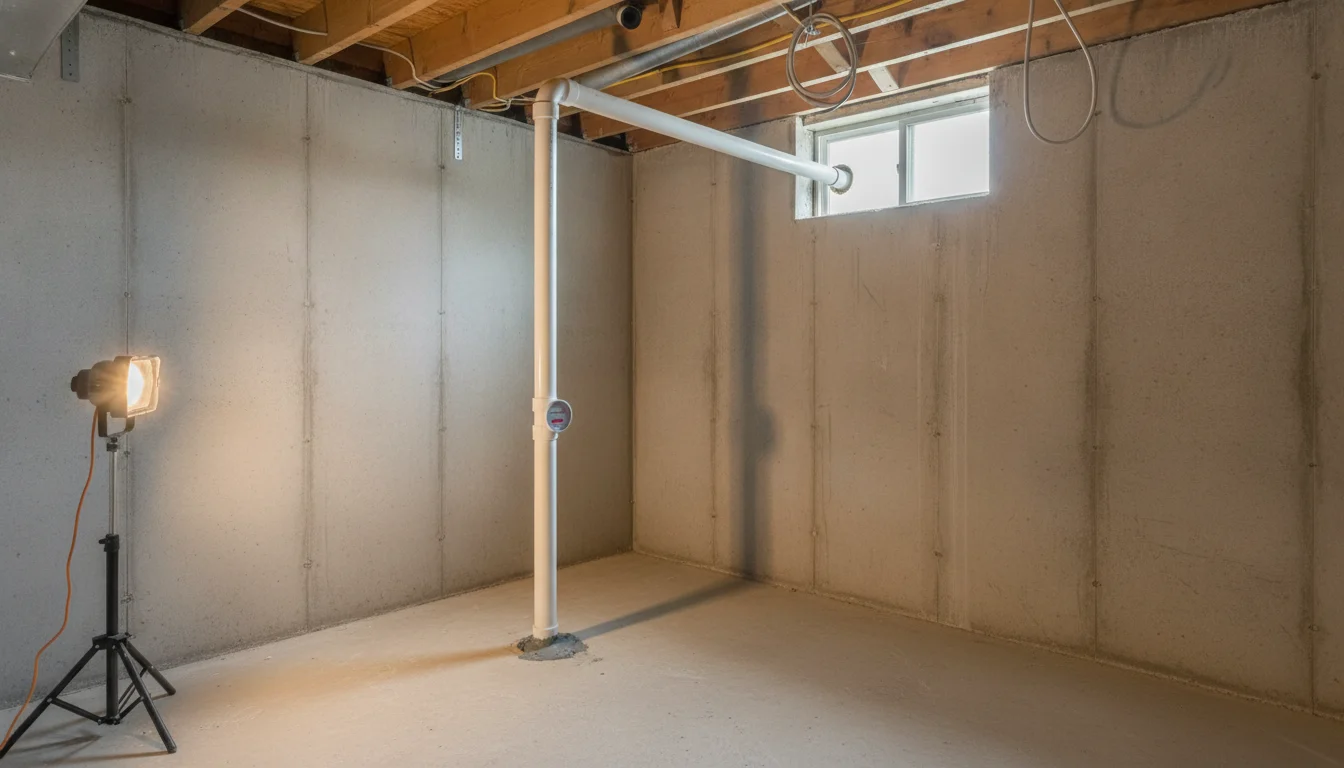
A basement radon mitigation system is a sealed suction point cut into the basement floor, a PVC pipe that carries soil gas up through the house, and a continuously running fan that vents the gas above the roofline. Because a basement sits deepest in the soil, it is almost always where radon enters a home first and where the reading is highest, so it is also where the system gets installed. In the St. Louis metro, where roughly 4 in 10 homes test above the EPA action level of 4.0 pCi/L, a properly designed basement system can cut radon by up to 99%. Air Sense Environmental installs these systems on both the Missouri and Illinois sides of the metro and recommends a separately arranged follow-up radon test. Most installs take a single day.
Why Is Radon Always Worst in the Basement?
Radon is worst in the basement because that level has the most surface area in direct contact with soil, and because the air pressure inside a basement is usually slightly lower than the pressure in the ground beneath it.
That pressure difference pulls soil gas through any opening it can find. In a typical St. Louis basement, that means:
- The gap where the slab meets the foundation wall
- Cracks in the concrete floor
- Open or loosely covered sump pits
- Floor drains and plumbing penetrations
- Unsealed crawl space sections adjoining the basement
This is why a basement reading and an upstairs reading are rarely the same number. Testing is done on the lowest livable level for exactly this reason, and our radon testing service follows that standard. If you are trying to work out whether your number is a problem, our guide to what counts as a dangerous radon level puts the pCi/L scale in context.
How Does a Basement Radon Mitigation System Actually Work?
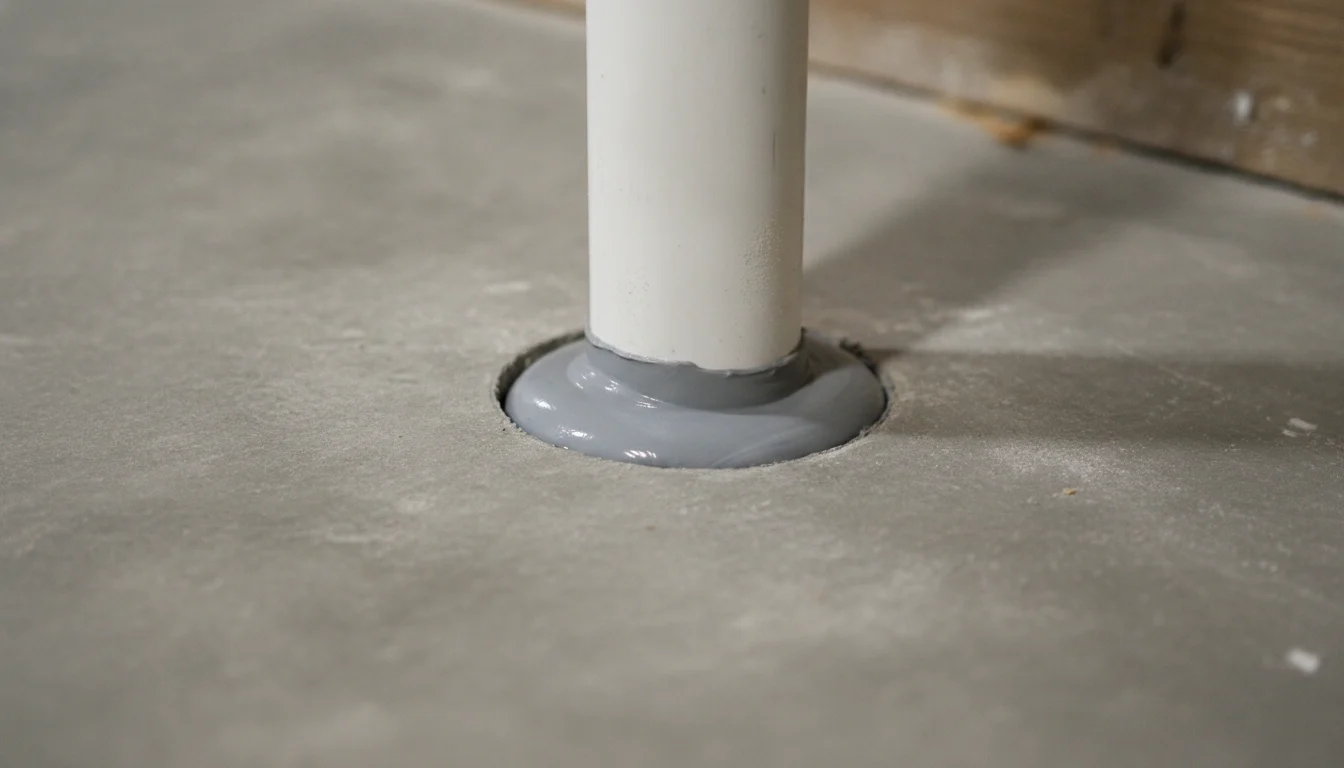
A basement system works by reversing the pressure difference: instead of the house pulling gas up out of the soil, the fan pulls gas out of the soil before it ever reaches the basement. The method is called sub-slab depressurization, and it is the standard fix.
The install follows the same sequence in most homes:
- A suction point is cut through the basement slab into the gravel or loose fill beneath it.
- Some of that material is removed to create a void the fan can draw from.
- A PVC pipe is sealed into the opening and routed up and out of the house.
- An in-line fan is mounted outside the living space and runs continuously.
- Visible slab cracks and the sump pit are sealed so the fan pulls from the soil, not from the room.
- The pipe terminates above the roofline, where the gas disperses.
The sealing step matters more than people expect. A fan pulling air out of the basement itself wastes suction and conditioned air; a fan pulling from a sealed void under the slab is what produces the large reductions. Our full radon mitigation page walks through the system components, and how to get rid of radon covers the approach for other foundation types.
Where Does the Radon Vent Pipe Run, and Can It Be Hidden?
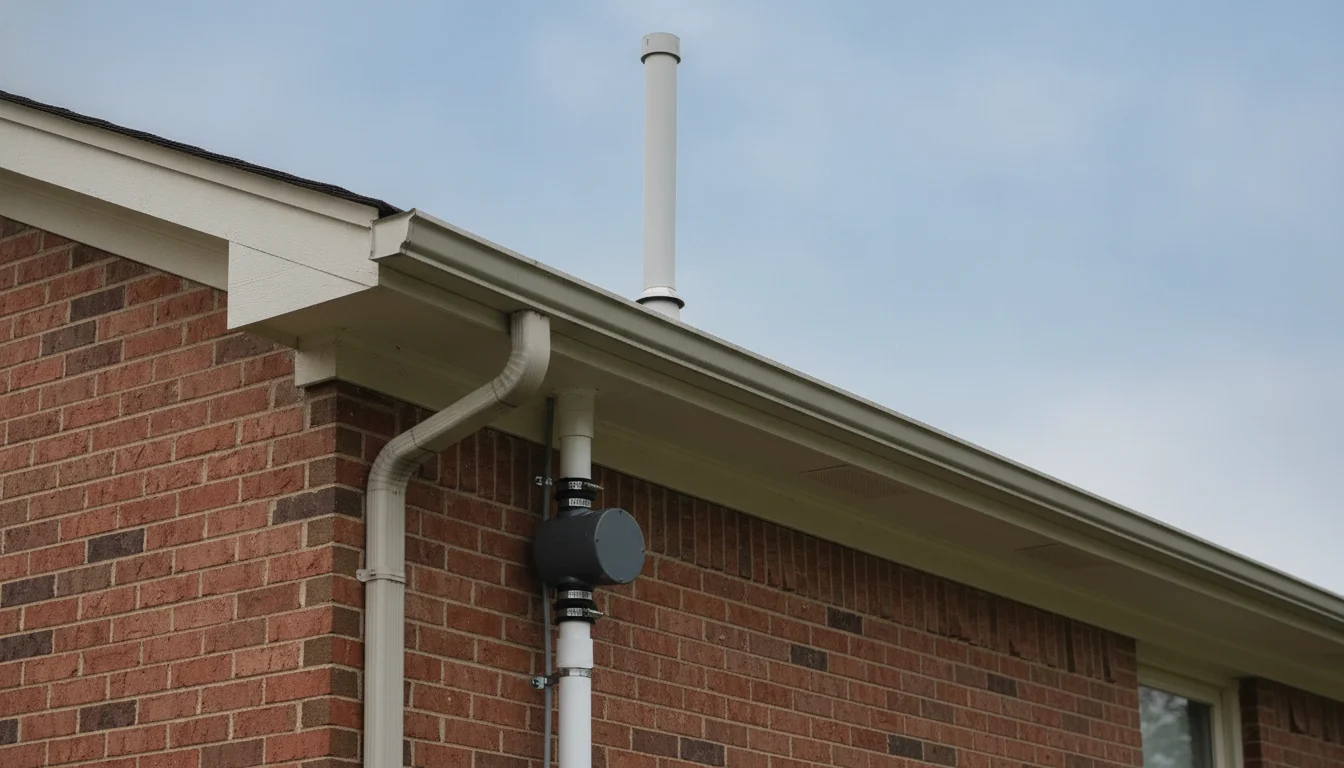
The pipe runs from the suction point in the basement floor to a discharge above the roofline, and in most homes there is more than one route to get there. Which one you pick is largely a cosmetic decision.
The two common configurations:
- Exterior routing. The pipe exits through the rim joist near the suction point and runs up an outside wall, with the fan mounted outdoors. Simplest to install, and the pipe can be painted to match the siding.
- Interior routing. The pipe runs up through a closet, a utility chase, or the garage into the attic, where the fan sits out of sight. Nothing is visible on the outside except a short section of pipe at the roof.
Interior routing hides the system almost completely but needs a usable vertical path, so it is easier in some floor plans than others. We look at both options during the free in-home estimate and show you where the pipe would land before any work starts.
Can You Install a Basement Radon System in a Finished Basement?
A finished basement can still be mitigated, and in most cases the finished space is left untouched. The suction point does not have to go in the middle of the family room.
Installers look for an unfinished corner to work in: the utility room, the area around the furnace and water heater, a storage closet, or the space where the sump pit already sits. Sub-slab gravel is usually connected under the whole floor, so a suction point in an unfinished corner can still depressurize the soil beneath finished rooms.
Where a finished basement does add complexity is diagnostics. Sealed-over slab cracks and covered floor drains are harder to inspect, and if the fill under the slab is poor, a second suction point may be needed to reach the far side of the floor. That is a design question we answer on site rather than a reason to avoid mitigating.
Can the Sump Pit Be Used for a Basement Radon System Instead of Cutting the Slab?
Yes. Where a basement has a sump pit, the pit can be sealed with an airtight lid and used as the suction point, which means no coring through the floor at all.
Sump pits are common in this area because many St. Louis metro homes sit on heavy clay soil with a high water table. The pit already opens into the drain tile and the gravel bed under the slab, which is precisely the space a radon system needs to draw from. Sealing it serves two purposes at once: it closes a large radon entry point and it gives the fan a ready-made connection to the sub-slab area. We cover this setup in detail on our sump pump radon mitigation page.
A sealed pit still works normally. The lid includes a gasketed access panel and sealed pass-throughs for the pump power cord and discharge line, so the pump can be serviced or replaced later.
| Factor | Through-slab suction | Sealed sump pit suction |
|---|---|---|
| Where the suction point goes | A cored opening through the basement floor into the gravel below | The existing sump pit, capped with an airtight lid |
| Best suited to | Basements with no sump pit, or large floor areas needing a second suction point | Basements that already have an active sump pit connected to drain tile |
| Effect on finished space | Requires an accessible spot to core; usually placed in an unfinished corner | None, the pit is already exposed in a utility area |
| Concrete work involved | Coring plus patching and sealing around the pipe | No coring, lid is fitted and sealed to the existing pit |
| Sump pump access afterward | Unchanged | Through a sealed, removable access panel in the lid |
What Does the Cost of Radon Mitigation in a Basement Run in St. Louis?
Cost for a basement system depends on a handful of design factors rather than a single flat rate, so the estimate is done in the home after we see the foundation. Our 2026 St. Louis radon mitigation cost guide breaks the pricing down in full.
What moves the number up or down:
- How many suction points the slab needs, one is typical
- Whether the pipe runs outside or is concealed through the interior
- The distance from the suction point to the roofline
- Whether the basement has a sump pit that can be sealed and used
- How much crack sealing and slab prep the floor needs
- Fan sizing, which depends on how tight or loose the sub-slab fill is
Estimates are free and done in person, because quoting a basement system from a phone call means guessing at the details that actually set the price.
Will a Basement Radon System Make the Basement Cold or Noisy?
No. A correctly installed system pulls air from beneath the slab, not from inside the basement, so it does not draw out heated or cooled air and it does not make the room colder.
Noise is minimal for the same reason the fan is never mounted in living space. Radon fans are installed outdoors or in an attic or garage, and what you hear inside is usually a faint airflow sound through the pipe, comparable to a bathroom exhaust fan running in another room.
Power draw is modest as well. Most radon fans use roughly the same electricity as a standard light bulb running around the clock, which we cover in how much electricity a radon fan uses.
Frequently Asked Questions About Basement Radon Systems
These are the questions homeowners ask most often about basement radon systems, covering install time, how fast levels drop, slab sealing, and continuous fan operation.
How long does a basement radon system take to install?
Most basement installations are completed in one day, typically within three to five hours. Homes needing multiple suction points or a long concealed interior pipe run can take longer. You do not need to leave the house while the work is done.
How fast will radon levels in the basement drop?
Levels usually begin falling within hours of the fan being turned on, and the system reaches steady performance within a day or two. Air Sense recommends arranging a separate follow-up test after the system has been operating. If the reading remains elevated, contact us for an assessment; testing, adjustment costs, and warranty coverage depend on the written agreement.
Do I need to seal every crack in the basement floor first?
Sealing alone is not a fix for high radon, but it is part of a proper install. We seal visible slab cracks, the floor-to-wall joint, and the sump pit so the fan draws from the soil instead of the room. Sealing without an active system rarely brings a high reading below the action level.
Does the radon fan have to run all the time?
Yes, the fan is designed to run continuously and should not be switched off. Radon enters the basement constantly, so shutting the fan down allows levels to climb back within days. Radon fans typically last several years before needing radon fan replacement.
Ready to Get a Basement Radon System Quoted?
To get a basement radon system quoted, Air Sense Environmental looks at your basement, the slab, and any sump pit, then designs the system around what we find and recommends arranging a separate follow-up radon test. Schedule your free in-home estimate or call 314-664-9807.