
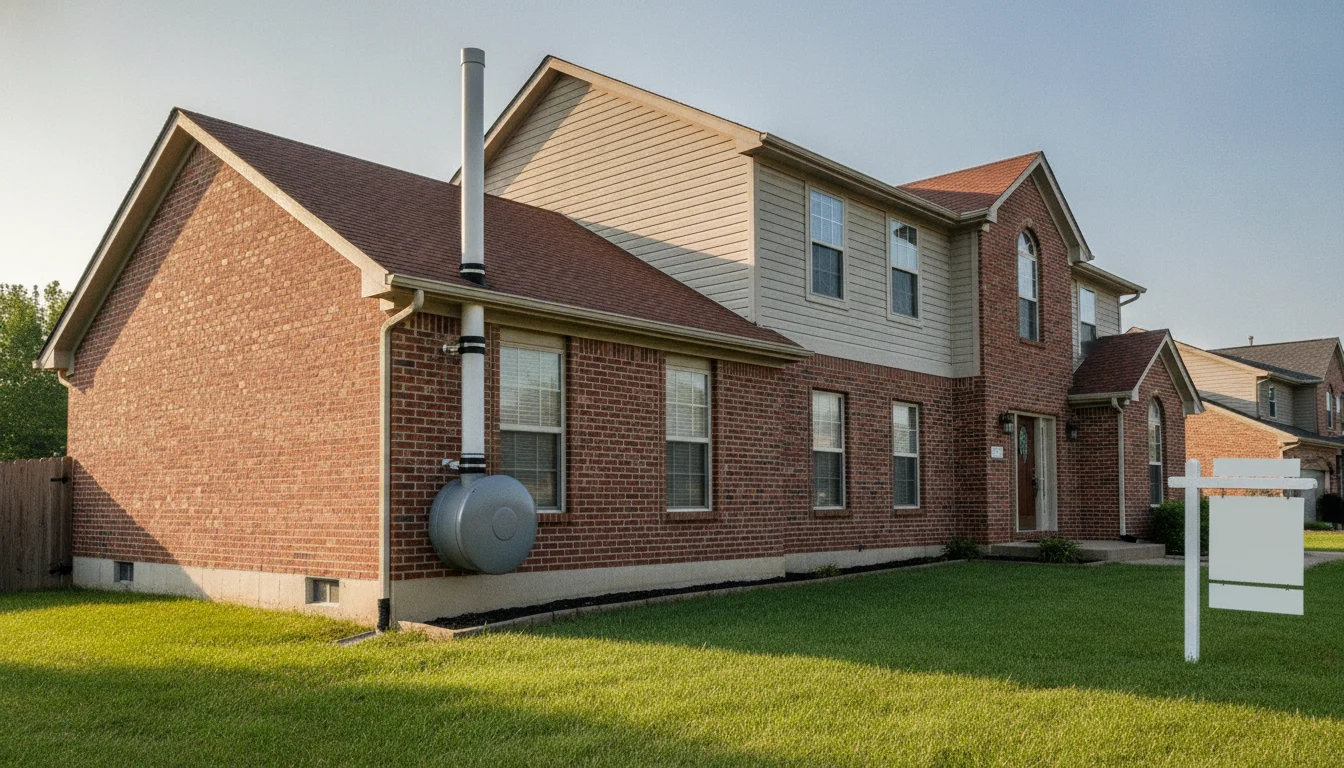
Should I buy a house with a radon mitigation system? Yes, in almost every case: an existing radon mitigation system is a good sign rather than a warning. It means someone tested the home, found radon worth reducing, and paid to fix it, which is the opposite of a hidden problem. In the St. Louis metro, where roughly 4 in 10 homes test above the EPA action level of 4.0 pCi/L, an untested house carries more unknowns than a mitigated one. Your job as the buyer is not to walk away; it is to confirm the radon mitigation system still works and to learn who installed it.
Is an existing radon mitigation system a red flag?
No, an existing system is not a red flag by itself. Radon is a soil gas that enters through the slab, foundation cracks, and sump openings, so elevated levels reflect the ground under the house, not neglect by the owner.
A newer home can test high and a well kept older home can test low. The presence of a radon mitigation system tells you the issue was measured and addressed rather than left for you to discover after closing.
What does a radon system tell you about the house?
It tells you three things. First, radon was measured here and someone judged the result high enough to act on. Second, the house has a basement, slab, or crawl space that let soil gas in. Third, a contractor was hired and money was spent.
What it does not tell you is the current radon level. Systems can be installed well or poorly, fans wear out, and pipes can be disconnected during a basement remodel.
It also does not tell you how high the original reading was. If that matters to you, ask for the pre mitigation test report and compare it against what counts as a high radon level in pCi/L.
How do you confirm the radon mitigation system still works before you close?
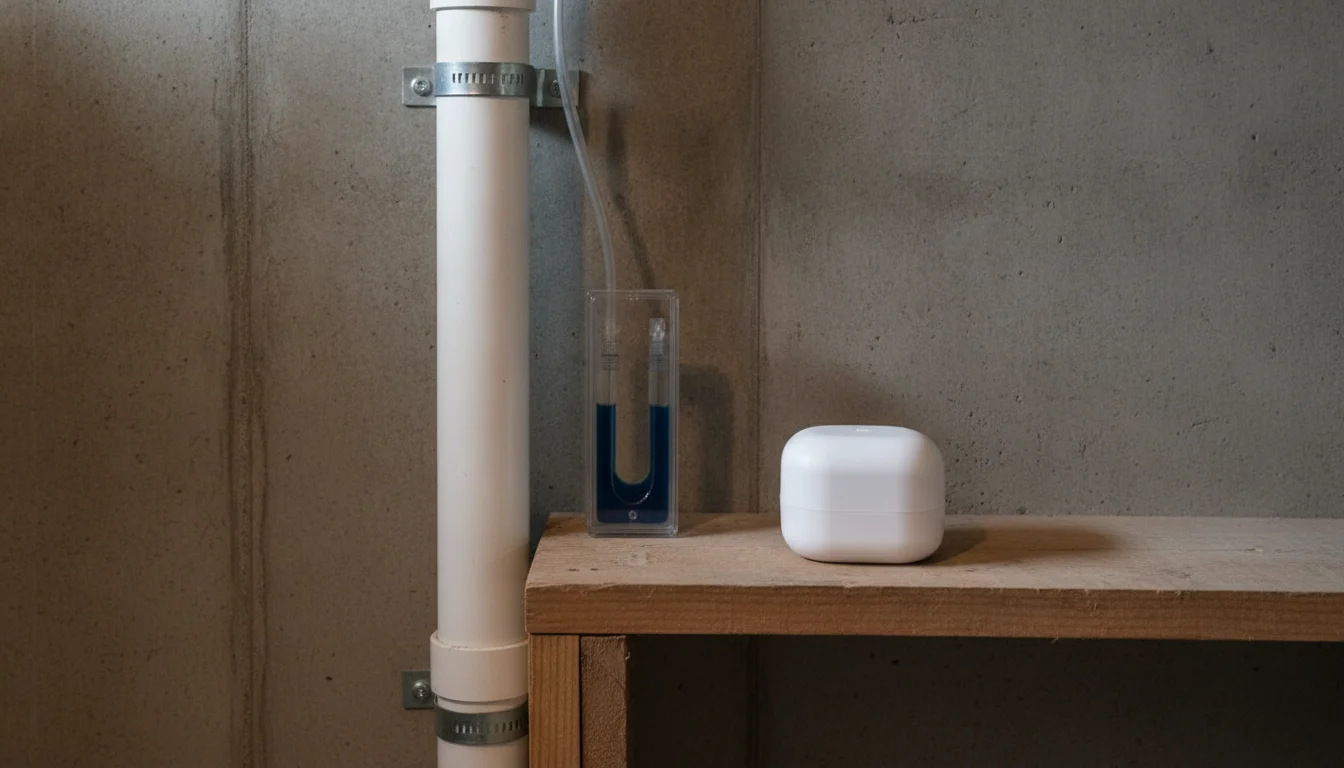
Run a current radon test during your inspection period with the fan running normally. That step turns an assumption into a number, and it costs little next to everything else on a closing statement.
Alongside a fresh radon test, do a quick visual check:
- Look at the manometer, the small U shaped gauge on the pipe. The liquid levels should be uneven. Level liquid usually means the fan is not moving air.
- Listen for the fan. It should hum quietly and run without cycling on and off.
- Follow the pipe outside. It should discharge above the roofline and away from windows.
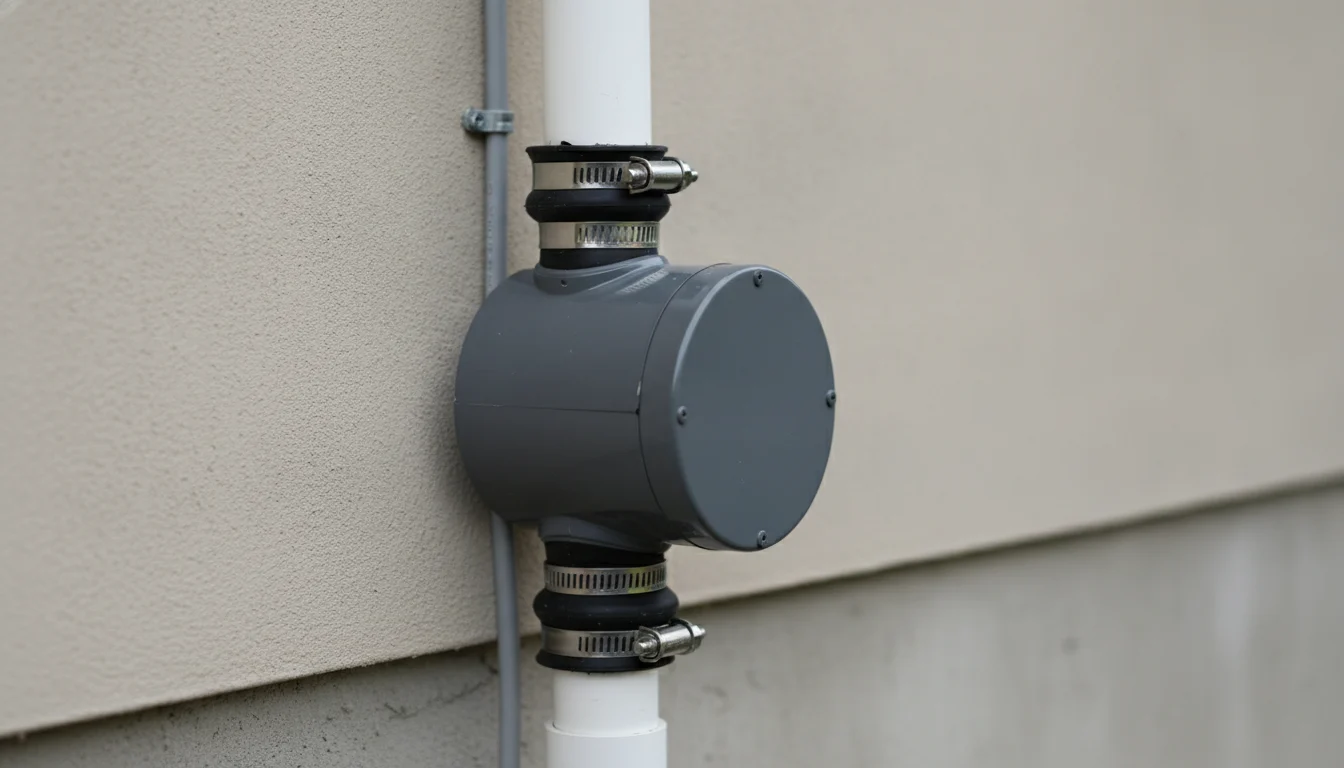
- Check that the fan is mounted outside the living space, in the attic or on an exterior wall.
- Look for a label on the system listing the installer and install date.
A properly designed active system reduces radon by up to 99% while the fan runs, which is why a post test is the real proof. Our guide on how effective radon mitigation systems are covers what a reduced result should look like.
What should you ask the seller about the radon mitigation system?
What you should ask the seller about the radon mitigation system is for paperwork, because documentation is what separates a verified install from a pipe someone glued together on a weekend. Sellers in Missouri and Illinois often keep it with the HVAC records.
- Who installed it, and were they certified? In Illinois, mitigation contractors must be licensed through IEMA.
- What was the radon level before mitigation, and what was the post mitigation test result?
- When was the fan installed, and has it ever been replaced?
- Has the house been tested since? Anything older than two years is worth repeating.
- Was the basement finished, the sump replaced, or the slab cut after the system went in?
If the seller has no records at all, that is not a reason to cancel. It just means your own test carries the weight.
What if the house has no radon system at all?
Then you are buying an unknown, and you should test before you close. The absence of a system does not mean the home is low in radon, it usually means nobody has checked.
Because the St. Louis metro sits in the EPA’s highest risk radon zone, a first test coming back above 4.0 pCi/L is common on both the Missouri and Illinois sides. If that happens while you are under contract, you still have room to negotiate, and our article on what to do when a radon test comes back high walks through the options.
What does it cost to service or replace a radon mitigation system you inherit?
It costs very little to service a radon mitigation system you inherit, and replacing one costs far less than a new install. Servicing the radon mitigation system means a retest every two years and a look at the gauge. The fan is the only part that wears out, and radon fan replacement is a single service call rather than replacing the radon mitigation system itself.
The one predictable expense is the fan. Fans typically run for several years of continuous use before they need swapping, and radon fan replacement is a straightforward service call rather than a rebuild of the system.
A full new install is the larger number, and it is the one you avoid by buying a mitigated house. See our breakdown of radon mitigation costs in St. Louis for current local pricing.
Here is how the two situations compare:
| Buyer’s question | House with a mitigation system | House with no system |
|---|---|---|
| What you know | Radon was measured, found elevated, and equipment was installed to reduce it | Nothing measured, so the radon level is unknown until you test |
| What to verify | Current test result, installer credentials, fan age, manometer reading, exterior discharge point | A short term test during the inspection period, ideally in the lowest lived in level |
| Likely cost exposure | Electricity for the fan, a retest every two years, and a fan replacement at some point | Possible full system install if results come back above 4.0 pCi/L |
| Effect on your timeline | Usually none, since testing fits inside a normal inspection window | Can add days if a result is high and mitigation becomes a repair negotiation |
Frequently Asked Questions About Buying a Home With Radon Mitigation
These are the questions buyers ask most often about buying a home with radon mitigation, covering resale value, whether to run your own test, and who pays for the work.
Does a radon mitigation system hurt resale value?
In a high radon area like the St. Louis metro, a documented system is usually treated as a completed repair rather than a defect. Buyers who understand local radon levels tend to see it as one less item to negotiate. Keeping the install paperwork and recent test results with the home makes that easier to demonstrate.
Do I still need my own radon test if the seller gives me one?
Yes, if their test is more than about two years old or you cannot confirm how it was conducted. Radon levels shift with seasons, soil moisture, and changes to the house. A current test during your inspection period confirms the system is performing today, not on the day it was installed.
Can the seller be asked to pay for radon mitigation?
Often yes, when a test during the inspection period comes back above 4.0 pCi/L. Radon results are commonly handled the same way as other inspection findings, through a repair request or a credit at closing. Your agent can advise on what is customary for your contract.
How long does a radon mitigation system last?
The piping and sealing work generally lasts as long as the house, and the fan is the wearing part. A system keeps reducing radon continuously as long as the fan is running, so replacing a failed fan restores the original performance. Testing every two years is how you confirm it is still working.
Want the Radon Mitigation System Checked Before You Close?
If you want the radon mitigation system checked before you close, Air Sense Environmental tests and services existing radon mitigation systems across the St. Louis metro on both the Missouri and Illinois sides. We confirm whether the system is still holding the home below 4.0 pCi/L. Request a free in-home estimate or call 314-664-9807.