
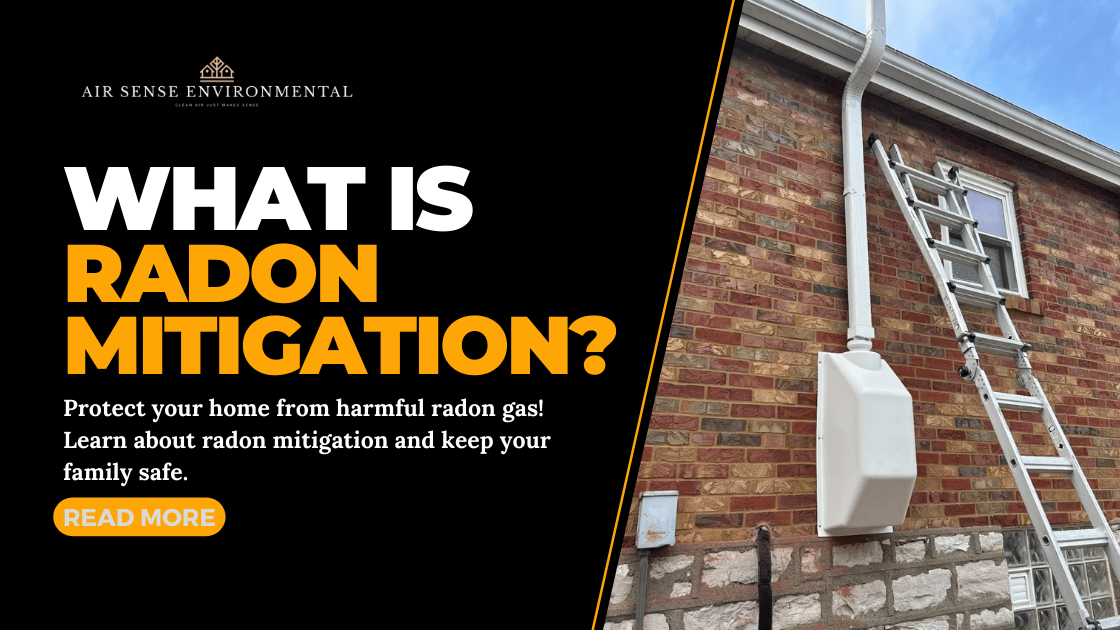
A radon mitigation system is a set of pipes and a continuously running fan that pulls radon gas out of the soil beneath your home and vents it above the roofline, before it can enter the air you breathe. The most common design is called sub-slab depressurization, and a properly installed system reduces indoor radon by up to 99 percent. This guide explains what the system is, how it works, what installation involves, and when a St. Louis area home needs one.
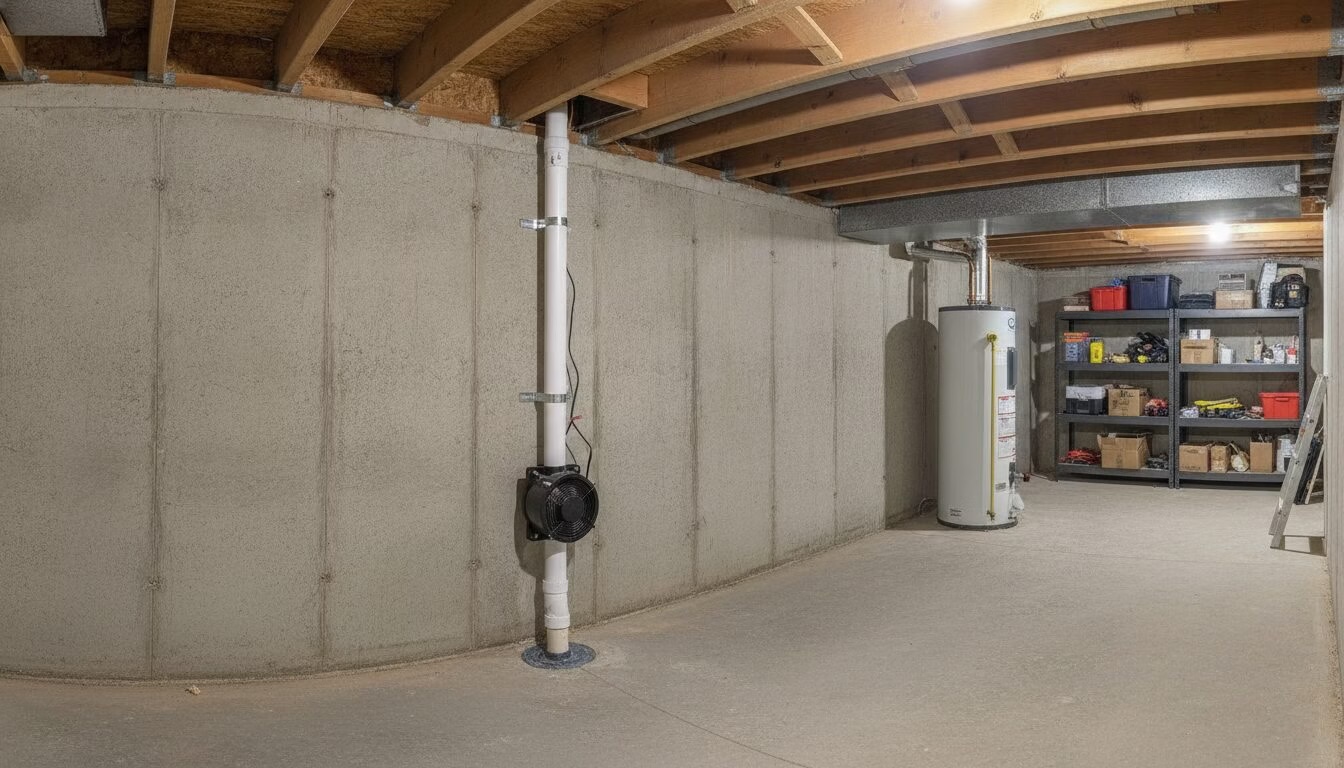
What Does a Radon Mitigation System Do?
It changes the air pressure under your foundation so soil gas is drawn outside instead of into the house. Your home normally sits at slightly lower pressure than the ground beneath it, which quietly pulls radon up through the slab. A mitigation system reverses that.
Every active system has four parts:
- A suction point opened through the slab into the gravel or soil beneath it.
- A vent pipe that carries the gas up and out of the building.
- An in-line fan that runs continuously, mounted outside the living space.
- A manometer, the small gauge on the pipe that shows the system is pulling.
How Does Radon Get Into a Home in the First Place?
Radon forms from the natural breakdown of uranium in soil and rock, then moves upward through whatever openings it finds. Common entry routes include:
- Cracks in solid floors and foundation walls
- The joint where the slab meets the foundation wall
- Gaps around service pipes and floor drains
- Open or loosely covered sump pits
- Cavities inside block walls
- The water supply, which is far less common
Because radon is a gas rather than a particle, sealing these openings helps but does not solve the problem on its own. Our guide to getting rid of radon compares what works against what only helps at the margins.
What Are the Main Types of Radon Mitigation Systems?
The right design depends on your foundation. The underlying principle is the same in each case: draw the soil gas away before it reaches the living space.
| System type | Suited to | How it works |
|---|---|---|
| Sub-slab depressurization | Basements and slab-on-grade homes | Suction point cut through the slab into the gravel below |
| Sump pit suction | Homes with an existing sump pit | Pit sealed with an airtight lid and used as the suction point |
| Sub-membrane depressurization | Crawl space homes | Heavy membrane sealed over the soil, with suction drawn beneath it |
| Drain tile depressurization | Homes with perimeter drain tile | Uses the existing tile loop to draw from the whole foundation |
If your home has a sump pump, the pit is often the most effective place to draw from. We cover that design on our sump pump radon mitigation page, and crawl space homes are covered in crawl space encapsulation and radon.
What Happens During a Radon Mitigation Installation?
Most installations are completed in a single day, and you can stay home while the work is done. A technician locates the best suction point, cores the slab, runs and seals the vent pipe, mounts the fan outside the living space, and seals visible entry routes so the fan draws from the soil rather than the room.
Our step-by-step guide to what to expect walks through the visit in detail.
How Effective Are Radon Mitigation Systems?
A correctly installed active system typically reduces indoor radon by up to 99 percent, and levels begin dropping within about 24 hours of the fan starting. The reduction holds year-round because the fan never stops changing the pressure under the house.
The proof is a post-mitigation test rather than an assumption. Air Sense Environmental recommends that customers arrange one separately after installation. See how effective radon mitigation systems are for what a reduced result should look like.
What Does a Radon Mitigation System Cost?
Cost depends on the foundation type, the number of suction points needed, and how far the pipe has to travel to reach the roofline. Rather than quote a figure that may not fit your home, we keep current local pricing in one place: see our St. Louis radon mitigation cost guide.
Running costs are modest. The fan draws roughly the electricity of a light bulb left on, covered in how much electricity a radon fan uses.
Does Your St. Louis Home Need a Radon Mitigation System?
You need one if your home tests at or above the EPA action level of 4.0 pCi/L, and testing is the only way to know. The St. Louis metro sits in the EPA’s highest-risk radon zone on both the Missouri and Illinois sides, and roughly 4 in 10 area homes test above that level.
Start with a radon test. If the number comes back high, our guide on what to do next explains the sequence, and what your pCi/L reading means puts the number in context.
Frequently Asked Questions About Radon Mitigation Systems
These are the questions homeowners ask most often about radon mitigation systems, covering how to tell a system is working, how long it lasts, and when to retest.
How do I know if my radon system is working?
Check the manometer on the vent pipe. The liquid in the two sides of the gauge should sit at uneven levels, which shows the fan is pulling. If the levels are even, the fan has likely stopped and needs attention.
Does the radon fan have to run all the time?
Yes. Radon enters continuously, so switching the fan off allows levels to climb back within days. The fan is built for constant operation and uses very little electricity.
How long does a radon mitigation system last?
The pipework and sealing generally last as long as the house. The fan is the wearing part and can be swapped without redoing the system when it eventually fails, covered in radon fan replacement.
Should I retest after a radon mitigation system is installed?
Yes. A post-mitigation test a few days after the fan starts confirms the home is below 4.0 pCi/L, and a retest every two years, or after major renovations, verifies the system is still performing.
Get a Free Radon Mitigation Estimate in St. Louis
Air Sense Environmental designs and installs radon mitigation systems across the St. Louis metro on both sides of the river, from our Edwardsville office. Jake (Jacob) Lusby holds Illinois IEMA Mitigation Professional license RNM20232346, with the company listed as his employer.
Schedule your free in-home estimate or call 314-664-9807. We recommend arranging separate post-mitigation testing so the result is measured rather than assumed. Confirm the testing provider, timing, price, and scope in the written estimate.